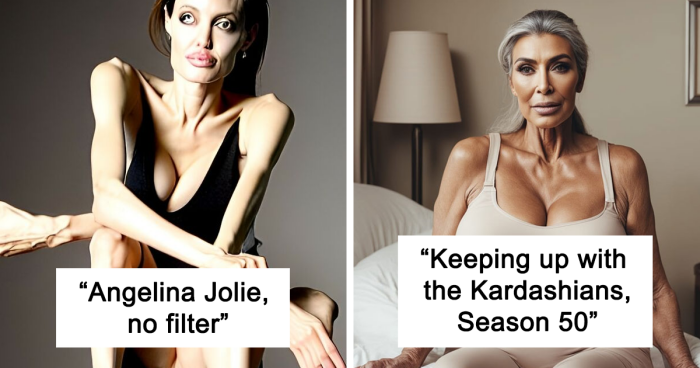

Artificial intelligence can create a cinematic landscape, a fashionable astronaut, or a photorealistic cheeseburger in seconds. Then you ask it to draw a person holding a coffee cup, and suddenly the person has eight fingers, the cup has teeth, and the café sign appears to have been written by a raccoon walking across a keyboard.
That unpredictable gap between an ordinary prompt and a gloriously unhinged result has created an entire category of online comedy: weird AI-generated images. Social communities now collect synthetic pictures featuring furry snakes, anatomically ambitious celebrities, confused animals, impossible architecture, and family portraits in which nobody appears to belong to the same species.
The funniest AI image fails are not entirely random. Text-to-image models learn statistical relationships from enormous collections of images and captions. They can imitate visual patterns impressively, but they may still struggle with exact quantities, relationships between objects, readable text, unusual anatomy, and complicated instructions. Research organizations have specifically tested image generators on counting, spatial placement, compositionality, rare words, and long prompts because these remain challenging areas.
Why Do AI Image Generators Produce Such Weird Results?
An AI image generator does not build a scene the way a human illustrator might. It does not begin with a skeleton, check whether each hand has five fingers, consult a map, and ask whether the refrigerator should really be floating above the kitchen table. It gradually constructs an image by predicting visual patterns associated with the words in a prompt.
That approach works beautifully for broad concepts such as “a dramatic sunset over a futuristic city.” It becomes less dependable when a prompt demands five identical objects, precise left-and-right positioning, realistic reflections, multiple interacting people, or several lines of correctly spelled text. Hands have historically been especially troublesome because they appear in countless poses, are frequently obscured, and contain many small structures that must remain anatomically connected.
Today’s models are considerably better than early generators, but improvement does not mean perfection. It simply means the six-fingered wedding guest may now be wearing a more realistic suit.
30 Hilariously Weird AI Image Fails
1. The Fluffy Snakes That Looked Delighted About Everything
A request for cheerful snakes produced reptiles covered in soft fur and wearing enormous smiles. Scientifically questionable? Absolutely. Adorable enough to sell plush toys? Also absolutely. The generator apparently decided that happiness requires both eyebrows and the coat of a golden retriever.
2. Real-Life SpongeBob Became a Maritime Medical Emergency
Turning a cartoon character into a realistic person sounds entertaining until the square yellow body acquires human pores, damp eyelashes, and teeth that seem to continue behind the cheeks. Instead of a lovable fry cook, the result resembles something marine biologists would quietly return to the ocean.
3. The Dog-Raccoon Hybrid Nobody Ordered
When asked for a recognizable animal, the AI blended a friendly dog with the striped face and suspicious energy of a raccoon. The creature looked ready to fetch a tennis ball, steal the garbage, and deny everything during questioning.
4. Frogs With Fur
The prompt was simple: imagine frogs covered in fur. The resulting creatures occupied an uncomfortable space between amphibian, hamster, and bathroom rug. They were cute from a distance, but their tiny wet noses suggested that nature had rejected the prototype for a reason.
5. The Zombie-Spider With Too Many Career Options
Combining a zombie and a spider gave the model permission to abandon biological restraint. The finished monster had limbs growing from limbs, several disputed mouths, and the posture of an office worker who had just been invited to another meeting that could have been an email.
6. Cats Driving a School Bus
The cats were supposed to operate a school bus. Instead, several appeared fused with the steering wheel while others stared through windows that led nowhere. One cat seemed to be both the driver and the driver’s seat, which at least reduced staffing costs.
7. Shrek Entered a High-Fashion Modeling Competition
A fashion-inspired version of Shrek produced a green runway model delivering an intense expression somewhere between “Blue Steel” and “please leave my swamp.” The outfit was glamorous, but the anatomy suggested the designer had never encountered knees.
8. Dora the Explorer Became Dora the Destroyer
A darker, action-oriented interpretation of Dora transformed the cheerful explorer into a heavily armored warrior. Her backpack looked capable of launching missiles, while the map appeared to be reconsidering its employment contract. Swiper would not be swiping anything that day.
9. Emo Potter and the Chamber of Sadness
When Harry Potter met dramatic emo styling, the AI supplied heavy eyeliner, aggressively windswept hair, and the emotional atmosphere of a rainy Tuesday. Hogwarts had apparently replaced Defense Against the Dark Arts with Advanced Sighing Near Windows.
10. The Ceremonial Minion Gathering
A request for Minion-like characters wearing ceremonial robes produced a gathering that looked less like a comedy scene and more like a secret society preparing to summon an ancient banana. Their identical smiles only made the image more unsettling.
11. A Celebrity Working Black Friday at a Superstore
The generator placed a polished pop star behind a chaotic retail counter during Black Friday. Unfortunately, it also merged customers with shopping carts and filled the shelves with products labeled “SLAE,” “BARGN,” and possibly “CHEESE PHONE.”
12. Eight Billion People at a Concert
AI models can depict a crowd, but asking for an exact, enormous attendance figure invites visual anarchy. The people became a textured carpet stretching across the landscape. Some audience members had two heads, while others appeared to be partially constructed from guitar amplifiers.
13. A Map of the United States Without Ohio
Removing one state should leave a recognizable gap. The AI instead rearranged much of the country, relocated several coastlines, and invented states with names that looked like rejected prescription medications. Ohio vanished, but so did any commitment to geography.
14. The World’s Largest Head in 1840
A fake historical portrait of a record-setting giant head produced a Victorian gentleman whose skull overwhelmed the furniture, room, and possibly local economy. His tiny hat sat bravely on top like a button placed on a parade balloon.
15. Nicolas Cage Went Shopping
Putting Nicolas Cage in an ordinary store should be straightforward. The AI disagreed. His face appeared on multiple shoppers, a mannequin, and something that might have been a watermelon. The store had not stocked Nicolas Cage; Nicolas Cage had stocked the store.
16. Michael Scott Built a Hamster Town
An office sitcom character creating a miniature hamster community should have been wholesome. Instead, the hamsters wore human office clothes, employees shrank to rodent size, and the desks connected through tunnels that violated several building codes.
17. The Alternative Ending to Free Willy
The famous image of a whale jumping over a barrier became much stranger when regenerated. The whale changed size in midair, the child’s arms multiplied, and the ocean curved upward as though gravity had briefly taken a personal day.
18. The Most British Christmas Imaginable
Asked to create an exaggerated British Christmas, the AI assembled tea, royal guards, red telephone boxes, puddings, corgis, and several incompatible versions of London. Everyone appeared to be celebrating inside a bus that was also a castle.
19. The Construction Worker Pouring Solid Cement
In one impossible construction scene, a worker poured what looked like a fully hardened concrete column from a small bucket. Tools melted into the ground, protective equipment became decorative, and the unfinished house seemed to be supporting itself through optimism.
20. The Car Repair That Became Human Repair
A mechanic leaning beneath a vehicle emerged partly fused with the bumper. One leg belonged to the car, an arm ended in a wrench, and the hood opened into a location that engines generally do not occupy. The repair estimate was presumably “start over.”
21. The Company’s Generous Employee Reward
An image about a company celebrating record profits produced executives presenting workers with a reward so tiny and ambiguous that it could have been a coupon, a single cracker, or permission to use the restroom. Satire arrived even though nobody explicitly requested it.
22. The Comic With Dialogue From Another Dimension
AI-generated comics may produce excellent costumes and expressive faces before filling every speech bubble with sentences such as “I am to the because tomorrow!” Text rendering has improved, but long dialogue, panel continuity, and spelling can still wander away from the assignment together.
23. The Anatomical Diagram of a Shoe
A medical-style diagram explaining shoe anatomy turned the sneaker into a fleshy biological organism. It contained tendons, mysterious organs, and something resembling a small digestive tract. Apparently, running shoes do not merely support feet; they must also be fed.
24. The Coffee Cup Held by Seven Fingers
The classic AI hand problem appeared when a person held a simple mug. Fingers wrapped around the handle, passed through the ceramic, and multiplied behind the cup. The coffee looked excellent, assuming the drinker could determine which hand belonged to them.
25. The Traditional Family Portrait With Bonus Relatives
A wholesome family portrait included extra arms, duplicated children, and a grandmother who appeared to share a shoulder with the dog. Everyone smiled confidently, suggesting either deep family unity or a collective decision never to discuss what happened.
26. The Restaurant Menu Written in Alien Cursive
The restaurant looked photorealistic until viewers examined the menu. “Grilled chicken” became “Gribbled Chorken,” prices contained letters, and dessert was apparently available for “$Q.99.” The chef may have understood the assignment, but the sign painter did not.
27. The Mirror Reflection That Started Its Own Story
A woman looked into a mirror, but her reflection wore different clothes, faced another direction, and had an additional person standing behind it. Mirrors demand consistent geometry, so the AI treated the reflective surface as a convenient portal to an unrelated image.
28. The Historical Soup-Kitchen Photo That Never Existed
A fabricated black-and-white image supposedly showing Al Capone’s soup kitchen circulated as a real historical photograph. Distorted faces, nonsensical signage, inconsistent reflections, and a partially rendered body exposed its synthetic origin. The incident demonstrated how funny-looking mistakes can become serious misinformation when context disappears.
29. The Pope’s Unexpected Designer Puffer Jacket
The viral image of Pope Francis wearing an enormous white luxury-style coat was not an obvious failure. In fact, it was convincing enough to fool many viewers. Small inconsistencies in details and object interactions remained visible, but the concept felt plausible enough to travel rapidly across social media.
30. The Guitarist Playing an Instrument With Endless Strings
A musician performing onstage appeared to have twelve fingers, three elbows, and a guitar whose strings continued beyond the body of the instrument. The audience remained impressed, perhaps because nobody wanted to interrupt a solo being performed across multiple dimensions.
Why These Weird AI Images Are So Funny
Comedy often comes from violated expectations. We recognize what a family portrait, school bus, hand, map, or restaurant menu should look like. When an image follows the rules perfectly for 90% of the scene and then quietly attaches a thumb to somebody’s forehead, the contrast becomes irresistible.
There is also something oddly relatable about an AI misunderstanding a request. Humans have all completed a task incorrectly after missing one small instruction. The difference is that most people do not respond to “draw five ducks” by creating seven ducks, half a goose, and a suspicious feathered teapot.
The humor should not distract from the technology’s broader risks. Synthetic images can reinforce stereotypes inherited from training data, imitate real people, fabricate historical scenes, and circulate without reliable context. Researchers and standards organizations therefore emphasize testing, labeling, provenance, and media literacy rather than relying solely on visual clues such as strange fingers.
A Typical Experience Creating Images With AI
Working with an AI image generator often begins with unreasonable confidence. A user enters a prompt such as “a cozy reading nook with a woman drinking tea, a sleeping orange cat, and five books arranged on a wooden table.” The request feels precise. The generator has other plans.
The first result may be beautiful at a glance. Sunlight enters through a window, the color palette feels warm, and the furniture belongs in an expensive design magazine. Then the inspection begins. The woman is drinking from a cup with no opening. The orange cat has two tails. Seven books are present, although two have merged into the table. One title reads “THE BOOOK OF WIMTER.”
The natural response is to revise the prompt. The user specifies exactly five separate books, one normal cat, a visible cup opening, and readable English titles. The second result fixes the cat but removes the woman. The third restores the woman while placing the tea inside a flowerpot. The fourth is nearly perfect except that the window now opens onto the surface of the moon.
This iterative process teaches an important lesson: the first AI-generated image is usually better treated as a concept sketch than as a finished product. Broad artistic direction may work immediately, while precise details often require several attempts, selective editing, inpainting, or traditional design software.
Experienced users also learn to break complicated scenes into smaller instructions. Instead of requesting ten characters, exact poses, a branded sign, complicated lighting, and perfectly spelled dialogue in one prompt, they establish the composition first. They add individual elements gradually, correct problem areas, and verify every detail before publication.
Counting deserves special attention. Research on text-to-image generation shows that producing an exact number of repeated objects is difficult because the model must preserve each object as a separate instance throughout the generation process. Asking for “five red apples” may therefore produce four, six, or five plus an object experiencing an identity crisis.
Text also benefits from a separate workflow. A generator might create the appearance of a vintage poster beautifully while misspelling the headline. Designers often get more dependable results by generating the visual background first and adding important wording later with a conventional editing tool.
Most importantly, users should examine faces, hands, reflections, shadows, labels, background figures, and object boundaries at full resolution. A thumbnail can hide a surprising number of tiny disasters. The image may look flawless in a social feed while containing a fork that becomes a finger or a doorway that opens directly into somebody’s jacket.
When synthetic images depict real people, newsworthy events, medical information, products, or historical scenes, verification becomes more than a quality-control step. It becomes an ethical obligation. Provenance systems such as Content Credentials can record information about how an asset was created or edited, although viewers should still consider the source and surrounding evidence.
The best experience comes from treating AI as an enthusiastic creative collaborator with tremendous visual talent and occasional confusion about fingers, physics, geography, spelling, and the basic responsibilities of mirrors. Give it direction, inspect its work, correct its mistakes, and keep the funniest rejected versions. Those failures may be more entertaining than the image you originally intended to make.
Conclusion
Weird AI-generated images reveal both the power and the limitations of modern creative technology. A model can deliver cinematic lighting, detailed textures, and imaginative concepts while simultaneously forgetting how many legs a cat should have. These failures are funny because they combine technical sophistication with mistakes that seem spectacularly obvious to humans.
As image generators improve, today’s familiar clues may become less reliable. Extra fingers and garbled signs will gradually become rarer, while subtler inconsistencies take their place. For now, however, the internet can continue enjoying furry frogs, interdimensional mirrors, biologically active footwear, and the occasional school bus operated by cats.
Editorial note: This article synthesizes documented research and reporting from organizations and publications including NIST, MIT, Stanford HAI, Google Research, OpenAI, NVIDIA, Adobe, IBM, Reuters, the Associated Press, TIME, The New Yorker, Scientific American, and The Washington Post. Examples are described in original language and are intended to illustrate recurring AI-image failure patterns rather than authenticate every reposted social-media caption.