
Some days begin with possibility. Other days begin with a cold cup of coffee, 19 unread emails, and the discovery that your shirt has been inside out since breakfast. On those days, a long collection of Loading Artist comics can feel less like entertainment and more like emergency emotional maintenance.
Created by cartoonist Gregor Czaykowski, Loading Artist turns everyday disappointments, social awkwardness, creative frustration, strange animals, and suspiciously dramatic household objects into short visual jokes. The premise of the comic sometimes centers on an artist who dreams of becoming rich and famous, although the series happily wanders into almost any situation capable of producing a pun, twist, or tiny existential crisis.
Czaykowski launched Loading Artist in 2011 after deciding that making a webcomic would help him practice art consistently. The name originally reflected the idea that he was an artist still “loading”a work in progress rather than a polished creative machine descending from the heavens with perfect anatomy and unlimited confidence.
The famous collection titled 247 Hilarious Comics By Loading Artist That Will Make Your Day was published in December 2016 and introduced an enormous audience to jokes involving employment, relationships, technology, animals, adulthood, and the increasingly unreasonable demands of simply existing.
Who Is the Loading Artist?
Gregor Czaykowski is a New Zealand cartoonist whose webcomic developed from a personal art project into a widely shared comedy series. His artistic background was largely self-directed, although he also explored 3D art when he considered becoming a game artist. He has cited classic newspaper comics such as The Far Side, Calvin and Hobbes, and Garfield among his early influences.
That combination makes sense when you look at the final product. Loading Artist often uses the compact structure of a newspaper gag strip, the exaggerated emotional reactions of internet humor, and the visual freedom of a modern webcomic. A joke might begin with an ordinary conversation, continue with a perfectly reasonable assumption, and end with reality walking into the room wearing a fake mustache.
The central artist character is not presented as an unstoppable creative genius. He worries, procrastinates, gets discouraged, dreams too big, sleeps too little, and occasionally treats minor inconveniences as if they were the final act of a disaster movie. That vulnerability gives the comic its personality. Readers are not laughing at a distant fictional hero. They are laughing at a recognizable bundle of ambition, anxiety, and poor time management.
Why 247 Loading Artist Comics Are So Easy to Read
A gallery containing 247 comics sounds intimidating. That is enough material to make your browser fan start breathing heavily. Yet the collection remains approachable because most strips are brief, visually clear, and built around one central idea.
The Setups Are Immediately Understandable
Loading Artist rarely asks readers to study three pages of fictional history before understanding a punchline. The setup is usually something familiar: applying for a job, checking a phone, talking to a friend, attempting to sleep, trying to be productive, or confronting the terrifying possibility that someone else may have eaten your food.
This familiarity allows the comic to move quickly. You recognize the situation in one panel, develop an expectation in the next, and watch that expectation fall down the stairs shortly afterward.
The Punchlines Reward Careful Looking
Some jokes depend on dialogue, but many rely on visual information. A background object, facial expression, costume detail, or small change between panels can completely reshape the scene. The words send you toward one conclusion while the artwork quietly prepares another.
This makes the comics particularly rereadable. The second viewing often reveals that the joke was sitting in plain sight, behaving innocently while waiting to trip you.
The Characters React With Maximum Emotion
A minor problem in a Loading Artist comic rarely receives a minor reaction. Eyes widen. Bodies collapse. Smiles become dangerously enthusiastic. Hope appears briefly and is then launched into orbit.
The emotional exaggeration is part of the joke, but it is also strangely honest. Real adults may not physically melt when a Wi-Fi connection fails, but spiritually? Many of us have already become a small puddle beside the router.
The Funniest Recurring Themes
Creative Ambition Meets Creative Reality
One of the strongest themes is the gap between wanting to create and actually creating. The artist character may imagine recognition, success, or artistic greatness, only to encounter deadlines, fatigue, criticism, distraction, or a brain that has apparently left the building without submitting a vacation request.
Czaykowski has discussed idea generation as one of the most difficult parts of making the comic. He has described brainstorming in cafés, carrying a phone for unexpected ideas, and sometimes finding inspiration only when a deadline becomes alarmingly close.
That struggle gives the creativity jokes extra weight. They are not generic observations about artists wearing berets and staring thoughtfully at fruit. They come from the familiar cycle of enthusiasm, doubt, procrastination, panic, production, and promising to organize everything better next time.
Adulthood Is a Poorly Organized Group Project
Jobs, bills, exhaustion, loneliness, and unrealistic expectations appear frequently throughout the series. The comedy often begins with the childhood belief that adulthood means unlimited freedom. It then introduces the adult discovery that freedom apparently includes scheduling dental appointments and comparing electricity plans.
Other comic roundups have highlighted Loading Artist alongside strips about overwork and shattered expectations, which reflects how naturally the series fits into the broader tradition of relatable adulthood comics.
What keeps these jokes from becoming unbearably gloomy is their playful construction. A difficult emotion is converted into a character, a monster, a physical obstacle, or an absurd misunderstanding. The problem remains recognizable, but humor gives readers a little distance from it.
Animals Follow Their Own Ridiculous Logic
Animals are perfect comedy partners because they can be innocent, judgmental, chaotic, or all three before lunch. Loading Artist gives animals human motivations while preserving their natural behavior, creating jokes about food, fear, survival, and communication.
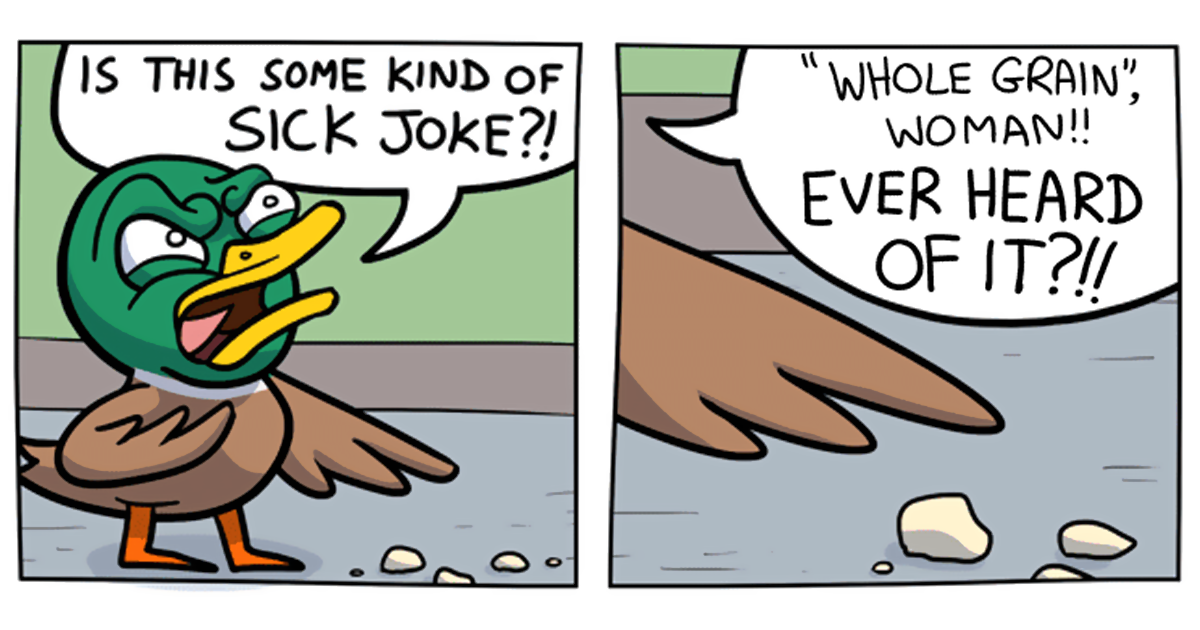
The well-known collection includes situations ranging from mice and cheese to ducks with surprisingly firm dietary opinions. The humor works because the animals behave logically from their own perspective, even when that perspective is completely unhelpful to everyone else.
In a later comic titled “Bookworm,” for example, a literal interpretation of the phrase becomes unexpectedly sympathetic. The joke begins with wordplay and ends by making the supposed nuisance feel like the most emotionally vulnerable character in the room.
Dark Humor Arrives Wearing a Friendly Face
Loading Artist occasionally enters darker territory, including disappointment, isolation, depression, fear, failure, and mortality. However, the visual style usually remains colorful and expressive. That contrast creates a distinctive tone: adorable characters discovering that existence has terms and conditions nobody bothered to read.
The darkness is rarely complicated merely for shock value. Instead, it often grows from ordinary emotional experiences. A lonely moment becomes surreal. A harmless wish develops an alarming consequence. A cheerful setup reveals that the universe has been preparing a technicality.
An early review of the webcomic noted that its jokes about depression, loneliness, and everyday life could make the series thoughtful as well as funny. That balance remains central to its appeal.
The Art Style Makes Every Punchline Stronger
Loading Artist uses clean shapes, bold expressions, readable compositions, and carefully controlled colors. The characters are simple enough to understand instantly but expressive enough to communicate several emotional disasters with one eyebrow.
The apparent simplicity should not be confused with carelessness. Timing in visual comedy depends heavily on composition. The artist must decide what the reader sees first, what remains hidden, where the eye moves, and precisely when the final information appears. One badly placed detail can reveal the joke too early. One confusing panel can make a clever punchline feel like assembling furniture without instructions.
Czaykowski’s production process has evolved over the years. He moved from Photoshop to Clip Studio Paint and has increasingly used an iPad Pro for drawing. His official FAQ also points readers toward tutorials, drawing streams, sketchbook material, and behind-the-scenes process content.
The comics also contain small rewards for attentive fans. High-definition editions have invited readers to search for hidden spiders, while membership content has included bonus panels, alternate endings, sketches, progress images, timelapses, and creator commentary.
How Loading Artist Builds a Relationship With Readers
A successful webcomic is more than a stack of images. It becomes an ongoing conversation between a creator and an audience. Loading Artist has developed that relationship through social platforms, livestreams, memberships, community spaces, anniversary projects, and direct glimpses into the creative process.
For the comic’s tenth anniversary, community members recreated the website, redrew comics, filled the project with inside jokes, and produced additional fan-made surprises. That kind of response suggests that readers were not simply consuming weekly jokes. They were building a culture around them.
The creator has also been open about burnout and the difficulty of sustaining creative work over many years. A related slice-of-life project, Plucked Up, grew from a burnout storyline and developed into a longer-form series. That openness makes the cheerful punchlines feel more meaningful because readers can see the human effort behind them.
How to Enjoy a 247-Comic Marathon
You can absolutely read all 247 comics in one sitting. You can also eat an entire family-size bag of chips in one sitting. The question is not whether it is technically possible. The question is whether you want to look at the empty container afterward and reconsider your decisions.
Read in Small Batches
Try reading 20 or 30 comics at a time. Short breaks help prevent punchlines from blending together and allow distinctive strips to remain memorable. This method also gives you something cheerful to revisit during multiple coffee breaks instead of consuming the entire supply before your first meeting.
Watch the Backgrounds
Do not focus exclusively on speech bubbles. Check signs, screens, costumes, objects, shadows, and characters standing quietly in the distance. Webcomic artists often hide important information wherever impatient readers are least likely to look.
Notice the Reversal
Before revealing the last panel, pause and predict the ending. You will occasionally guess correctly and feel like a comedy detective. More often, the comic will turn in a completely different direction and remind you that confidence is merely surprise warming up.
Share the Most Relatable Strips
Part of the pleasure of relatable comics is sending them to someone with no explanation. A perfectly chosen comic can mean, “This is us,” “This happened at work,” or “Please observe how accurately this fictional person represents my current psychological condition.”
A Reader’s Experience: Falling Into the Loading Artist Rabbit Hole
The typical experience begins innocently. A reader opens the collection intending to view three or four comics during a break. The first strip earns a smile. The second earns a quiet snort. The fifth produces the dangerous thought, “I’ll just keep scrolling until I find one that isn’t funny.” This is how the trap closes.
After several dozen comics, patterns start to emerge. The reader learns that optimism should not be trusted, harmless objects may be planning something, and any character who smiles confidently in the first panel should update their insurance information immediately.
The strongest jokes often create a tiny pause before the laugh. The final panel appears, but the brain needs half a second to rearrange the setup. Then the meaning arrives. Sometimes it is a pun. Sometimes a background detail changes everything. Sometimes the character has interpreted a familiar phrase with such spectacular literalness that language itself should apologize.
Relatable strips produce a different reaction. Instead of surprise, they create recognition. A character avoids work, imagines success, loses confidence, checks the internet, or tries to fall asleep while remembering something embarrassing from years ago. The reader does not merely understand the joke. The reader feels personally observed.
That recognition can be comforting. Many everyday worries feel private when they remain inside your own head. A comic transforms them into a shared experience. Suddenly procrastination is not evidence that you are the world’s least functional person. It is material. Social awkwardness is not a solitary defect. It is a four-panel international language.
The emotional range becomes more noticeable during a longer reading session. A ridiculous animal joke may be followed by a comic about loneliness. A cheerful fantasy may collapse into an observation about adulthood. A dark punchline may be followed by something unexpectedly gentle. The shifts prevent the archive from feeling like 247 copies of the same gag wearing different hats.
The experience is also visual. Earlier comics show the foundations of the style, while later work demonstrates stronger staging, more confident expressions, and increasingly polished color. Following a large archive lets the reader see not only a collection of jokes but also the gradual development of an artist.
Eventually, the reader notices the time. The short break has become a substantial historical period. The coffee is cold. Someone has sent a message asking whether the reader is joining the meeting. The reader closes the gallery, returns to responsible adulthood, and then immediately reopens it to find the comic that perfectly explains why the meeting should have been an email.
That is the real charm of a Loading Artist marathon. The comics are quick, but the best ones linger. A single expression or final-panel reversal may return to mind hours later. The collection does not eliminate a bad day, repair a deadline, or answer an overflowing inbox. It simply makes the chaos feel slightly less lonelyand considerably more ridiculous.
Why These Hilarious Webcomics Still Work
The internet changes quickly, but many Loading Artist comics remain effective because they are built on durable human experiences. People still procrastinate. Technology still betrays us. Jobs remain strange. Ambition continues to exceed available energy. Animals remain adorable agents of disorder.
The series also understands an important rule of comedy: specificity creates relatability. A joke does not need to describe every reader’s exact life. It only needs to capture one familiar emotional truth with enough precision that readers recognize themselves.
That is why a huge collection of funny Loading Artist comics can brighten an ordinary afternoon. The drawings are accessible, the punchlines are fast, and the emotions underneath them are surprisingly real. Whether the subject is creative burnout, cheese-seeking rodents, failed productivity, or a universe with an unnecessarily dark sense of humor, the comic finds a way to turn frustration into something shareable.
Conclusion
247 Hilarious Comics By Loading Artist That Will Make Your Day is more than an oversized gallery of quick jokes. It is a tour through the awkward, exhausting, hopeful, and absurd parts of modern life. Gregor Czaykowski’s expressive artwork and carefully timed twists make the comics easy to read, while recurring themes of creativity, adulthood, loneliness, technology, and ambition give them lasting personality.
You may arrive looking for a five-minute distraction. You may leave much later with several favorite comics, a new appreciation for visual timing, and the uncomfortable realization that a cartoon character understands your work habits better than your manager does.