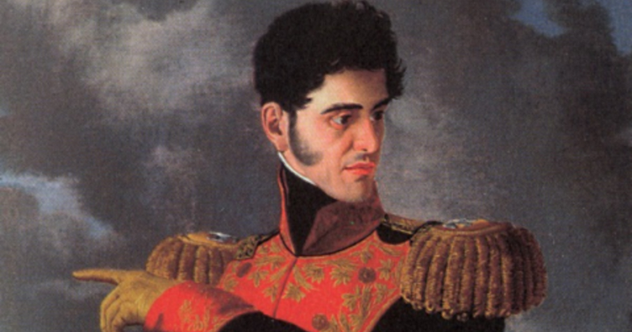

History loves a grand entrance, but it loves a comeback even more. A comeback is not just “Oops, I fell down, now I’m standing again.” It is the dramatic art of being dismissed, defeated, exiled, imprisoned, ignored, or underestimatedand then returning so powerfully that the footnotes suddenly need extra pages.
The most amazing comebacks by historical figures remind us that failure is not always a full stop. Sometimes it is a comma with better lighting. From political losses to exile, from physical hardship to public disgrace, these leaders, reformers, rulers, and thinkers turned setbacks into turning points. Their stories are not fairy tales; they are messy, human, complicated, and often uncomfortable. That is exactly why they matter.
Below are ten remarkable historical comeback stories that show resilience, strategy, courage, timing, and, in a few cases, a level of stubbornness that probably made their friends sigh deeply into their tea.
What Makes a Historical Comeback Truly Amazing?
A great comeback has three ingredients. First, the person must face a real collapse: defeat, imprisonment, exile, rejection, illness, poverty, or loss of power. Second, the return must change something beyond personal reputation. Third, the comeback must teach us something useful about persistence, leadership, and human nerve.
These figures were not perfect. Some made mistakes. Some carried contradictions large enough to require their own storage unit. But their comebacks shaped nations, movements, and the way people think about possibility.
1. Abraham Lincoln: From Political Defeat to the Presidency
The setback
Abraham Lincoln’s road to the White House was not a smooth marble staircase. It looked more like a country road after a thunderstorm. He lost important races, including the 1858 U.S. Senate contest against Stephen A. Douglas. To many observers, that loss could have been the end of his national ambitions.
The comeback
Instead, the Lincoln-Douglas debates gave Lincoln national visibility. His arguments against the expansion of slavery sharpened his public identity and helped introduce him to voters far beyond Illinois. Two years later, in 1860, Lincoln won the presidency.
Why it matters
Lincoln’s comeback shows that losing loudly can be better than winning quietly. The Senate race did not give him the office, but it gave him a platform. In modern terms, Lincoln lost the job interview but accidentally built the brand. His rise proves that a public defeat can become preparation for a larger role when the message is strong enough.
2. Winston Churchill: From Political “Has-Been” to Wartime Prime Minister
The setback
During the 1930s, Winston Churchill spent years outside the center of British government. His reputation had been damaged by earlier political controversies, and many considered him outdated, difficult, and inconvenient. In politics, being “inconvenient” is often a polite way of saying people would rather you sit in the corner and stop predicting disasters.
The comeback
Churchill used his so-called wilderness years to write, speak, study, and warn about the growing danger in Europe. When war broke out and Britain faced crisis in 1940, his long warnings looked less like exaggeration and more like foresight. On May 10, 1940, he became prime minister and led Britain through some of the darkest years of World War II.
Why it matters
Churchill’s comeback was built on endurance and conviction. He was not suddenly useful because he changed his personality. He became useful because the moment changed, and the qualities once seen as troublesome became necessary. Sometimes history keeps the “difficult person” on hold until the emergency line opens.
3. Nelson Mandela: From Prisoner to President
The setback
Nelson Mandela spent 27 years in prison for his role in the struggle against apartheid in South Africa. For many people, such a sentence would have been designed not only to punish but also to erase influence. Prison was meant to silence him.
The comeback
Mandela emerged from prison in 1990 not as a forgotten figure, but as a global symbol of perseverance and dignity. He helped negotiate South Africa’s transition away from apartheid and became the country’s first Black president in 1994 after its first fully democratic election.
Why it matters
Mandela’s comeback was not simply personal triumph. It was a national turning point. His return showed the power of disciplined leadership after long suffering. He chose negotiation over revenge and institution-building over spectacle. That is not the loudest type of comeback, but it may be one of the most difficult.
4. Franklin D. Roosevelt: From Paralysis to Four-Term President
The setback
Franklin D. Roosevelt was struck by a paralytic illness in 1921, widely identified at the time as polio. The illness changed his body and threatened his political future. In an era with far less public acceptance of disability, many assumed his national career was finished.
The comeback
Roosevelt worked intensely to rebuild his strength and public image. He remained active in politics, became governor of New York in 1928, and won the presidency in 1932. He went on to lead the United States through the Great Depression and most of World War II, becoming the only U.S. president elected four times.
Why it matters
FDR’s comeback was a masterclass in adaptation. He could not return to life exactly as it had been, so he built a new public style around confidence, communication, and empathy. His story reminds us that resilience is not always about returning unchanged. Sometimes the comeback is learning how to lead from a new reality.
5. Elizabeth I: From Imprisoned Princess to Defining Queen
The setback
Before Elizabeth I became one of England’s most famous monarchs, her future was dangerously uncertain. During the reign of her half-sister Mary I, Elizabeth was suspected of involvement in rebellion and imprisoned in the Tower of London. For a royal heir, the Tower was not exactly a charming waiting room with complimentary biscuits.
The comeback
Elizabeth survived the political danger and became queen in 1558. Her reign lasted more than four decades and is often associated with the Elizabethan Age, a period of English cultural growth, maritime expansion, and political consolidation.
Why it matters
Elizabeth’s comeback shows the power of caution, intelligence, and timing. She lived in a world where one wrong move could become a permanent problem. Her survival was not passive; it required self-control, political awareness, and the ability to speak carefully when silence might be safer than brilliance.
6. Ulysses S. Grant: From Struggling Clerk to Union General and President
The setback
Before the Civil War, Ulysses S. Grant was not widely seen as a rising star. He had left the army, struggled in business, and was working in his father’s leather goods store when war began in 1861. His early adult life did not scream, “Future national hero incoming.” It whispered, “This man needs a break.”
The comeback
The Civil War gave Grant the opportunity to use his military training and calm determination. He rose through the Union ranks, became commanding general, and helped bring the war to its conclusion. In 1868, he was elected president of the United States.
Why it matters
Grant’s comeback reveals that talent can look ordinary until it meets the right crisis. His steadiness under pressure became one of his greatest strengths. Not every comeback begins with applause. Some begin with a person doing the next necessary thing better than everyone expected.
7. Charles de Gaulle: From Exile to Architect of Modern France
The setback
In 1940, after France fell to Nazi Germany, Charles de Gaulle left for London and called on the French people to continue resisting. At first, he had limited support and uncertain authority. He was a general without a conventional army, a leader whose country had been defeated, and a voice broadcasting hope into a storm.
The comeback
De Gaulle became the symbol of Free France and returned to Paris after liberation. Later, during the Algerian crisis of 1958, he returned to power again and helped establish France’s Fifth Republic, becoming its first president.
Why it matters
De Gaulle’s comeback was about legitimacy. He understood that leadership is not only about holding office; it is about representing continuity when institutions collapse. His career shows that exile can become a platform if the message is clear and the moment demands it.
8. Napoleon Bonaparte: From Elba to the Hundred Days
The setback
Napoleon Bonaparte’s first fall was dramatic. After years of war and empire-building, he abdicated in 1814 and was exiled to the island of Elba. Most rulers, when placed on a small island after losing an empire, might take up gardening. Napoleon chose a different hobby: returning.
The comeback
In 1815, Napoleon escaped Elba, landed in France, and regained power in a period known as the Hundred Days. His return shocked Europe, but it ended with defeat at Waterloo and a second exile, this time to Saint Helena.
Why it matters
Napoleon’s comeback was astonishing, but it also warns us that not every comeback is wise or lasting. Speed and charisma can reopen doors, but they cannot always rebuild trust, resources, or strategic advantage. His return remains one of history’s most dramatic reversals, even if it ended with a hard lesson in limits.
9. Deng Xiaoping: From Political Purge to Reform Leader
The setback
Deng Xiaoping’s political life in China included repeated purges, especially during the Cultural Revolution. He was removed from power more than once and could easily have vanished into the long list of officials crushed by political storms.
The comeback
After Mao Zedong’s death and the fall of the Gang of Four, Deng returned to influence. By the late 1970s, he had become China’s paramount leader, guiding major economic reforms and opening policies that reshaped China’s future.
Why it matters
Deng’s comeback was built on patience, networks, and practical credibility. He did not need the flashiest title to become powerful. His story shows that influence sometimes returns through competence rather than ceremony. In history, the person holding the largest nameplate is not always the one steering the ship.
10. Frederick Douglass: From Enslavement to Statesman and Global Voice
The setback
Frederick Douglass was born into slavery in Maryland, a system designed to deny education, freedom, legal rights, and public voice. His early life placed enormous barriers in front of him before he even had a chance to choose a path.
The comeback
Douglass escaped in 1838 and became one of the most influential abolitionists, writers, speakers, and advocates for equal rights in American history. His autobiographies, speeches, newspaper work, and public service made him a national and international figure.
Why it matters
Douglass’s comeback was not a return to former status; it was the creation of a status that had been denied to him. He turned literacy, moral clarity, and public speech into tools of liberation. His life proves that a comeback can be more than recovery. It can be a direct challenge to the system that tried to define a person’s limits.
Common Patterns Behind These Historical Comebacks
They turned setbacks into preparation
Lincoln used a Senate loss to gain national attention. Churchill used political isolation to sharpen his warnings. Roosevelt used recovery to develop empathy and discipline. These figures did not waste the wilderness years. They studied, practiced, organized, wrote, waited, and improved.
They understood timing
A comeback is not only about effort. Timing matters. Churchill’s warnings became powerful when war made them urgent. De Gaulle’s authority grew when France needed a symbol of continuity. Deng’s practical approach gained force after a period of political exhaustion. History rewards readiness, but it also rewards those who know when to step forward.
They had a message bigger than themselves
The most durable comebacks are not built on ego alone. Mandela represented democratic transition. Douglass represented abolition and equal rights. Lincoln represented the preservation of the Union and opposition to slavery’s expansion. Their personal returns mattered because they connected to larger public struggles.
Experiences and Lessons Related to Historical Comebacks
When we look at these amazing comebacks by historical figures, it is tempting to treat them like motivational posters with better costumes. But the real value is not in saying, “Never give up,” as if that solves everything. The better lesson is more practical: setbacks require interpretation. What happened? What can be learned? What must change? Who can help? What opportunity might appear later?
One experience many people share, whether in school, work, business, sports, or creative life, is the sting of being underestimated. Lincoln knew what it meant to lose publicly. Grant knew what it meant to look unsuccessful. Churchill knew what it meant to be dismissed as yesterday’s man. That feeling can be heavy, but it can also create freedom. When expectations are low, improvement becomes a quiet advantage. You do not need to convince the entire world immediately. You need to keep building until the evidence becomes too large to ignore.
Another lesson is that recovery often looks boring from the outside. Roosevelt’s comeback was not one heroic day. It involved years of therapy, planning, image management, and political relationship-building. Mandela’s influence after prison was rooted in decades of discipline. Douglass’s power came from literacy, writing, speaking, organizing, and moral consistency. The comeback highlight reel is exciting, but the training footage is where the story is made.
These historical comebacks also teach the importance of identity. A setback can tempt people to accept a smaller version of themselves. Elizabeth I could have been remembered only as a threatened princess. De Gaulle could have remained a lonely voice in exile. Douglass could have been limited by a society determined to deny his humanity. Instead, each built an identity stronger than the label placed on them.
There is also a warning here. Napoleon’s Hundred Days prove that a comeback powered by charisma alone can be spectacular and short. Returning is not the same as rebuilding. A sustainable comeback needs judgment, allies, resources, and a future that others can believe in. Otherwise, the comeback may be dramatic, but it becomes a fireworks show: bright, loud, and over before anyone finds their snacks.
For everyday life, the best takeaway is this: do not confuse a bad chapter with the whole book. A rejection, failed project, embarrassing moment, or difficult season can become useful material. It can reveal weaknesses, clarify values, and expose which people truly belong in your corner. The historical figures above did not all win in the same way, and they certainly did not live flawless lives. But they show that comeback stories are rarely magic. They are made from patience, preparation, courage, and the stubborn decision to keep answering history’s phone callseven when the ringtone sounds suspiciously like disaster.
Conclusion: Why Historical Comebacks Still Inspire Us
The greatest historical comeback stories endure because they feel deeply human. We recognize the fear of being finished, the humiliation of failure, and the long silence before another chance appears. Abraham Lincoln, Winston Churchill, Nelson Mandela, Franklin D. Roosevelt, Elizabeth I, Ulysses S. Grant, Charles de Gaulle, Napoleon Bonaparte, Deng Xiaoping, and Frederick Douglass all faced moments when defeat seemed final.
Yet each, in a different way, returned. Some returned to lead nations. Some returned to reshape ideas. Some returned wisely; others returned dramatically and paid the price. Together, they prove that history is not only written by those who rise early. It is also written by those who rise again.
Note: This article is based on verified historical records and reputable reference sources. It is written in original language for web publishing, with no raw source links or unnecessary citation placeholders included in the article body.