
Some rooms look perfectly fine in photos but feel a little flat in real life. They have the sofa, the coffee table, the lamp, the rug, and the “look at me, I’m decorated” energy. And yet, the space still lands with all the personality of plain toast. That is usually a texture problem.
Texture in interior design is the secret ingredient that makes a room feel layered, warm, inviting, and expensive without forcing you to buy a truckload of trendy stuff. It gives your eye something to explore and your home something even better: character. Whether you love a cozy farmhouse vibe, a clean modern look, a collected vintage style, or a calm neutral palette, adding texture to every room can turn “nice enough” into “whoa, this feels amazing.”
In other words, texture is the design equivalent of good lighting at dinner. Nobody always notices it right away, but everybody benefits from it.
What Texture Means in Interior Design
When designers talk about texture in a room, they are talking about both how something feels and how it looks like it would feel. A chunky knit throw has tactile texture because you can literally touch it. A limewashed wall, fluted wood panel, or woven basket has visual texture because your eyes register depth, variation, and movement even before your hands get involved.
The best interiors use both. A room with only smooth surfaces, sleek metals, and flat paint can feel cold or unfinished. A room with too many heavy textures can feel chaotic, dusty, or like it is auditioning for a rustic cabin reboot. The goal is balance. Think soft against structured, matte against polished, organic against refined.
Why Texture Instantly Elevates a Room
1. It Adds Depth Without Creating Clutter
If you want your home to feel more interesting but do not want it packed with extra décor, texture is your best friend. A boucle chair, a ribbed ceramic lamp, a nubby linen pillow, or a jute rug can bring life to a room without adding visual noise. That is why how to add texture to a room is one of the smartest decorating questions you can ask.
Texture creates dimension. It keeps a monochrome space from looking one-note and helps a colorful room feel intentional rather than random. In a neutral room especially, texture does the heavy lifting that bright color might do elsewhere.
2. It Makes a Home Feel Warm and Lived-In
Have you ever walked into a room and instantly wanted to sit down, kick your shoes off, and stay awhile? That is often the work of layered texture. Soft fabrics, natural woods, woven materials, plush rugs, and matte finishes make spaces feel human. They remove that showroom stiffness and replace it with comfort.
This is especially useful in homes with open floor plans, lots of hard surfaces, or minimalist furniture. Texture can warm up a room faster than you can say “maybe I should buy another throw blanket,” which, to be fair, you probably will.
3. It Helps Define Your Style
Texture is often what separates one design style from another. Coastal rooms lean on breezy linens, light woods, and woven fibers. Modern spaces often mix smooth stone, soft upholstery, and warm wood grain. Traditional homes may feature velvet, trim, wallpaper, and aged brass. Boho rooms play with fringe, cane, rattan, clay, and layered textiles.
So if your room feels generic, not personal, texture may be the missing link. It gives style a physical presence.
4. It Creates Better Balance
Every room needs contrast. If everything is shiny, the room feels slippery. If everything is soft, it feels mushy. If everything is rough, it feels like you are camping indoors against your will. Great design layers opposing materials so the room feels complete.
A classic formula is to combine:
soft + hard, matte + reflective, smooth + rough, tailored + organic.
That kind of mix makes a room feel designed rather than accidental.
How to Add Texture to Every Room
Living Room: Layer Like You Mean It
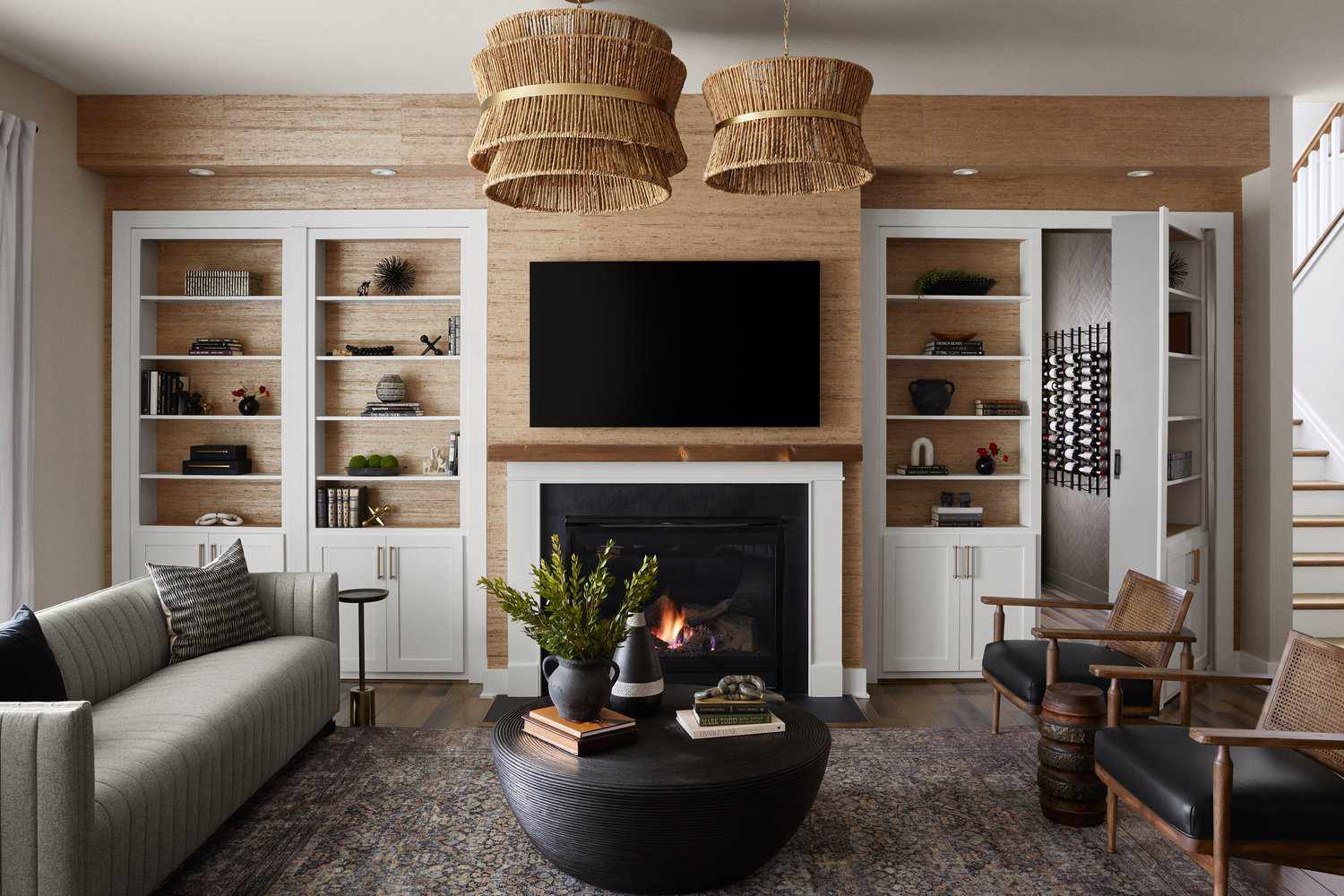
The living room is where texture usually earns its paycheck. Start with the big surfaces: a rug with visible weave, a sofa in linen, velvet, boucle, or performance fabric with some character, and curtains that do more than exist. Then build upward with pillows in mixed fabrics, a chunky throw, ceramic or wood accessories, baskets, books, and maybe a coffee table that brings in a contrasting finish.
If your walls are plain, try textured wallpaper, a plaster-style finish, beadboard, slatted wood, or oversized art with dimensional framing. Even plants count. A leafy tree in the corner can soften hard edges and add natural texture in one move.
Example: A beige sofa can look bland on a flat synthetic rug. Put that same sofa on a handwoven wool or jute rug, add a leather accent chair, a stoneware lamp, linen drapes, and a knit throw, and suddenly the room has depth, warmth, and that magazine-home confidence.
Bedroom: Build a Softer Landing
The bedroom should feel layered, not sterile. This is where textured home décor really shines because comfort matters just as much as style. Start with bedding: combine crisp sheets, a quilt or coverlet, a duvet, and pillows in different materials. A linen duvet with velvet shams or a cotton quilt with a chunky wool throw creates contrast without drama.
Add an upholstered headboard, a bench with a tactile fabric, a rug underfoot, and drapery that has weight and softness. Bedside tables can bring in wood grain or stone, while lamps in ceramic or pleated shades add even more visual interest.
If your bedroom is all one color, that is not a problem. In fact, it is an opportunity. A tonal room becomes far more beautiful when the textures vary.
Kitchen: Yes, Kitchens Need Texture Too
Kitchens often lean hard into function, which can leave them looking a little clinical. Texture keeps them from feeling like a place where only onions are allowed to cry. Natural wood stools, a runner rug, handmade pottery, fluted glass pendants, matte tile, open shelving with ceramics, and mixed metal finishes can make a kitchen feel more inviting.
You can also use texture through backsplash tile, cabinet hardware, woven shades, and countertop styling. A kitchen does not need clutter; it needs contrast. Smooth counters paired with wood cutting boards, ribbed vases, and textured linens go a long way.
Bathroom: Small Room, Big Opportunity
Bathrooms are often overlooked, but they benefit enormously from texture because they usually contain so many hard, reflective surfaces. Bring in softness with plush towels, a woven hamper, a fabric shade, a bath mat with real pile, and maybe a small stool or tray in warm wood.
For more permanent texture, consider zellige-style tile, beadboard, limewash paint, stone accessories, or wallpaper in a grasscloth-inspired pattern. These touches help a bathroom feel layered and spa-like instead of cold and echoey.
Dining Room: Make It Feel Collected
A dining room can feel formal fast, so texture helps relax the space. Upholstered dining chairs, a natural fiber rug, linen napkins, ceramic serving pieces, a wood table with visible grain, and a statement pendant in rattan, plaster, or textured metal all help the room feel richer.
Even if your table is sleek, the surrounding elements can soften it. That mix is often what makes a dining room feel memorable.
Entryway and Hallways: Set the Tone Early
Your entryway is the handshake of your home. Texture here sends a message immediately. A runner, a woven bench, wall hooks in aged brass, a mirror with a wood or cane frame, and a basket for shoes create a layered first impression that feels thoughtful instead of rushed.
Hallways also benefit from textured walls, runners, and art with dimensional frames. These areas are perfect for subtle texture because they do not need much furniture to make an impact.
The Best Ways to Layer Texture Without Overdoing It
Use a Mix of Natural Materials
Wood, linen, wool, cotton, rattan, jute, clay, leather, marble, and stone all bring a grounded, timeless quality to a room. They age well, and they keep a space from feeling too synthetic.
Vary the Scale
Good texture is not all tiny details. Pair chunky textures with smoother ones. A nubby throw looks better next to crisp bedding. A rough wood table looks better with sleek glassware. Scale creates rhythm.
Let One Texture Be the Star
Not every piece has to shout. Choose one standout moment in each room, such as dramatic curtains, a boucle chair, a slatted wall, or a heavily veined stone surface. Then let the rest support it.
Remember That Texture Can Be Subtle
Texture does not have to mean tassels, fringe, and enough woven baskets to start a side business. It can be a matte wall paint, the grain of oak cabinetry, fluted glass, or a tonal wallpaper that reads almost like a neutral from afar.
Common Texture Mistakes to Avoid
Using all the same finish: If every surface is smooth and flat, the room will likely feel cold.
Adding texture only through throw pillows: Pillows help, but they should not carry the entire design strategy on their tiny stuffed backs.
Ignoring walls and floors: These large surfaces make the biggest difference.
Overcrowding the space: Texture works best when there is enough breathing room to notice it.
Choosing texture that fights the room’s purpose: A busy, high-contrast mix may energize a living room but feel wrong in a calming bedroom.
Why Texture Matters Even More in Neutral Rooms
One of the biggest myths in decorating is that neutral rooms are boring. They are only boring when everything is flat. A neutral palette comes alive when it includes layers of cream, tan, taupe, gray, white, greige, and brown expressed through different materials and finishes.
That is the real power of adding texture to every room. It allows a restrained color palette to feel warm, rich, and deeply intentional. Without texture, a neutral room risks looking unfinished. With texture, it looks sophisticated.
The Experience of Texture in Real Life
Texture is not just a visual trick. It changes how a room feels when you live in it day after day. A textured home is usually easier to settle into. It feels more forgiving, more dimensional, and more emotionally warm. You notice it when you sink into a chair that has a soft weave instead of a slick finish. You notice it when bare feet hit a rug with real softness instead of a thin, lifeless surface. You notice it when evening light lands on a limewashed wall, a pleated lampshade, or the grain of a wood table and suddenly the room has shadows, movement, and soul.
Think about the homes that stay with you. They are rarely memorable because everything matched perfectly. They are memorable because they felt layered. The sofa had a fabric you wanted to touch. The curtains softened the light. The dishes looked handmade. The walls did not feel blank. The room invited you in instead of merely existing around you.
Texture also changes your routines in subtle ways. A bedroom with layered bedding and soft drapery feels more restful at night. A living room with a substantial rug, woven accents, and cozy upholstery makes it easier to linger over coffee, books, or late-night conversations. A bathroom with plush towels, stone accessories, and warm wood feels less like a pit stop and more like a reset button. Even a kitchen becomes more welcoming when it mixes smooth counters with natural wood, ceramic pieces, and linens that make everyday tasks feel less transactional.
There is also a psychological comfort in texture. Rooms that include tactile materials tend to feel less harsh and less sterile. They soften the edges of modern life. In practical terms, that can mean a calmer mood, less visual fatigue, and a home that feels more personal. You do not have to touch every surface to register that softness. Your eyes pick it up first. They read woven, brushed, aged, matte, ribbed, and nubby surfaces as warmth and variation. That is part of why highly layered spaces often feel more welcoming than rooms filled only with glossy, hard, or ultra-uniform materials.
And perhaps the best part is that texture has a way of making a room feel finished without making it feel fussy. It can be collected over time. A vintage wood stool here, a linen pillow there, a hand-thrown vase, a textured lampshade, a wool rug, a cane cabinet, a slubby throw blanket. None of these pieces has to be dramatic on its own. Together, they build a room that feels lived-in, grounded, and unmistakably yours.
That is why texture is one of the smartest upgrades in home décor. It does not demand a total renovation. It does not require a giant budget. It does not care whether your style is modern, classic, rustic, coastal, minimalist, or somewhere between “clean lines” and “I accidentally bought six baskets.” Texture simply asks for variety, balance, and a little intention. Give it that, and almost any room will feel better, look better, and work harder for the people living in it.
Final Thoughts
If you want to elevate your home without overcomplicating it, start with texture. It is one of the most effective interior design tools because it brings depth, warmth, contrast, and personality to every room. From soft textiles and natural materials to textured walls and layered finishes, the right combination turns flat spaces into memorable ones.
So the next time a room feels off, do not assume you need a full makeover. You may not need more furniture, more color, or more stuff. You may just need more texture. And honestly, that is great news for both your home and your credit card.