
Note: This article is for general education and is not a substitute for personal medical advice. New joint swelling, persistent stiffness, sudden eye pain, vision changes, or severe symptoms should be discussed with a qualified healthcare professional.
Psoriatic arthritis can be confusing because it refuses to stay in one lane. It may begin with a stubborn patch of psoriasis, a swollen toe, heel pain that feels like your shoe has declared war on you, or morning stiffness that makes getting out of bed feel like rebooting an ancient computer.
But psoriatic arthritis, often called PsA, is not simply “arthritis plus a rash.” It is an inflammatory condition linked to an overactive immune response. It can affect joints, tendons, ligaments, skin, nails, the spine, energy levels, mood, and sometimes the eyes. Symptoms can come and go, change locations, and vary widely from one person to the next.
The encouraging news is that modern treatment can help control inflammation, reduce pain, protect joints, and support a more active life. The earlier PsA is recognized and treated, the better the chance of preventing long-term joint damage.
What Is Psoriatic Arthritis?
Psoriatic arthritis is a chronic inflammatory disease that occurs in some people with psoriasis. Psoriasis is best known for causing scaly, itchy, or sore skin patches, but it is also an immune-mediated inflammatory condition. In PsA, inflammation can move beyond the skin and affect joints and the places where tendons and ligaments attach to bone.
Many people develop psoriasis before joint symptoms appear, sometimes by years. However, joint pain and stiffness can occasionally arrive before visible skin changes. That is one reason PsA can be difficult to recognize. It can look like osteoarthritis, rheumatoid arthritis, tendonitis, gout, a sports injury, or just “getting older,” which is a phrase the body sometimes uses when it wants to avoid answering questions.
Psoriatic arthritis is not contagious. It is also not caused by laziness, poor hygiene, or a failure to drink enough green juice. Genetics, immune activity, and environmental factors all appear to play a role.
How Psoriatic Arthritis Affects Your Joints
The most obvious way PsA affects the body is through joint inflammation. Inflamed joints may become painful, swollen, warm, stiff, or tender. Symptoms may affect only a few joints or many. Unlike some forms of arthritis that usually appear symmetrically, PsA can affect one side of the body more than the other.
Pain, Swelling, and Stiffness
Joint stiffness is often worse after resting, especially in the morning or after sitting still for a long time. A person may wake up feeling like their hands, knees, or ankles were replaced overnight with rusty hinges. Movement may gradually loosen things up, although that does not mean the inflammation is harmless.
Commonly affected areas include the fingers, toes, wrists, knees, ankles, feet, hips, and shoulders. The small joints near the tips of the fingers and toes can be especially involved, which helps distinguish PsA from some other forms of inflammatory arthritis.
Joint Damage and Changes in Function
Over time, untreated inflammation can damage cartilage, bone, tendons, and ligaments around a joint. This may lead to reduced range of motion, weakness, trouble gripping objects, difficulty walking, or changes in joint shape. Not everyone develops severe damage, but PsA is not a condition to “wait and see” for years while hoping it gets bored and leaves.
In rare severe cases, PsA can cause major destruction in the small joints of the hands or feet. This can make everyday tasks such as opening jars, typing, buttoning clothes, carrying groceries, or turning a doorknob far more difficult.
Why Fingers and Toes Can Look Like Little Sausages
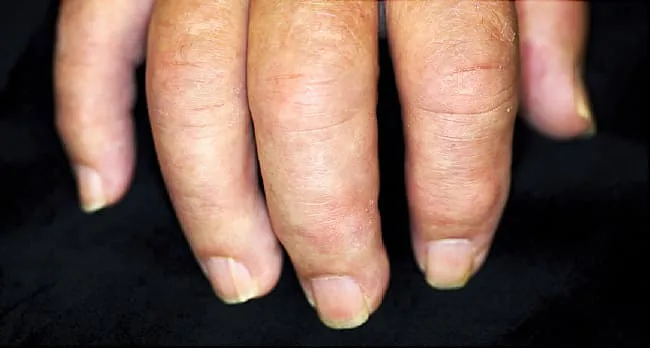
One hallmark symptom of psoriatic arthritis is dactylitis, often called a “sausage digit.” This happens when an entire finger or toe becomes swollen rather than just one individual joint.
Dactylitis can make a toe feel tender, stiff, and difficult to fit into a shoe. A swollen finger may make rings feel suspiciously optimistic. The swelling occurs because inflammation can affect joints, tendons, and surrounding tissues throughout the digit.
Another common feature is enthesitis. This is inflammation where tendons or ligaments attach to bone. Frequent locations include the heel, Achilles tendon, bottom of the foot, elbows, knees, and hips. Heel pain in PsA can be more than ordinary soreness after a long walk; it may be persistent, tender, and worse with certain movements.
What Psoriatic Arthritis Can Do to Your Spine and Back
PsA can affect the spine, neck, and sacroiliac joints, which are located where the spine meets the pelvis. This is sometimes called axial psoriatic arthritis.
Inflammatory back pain often behaves differently from a strained muscle. It may be worse after rest, improve with movement, create morning stiffness, or wake someone during the second half of the night. The lower back, buttocks, hips, and neck may all be involved.
When inflammation affects the spine over time, flexibility can decrease. Turning the head, bending down, standing upright for long periods, or getting comfortable in bed can become challenging. Physical therapy, medication, guided exercise, and regular movement can all play important roles in maintaining mobility.
How Psoriatic Arthritis Affects Skin and Nails
PsA and psoriasis often travel together, although their flares do not always follow the same schedule. Someone may have painful joints while their skin looks relatively calm, or their skin symptoms may flare while their joints are behaving better. The body, unfortunately, does not provide a shared calendar invitation.
Skin Changes
Psoriasis may cause raised, scaly plaques that itch, burn, crack, or feel sore. These patches can appear on the scalp, elbows, knees, lower back, hands, feet, or other areas. Skin color can influence how plaques look, so psoriasis may appear red, purple, brown, gray, or darker than the surrounding skin.
Nail Changes
Nail symptoms are especially common in psoriatic disease. Fingernails or toenails may develop tiny pits, ridges, discoloration, thickening, crumbling, or separation from the nail bed. These changes can be mistaken for fungal infections, so a medical evaluation is useful before assuming the answer is simply “buy stronger nail polish.”
Nail psoriasis can matter for more than appearance. Nail changes are often associated with nearby finger or toe joint involvement, since the nail structures sit close to the joints at the ends of the digits.
Fatigue: The Symptom That Makes Everything Feel Harder
Fatigue is one of the most underestimated effects of psoriatic arthritis. This is not ordinary sleepiness after staying up too late watching “one more episode.” PsA fatigue can feel like a heavy, all-over lack of energy that does not fully improve with rest.
Several factors may contribute: ongoing inflammation, chronic pain, disrupted sleep, low activity during flares, medication effects, stress, anxiety, or depression. Some people also report “brain fog,” meaning difficulty concentrating, remembering details, or staying mentally sharp when pain and poor sleep pile up.
Fatigue can affect work, parenting, exercise, social plans, and confidence. It may be invisible to others, which can make it especially frustrating. A person can look fine from the outside while their body feels like it has been running a marathon in wet socks.
Psoriatic Arthritis and Your Eyes
Psoriatic disease can sometimes affect the eyes. Possible problems include dry eye, irritation, redness, conjunctivitis, inflammation of the white part of the eye, and uveitis.
Uveitis is inflammation inside the eye and needs prompt medical attention. Symptoms can include eye pain, redness, light sensitivity, blurred vision, or sudden visual changes. These signs should not be treated as a “wait until Monday” situation, especially if vision is affected.
Regular communication between a rheumatologist, dermatologist, primary care clinician, and eye specialist can be helpful when PsA involves multiple body systems.
Other Health Issues Linked to Psoriatic Disease
Psoriatic arthritis does not mean a person will automatically develop other health conditions. However, chronic inflammation and shared risk factors mean that people with PsA may have a higher likelihood of certain related health concerns, including high blood pressure, metabolic syndrome, diabetes, cardiovascular disease, anxiety, depression, and inflammatory bowel disease.
This is why PsA care should go beyond asking, “How much do your knees hurt today?” A thoughtful care plan may also include regular blood pressure checks, cholesterol and blood sugar monitoring, mental health support, sleep assessment, weight management when appropriate, smoking cessation support, and attention to digestive symptoms.
Think of PsA management as taking care of an entire house, not just repainting one squeaky door. The joints matter enormously, but so do the systems supporting the rest of your health.
How Psoriatic Arthritis Can Change Everyday Life
PsA can influence daily life in practical, annoying, and sometimes surprisingly emotional ways. A mild flare may make it harder to walk long distances, type comfortably, hold a coffee mug, exercise, sleep, or stand during a work shift. A stronger flare can make routine tasks feel like a complicated obstacle course designed by a very petty game show producer.
- Buttoning shirts or fastening jewelry may become difficult during hand flares.
- Heel pain can make the first steps in the morning particularly uncomfortable.
- Back stiffness may make long car rides or desk work harder to tolerate.
- Fatigue can reduce social energy, even when pain is manageable.
- Visible skin or nail changes can affect self-esteem and body image.
- Unpredictable flares can make planning feel stressful.
These effects are real, but they do not define a person’s identity or future. Many people with PsA continue working, traveling, exercising, parenting, creating, and doing the things they value most. The goal is not perfection. The goal is better symptom control, preserved function, and fewer days ruled by inflammation.
How Treatment Helps Protect the Body
There is currently no cure for psoriatic arthritis, but treatment can make a major difference. The best treatment plan depends on which parts of the body are affected, how active the inflammation is, whether skin symptoms are significant, and what other health conditions a person has.
Medication options may include anti-inflammatory pain relievers, conventional disease-modifying antirheumatic drugs, biologic medicines that target specific inflammatory pathways, and oral targeted therapies. A rheumatologist may coordinate care with a dermatologist when skin and nail symptoms are active.
Medication is only one part of a successful plan. Physical therapy can help protect mobility and build strength without overloading painful joints. Low-impact activities such as walking, swimming, cycling, stretching, or gentle strength training may improve function when tailored to the individual. Heat may help stiffness, while cold packs can sometimes ease swollen or painful joints.
No single diet cures PsA. Still, eating in a way that supports heart health, maintaining a weight that reduces stress on joints, getting consistent sleep, managing stress, limiting alcohol when appropriate, and avoiding smoking can all support overall health.
When to Seek Medical Care Quickly
Contact a healthcare professional promptly if you develop persistent joint swelling, morning stiffness that lasts more than a few weeks, a suddenly swollen finger or toe, ongoing heel pain, unexplained back stiffness, or new nail changes along with joint symptoms.
Seek urgent eye care for a painful red eye, light sensitivity, blurred vision, loss of vision, or sudden visual changes. Early treatment matters because inflammation can sometimes cause lasting problems before it becomes dramatically painful.
What Living With Psoriatic Arthritis Can Feel Like: Common Experiences
Living with psoriatic arthritis often means learning that symptoms are not always predictable. A person may feel fairly comfortable on Monday, wake up Tuesday with a swollen ankle, and spend Wednesday wondering why their hands suddenly object to opening a cereal box. This unpredictability can be one of the hardest parts of the condition.
Many people describe mornings as the toughest part of the day. The body may feel stiff, heavy, or slow to cooperate. Getting dressed can take longer. Walking downstairs may require a few cautious steps. Holding a toothbrush or twisting a shower knob can feel oddly difficult. By the time someone arrives at work or begins family responsibilities, they may already feel as though they have completed a small endurance event.
Flares can create a frustrating gap between how someone looks and how they feel. A person may not have a cast, a visible injury, or an obvious limp, yet still experience significant pain and fatigue. Friends or coworkers may see someone cancel plans and assume they are being antisocial, when the real issue is that the body has spent the day negotiating with inflammation.
Some people become experts at adapting. They use voice-to-text when hand pain makes typing difficult. They choose shoes with better cushioning when heel pain flares. They keep heating pads, cold packs, supportive pillows, or ergonomic tools nearby. They learn which activities improve stiffness and which ones turn a mildly irritated joint into a full-blown protest.
There can also be emotional ups and downs. Skin plaques, nail changes, weight changes, fatigue, and limitations in movement may affect confidence. It can feel discouraging to need help with something that used to be easy. At the same time, many people develop a sharper sense of self-advocacy. They learn to describe symptoms clearly, ask better questions in medical appointments, and set boundaries around rest and recovery.
Support matters. A partner who understands why a person needs to leave an event early, a manager who allows ergonomic adjustments, a friend who chooses a shorter walking route without making it awkward, or a healthcare team that listens carefully can make a meaningful difference.
Perhaps the most important lived experience is this: PsA is not identical every day. A flare is not failure. Rest is not laziness. Using treatment, asking for help, adjusting routines, and protecting energy are practical forms of strength. Psoriatic arthritis may change how the body moves through the world, but it does not erase the person living in that body.
Conclusion
Psoriatic arthritis can affect far more than joints. It may involve fingers, toes, tendons, heels, the spine, skin, nails, eyes, energy levels, sleep, mood, and everyday function. The condition can be serious, especially when inflammation is left untreated, but it is also manageable.
Recognizing symptoms early, working with a rheumatology and dermatology care team, protecting mobility, paying attention to eye symptoms, and treating inflammation consistently can help preserve quality of life. PsA may be persistent, but with the right care plan, it does not get to write every chapter of the story.