
So, you have a can of beans, soup, tuna, or peaches staring at you like it knows a secret. The secret? Your can opener has disappeared. Maybe it broke, maybe it is hiding in the junk drawer with seventeen twist ties, or maybe you packed every camping essential except the one tool that stands between you and dinner. Whatever happened, the question is simple: can you open a can without a can opener?
Yes, you canbut it should be done carefully. A can lid is not just “thin metal.” Once cut or torn, it becomes a tiny silver saw with a grudge. That is why this guide focuses on safer, practical methods first: a metal spoon, a rough surface, a pull-tab rescue, and pliers. You will also see a safety note about knives, because while many people search for the “knife method,” it is usually the riskiest option and should not be your first choice.
Before we get into the techniques, remember the golden rule of emergency eating: the food is not worth an injury. If the can is bulging, leaking, badly dented, rusted through, spurts liquid when opened, smells strange, or looks abnormal, throw it away. No bowl of chili deserves a medical subplot.
Before You Open Any Can: Safety Comes First
Whether you are at home, camping, staying in a rental cabin, or dealing with a power outage, start with a quick safety check. Wash your hands if possible. Wipe or rinse the top of the can before opening it, because dust and bacteria on the lid can fall into the food. Set the can on a stable surface, keep it away from your face, and protect your hands with a towel or gloves if you have them.
Canned food is generally convenient and shelf-stable, but the container matters. Do not use a can that is swollen, leaking, cracked, badly dented near the seam, deeply rusted, or spraying liquid. Those warning signs can point to contamination or spoilage. Also, once you open the can, avoid touching the jagged lid with your fingers. Lift food out with a clean spoon or pour it into another container.
Method 1: Open a Can With a Metal Spoon
The metal spoon method is the most famous “I refuse to be defeated by canned corn” technique. It works because the top of a can is weakest near the inner rim, where a normal can opener usually cuts. A sturdy metal spoon can create enough friction to wear through the lid.
Best for:
Soups, beans, vegetables, tuna, fruit, and other standard-size cans when you have time, patience, and a strong spoon.
How to do it safely:
- Place the can on a flat, stable surface.
- Hold a sturdy metal spoon low on the handle, close to the bowl of the spoon, so it will not bend easily.
- Place the rounded tip of the spoon just inside the rim of the lid.
- Rub the spoon back and forth with firm pressure in one small spot.
- Keep rubbing until the metal thins and a small opening appears.
- Once the lid is punctured, use the spoon to widen the opening slowly around part of the rim.
- Open only enough of the lid to pour or scoop the food out.
This method is not glamorous. You will not look like a wilderness chef in a commercial. You may look like someone arguing with a can of black beansand losing for the first three minutes. But it is one of the safer ways to open a can without a can opener because the spoon has no blade.
Tips for better results:
Use a thick stainless-steel spoon, not a plastic spoon or flimsy decorative spoon. Keep your hand away from the edge once the lid starts to tear. If the spoon slips, stop and reset your grip. If the lid becomes too jagged, do not pry it with your fingers. Let the spoon do the work.
Method 2: Use a Rough Surface Like Concrete or a Flat Rock
This method sounds like something invented by a hungry camper, because it probably was. A can is sealed at the top rim. If you rub that raised rim against a rough, clean surface, you can wear down the seam until the lid loosens.
This technique is best used outdoors, during camping, or in emergency situations when you do not have utensils strong enough to puncture the lid. It can be messy, so do not do it over your grandmother’s white tablecloth unless you are ready to be removed from the will.
Best for:
Standard cans with liquid inside, such as soup, beans, tomatoes, or vegetables. The liquid helps show when the seal has started to break.
How to do it safely:
- Find a clean, flat, rough surface such as concrete or a broad flat rock.
- Turn the can upside down so the top rim touches the rough surface.
- Rub the can in a steady circular or back-and-forth motion.
- Check frequently. When the rim looks worn and liquid begins to appear, stop.
- Wipe the top carefully to remove grit or metal dust.
- Squeeze the sides gently or use a spoon to lift the loosened lid away.
- Pour the food into a clean bowl if possible.
Important warning:
Do not grind the can so aggressively that dirt or metal shavings fall into the food. This is a survival-style method, not the fancy way to serve peaches at brunch. If the food gets gritty, contaminated, or suspicious, skip it.
Method 3: Rescue a Broken Pull-Tab Can
Pull-tab cans are wonderful until the tab snaps off. Then they become tiny metal riddles. The good news is that a broken pull tab does not always mean the can is impossible to open. If the tab broke before the lid opened, you may still be able to lift the scored section using a spoon handle.
Best for:
Pull-tab soup cans, canned fish, pet food cans, beans, and similar cans with a pre-scored lid.
How to do it safely:
- Place the can on a stable surface.
- Look for the scored outline where the lid is designed to open.
- Slide the end of a sturdy spoon handle under the remaining tab area if there is enough space.
- Lift slowly and evenly, keeping your fingers away from the metal edge.
- If the scored lid starts to open, continue lifting with the spoon handle rather than your bare hands.
- Stop if the lid tears into sharp strips or becomes unstable.
This method is less about force and more about leverage. The spoon handle acts like a safer extension of your hand. If the pull-tab section refuses to move, do not keep yanking. A stubborn can plus sudden force equals tomato soup on the ceiling and possibly a cut hand. Nobody needs that kind of dinner theater.
Method 4: Use Pliers to Work the Rim Open
If you have pliers but no can opener, you may be able to work around the lid by gripping the rim and bending small sections upward. This is not as clean as a real can opener, but it can be useful in a garage, campsite, boat, emergency kit, or rental house with mysteriously empty kitchen drawers.
Best for:
Cans you need to open carefully when you have a sturdy pair of clean pliers and hand protection.
How to do it safely:
- Clean the top of the can and the pliers if possible.
- Set the can on a flat, stable surface.
- Grip a small section of the outer rim with the pliers.
- Bend the rim upward a little at a time.
- Move around the lid in small sections rather than forcing one big tear.
- Once you have created enough space, pour the food out without touching the jagged edge.
The key is patience. Do not crush the entire can unless you enjoy wearing soup. Work slowly, keep your hands protected, and remember that metal edges become sharp quickly. If the lid breaks into sharp points, stop and use a spoon to remove the food from a safe angle.
What About Opening a Can With a Knife?
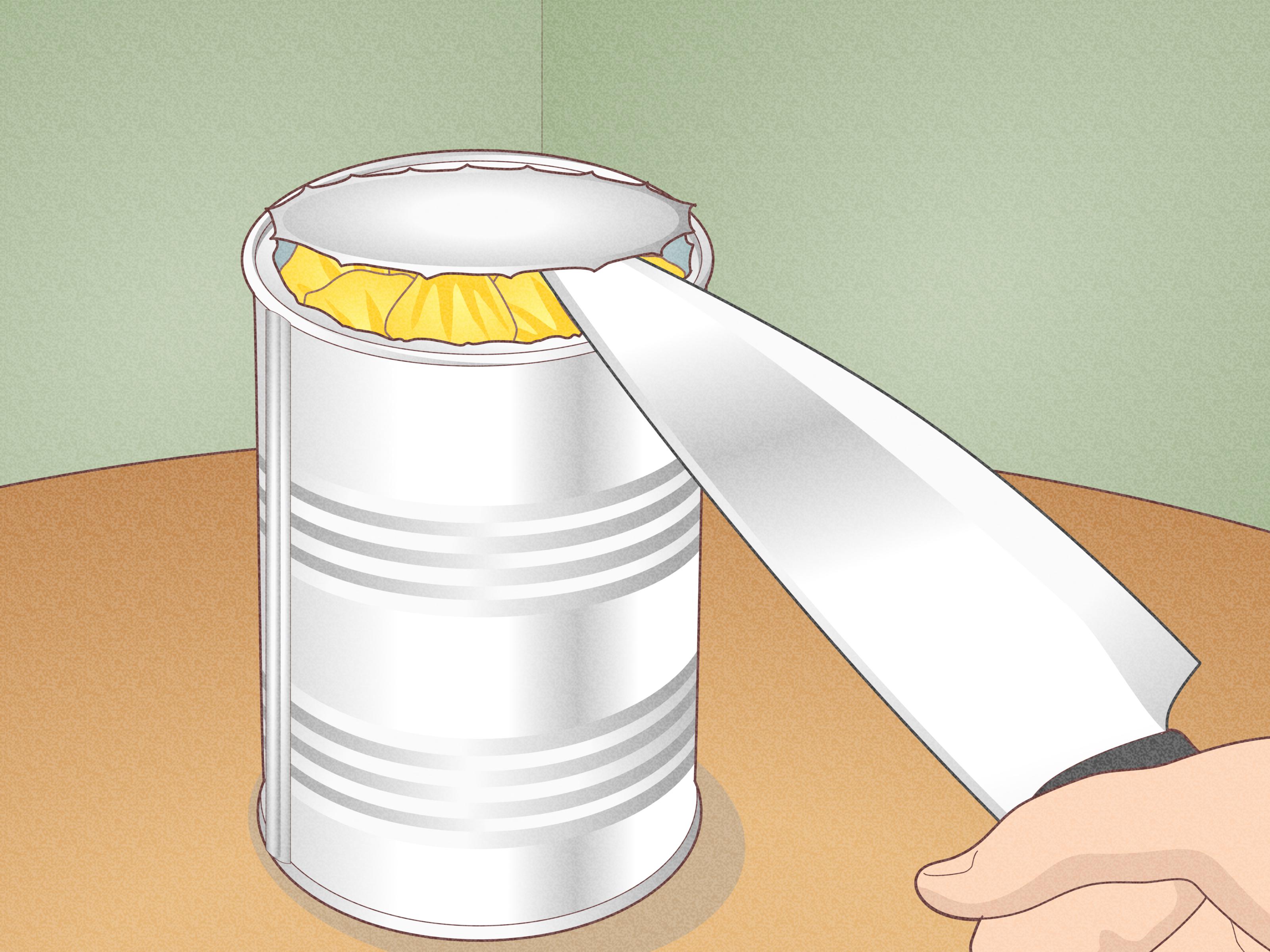
Many people search for how to open a can with a knife, and yes, you will find plenty of dramatic advice online. But a knife is not a beginner-friendly can-opening tool. It can slip, bend, break, damage the surface beneath the can, or cut your hand. For most people, the spoon method is a better first choice. A rough surface is better in outdoor situations. Pliers are better if you have them. A broken pull tab is better handled with a spoon handle.
If a knife is the only object nearby, the safest advice is simple: pause and look for another option first. Ask a neighbor, check for a spoon, use a clean rough surface outdoors, look for pliers, or choose a different food that does not require opening a metal can. Hunger is annoying, but hand injuries are much worse. Beans can wait. Your fingers should not have to file a complaint.
Which Method Is Safest?
The safest method is usually the metal spoon method because it avoids blades and gives you more control. The rough-surface method can work well outdoors, but it raises the risk of dirt or grit getting into the food. Pull-tab rescue is safe when the can is designed for it and the lid opens cleanly. Pliers can work, but they create jagged edges and require extra care.
In any method, sharp edges are the real enemy. Do not run your finger around the lid. Do not drink directly from a jagged can. Do not let children handle the opened edge. If you can, transfer the food to a bowl, pot, or cup immediately.
Common Mistakes to Avoid
Using too much force too quickly
Most accidents happen when people get impatient. Cans open by weakening the seam, not by heroic smashing. Work slowly and keep control.
Ignoring the condition of the can
A damaged can is not a puzzle to solve. If it is bulging, leaking, deeply dented, or smells wrong after opening, throw it away.
Letting the lid fall into the food
Once the lid is jagged, it can carry dirt or metal bits into the food. Try to keep it attached and bend it back only enough to pour or scoop.
Using plastic utensils
A plastic spoon will not open a metal can. It will simply suffer a tragic and unnecessary ending.
Food Safety After the Can Is Open
After you open the can, inspect the food. Look for mold, strange color, unusual odor, foam, spurting liquid, or anything that seems off. Do not taste food to “check” if it is safe. That is not bravery; that is how a bad afternoon begins.
If the food looks and smells normal and the can was in good condition, transfer leftovers to a clean container and refrigerate them when possible. If you are camping or dealing with an outage, eat only what you can use safely and keep the rest protected from insects, dirt, and heat.
How to Avoid This Problem Next Time
The easiest way to open a can without a can opener is, of course, to own a can opener. Keep one in the kitchen, one in your camping box, and one in your emergency kit. A small manual can opener costs little, weighs almost nothing, and saves you from having to negotiate with a spoon at dinnertime.
For emergency planning, store ready-to-eat foods that do not all require metal-can opening. Choose pouches, boxed meals, dried fruit, crackers, nut butter packets, shelf-stable milk, and pull-tab cans. Still, pull tabs can break, so do not depend on them completely. A basic manual can opener is one of those boring tools you ignore until it becomes the hero of the evening.
Real-Life Experience: What It Actually Feels Like to Open a Can Without a Can Opener
The first thing you learn when opening a can without a can opener is that online videos make it look suspiciously easy. Someone grips a spoon, rubs the lid twice, and suddenly dinner appears. In real life, the can usually sits there like a tiny bank vault. You rub. Nothing happens. You rub harder. Still nothing. Then, just when you begin questioning your life choices, the spoon finally breaks through and you feel like you have discovered electricity.
The spoon method is the one I would trust most in an ordinary kitchen emergency. It is slow, but predictable. You do not need a sharp blade, and you can control the pressure. The trick is to choose a strong spoon and focus on one small area near the rim. People often fail because they move around too much. They rub here, then there, then somewhere else, and the lid never gets thin enough. Pick one spot and commit. The can may not respect you at first, but persistence works.
The rough-surface method feels more like camping problem-solving. It is useful, but it is not elegant. You flip the can upside down, rub it against concrete or stone, and wait for the rim to wear down. The first challenge is keeping the surface clean. The second challenge is stopping at the right moment. Rub too little and the lid will not open. Rub too much and you risk mess, grit, or food leaking everywhere. This method is best when you can rinse the top afterward or when you have a clean towel ready.
Pull-tab rescue is the most emotionally frustrating method because the can promised convenience and then betrayed you. A broken tab can make a simple lunch feel personal. The safest fix is gentle leverage with a spoon handle. Do not dig your fingernails under the metal. Do not twist wildly. Work slowly at the scored section and let the spoon handle lift the lid. If it does not move, switch methods instead of forcing it.
Pliers can be effective, especially in a garage or campsite, but they make the sharp-edge problem worse. The lid can bend into uneven points, and the rim may tear unpredictably. If using pliers, gloves or a thick towel are not optional extras; they are common sense wearing a cape. This method is useful when you have no better choice, but it is not the method I would choose for a casual bowl of soup.
The biggest lesson is preparation. Opening a can without a can opener is possible, but it is not something you want to do every Tuesday. Keep a small manual opener in your kitchen drawer, emergency bag, picnic basket, and camping kit. Future you will be grateful, full, and much less likely to be arguing with chickpeas under poor lighting.
Conclusion
Learning how to open a can without a can opener is a useful emergency skill, but it should always be done with patience and respect for sharp metal. A sturdy metal spoon is usually the best first option. A clean rough surface can work outdoors. A broken pull-tab can often be rescued with a spoon handle. Pliers can help when you have them, though they require extra caution.
The knife method may be popular in search results, but it is not the safest choice for most people. When possible, choose a safer method, protect your hands, inspect the can, and transfer food away from sharp edges. And after dinner, do yourself a favor: buy a manual can opener. It may be the least glamorous kitchen tool you own, but when the beans are locked down, it becomes a legend.