
For years, the startup world repeated one story so often it practically became office wallpaper: raise venture capital, hire fast, grow faster, burn cash, raise again, and eventually ring the IPO bell while everyone pretends the sleepless nights were “fun.” But the recent SaaS IPO landscape has added a plot twist worthy of a CFO spilling coffee on the cap table: two of the last three major SaaS IPOs in the post-2021 reopening barely relied on early venture capital at all.
The companies in question are Klaviyo, Rubrik, and OneStream. Rubrik followed the classic Silicon Valley path, raising significant venture capital from major investors on its way to the public markets. Klaviyo and OneStream, however, tell a more unusual story. Klaviyo self-funded and stayed lean for years before raising larger growth rounds later. OneStream went even further, building its way to serious scale before outside capital became a major part of the story.
That does not mean venture capital is suddenly useless. VC is still rocket fuel when the rocket is pointed in the right direction. But these SaaS IPO examples prove something important: customer-funded growth, capital efficiency, strong retention, and disciplined execution can still build public-company-scale software businesses. Apparently, it is possible to create a giant SaaS company without turning the fundraising announcement into the product roadmap. Who knew?
The SaaS IPO Market After 2021: A Long, Awkward Silence
The SaaS IPO market was booming during the low-interest-rate era. Public investors loved cloud software. Private investors loved cloud software. Everyone loved cloud software, including people who could not explain what ARR meant but still nodded confidently at networking events.
Then 2022 arrived. Interest rates rose, public software multiples compressed, and the IPO window mostly slammed shut. Growth alone was no longer enough. Investors wanted efficiency, profitability, net revenue retention, cash flow discipline, and realistic valuations. In other words, public markets became the strict teacher who actually reads the homework.
Against that backdrop, the first major SaaS IPOs to break through after the freeze were especially interesting. Klaviyo went public in September 2023. Rubrik followed in April 2024. OneStream debuted in July 2024. Each company was already large, mature, and proven by the time it reached Wall Street. But their funding histories were very different.
Why This Topic Matters for SaaS Founders
The phrase “barely raised any VC capital” does not mean these companies never touched institutional money. It means they did not depend heavily on early-stage venture funding to survive, discover their market, or reach initial scale. That distinction matters.
Many startup founders assume that raising a big seed round is validation. Sometimes it is. Sometimes it is just expensive applause. The real validation in SaaS is whether customers pay, stay, expand, and recommend the product when no one is bribing them with conference swag.
Klaviyo and OneStream show that the best source of capital can be customers. Revenue is wonderfully non-dilutive. It does not ask for board seats. It does not send “quick thoughts” emails at 11:48 p.m. It simply says: solve our problem, and we will pay you again next month.
Klaviyo: From Lean Beginnings to a Major SaaS IPO
Klaviyo, founded in 2012 by Andrew Bialecki and Ed Hallen, became one of the clearest examples of capital-efficient SaaS growth. The company built a marketing automation and customer data platform focused heavily on e-commerce businesses. Its product helped brands use first-party data to send personalized messages through email, SMS, push notifications, and other owned channels.
What made Klaviyo stand out was not just its growth. It was the way it grew. The company self-funded in its early years and did not lean heavily on traditional early-stage VC capital. Later, as the business scaled, Klaviyo raised major growth rounds from investors including Summit Partners, Shopify, and others. But by that point, the engine was already running. The investors were not funding a dream scribbled on a pitch deck; they were backing a machine with customers, revenue, and momentum.
By the time Klaviyo filed to go public, the company had become a rare software IPO candidate with both strong growth and improving profitability. Its public filings showed revenue of $472.7 million in 2022, up from $290.6 million in 2021. For the first six months of 2023, revenue reached $320.7 million. The company also reported positive net income for that six-month period, which is not exactly standard behavior for a venture-backed software company preparing an IPO. In startup terms, that is like seeing a unicorn file taxes early.
Klaviyo priced its IPO at $30 per share, selling 19.2 million shares and raising $576 million in total offering proceeds. The debut valued the company around $9 billion to $11 billion depending on the share count and first-day trading price. More importantly for this discussion, the founders retained unusually meaningful ownership because the company had not been diluted into confetti during its earliest years.
What Klaviyo Teaches About Capital-Efficient Growth
Klaviyo’s story is not “never raise money.” That would be too simple, and the real world hates simple answers almost as much as procurement hates fast approvals. The lesson is better stated this way: raise money after the business model is working, not before the business model has been invented.
Klaviyo had a clear ideal customer profile, a product tied directly to revenue generation, and a market where customers could see measurable ROI. E-commerce brands did not buy Klaviyo because it sounded trendy. They bought it because better customer messaging could drive more sales. When SaaS software connects directly to revenue, retention becomes easier, expansion becomes more natural, and pricing power improves.
That is one reason capital efficiency matters so much. A SaaS company that uses customer revenue to fund product development must listen carefully. It cannot hide behind endless fundraising cycles. The market speaks daily through churn, upgrades, usage, support tickets, and renewal conversations. Painful? Yes. Useful? Extremely.
Rubrik: The Classic Venture-Backed SaaS Path
Rubrik is the counterexample that keeps the article honest. Founded in 2014, Rubrik built a data security and cyber resilience platform for enterprise customers. Its products help organizations protect, monitor, and recover data across cloud, SaaS, and on-premises environments. This is not a lightweight category. Enterprise security demands deep engineering, large sales teams, customer trust, compliance muscle, and a willingness to survive procurement cycles long enough to question your life choices.
Rubrik raised substantial venture capital from the beginning. Lightspeed Venture Partners led an early Series A, and investors such as Greylock, Khosla Ventures, Bain Capital Ventures, IVP, and Microsoft became part of the story over time. That funding supported a more traditional high-growth enterprise software path.
When Rubrik went public in April 2024, it had subscription annual recurring revenue of about $784 million as of January 31, 2024, up 47% year over year. Its IPO priced at $32 per share and raised approximately $752 million. Rubrik’s debut showed that heavily VC-backed SaaS companies can still win big when the market is large, the product is mission-critical, and the company reaches enough scale to satisfy public investors.
So, no, the takeaway is not that VC is bad. Rubrik proves the opposite. Some markets reward speed, deep R&D investment, and aggressive go-to-market expansion. In cybersecurity, being underfunded can be dangerous because the enemy is not only your competitor; it is also every attacker trying to turn your customer’s Monday morning into a disaster movie.
OneStream: Bootstrapped to Serious Scale
OneStream may be the most striking example in this group. Founded in 2012, OneStream built software for corporate performance management, financial consolidation, planning, reporting, and forecasting. In normal-person language, it helps finance teams close the books, plan the future, and avoid becoming trapped forever in spreadsheet purgatory.
The company was founded by experienced operators who understood the finance software market deeply. That mattered. Founder-market fit is not a motivational poster; it is an unfair advantage. OneStream’s leadership knew the customer pain, the buying process, the limitations of legacy systems, and the specific workflows CFO teams needed to modernize.
OneStream scaled for years with little to no traditional venture capital. It later brought in KKR, which acquired a majority stake in 2019, and the company raised a $200 million Series B round in 2021 at a $6 billion valuation. But by then, OneStream had already proven the business. It surpassed $100 million in ARR before becoming a typical growth-capital story.
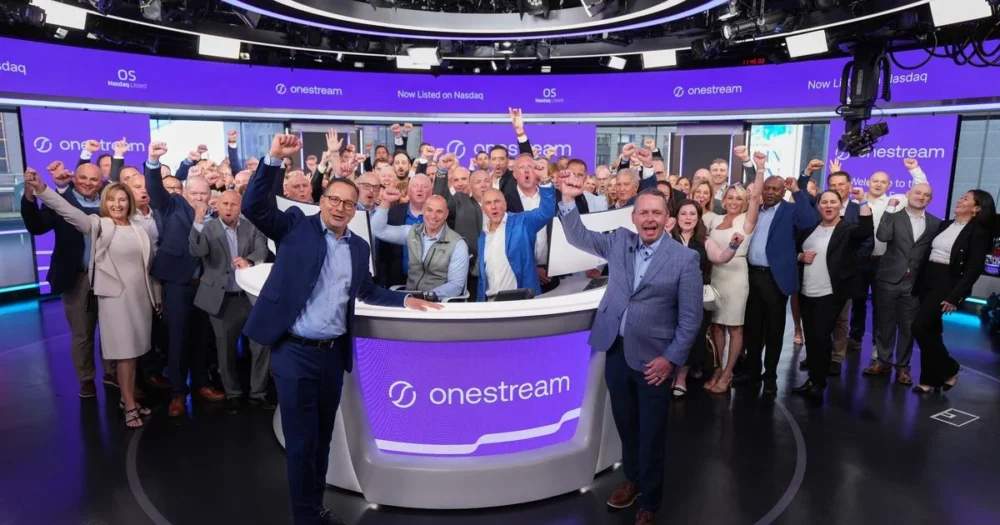
In July 2024, OneStream priced its IPO at $20 per share, selling 24.5 million shares and raising about $490 million. The company was valued at roughly $4.6 billion at pricing and traded on Nasdaq under the symbol OS. Its journey reinforced a powerful idea: in vertical or workflow-heavy SaaS, deep domain knowledge and customer trust can be more valuable than a mountain of early VC money.
Why Two Capital-Light SaaS IPOs Are Such a Big Deal
Two out of three is not enough to declare a permanent market trend. It is, however, enough to make founders, investors, and operators pause. For more than a decade, the loudest startup stories celebrated fundraising velocity. A large seed round became a headline. A large Series A became a personality trait. A large Series B became a LinkedIn post with suspiciously many rocket emojis.
But public markets do not buy fundraising stories forever. They buy revenue quality, growth durability, operating leverage, and credible paths to cash generation. That is why the Klaviyo and OneStream examples matter. They show that a company can reach IPO scale by prioritizing business fundamentals before financial engineering.
Capital-light growth also changes incentives. When founders own more of the company, they can think longer term. When teams are not constantly raising the next round, they can spend more time building products customers actually use. When expenses are tied to revenue reality, hiring tends to be more deliberate. The company may grow more slowly at first, but it often grows with better muscles.
The New SaaS IPO Checklist: Growth Plus Discipline
The modern SaaS IPO candidate needs more than a pretty revenue chart. Investors now want to see a balanced business. That means strong ARR growth, high gross margins, healthy net revenue retention, efficient customer acquisition, disciplined operating expenses, and a believable path to free cash flow.
During the 2020 and 2021 boom, many SaaS companies were rewarded for “growth at all costs.” The problem with growth at all costs is the “all costs” part. When capital became expensive, public investors started asking simple but terrifying questions: How much does it cost to acquire each customer? How long until payback? Are customers expanding? Is the company becoming more efficient as it grows? Can this business produce cash?
Klaviyo, Rubrik, and OneStream each brought different strengths to that checklist. Klaviyo showed efficient growth and strong customer economics. Rubrik showed a large, mission-critical market with fast subscription ARR expansion. OneStream showed deep enterprise workflow value and the ability to scale before relying on large outside funding.
What Founders Should Learn From These SaaS IPOs
1. Revenue Is the Best Early Investor
Revenue forces clarity. If customers pay early, renew, and expand, you have evidence. If they do not, a bigger round may only help you postpone the truth. Customer revenue is less glamorous than a term sheet, but it is also less dilutive and usually more honest.
2. A Narrow Market Can Become a Huge Company
Klaviyo focused heavily on commerce brands. OneStream focused on finance teams and corporate performance management. These were not vague “software for everyone” pitches. They were specific markets with painful problems and clear buyers. Narrow focus often creates the wedge that later becomes a platform.
3. Late Capital Can Be Smarter Than Early Capital
Raising growth capital after product-market fit is very different from raising early capital to search for product-market fit. Late-stage funding can accelerate a machine. Early funding can sometimes disguise the fact that the machine is actually three interns and a landing page.
4. Founder Ownership Still Matters
When companies raise less early capital, founders and employees often retain more ownership. That can improve alignment and morale. It also gives leadership more strategic flexibility. Dilution is not evil, but unnecessary dilution is expensive.
5. Bootstrapping Is Not a Religion
The correct lesson is not “never raise venture capital.” The correct lesson is “know why you are raising.” Rubrik needed capital for a massive enterprise security opportunity. Klaviyo and OneStream could rely more heavily on customer-funded momentum. The right financing strategy depends on the market, product, timing, and ambition.
The Role of Private Equity and Growth Equity
Another underappreciated part of this story is the role of growth equity and private equity. Klaviyo and OneStream were not tiny bootstrapped businesses forever. They eventually worked with large institutional investors. The difference is timing.
Growth equity often enters after a company has strong revenue, repeatable sales motion, and clear expansion opportunities. That capital can support international growth, product expansion, acquisitions, and pre-IPO readiness. It is less about finding the market and more about scaling what already works.
Private equity involvement, especially in OneStream’s case, also shows how software companies can mature outside the classic venture script. Not every SaaS company needs to follow the same path from seed to Series A to Series B to Series C. Some build slowly, sell efficiently, bring in strategic capital later, and still reach the public markets.
What Investors Should Learn
For investors, these IPOs are a reminder that the best companies do not always need the most capital. In fact, the best companies are often the ones that can choose whether to raise. That choice creates leverage.
A founder who must raise money is negotiating from necessity. A founder who can raise money because the business is already working is negotiating from strength. That difference can shape valuation, control, governance, dilution, and long-term outcomes.
Investors should also be cautious about confusing capital raised with company quality. A startup that raises $500 million is not automatically better than one that raises $50 million. Sometimes it simply has a more expensive strategy. Capital is an input. The output is durable enterprise value.
What This Means for the Future of SaaS IPOs
The next generation of SaaS IPOs will likely face a tougher public market than the class of 2021. That is not necessarily bad. A stricter market can produce healthier companies. Founders will need to build with efficiency earlier. Boards will need to value retention and payback periods as much as top-line growth. Employees may need to get comfortable with fewer vanity metrics and more operating discipline.
At the same time, artificial intelligence is changing software markets quickly. Some AI-native companies may require enormous capital because model training, infrastructure, and talent are expensive. Others may become incredibly efficient because small teams can now build products that once required entire departments. The SaaS funding playbook is not disappearing. It is splitting into multiple playbooks.
For workflow SaaS, vertical SaaS, and customer-data platforms, the Klaviyo and OneStream examples will remain highly relevant. If the software solves an urgent problem, creates measurable value, and earns expansion revenue, the business may not need huge early funding. It may need patience, taste, discipline, and a willingness to sell before the pitch deck wins any design awards.
Experience-Based Lessons: What Operators Can Take From This Pattern
The most practical experience related to this topic is simple: the companies that raise less early capital usually have to learn faster. They cannot buy their way out of confusion. They must talk to customers, narrow the product, improve onboarding, price intelligently, and make every hire count. That pressure can feel uncomfortable, but it often creates better operating habits.
In many SaaS teams, the first dangerous moment comes right after a funding round. The bank account grows, and suddenly every idea looks affordable. Marketing experiments multiply. Headcount plans expand. Product roadmaps become crowded. The company starts behaving like scale has already been achieved, even when repeatability is still fragile. Capital-efficient companies avoid some of that temptation because they do not have the luxury of pretending.
A founder studying Klaviyo or OneStream should not ask, “How do I avoid investors forever?” A better question is, “How do I build a business investors would want, even if I did not need them?” That mindset changes everything. It pushes the team toward strong unit economics, clear positioning, and a product that customers can explain to their own bosses. If the buyer cannot describe the value internally, the sales cycle becomes a haunted house with calendar invites.
Another experience from the SaaS world is that customer-funded growth creates sharper product judgment. When revenue funds the roadmap, every feature has to compete against real customer pain. Teams become less likely to build impressive but unused features. They care more about activation, retention, integrations, reporting, permissions, security, and boring-but-critical workflows. Boring software, when it saves time or money, can become a beautiful business.
Sales discipline also improves when cash is not unlimited. A capital-efficient SaaS company cannot afford to chase every segment. It must decide who the product is for and who it is not for. That second part is painful. Saying no to revenue feels unnatural, especially early. But saying yes to the wrong customers can poison support, distort the roadmap, and weaken retention. The best SaaS operators learn that focus is not a slogan. It is a budget strategy.
Finally, these IPO stories are encouraging because they give founders more options. Venture capital can be powerful, but it should not be treated as the only legitimate path. A company can bootstrap, raise a small amount, use revenue, partner with growth equity later, or pursue a hybrid path. The goal is not to win the fundraising game. The goal is to build a company with customers, durability, and strategic freedom.
The quiet lesson behind two capital-light SaaS IPOs is that discipline compounds. Clean customer economics compound. Strong retention compounds. Founder ownership compounds. It may not look as exciting as a giant funding announcement, but over a decade, those advantages can become enormous. In SaaS, the turtle can still win the raceespecially if the rabbit is busy refreshing its valuation spreadsheet.
Conclusion
The fact that two of the last three major SaaS IPOs in the post-2021 reopening barely raised early VC capital is not proof that venture capital is dead. Far from it. Rubrik’s success shows that big VC-backed software companies can still thrive when the market is large and the execution is strong.
But Klaviyo and OneStream prove that another path is alive and well. SaaS founders can build slowly, sell deeply, stay efficient, and use customer revenue as their first real investor. They can raise later from a position of strength. They can protect ownership, sharpen discipline, and still reach IPO scale.
For founders, the message is liberating: you do not need to copy the loudest startup playbook. You need the right playbook for your market. If your product solves a painful problem, customers expand, retention is strong, and growth becomes more efficient over time, you may not need as much outside capital as everyone says. And if you do raise, the best time to do it is when the business is already strong enough to say no.