
Most people think of stingrays as silent, gliding pancakes with attitude. They drift, they bury themselves in sand, and they carry a tail that says, “Please respect my personal space.” Chewing, however, is not usually the first skill anyone puts on a stingray’s résumé. That is exactly why the ocellate river stingray has become such a fascinating animal in the world of biology. This freshwater species from South America does not simply gulp down prey and let the stomach sort out the details later. It actually breaks food down with repeated jaw movements before swallowing.
That may not sound dramatic at first. After all, humans chew. Cows chew. Goats chew like it is a full-time job with benefits. But outside mammals, true chewing is surprisingly rare. Many fish grab prey, crush it, tear it, or swallow it whole. The ocellate river stingray, Potamotrygon motoro, does something more sophisticated. It uses complex, asymmetrical jaw motions to process tough prey, especially insect larvae with hard exoskeletons. In plain English, this ray takes its time, works the meal around, and turns dinner into something more manageable before it goes down the hatch.
That discovery matters for more than just weird-animal trivia night. It changes how scientists think about feeding behavior, the evolution of chewing, and how animals with cartilaginous skeletons can handle prey that is tough, crunchy, and not exactly smoothie-friendly. It also reminds us that evolution loves to repeat a good idea. Mammals did not get an exclusive contract on mastication after all.
Meet the Stingray Behind the Headline
The star of this story is the ocellate river stingray, a freshwater ray native to tropical rivers and lagoons in South America. It is commonly associated with the Amazon Basin and nearby river systems, where it lives in calm, sandy-bottomed habitats and often rests partially buried. Visually, it is a beauty: a round, flattened body patterned with orange or yellow eye-like spots ringed in dark color. In other words, it looks like someone decorated a flying saucer with tiny bull’s-eyes.
Like other rays, this species belongs to a group of cartilaginous fishes, meaning its skeleton is made of cartilage rather than bone. That puts it in the same broad club as sharks, skates, and rays. Its mouth sits on the underside of the body, which is typical for bottom-feeding rays. It also has a defensive tail spine, but that barb is for protection, not for spearing lunch. When it comes time to eat, the real action happens underneath the disc, where the jaws and tooth plates do the heavy lifting.
Although many rays specialize in crushing shellfish, clams, crabs, and other tough prey, Potamotrygon motoro stands out because it also consumes insects and insect larvae. That diet is part of what makes its chewing behavior so important. Insects may be small, but they come wrapped in sturdy armor. Anyone who has ever stepped on a beetle can confirm that nature occasionally packages lunch like it expects a battlefield.
How Scientists Discovered the Stingray Was Chewing
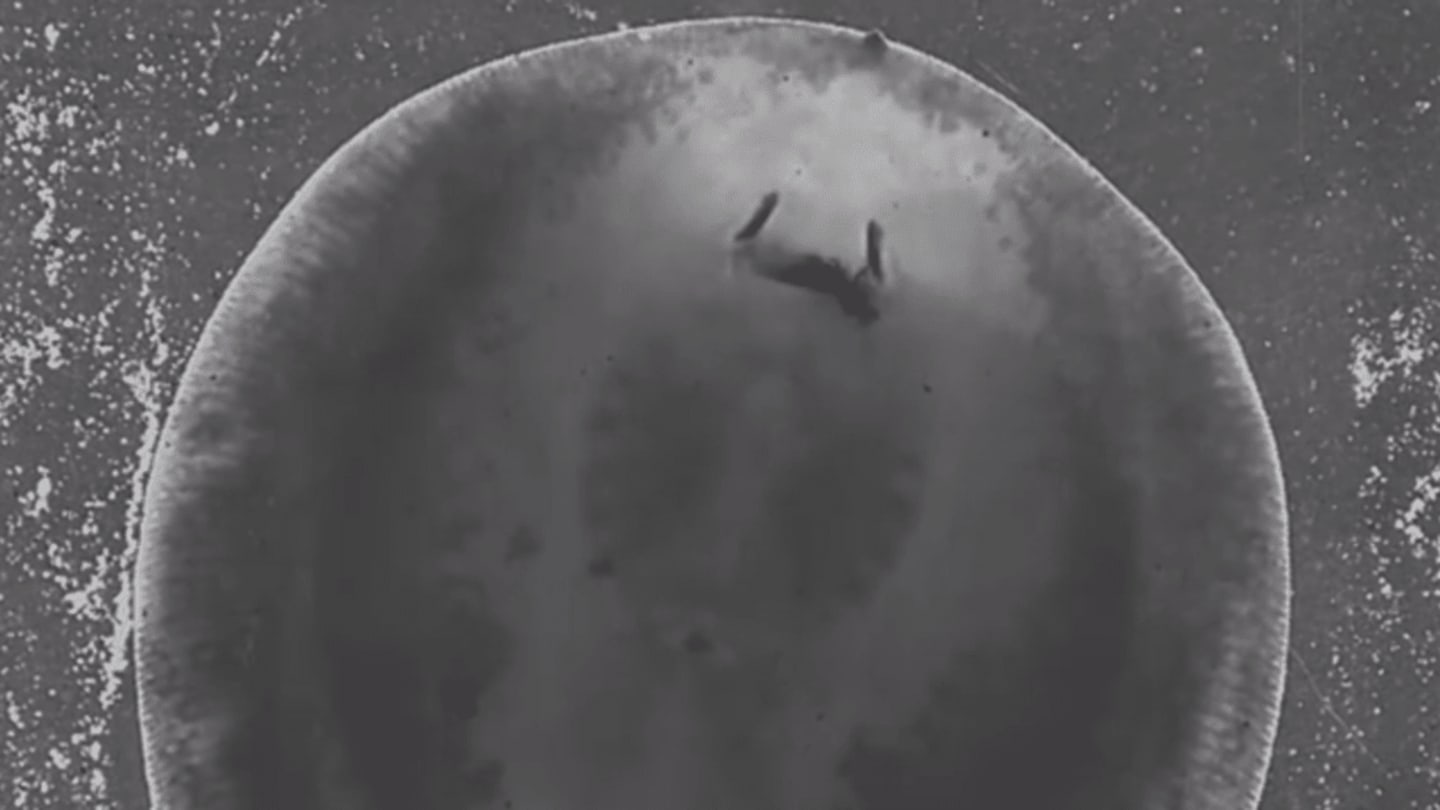
The discovery did not come from someone casually glancing into an aquarium and shouting, “Hang on, that fish is basically having corn on the cob.” Researchers used high-speed video and imaging tools to study how freshwater stingrays capture and process prey. What they saw was striking: after drawing prey into the mouth, the ray protruded its jaws away from the skull and moved them in repeated, uneven side-to-side motions. That is not random mouth wiggling. That is coordinated prey processing.
In the original research, scientists focused on how the stingray handled tough insect prey. They found that the animal used asymmetrical jaw motion to dismantle the food before swallowing it. Later work added even more detail, showing that the stingray can modulate its chewing into different cycle types, including compressive movements and overbite-like movements that help shear food between the upper and lower tooth plates. So yes, this ray is not merely chomping. It has a feeding routine.
That is especially intriguing because the stingray does not have mammal-style molars. Its teeth are comparatively simple and plate-like. Mammals often rely on specialized teeth plus complex jaw joints to grind and shear food. This stingray gets to a similar end point by a different route. It uses motion, timing, and repeated bite cycles to achieve food breakdown. Evolution, as always, appears to enjoy solving the same problem with a totally different toolbox.
Not Just Crushing, But Processing
Many fish can crush or crack prey. Plenty of rays do this with shellfish, and some species spit out shell fragments after smashing them. That is impressive, but it is not quite the same as a repeated chewing sequence. What makes the ocellate river stingray special is the way it keeps working the food inside the mouth. It is not a one-and-done bite. It is more like a built-in food processor that refuses to rush dinner.
That distinction is what makes this animal so scientifically important. Chewing is not simply “biting hard.” It is a patterned behavior that breaks food down mechanically before swallowing. The freshwater stingray checks that box in a way that surprised researchers and broadened the conversation about how feeding systems evolve across vertebrates.
Why Chewing Helps This Stingray
Chewing helps the stingray tackle prey that would otherwise be awkward to digest. Insect larvae, juvenile dragonflies, beetles, and other armored invertebrates come with exoskeletons that are not exactly soft and tender. By breaking these prey items into smaller pieces first, the stingray makes them easier to swallow and likely easier to digest. That may sound obvious, but in biology, obvious advantages are often the exact ones that shape big evolutionary changes.
There is also a competitive advantage here. Freshwater stingrays occupy ecosystems crowded with other fish species, all chasing calories in one form or another. If a stingray can make better use of insect prey that other predators cannot process as efficiently, it opens up a valuable food niche. That means less competition and more menu options. In evolutionary terms, that is the equivalent of finding the shortest line at the food court and discovering the portions are bigger too.
Researchers have suggested that this kind of prey processing may have been especially useful as freshwater stingrays adapted to river life in South America. Insects and aquatic larvae are abundant, nutritious, and tough enough to require serious handling. A ray that could effectively chew them would gain an edge. Instead of waiting for softer prey, it could go after food with a crunchy wrapper and still come out ahead.
Cartilage Is Not a Limitation
One of the most interesting parts of the story is that rays have skeletons made of cartilage, not bone. That raises an obvious question: how can a cartilaginous fish process hard prey so effectively? The answer appears to be that the feeding system is more capable and dynamic than people once assumed. Cartilage is not flimsy. Combined with specialized jaw movements, protrusible mouthparts, and crushing tooth plates, it can handle challenging prey just fine.
In other words, the stingray does not need a mammal jaw to do mammal-like food processing. It just needs the right mechanics. That insight is one reason scientists find the species so exciting. It offers a new model for studying how chewing-like behaviors can evolve independently in very different animals.
How Other Rays Eat, and Why This One Stands Out
To understand why this stingray is such a standout, it helps to look at the bigger ray family. Many rays are bottom feeders. They use smell, touch, and electroreception to locate prey hidden in sediment. Some flap their pectoral fins to uncover buried animals. Others root around with the snout or pin prey against the seafloor. Their teeth are often broad and plate-like, ideal for crushing shellfish, crabs, worms, and other benthic prey.
That is already a pretty effective feeding strategy. A ray that finds a clam can crush the shell, spit out the fragments, and swallow the soft tissue. Cownose rays and southern stingrays are famous for this kind of hard-prey feeding. So rays were never exactly delicate salad nibblers. Still, the ocellate river stingray goes a step further by adding repeated, mastication-like processing to the routine.
That combination makes it doubly interesting. It is part of a broader group already known for handling challenging prey, but it shows an extra layer of behavior that looks much closer to what most people think of as chewing. It is the difference between cracking a walnut with a single press and actually working food around your mouth until it is properly broken down.
One of the Few Non-Mammals That Truly Chew
The idea that mammals are the only animals that chew has been fading as scientists study more species in greater detail. A few non-mammals show chewing or chewing-like prey processing, including some fishes, reptiles, and amphibians. Still, it remains rare. Many animals solve the food problem in other ways: they tear, shake, swallow whole, mash prey with tooth plates, or let the gut do more of the mechanical work.
That rarity is what gives this stingray its headline power. It is not just another fish with strong jaws. It is part of a very small club of animals outside mammals that use repeated oral processing to break down food before swallowing. And because it reaches that result without mammalian teeth or mammalian jaw anatomy, it offers a fascinating example of convergent evolution. Different body plans, different ancestry, similar feeding solution.
Scientists love examples like this because they show that evolution is both inventive and practical. When a problem keeps appearing in nature, organisms may arrive at similar answers even if their starting materials are wildly different. The freshwater stingray did not become a furry river cow. It simply evolved a ray version of chewing, which is somehow both less adorable and more impressive.
Why This Discovery Matters Beyond Stingrays
At first glance, a chewing stingray may sound like the biological equivalent of a party trick. It is not. Feeding behavior is central to survival, ecology, anatomy, and evolution. How an animal captures prey, breaks it down, and extracts nutrients affects everything from jaw design to habitat use. By showing that a cartilaginous fish can perform complex prey processing, the stingray forces biologists to rethink some old assumptions.
It also helps explain how animals can succeed on diets that seem mechanically difficult. Hard prey is not just about bite force. It is about control, repetition, and the ability to turn awkward food into digestible material. In mammals, chewing played a major role in dietary flexibility. The freshwater stingray suggests that similarly useful feeding solutions can evolve elsewhere too, even in bodies that look nothing like ours.
That matters for comparative anatomy, biomechanics, and evolutionary biology. The stingray gives researchers a living system for studying how chewing-like behavior emerges without the classic mammalian toolkit. It is a reminder that nature keeps extra blueprints in the drawer.
Experiences Related to This Topic: What It Is Like to Watch a Stingray “Chew”
If you have only seen stingrays glide past like underwater kites, the idea of one chewing its food can feel almost surreal. Rays usually look smooth, elegant, and calm from above. Their movements are so fluid that they seem less like animals making decisions and more like water having a thought. That is why the experience of watching feeding behavior up close can be so memorable. The animal suddenly stops looking like a drifting ornament and starts looking like a very focused predator with a plan.
In an aquarium setting, feeding often changes everything. A ray that seemed half asleep on the bottom can come alive in seconds. It lifts the front of its disc, stirs sediment, draws prey underneath the body, and begins working its mouth on the underside where most visitors cannot easily see it. When people finally notice that the mouth is doing more than snapping shut, there is usually a moment of surprise. The graceful “sea pancake” has turned into a compact machine, and all that elegance is suddenly paired with serious engineering.
Watching video of Potamotrygon motoro makes the experience even more dramatic because the high-speed footage reveals details the naked eye would probably miss. The jaws protrude. The movements are uneven from side to side. The food is not swallowed immediately. Instead, the ray keeps processing it, almost as though it is testing, repositioning, and working the prey until the texture is right. For a viewer, that can be one of those delightful science moments when an ordinary assumption quietly falls apart. Fish do not just gulp and go? Apparently not all of them.
There is also something oddly humbling about the experience. Humans are used to treating chewing as a normal, everyday act, so common that we barely think about it unless someone reminds us to do it with their mouth closed. Seeing a stingray perform a version of that same behavior makes the act feel new again. It becomes less of a routine human habit and more of a remarkable biological solution. Suddenly, lunch is anatomy. Dinner is biomechanics. Your sandwich has become educational.
For students, aquarists, and nature lovers, that kind of encounter can reshape how they think about animal intelligence and specialization. A stingray does not need expressive eyebrows or a dramatic roar to be impressive. Sometimes the most surprising sophistication is hidden underneath the body, in jaw joints and muscle timing and the quiet efficiency of a feeding cycle. That is a different kind of awe than the one inspired by a leaping dolphin or a breaching whale, but it is awe all the same.
There is also a storytelling angle that sticks with people. Once you know this stingray chews, you never really look at rays the same way again. The next time you see one cruising over sand, you are not just seeing a flat fish with a tail. You are seeing an animal with a rare feeding strategy, one that shares an unexpected mechanical similarity with mammals while remaining unmistakably ray-like. That contrast is part of the fun. It is familiar enough to be relatable and strange enough to be unforgettable.
In educational exhibits, facts like this work because they pull visitors past the surface. A child may arrive thinking stingrays are just “the ones with the scary tail.” An adult may assume they are simple bottom feeders. Then along comes the chewing fact, and suddenly both people want to know more. What does it eat? How does its mouth work? Why is chewing rare? That curiosity is the real experience behind this topic. The stingray becomes a doorway into bigger questions about evolution, anatomy, and how many surprises are still hiding in animals people think they already understand.
And honestly, that may be the best part. The discovery does not just teach us something about a single freshwater stingray. It recreates the experience of wonder. It reminds us that even in a world full of nature documentaries, aquariums, and science headlines, animals can still do something that makes us stop mid-scroll and say, “Wait, a stingray does what now?” That is a pretty wonderful outcome for a fish with a face on its underside and a talent for chewing bugs.
Conclusion
The ocellate river stingray is more than a fun fact with a tail. It is a vivid example of how evolution can produce complex solutions in unexpected places. By using asymmetrical jaw motions to process tough prey before swallowing, Potamotrygon motoro joins a very small group of non-mammals that genuinely chew their food. That makes it unusual, scientifically important, and frankly a little bit charming in a weird-underwater-overachiever kind of way.
For readers interested in animal behavior, feeding mechanics, or evolutionary biology, this stingray offers a perfect reminder that nature rarely sticks to the script we write for it. Sometimes the most surprising innovation is not a giant leap, but a quiet chew.