
When most people imagine the search for aliens, they picture shiny rockets, distant planets, and scientists squinting dramatically at a glowing screen while someone whispers, “We found something.” Antarctica rarely gets the starring role. It has no palm trees, no gift shops with alien bobbleheads, and absolutely no respect for exposed fingers. Yet this frozen continent may be one of the most important places on Earth for understanding life beyond Earth.
Antarctica is not just a giant freezer at the bottom of the world. It is a natural laboratory where meteorites wait on blue ice, microbes survive in extreme cold and dryness, and buried lakes mimic the hidden oceans of icy moons. If scientists want to know how life might survive on Mars, Europa, Enceladus, or a planet orbiting another star, Antarctica offers a brutal but useful preview. In other words, the search for aliens does not begin with a flying saucer. It begins with a parka, sterile tools, and the kind of wind that makes your eyelashes reconsider their career choices.
Why Antarctica Matters in the Search for Alien Life
Antarctica is useful to astrobiology because it pushes life close to its limits. The continent is cold, dry, isolated, and in some places nearly nutrient-starved. Those conditions resemble parts of Mars more than almost anywhere else on Earth. The McMurdo Dry Valleys, for example, are often described as one of the most Mars-like environments on our planet. With very little precipitation, powerful winds, and soils that can remain frozen for long periods, the Dry Valleys help researchers ask a simple but profound question: How little comfort does life actually need?
The answer is surprisingly stubborn. Microbes, algae, lichens, and bacteria can survive in cracks, under rocks, inside salty brines, and in frozen soils. They do not throw parties. They do not write poetry. But they endure. That endurance is exactly what makes Antarctica so valuable. If life can hang on in Earth’s harshest corners, scientists can better imagine where to look for possible biosignatures on Mars or under the ice shells of distant moons.
Antarctic Meteorites: Space Rocks Waiting in the Ice
One of Antarctica’s greatest gifts to planetary science is meteorites. Since the 1970s, the Antarctic Search for Meteorites program, known as ANSMET, has helped recover tens of thousands of specimens from the continent’s ice fields. Antarctica is especially good at preserving meteorites because dark rocks stand out against pale ice, and ice movement can concentrate them in certain areas. It is basically nature’s lost-and-found box for pieces of the solar system.
These meteorites can come from asteroids, the Moon, and even Mars. That last category is especially exciting because Martian meteorites provide physical samples from another planet without requiring a round-trip spacecraft. Scientists study their minerals, trapped gases, isotopes, and textures to understand the history of Mars. Some rocks preserve clues about water, volcanic activity, and the chemical environments that may once have existed on the Red Planet.
The famous case of ALH84001
No Antarctic meteorite stirred public imagination quite like Allan Hills 84001, often shortened to ALH84001. Found in Antarctica, this Martian meteorite became famous in the 1990s when researchers reported features that they argued might be consistent with ancient microbial life. The claim became a scientific flashpoint. Some scientists saw possible biosignatures; others argued that nonbiological processes could explain the same features.
The debate did not prove that Mars once had life, but it changed the conversation. It showed how hard life detection really is. A strange mineral shape, an organic molecule, or a microscopic structure is not enough by itself. Scientists need multiple lines of evidence, careful contamination control, and a healthy amount of skepticism. Alien life, if we ever confirm it, will probably not arrive with a dramatic soundtrack. It may arrive as a pattern in a rock that takes years to interpret.
Antarctica as a Mars Training Ground
Mars is dry, cold, dusty, and unfriendly to surface life as we know it. Antarctica is not Mars, but it offers useful comparisons. Researchers study Antarctic soils, ice, salts, and microbes to understand what signs of life might look like in extreme environments. This matters because future missions may not find living organisms directly. Instead, they may find biosignatures: chemical, physical, or mineral traces that suggest life once existed.
For example, microbes in Antarctic rocks and soils can leave behind subtle chemical fingerprints. Some survive under translucent rocks that allow just enough sunlight to pass through. Others endure in salty environments where liquid water remains possible at temperatures that would freeze ordinary freshwater. These survival strategies help scientists refine the instruments and sampling methods used in planetary exploration.
NASA’s Perseverance rover on Mars is already collecting and analyzing rocks in Jezero Crater, a region believed to have once hosted water. Scientists are especially interested in samples from ancient river and lake environments because those places could have preserved signs of past microbial life. Antarctica helps researchers interpret what they might be seeing by offering Earth-based examples of life in cold, dry, and mineral-rich settings.
The Hidden Lakes Beneath the Ice
Antarctica’s surface looks empty, but beneath the ice sheet lies an extraordinary world. Scientists have identified numerous subglacial lakes and water systems trapped under thick ice. These environments are dark, cold, high-pressure, and separated from the surface for long periods. That makes them fascinating to astrobiologists.
Why? Because several places in the solar system may have oceans hidden under ice. Jupiter’s moon Europa is believed to have a salty ocean beneath its icy crust. Saturn’s moon Enceladus sprays icy particles from a subsurface ocean into space. If life exists elsewhere in our solar system today, many researchers think it may be in one of these hidden watery environments rather than on a dry planetary surface.
Subglacial lakes and ocean worlds
Studying Antarctic subglacial lakes can help scientists design cleaner drills, better sampling systems, and more cautious exploration methods. Contamination is a huge concern. If scientists ever send a probe to sample Europa’s ice or Enceladus’s plume, they must avoid bringing Earth microbes along for the ride. Nobody wants to announce the discovery of alien life and then realize it was a hitchhiking bacterium named Kevin from Florida.
Antarctica forces researchers to practice strict procedures. Equipment must be cleaned, samples must be handled carefully, and data must be interpreted with humility. The same habits will be essential for future life-detection missions. In this way, Antarctica is not just a scientific field site; it is a rehearsal stage for exploring other worlds responsibly.
Europa, Enceladus, and the Ice-Covered Alien Ocean Problem
Europa and Enceladus are two of the most exciting targets in the search for life beyond Earth. Europa appears to have a global ocean beneath its crust, possibly containing more water than all of Earth’s oceans combined. Enceladus has provided even more direct evidence of an active ocean because its south polar region ejects plumes of icy material into space. NASA’s Cassini mission found salts, organic molecules, and other ingredients that keep Enceladus near the top of the astrobiology wish list.
But habitability is not the same as inhabited. A place can have water, chemistry, and energy without actually hosting life. That is why Antarctica is useful. It helps scientists understand what life looks like when conditions are barely tolerable. It also shows what nonliving chemistry can produce. That distinction is critical. Astrobiology is not about shouting “aliens!” every time a molecule wiggles. It is about building a case strong enough to survive years of scientific grilling.
IceCube: Antarctica Also Searches the Universe
Antarctica is not only useful for finding meteorites and studying microbes. It also hosts one of the most remarkable observatories on Earth: IceCube, a neutrino detector buried deep in the ice near the South Pole. IceCube is designed to detect high-energy neutrinos, sometimes called “ghost particles,” that travel through the universe from extreme cosmic events such as exploding stars, black holes, and active galaxies.
Neutrinos are not aliens. But IceCube is part of the broader search to understand the cosmos and our place in it. By using a cubic kilometer of Antarctic ice as a detector, scientists can observe signals that ordinary telescopes cannot. It is another example of Antarctica turning its harshness into an advantage. The same ice that makes fieldwork difficult also creates a uniquely quiet environment for studying particles from deep space.
What Scientists Are Actually Looking For
The phrase “search for aliens” can be misleading. Most researchers are not expecting tentacled neighbors to wave from under the ice. They are searching for evidence of life, and that evidence may be microscopic, chemical, or indirect. The most likely first discovery of extraterrestrial life would probably be microbial or fossilized, not a space ambassador with an excellent translator.
Scientists look for biosignatures such as organic molecules, unusual mineral patterns, isotopic ratios, cell-like structures, or chemical disequilibrium. Chemical disequilibrium simply means that certain compounds exist together in a way that may require an ongoing energy source or biological process. However, every possible biosignature must be tested against nonbiological explanations. Nature is creative, and rocks are surprisingly good at impersonating biology.
The importance of false positives
A false positive happens when evidence looks biological but is not. This is one of the biggest challenges in astrobiology. A molecule associated with life on Earth might form through geology elsewhere. A mineral texture might look like a fossil but result from heat, pressure, or fluid chemistry. Antarctica helps researchers study these gray areas. By comparing living and nonliving processes in extreme environments, scientists improve their odds of recognizing real evidence when it appears.
How Antarctica Helps Future Space Missions
Future missions to Mars, Europa, Enceladus, and beyond will need tools that can detect tiny clues under difficult conditions. Antarctica helps test those tools. Field teams can practice drilling into ice, collecting sterile samples, operating instruments in cold environments, and making decisions with limited time and limited comfort. That experience matters because robotic missions cannot rely on ideal laboratory conditions.
Antarctica also teaches patience. The search for life beyond Earth is not one discovery but a chain of discoveries. First, scientists identify a promising environment. Then they detect water, chemistry, and energy. Then they search for possible biosignatures. Then they test every boring explanation before daring to consider the thrilling one. It is slow, careful, and sometimes frustrating. It is also how science avoids fooling itself.
The Search Begins at the Edge of Earth
There is something poetic about looking for aliens in Antarctica. To understand life elsewhere, scientists first travel to a place on Earth that already feels otherworldly. They walk across blue ice, drill into ancient frozen systems, collect rocks older than civilization, and study microbes that survive where comfort goes to die. The work is difficult, but the reward is enormous: a clearer idea of what life can be and where it might hide.
The search for aliens starts now in Antarctica because Antarctica teaches the right lessons. It teaches that life can be tough, but evidence is delicate. It teaches that water matters, but water alone is not enough. It teaches that scientific excitement must travel with scientific caution. And it reminds us that the universe may not reveal its secrets with fireworks. Sometimes it begins with a dark stone on white ice.
Field Experience: What the Alien Hunt Feels Like in Antarctica
To understand the search for aliens in Antarctica, imagine joining a field team at the edge of the Transantarctic Mountains. The landscape is beautiful in a way that feels slightly illegal, as if Earth borrowed scenery from another planet and forgot to return it. The sky is enormous. The ice glows blue where the wind has polished it clean. The cold does not simply touch your face; it introduces itself, asks personal questions, and moves into your bones without paying rent.
A typical day might begin inside a tent that has become frosted from human breath overnight. Breakfast is practical, not glamorous. Coffee tastes like survival with a lid on it. Outside, the team checks equipment, reviews safety plans, and prepares to search a meteorite stranding surface. Everyone moves carefully because Antarctica punishes carelessness quickly. A dropped glove can become a small emergency. A loose sample bag can vanish across the ice like it owes money.
The work itself is strangely quiet. Researchers ride snowmobiles or walk across mapped areas, scanning for dark stones against the ice. Most rocks are ordinary Earth rocks. Some are meteorites. The skill is learning the difference. Meteorites may have fusion crusts, unusual textures, or shapes that suggest a fiery passage through the atmosphere. When a promising specimen appears, the excitement is real, but the process remains disciplined. The team documents the location, photographs the find, and collects it with clean tools. The goal is not just to grab a space rock. The goal is to preserve its scientific story.
That story may stretch back billions of years. A meteorite picked up in Antarctica might contain minerals formed in the earliest days of the solar system. Another might come from the Moon or Mars. Holding such a specimen is not like holding a souvenir. It is more like holding a page torn from a cosmic diary. You do not know yet what it says, but you know it matters.
In the Dry Valleys, the experience feels different but just as alien. There is little snow in some areas, only rock, dust, wind, and silence. Scientists search under stones, inside soils, and along salty features for signs of microbial life. The discoveries are not flashy. Nobody yells, “Take me to your leader!” at a patch of bacteria. But the implications are enormous. If tiny organisms can persist here, perhaps life could have survived in similar refuges on ancient Mars.
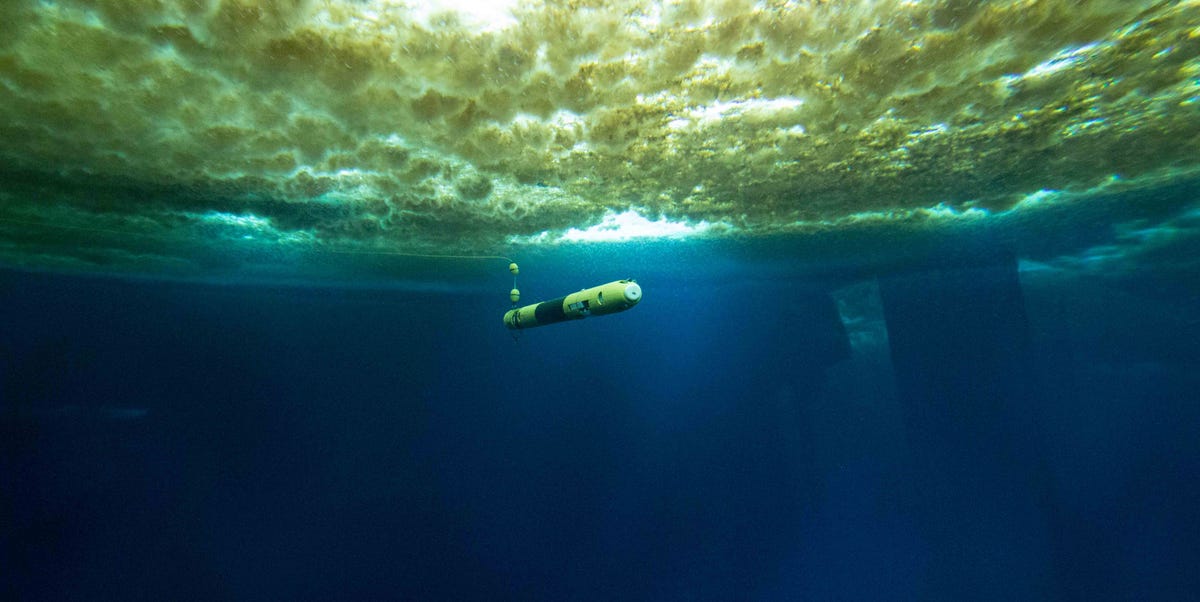
Subglacial research adds another layer of wonder. The idea that liquid water can exist beneath thick Antarctic ice changes how we think about frozen worlds. A buried lake on Earth becomes a model for a buried ocean on Europa. A clean drilling system becomes a prototype for future planetary protection. A vial of cold, dark water becomes a reminder that life does not need sunlight to be interesting.
The emotional experience of this work is a mix of awe, discomfort, patience, and humility. Antarctica makes humans feel small, which is useful when asking big questions. Are we alone? Where else could life exist? Would we recognize it if we found it? The continent does not answer directly. It gives clues, one frozen sample at a time.
Perhaps that is why Antarctica is such a fitting starting point for the search for aliens. It strips away fantasy and replaces it with evidence. It turns science fiction into field notes. It reminds us that discovery is not always a dramatic signal from the stars. Sometimes it is a careful glove reaching toward a black stone on ancient ice, knowing that the universe may have mailed us a message and waited patiently for us to learn how to read it.
Conclusion
The search for extraterrestrial life is no longer just a dream pointed at the night sky. It is a practical, disciplined scientific effort happening in laboratories, on Mars, around distant planets, and in one of Earth’s coldest wildernesses. Antarctica matters because it connects these worlds. It gives scientists meteorites from space, environments that resemble Mars, buried waters that echo icy moons, and a natural platform for observing cosmic particles.
Will Antarctica reveal alien life? Not directly, at least not in the little-green-neighbor sense. But it may teach us how to find it. The frozen continent helps scientists recognize biosignatures, avoid false positives, protect samples, and design future missions. If humanity ever confirms life beyond Earth, part of that discovery may trace back to fieldwork done under Antarctic skies. The search for aliens starts nowin Antarcticabecause sometimes the best way to look outward is to begin at the strangest edge of home.
Note: This HTML body is written for web publishing, based on real scientific information, and intentionally contains no visible source links or content reference markers inside the article body.