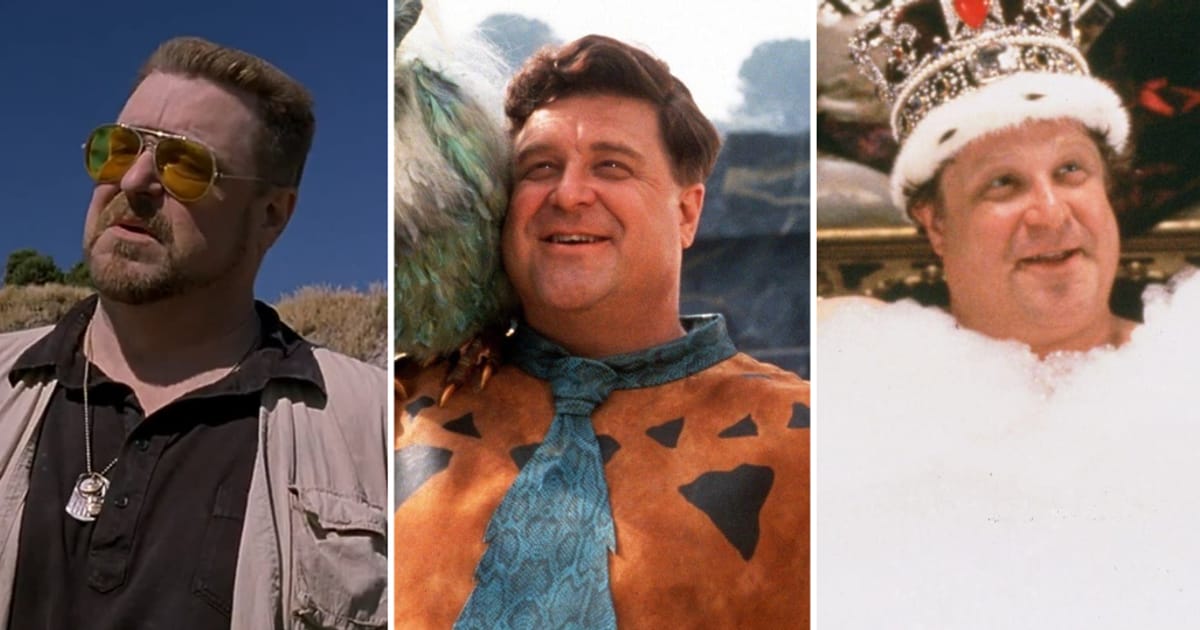

John Goodman has one of those careers that makes other actors look lazy. He can be funny without trying too hard, intimidating without raising his voice much, and heartbreakingly human while wearing a flannel shirt, a bowling vest, or, in at least one famous case, a whole lot of blue monster fur. Over several decades, he has built a filmography that swings from sitcom comfort to Coen brothers chaos, from animated family classics to dark thrillers where his smile alone can raise your blood pressure.
This list ranks the 17 best John Goodman movies and TV shows by balancing cultural impact, performance quality, rewatch value, and pure John Goodman-ness. In other words, these are the roles where he does more than simply appear. He takes over the room, steals the scene, or somehow makes the whole story feel sturdier just by showing up. If you have ever watched a movie and thought, “You know what this needed? More John Goodman,” congratulations: you understand cinema.
The 17 Best John Goodman Movies & TV Shows, Ranked
17. The Babe (1992)
Playing Babe Ruth is not exactly a subtle assignment, and that is part of what makes Goodman such a smart fit. He understood that Ruth was larger than life in every possible way, not just physically. In The Babe, Goodman gives the baseball icon warmth, swagger, appetite, and sadness, often in the same scene. The movie itself may not always land a perfect home run, but Goodman does. He makes Ruth feel mythic without turning him into a cardboard sports saint.
16. True Stories (1986)
This wonderfully odd David Byrne film is one of the earliest signs that Goodman was not going to be boxed into one type of role. As Louis Fyne, he is openhearted, awkward, and unexpectedly moving. True Stories has a deliberately offbeat rhythm, and Goodman fits it beautifully. He is funny, yes, but he also radiates a kind of earnest loneliness that lingers. Long before he became a household name, he was already doing that classic Goodman trick: making eccentric characters feel deeply real.
15. Flight (2012)
Goodman does not have the biggest role in Flight, but he definitely makes the loudest entrance. As Harling Mays, he barrels into the film like a one-man hurricane of confidence, bad ideas, and dark comic energy. The performance is showy in the best possible way. He is amusing, unsettling, and impossible to ignore, which is exactly what the movie needs at key moments. Goodman knows how to turn a supporting role into a jolt of electricity, and Flight is a great example.
14. Matinee (1993)
Joe Dante’s Matinee is a love letter to moviegoing, gimmicks, and Cold War nerves, and Goodman is absolutely delightful at the center of it. He plays a William Castle-style showman with hustle, heart, and just enough carnival-barker charm to sell every outrageous stunt. What makes the performance special is that Goodman never winks too hard at the audience. He treats this lovable promoter as a real artist, just one with better smoke machines. The result is sweet, smart, and endlessly watchable.
13. Inside Llewyn Davis (2013)
Goodman does not need much screen time to leave a dent in a movie, and in Inside Llewyn Davis, he practically kicks in the wall. As the jazz musician Roland Turner, he delivers one of the film’s funniest and prickliest performances. The character is pompous, cutting, and wonderfully miserable, which in Goodman’s hands becomes comic gold. It is a reminder that he excels at playing men who seem like they could tell a great story, ruin a dinner party, or do both in the same ten minutes.
12. The Conners (2018–2025)
It is easy to overlook The Conners because it exists in the long shadow of Roseanne, but Goodman’s work here deserves real credit. As Dan Conner in a later chapter of life, he gives the character more grief, gentleness, and weathered humor. He feels older, but not smaller. In fact, the years make Dan more affecting. Goodman plays him as a man who has survived disappointment, family chaos, and financial stress without losing his basic decency. That is not flashy acting. It is durable, excellent acting.
11. Argo (2012)
In Argo, Goodman teams with Alan Arkin for one of the great “put these two guys in a room and let them cook” pairings of modern studio filmmaking. As makeup artist John Chambers, he brings wit, professionalism, and a lived-in industry cynicism that helps the movie’s Hollywood satire really click. He never overplays it. Instead, he gives the film exactly the right amount of old-pro humor. Goodman understands that a supporting character can deepen a movie’s whole texture, and that is exactly what he does here.
10. The Emperor’s New Groove (2000)
Voice acting can expose every weak spot in a performer’s timing, which may be why Goodman sounds so completely effortless here. As Pacha, he gives The Emperor’s New Groove its moral center without turning the character into a lecture in sandals. Pacha is patient, funny, frustrated, and incredibly likable. Goodman’s voice has that rare quality of sounding sturdy and comforting at the same time, which is perfect for a family film that balances absurd comedy with genuine warmth. Also, few people have ever sounded this trustworthy while hauling an emperor around.
9. Raising Arizona (1987)
Goodman’s collaborations with the Coen brothers produced several career highlights, and Raising Arizona is where the beautiful weirdness really starts to bloom. As Gale Snoats, one half of an escaped-convict duo, Goodman is a marvel of comic menace. He is grubby, unpredictable, and hilariously intense. The performance is big, but it never feels sloppy. Goodman knows exactly how far to push a character before chaos becomes caricature, and that control is part of what makes him so great in broad comedies.
8. Treme (2010–2011)
For viewers who mainly associate Goodman with broad comedy or scene-stealing movie roles, Treme offers an important corrective. As Creighton Bernette, he gives one of the most emotionally bruised performances of his career. Set in post-Katrina New Orleans, the series allows Goodman to play anger, guilt, intelligence, and despair with painful honesty. There is nothing flashy about the work. It is restrained, deeply felt, and quietly devastating. If you want proof that Goodman can do far more than dominate a room, Treme has the evidence.
7. 10 Cloverfield Lane (2016)
This is one of Goodman’s best late-career performances because it weaponizes everything people naturally like about him. He plays Howard as protective, practical, and maybe even caring, right up until the movie makes you wonder whether every comforting word is actually a threat in work boots. Goodman turns ambiguity into suspense. You keep studying his face, his tone, his body language, trying to decide whether this man is a savior, a liar, or something worse. That tension is the engine of the movie, and Goodman drives it brilliantly.
6. The Righteous Gemstones (2019–2025)
As Eli Gemstone, Goodman gets to play a patriarch who is funny, formidable, shady, and oddly touching all at once. That is basically the John Goodman Grand Slam. In a series full of loud comic performances and magnificent nonsense, he anchors the chaos with gravitas. Eli can be loving one second and terrifying the next, but Goodman never loses the character’s inner logic. He makes the family’s ridiculous empire feel believable because he understands power, performance, and the sadness that can hide behind both.
5. O Brother, Where Art Thou? (2000)
Goodman’s Big Dan Teague is one of the great movie entrances by a character you should absolutely not trust. He is charming, smooth, and instantly suspicious, which is a delicious combination. The role is not enormous, but it is unforgettable, partly because Goodman plays the humor and menace in equal measure. Big Dan is ridiculous, dangerous, and somehow still grounded enough to feel like he wandered in from a different, darker American myth. In a movie full of scene-stealers, Goodman steals with professional efficiency.
4. Monsters, Inc. (2001)
James P. “Sulley” Sullivan could have been a standard lovable brute. Instead, Goodman helps make him one of Pixar’s most memorable characters. His performance gives Sulley authority, heart, and a surprisingly tender emotional arc. The magic of Monsters, Inc. depends on you believing that this giant furry scarer can become a protective parent-like figure to Boo, and Goodman sells that transformation completely. He also pairs beautifully with Billy Crystal, creating one of animation’s most enjoyable buddy dynamics. It is warm, funny, and far more nuanced than people sometimes remember.
3. Barton Fink (1991)
Here is where Goodman stops being merely great and starts being a little frighteningly great. As Charlie Meadows in Barton Fink, he delivers a performance that is by turns friendly, pathetic, funny, creepy, explosive, and impossible to shake. The movie thrives on tonal instability, and Goodman becomes its human embodiment. He can make a line sound neighborly and ominous at the same time, which is not a skill they teach in Intro to Acting. This is one of the defining performances of his career, and one of the boldest in 1990s American cinema.
2. The Big Lebowski (1998)
Walter Sobchak is one of the all-time great “you would never want to be trapped in a car with this person” characters. He is aggressive, self-righteous, bizarrely principled, and hysterically funny. Goodman plays him with volcanic conviction, which is why Walter never becomes a sketch. He is absurd, but he fully believes every word coming out of his mouth. That commitment is what makes the performance iconic. The Big Lebowski may belong to the Dude in spirit, but Goodman’s Walter is the movie’s most combustible source of comic force.
1. Roseanne (1988–1997; 2018)
Dan Conner is still John Goodman’s signature role because it shows almost every strength he has as a performer. He is hilarious without mugging, masculine without macho nonsense, loving without sentimentality, and flawed without losing audience affection. On Roseanne, Goodman made Dan feel like a real American husband and father, the kind of guy who could fix a furnace, crack a joke, mess something up, and break your heart before the commercial break. Plenty of actors can play sitcom dads. Very few can make one feel this lived-in, funny, and enduring.
Why John Goodman’s Best Roles Hold Up So Well
The secret is range, but not the flashy kind actors use in awards-season interviews while looking thoughtfully out a window. Goodman’s range works because it is built on behavior. He understands how people talk when they are bluffing, how they move when they are embarrassed, and how a joke can cover fear, pride, loneliness, or rage. That is why he can thrive in a family sitcom, a surreal Coen brothers nightmare, an animated classic, and a claustrophobic thriller without ever seeming miscast.
He is also one of the few performers who can make bigness feel precise. His voice is big. His physical presence is big. His comic energy can be huge. But the choices are rarely messy. Walter Sobchak, Dan Conner, Sulley, Charlie Meadows, and Eli Gemstone are wildly different people, yet each one feels specific down to the rhythm of a sentence. Goodman never just “does John Goodman.” He adjusts the temperature, the pressure, and the humanity of each role.
That is why his best work sticks. Even when the movie around him is strange, heightened, or completely bonkers, Goodman gives you something solid to hold onto. And then, just when you get comfortable, he might also throw a chair, deliver a devastating look, or reveal that the nice neighbor is not nice at all. A true professional.
The Viewing Experience of John Goodman, From Couch Comfort to Controlled Chaos
Watching John Goodman across different decades feels a bit like watching American screen entertainment grow up, get weird, calm down, and then get weird again. His career is one of those rare acting journeys where the audience experience changes with age, but the performer’s value never drops. If anything, it gets richer. Early Goodman performances often arrive like a burst of personality. He is funny, loud, memorable, and impossible to ignore. As the years go on, he keeps that energy, but adds more melancholy, more patience, and more emotional shading. The result is that viewers do not just remember his characters. They remember how those characters felt to be around.
Take the homey comfort of Roseanne. Dan Conner feels like someone viewers know, or wish they knew, because Goodman makes everyday decency look heroic without turning it into a speech. Then compare that with the spiraling unease of 10 Cloverfield Lane, where the exact same qualities that once made him reassuring become unnerving. His friendliness has weight. His stillness has teeth. The audience experience changes, but the magnetism stays the same.
That is also why rewatching his work is so rewarding. A first viewing of The Big Lebowski might leave you laughing at Walter’s volume and intensity. A second or third viewing lets you appreciate how carefully Goodman calibrates the character’s rhythms, interruptions, and misplaced certainty. In Barton Fink, he is even more fascinating on revisit because you start noticing how much tension he creates before the movie fully tips its hand. Goodman is great at giving audiences something extra to discover once the plot is no longer distracting them.
Family audiences experience him differently, of course. For many viewers, Goodman is Sulley or Pacha first, and that matters. His voice work has an inviting steadiness that makes animated films feel safe, funny, and emotionally grounded. He sounds like someone who can carry the story when things get wild. That quality has made him a generational actor in the truest sense. Parents, kids, comedy fans, prestige-TV viewers, and film nerds can all claim a different “favorite” Goodman performance and still be completely right.
There is also a special pleasure in watching him support other actors. Goodman is not insecure on screen. He does not cling to every scene like a man trying to win a trophy by force. Instead, he often improves the chemistry of an entire cast. You can see it in ensemble comedies, in prestige dramas, and especially in projects where he plays off high-strung or eccentric co-stars. He knows when to dominate a moment and when to make someone else better. That kind of generosity is one reason his performances age so well.
Maybe that is the real experience of watching John Goodman: trust. You trust that he will find the joke without flattening the emotion. You trust that he can play scary without becoming ridiculous. You trust that, even in a strange movie, he will give you a human center. And if the role calls for him to be lovable, menacing, ridiculous, heartbreaking, or all four before lunch, he will probably do that too. Very few careers offer this much consistency without becoming predictable. Goodman’s does, which is exactly why these 17 titles are still such a pleasure to watch.
Final Take
If you only know John Goodman from one role, you only know one corner of the map. His best movies and TV shows reveal an actor who can be broad and subtle, comforting and terrifying, hilarious and devastating. Roseanne remains the essential starting point, while The Big Lebowski and Barton Fink showcase his fearless brilliance in film. But the deeper joy of exploring his career is realizing there is no single version of John Goodman. There is only the next great performance waiting to remind you why he has been indispensable for so long.