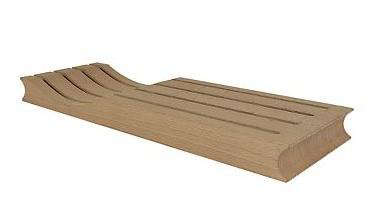

If your kitchen counter currently looks like it’s hosting a support group for confused appliances, a Swedish knife rest for drawers might be the calm, clever fix you didn’t know you needed. This style of in-drawer knife organizer is simple in the best Scandinavian way: clean lines, practical storage, and just enough elegance to make you feel like your kitchen has its life together even when dinner is frozen dumplings and a last-minute salad.
At its core, a Swedish knife rest for drawers is a low-profile insert designed to keep knives safely tucked inside a drawer rather than rattling around loose like tiny stainless-steel land mines. Many versions are made from hardwood such as maple or beech, and the design often includes shaped grooves or slots that protect the blade while leaving the handle easy to grab. Some models are minimal and narrow, while others hold a full knife collection. Either way, the goal is the same: protect the edge, protect your fingers, and reclaim precious counter space.
This article takes a close look at what a Swedish knife rest for drawers is, why people love it, how it compares with other knife storage ideas, what to check before buying one, and how to use it without turning your drawer into a sad little knife parking lot. We’ll also cover real-world experiences from home cooks who have made the switch from countertop blocks to hidden drawer storage.
What Is a Swedish Knife Rest For Drawers?
The phrase usually refers to a Swedish-made or Swedish-style in-drawer knife holder with a distinctly minimalist design. A classic version is a chunky wooden rest with grooves carved into the top surface so each blade lies securely in place. The shape is intentional: the blade stays protected, the handle remains visible, and the whole organizer sits flat in the drawer without demanding a dramatic kitchen renovation.
Think of it as a knife block that decided to be less flashy and more useful. Instead of occupying prime real estate on your countertop, it disappears into a drawer. Instead of forcing blades into vertical slots that may or may not fit your favorite chef’s knife, many drawer rests let knives lie at a gentle angle or in individual grooves. The result is safer storage, less edge damage from knives knocking into each other, and a kitchen that looks cleaner at a glance.
Why the Swedish Angle Matters
“Swedish” in this context is part design language and part product origin story. Swedish and broader Scandinavian kitchen storage products are famous for being practical, streamlined, and visually restrained. In plain English, they do the job without screaming for attention. A Swedish knife rest for drawers fits that pattern perfectly: useful, compact, durable, and suspiciously good at making you feel more organized than you actually are.
Why More Home Cooks Are Choosing In-Drawer Knife Storage
There are three big reasons people fall for drawer-based knife storage: safety, blade protection, and space savings.
1. It Protects Your Knives
Loose knives in a drawer are a terrible idea. They bang into other utensils, knock against each other, and dull faster. A dedicated drawer rest keeps each knife in its own spot, which reduces friction and minimizes accidental nicks to the blade. If you’ve spent real money on quality cutlery, that matters. A sharp knife is easier to control, more pleasant to use, and less likely to make you mutter things you wouldn’t want repeated at the dinner table.
2. It Improves Kitchen Safety
One of the easiest ways to get cut in the kitchen is to reach into a drawer and discover, with your hand, that a knife has migrated. A Swedish knife rest for drawers solves that problem by giving every blade a clear home. Handles remain accessible, edges stay covered or cradled, and you’re no longer playing a game called “guess which object in this drawer is dangerous.”
3. It Frees Up Counter Space
Countertop knife blocks can be handsome, but they take up room all day, every day. If you have a compact kitchen, a crowded prep zone, or a strong dislike of visual clutter, moving knives into a drawer is a smart upgrade. It creates a cleaner look and makes the kitchen feel more open without changing your layout.
The Design Features That Make a Good Drawer Knife Rest
Not every in-drawer organizer deserves a standing ovation. The best ones share a few key design traits.
Low Profile Construction
A good knife rest should fit inside a standard kitchen drawer without forcing the drawer to scrape, jam, or close with the drama of a haunted cabinet. Low-profile models are especially popular because they work in more kitchens and leave room for the knife handles to sit comfortably.
Proper Blade Support
The whole point is to support the blade without damaging the cutting edge. Grooves, angled slots, or fitted channels should keep knives stable while preventing metal-on-metal contact. If the knives wobble or overlap, the organizer is not helping as much as it claims.
Easy Handle Access
Some of the most thoughtful designs include a curved or contoured shape so the handle sits higher and is easier to grip. This sounds like a tiny detail until you’re trying to pull out a paring knife with wet hands while onions are waiting. Then it becomes very important, very fast.
Durable Materials
Many premium drawer rests use beech, maple, walnut, ash, oak, or bamboo. Hardwood looks polished and tends to pair well with kitchen cabinetry. Some modern organizers use sturdy plastic or composite materials, which can be lighter and easier to wipe clean. There is no single perfect material; the right choice depends on your aesthetic, your budget, and how much maintenance you’re willing to tolerate before coffee.
How a Swedish Knife Rest Compares With Other Knife Storage Options
Compared With a Countertop Knife Block
A drawer rest wins on visual simplicity and counter space. A traditional knife block can be convenient, but it is bulkier and more exposed. It also tends to collect crumbs and dust if ignored long enough, which many of us absolutely do. Drawer storage feels more modern, cleaner-looking, and often safer in family kitchens because the knives are out of immediate sight.
Compared With a Magnetic Knife Strip
Magnetic strips are popular because they keep knives easy to grab and can look sleek on the wall. But they are not always ideal for every home. If you have children, limited wall space, or a low tolerance for visible metal objects hovering in your peripheral vision, a drawer organizer may feel more comfortable. A Swedish knife rest also protects the kitchen from that one dramatic moment when a knife is placed on the strip carelessly and clacks into position like it’s auditioning for an action movie.
Compared With Blade Guards in a Regular Drawer
Blade guards are useful and often inexpensive, but they are a bit less elegant. They protect each knife individually, yet they do not organize the drawer by themselves. A drawer rest creates an actual system. Instead of loose but sheathed knives drifting around next to peelers, thermometers, and that one random corn skewer, you get order.
What to Check Before You Buy
Measure the Drawer First
This is the least glamorous step and the most important one. Measure the interior length, width, and depth of the drawer, not the outside cabinet size. Many in-drawer organizers are around 16 to 17 inches long, but widths vary a lot. Some narrow rests hold four or five knives. Larger trays may hold seven, fourteen, or even more. Your dream organizer is only dreamy if the drawer can actually close.
Consider Your Knife Collection
If you mainly use a chef’s knife, paring knife, and serrated utility knife, a compact rest is enough. If you own a full collection with bread knives, santoku knives, carving knives, and extra utility blades, look for a wider organizer or a modular system. The best fit is the one that matches your real kitchen habits, not your fantasy life as a television chef who juliennes vegetables while smiling.
Look at Blade Length Compatibility
Some organizers are designed for blades up to about 9 or 10 inches. Others are best for smaller everyday knives. Check the slot length and handle clearance before buying, especially if you use a large chef’s knife or a long slicer.
Think About Cleaning
Wooden organizers look beautiful, but they still need common sense. Store knives dry, wipe the organizer regularly, and avoid letting moisture hang around inside the drawer. If low-maintenance care is your love language, a plastic or composite organizer may be more your speed.
How to Use a Swedish Knife Rest For Drawers the Right Way
Store Knives Clean and Dry
Putting damp knives into a drawer is a fast way to create problems. Water and enclosed spaces are not a charming couple. Always hand-wash and fully dry knives before storing them.
Give Each Knife Its Own Spot
Do not stack knives, overlap blades, or treat the organizer like a suggestion rather than a system. These rests work best when each knife has a dedicated place.
Use the Knife Drawer Only for Knives
If possible, reserve that section of the drawer for cutlery. Tossing in bottle openers, tongs, can openers, and mystery gadgets defeats the purpose. A tidy knife drawer is both safer and more satisfying. It also gives you one tiny area of the house where life appears under control.
Who Should Buy One?
A Swedish knife rest for drawers is especially useful for people who want a minimalist kitchen, have limited counter space, or care about keeping blades in better condition. It is also a great choice for households that prefer sharp tools out of sight, but still want them organized and easy to reach.
It may be less ideal if your drawers are extremely shallow, you own unusually shaped knives, or you want instant visual access to your entire collection. In that case, a magnetic strip or a universal block might suit you better. But for many home cooks, drawer storage hits the sweet spot between function and style.
Why the Swedish Knife Rest For Drawers Has Lasting Appeal
This product category keeps showing up in modern kitchen design for a reason. It combines practical storage with understated beauty. It protects expensive tools without dominating the room. It encourages better habits without feeling fussy. And it makes a kitchen look cleaner almost instantly, which is one of the rare upgrades that feels both aesthetic and genuinely useful.
In a world full of kitchen gadgets that promise transformation and deliver clutter, the Swedish knife rest for drawers is refreshingly honest. It does not spiralize anything. It does not connect to Wi-Fi. It simply holds your knives safely, neatly, and smartly. Sometimes that’s the real luxury.
Experiences Related to a Swedish Knife Rest For Drawers
One of the most common experiences people report after switching to an in-drawer knife rest is surprise at how much calmer the kitchen feels. That sounds dramatic for a piece of wood sitting in a drawer, but the change is real. A countertop block disappears, the work surface opens up, and suddenly the kitchen looks less busy. People often expect the benefit to be purely practical, then realize the visual difference is just as satisfying. It is the kitchen equivalent of deleting fifty screenshots from your phone and feeling like you’ve become a new person.
Another frequent experience is that knives seem easier to maintain. Home cooks often notice fewer accidental dings on the edge because the blades are no longer sliding around in a drawer with other utensils. Several shoppers also comment that once knives are stored in an orderly way, they become more careful about drying them thoroughly before putting them away. In other words, the organizer gently pressures people into better knife habits. It’s like having a very quiet Scandinavian roommate who never judges you out loud but somehow inspires better choices.
There are also stories about convenience. Many users say they like being able to open one drawer, see every handle at once, and grab the exact knife they need without digging through a block or searching behind a toaster. This is especially useful during busy meal prep, when you want speed without chaos. A narrow drawer rest can also fit alongside other inserts, which makes it easier to build a full drawer system for knives, utensils, and prep tools.
Of course, not every experience is instantly perfect. A common mistake is underestimating drawer dimensions. Someone buys a beautiful organizer, brings it home, slides it in, and discovers the drawer will not close because the handle height is just a little too generous. That is why measuring the inside depth of the drawer matters so much. Another issue comes up when buyers choose a fixed-slot model that does not match their actual knives. If you have extra-tall blades or a mix of unusual shapes, flexibility matters more than looks.
Families often mention safety as one of the biggest wins. Parents and grandparents appreciate that sharp knives can be stored out of sight instead of sitting on the counter. It does not remove the need for caution, of course, but it does reduce casual exposure. At the same time, adults in the home often say the drawer feels safer for them too, because the knives are no longer loose and unpredictable.
Then there is the aesthetic experience, which should not be underestimated. Wooden organizers in beech, maple, walnut, or bamboo add warmth to a drawer and make the whole kitchen feel more intentional. Even people who are not particularly design-obsessed seem to enjoy opening a drawer that looks tidy and purposeful. There is a quiet pleasure in seeing each knife resting exactly where it belongs.
Overall, real-world experience tends to be positive when the organizer matches the drawer and the knife collection. People like the cleaner counters, the safer storage, the protected blades, and the sense of order. The only real downside is that once one drawer looks this good, the rest of the kitchen starts looking suspiciously unorganized.
Conclusion
A Swedish knife rest for drawers is one of those rare kitchen upgrades that earns its keep every single day. It protects your knives, improves safety, clears counter space, and adds a subtle Scandinavian sense of order to your kitchen routine. Whether you choose a slim maple rest, a beech organizer, or a more modern insert, the smartest option is the one that fits your drawer, suits your knife collection, and supports how you really cook. If you want a kitchen that feels sharper in every sense of the word, this is a smart place to start.