
Note: This article is written in standard American English and synthesizes real research and practice-based insights about project-based learning, or PBL.
Project-based learning has spent years being treated like the cool cousin of traditional instruction: popular, energetic, and occasionally blamed for every classroom problem from weak essays to glitter explosions. But a growing body of research suggests PBL is more than an educational trend with good posters. When it is designed well, taught with structure, and supported by strong teacher training, PBL can improve achievement, deepen engagement, and help students build the kind of skills that actually matter outside a test booklet.
That matters because schools are under pressure from all sides. Teachers are expected to raise achievement, close opportunity gaps, keep students engaged, teach collaboration, develop critical thinking, and somehow do it all before lunch. Traditional instruction can certainly teach important content, but recent research on PBL suggests that students often learn more powerfully when they are asked to investigate meaningful questions, create authentic products, revise their work, and present what they know to real audiences. In other words, learning gets stickier when it stops feeling like a worksheet marathon.
The newest conversation around PBL is not really about whether projects are fun. Of course they can be fun. So is a class pet, but nobody argues the hamster is a curriculum framework. The real question is whether PBL improves outcomes that schools care about: academic performance, engagement, collaboration, literacy, problem-solving, and equity. The latest research says the answer is increasingly yes, with an important footnote in bold: quality matters.
What Is PBL, Exactly?
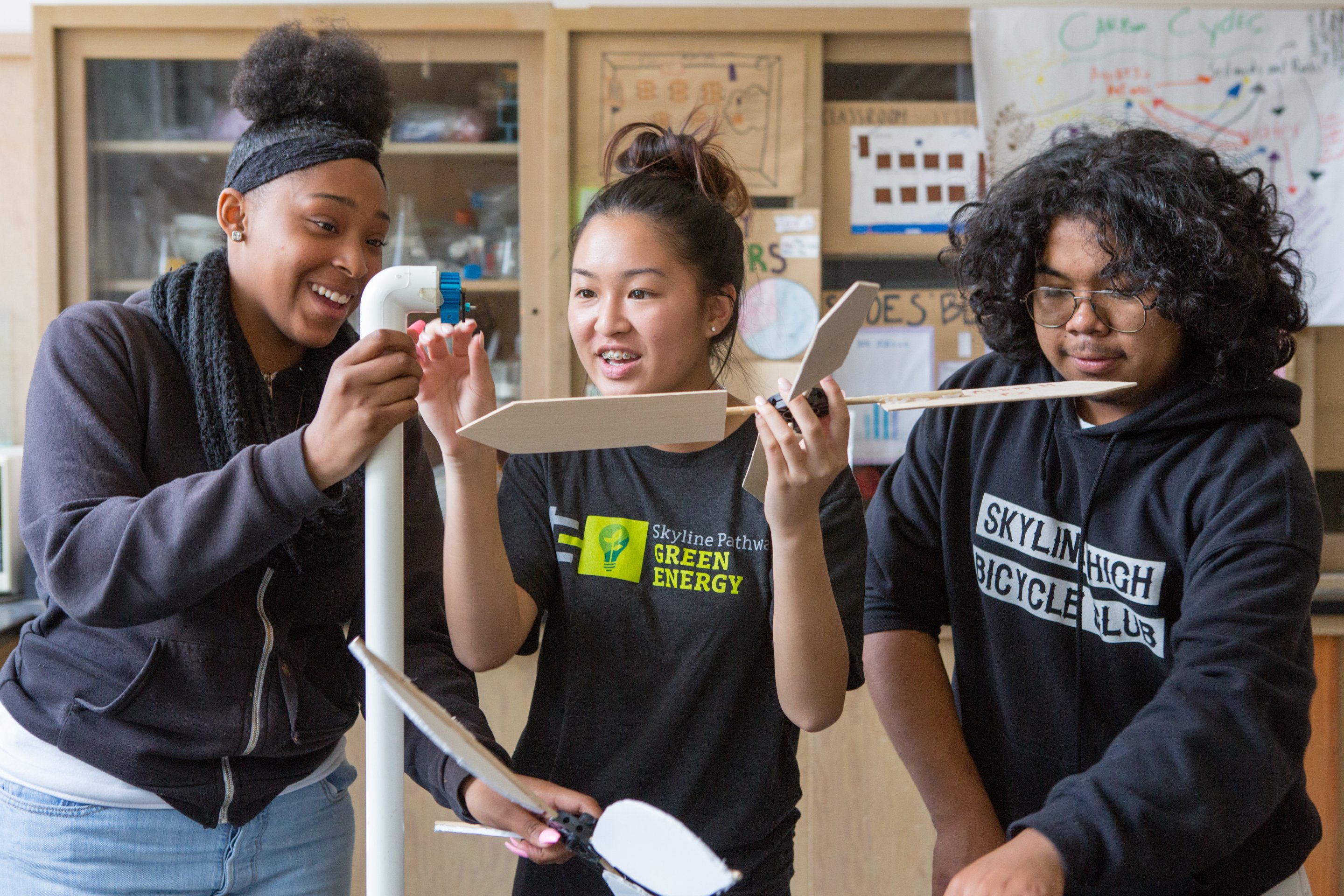
Project-based learning is a teaching approach in which students learn by investigating a complex question, problem, or challenge over an extended period of time. Instead of receiving information in neat little spoonfuls and then giving it back on a quiz, students use content to create something meaningful. That could be a policy proposal, a scientific explanation, a design solution, a public presentation, or a community-centered product.
Good PBL is not “make a poster and call it rigor.” It usually includes a driving question, sustained inquiry, authentic tasks, student voice and choice, critique and revision, collaboration, and a public product. It also includes direct teaching when needed. That last part is important. High-quality PBL is not a free-for-all where students are left to wander through confusion like tourists without a map. The strongest models blend inquiry with careful scaffolding, feedback, and teacher expertise.
That distinction helps explain why PBL has moved from inspirational conference talk to serious research topic. Educators are no longer just asking whether students enjoy projects. They are asking what kinds of projects work, for whom they work, and under what conditions they lead to better learning.
What New Research Says About the Impact of PBL
1. PBL can raise academic achievement, not just classroom energy
One of the most important shifts in the research base is that stronger study designs have started to show measurable academic gains. That is a big deal because critics have long argued that PBL might build enthusiasm while sacrificing content mastery. Recent findings do not support that gloomy little prophecy.
In Advanced Placement courses, researchers studying the Knowledge in Action model found that students in project-based AP classes earned credit-qualifying exam scores at higher rates than students in traditional AP classes. The gain was especially notable because the study involved diverse, largely urban districts and included many students from low-income households. That undercuts the old assumption that PBL is only for already-advantaged students with color-coded binders and suspiciously organized handwriting.
Research in elementary science tells a similar story. In one large study of third graders, students in a project-based science program outperformed peers in non-PBL classrooms on summative science assessments. Even better, the benefits were not confined to a narrow slice of students. The results held across subgroups, including struggling readers. That matters because PBL is often dismissed as too open-ended for students who need more support. Well-designed PBL appears to challenge that assumption.
Another study on second-grade social studies and literacy found that project-based learning produced gains in both social studies knowledge and informational reading. That combination is especially interesting because it suggests PBL can support content learning and literacy development at the same time. In a world where schools often treat subjects like jealous roommates fighting over time, that kind of integration is educational gold.
Middle school findings are also encouraging. A project-based science approach developed with Stanford researchers boosted science achievement and also showed benefits in mathematics, English language arts, student engagement, and language development for English learners. That suggests PBL may create useful spillover effects when students are repeatedly asked to read closely, discuss ideas, solve problems, and explain their thinking.
2. PBL appears to support deeper learning and transferable skills
Recent research summaries from leading education organizations point in the same direction: PBL is associated not just with academic gains, but also with outcomes that schools often struggle to teach directly. These include collaboration, self-reflection, engagement, motivation, and the ability to apply knowledge in new settings.
That makes sense. When students have to make decisions, interpret evidence, divide roles, revise work, and present to others, they are not simply memorizing information. They are using it. PBL often asks students to move from “I know the answer” to “I can do something with what I know.” Those are not the same skill, and the second one is usually the one employers, colleges, and communities care about.
Researchers and organizations such as Digital Promise and RAND have linked project-based learning to deeper learning goals, including critical thinking, problem-solving, and student participation in meaningful work. District leaders surveyed by RAND also reported that project-based learning was one of the most common examples of how schools try to develop critical thinking in middle and high school. That does not prove every project leads to deep learning, but it shows why PBL remains central to current conversations about school redesign.
3. PBL can be a lever for equity when it is designed thoughtfully
Perhaps the most compelling part of recent PBL research is its implication for equity. Several rigorous studies found benefits across racial, socioeconomic, and achievement groups. In other words, PBL is not just a shiny enrichment model for students who were already going to succeed anyway.
That does not happen by accident. Equity-centered PBL is intentionally designed to connect learning to students’ lives, communities, identities, and cultural knowledge. When projects feel relevant, students are more likely to engage deeply. When teachers build strong structures for collaboration and feedback, more students can participate successfully. When public products have real audiences and real stakes, schoolwork starts to feel less like busywork and more like contribution.
There is also a growing focus on culturally relevant PBL, including efforts supported by the Institute of Education Sciences to help teachers develop the routines and mindsets needed for student-centered, community-connected work. This is an important reminder that PBL is not only about the project topic. It is also about who gets to speak, whose experiences count, and whether students are invited to see themselves as thinkers, creators, and problem-solvers.
Why PBL Works When It Works
The newest research does not portray PBL as magic. It portrays it as design. That is actually better. Magic is unreliable. Design can be improved.
Several features show up again and again in successful PBL models. First, there is authenticity. Students are more engaged when the task feels real, useful, or connected to the world around them. A driving question about local water quality, public policy, food systems, or community design tends to land differently than “complete problems 1 through 27.”
Second, there is sustained inquiry. Students return to a question, gather information, test ideas, and revise their thinking over time. That repeated cycle helps learning move past short-term recall. Third, there is voice and choice, which can increase ownership and motivation. Students do not need total freedom to benefit; even meaningful choices about approach, product, or roles can make a difference.
Fourth, strong PBL includes critique and revision. Students receive feedback from teachers, peers, and sometimes outside experts, then improve their work. That makes the process more rigorous and less decorative. Finally, successful PBL depends on teacher support. Research consistently shows that projects need structure, scaffolds, clear goals, classroom routines, and skillful facilitation. The teacher is not absent in PBL. The teacher is busy doing some of the hardest work in education.
Where the Hype Needs a Hall Pass
If PBL has a weakness, it is that people often use the term too loosely. Not every activity with construction paper qualifies. Not every group assignment counts. And not every school that says it uses PBL is implementing a research-backed version of it.
That is why the caution from MDRC and federal evidence reviewers still matters. The research base is stronger than it used to be, but implementation remains uneven. Some programs show promising results. Some show strong results. Some do not yet have enough high-quality evidence for firm conclusions. That means educators should resist two bad habits: dismissing PBL entirely and worshipping it blindly.
The better approach is more practical. Use high-quality curriculum materials. Train teachers well. Align projects to academic goals. Provide frequent feedback. Build classroom norms for discussion and teamwork. Make sure assessments capture what students are expected to learn. And please, for the love of all rubrics, do not assume that students automatically know how to collaborate just because they have been placed near one another.
What This Means for Schools Right Now
In 2026, the appeal of PBL is easy to understand. Schools are looking for ways to increase engagement, build durable skills, and make learning feel more relevant after years of academic disruption and motivational drift. Recent research suggests that PBL can help, especially when schools treat it as a serious instructional approach rather than a once-a-semester special event.
That means school leaders should think beyond isolated projects. The most promising models include curriculum design, professional learning, assessment tools, and a broader culture that supports inquiry and revision. PBL works best when it is part of how a school thinks about learning, not just something that appears during Spirit Week wearing a fake mustache.
It also means policymakers and district leaders should pay attention to what the evidence is actually saying. The lesson is not that traditional teaching has no place. The lesson is that students often perform better when they use academic content in meaningful ways. Direct instruction and PBL are not enemies. In strong classrooms, they work together. Teachers introduce, model, clarify, question, coach, and then ask students to apply what they have learned in complex, authentic contexts.
Experiences From the Field: What PBL Feels Like in Real Life
Research data tells us what happened. Classroom experience tells us what it felt like. And when you read accounts from teachers, students, and school leaders connected to project-based learning, a few themes appear again and again.
For students, PBL often changes the emotional temperature of the classroom. Instead of asking, “Will this be on the test?” students are more likely to ask, “Can we try this?” or “What if we change our design?” That shift matters. In many PBL classrooms, students describe their work as more interesting, more challenging, and more worth doing because it leads somewhere. They are not just completing a task for the teacher. They are building something to explain, defend, improve, or share. Even when the project is difficult, the difficulty feels purposeful. It is the difference between climbing a hill and walking on a treadmill. Both take effort, but only one feels like it leads to a view.
For teachers, the experience is often a strange combination of exhilaration and organized chaos. PBL asks teachers to do less talking and more noticing. They have to anticipate misconceptions, design supports, guide discussion, coach collaboration, and decide when to step in with direct instruction. Teachers often report that the classroom becomes louder, more dynamic, and more intellectually revealing. Students say surprising things. They get stuck in visible ways. They also show understanding in ways that a multiple-choice test would never catch. Many teachers say PBL helps them see students who were previously quiet, underestimated, or disengaged come alive when the work becomes authentic.
For school leaders, the experience of implementing PBL is usually a lesson in systems, not slogans. PBL sounds wonderful at a conference. It becomes real when leaders have to create time for planning, support professional development, align expectations, and help teachers learn new routines. Schools that do this well often discover that PBL is not an “extra.” It changes how classrooms use time, how students demonstrate learning, and how teachers think about quality work. Leaders also learn quickly that one heroic teacher cannot carry a schoolwide model on caffeine alone.
For families and communities, PBL can make school feel more visible and more meaningful. When students present solutions, explain research, or create products connected to local issues, families get a clearer picture of what students are actually learning. Community partners can become part of the learning process, not just names on a newsletter. That public dimension often raises the stakes in a healthy way. Students know their work will be seen, and that tends to produce more care, more pride, and yes, occasionally more last-minute stress. Some educational traditions never change.
The most powerful experience, though, may be the sense of identity that PBL can build. Students start to see themselves not just as receivers of information but as thinkers, investigators, designers, and contributors. That identity shift is hard to measure neatly, but it shows up in effort, ownership, and persistence. And if recent research is right, it may be one of the reasons PBL has such lasting promise.
Conclusion
New research on project-based learning points to a more mature understanding of its impact. PBL is not a shortcut, not a gimmick, and not an excuse to replace teaching with vibes. But it is a promising, increasingly evidence-backed approach that can improve achievement, strengthen engagement, support deeper learning, and expand opportunity when it is implemented with care.
The real takeaway is refreshingly practical: students learn well when they are challenged to think, create, collaborate, revise, and apply knowledge to meaningful problems. That may not sound revolutionary, but in an education system still tempted by coverage over understanding, it is a powerful reminder. If the newest research on PBL keeps telling us anything, it is this: when learning feels real, students are more likely to rise to it.