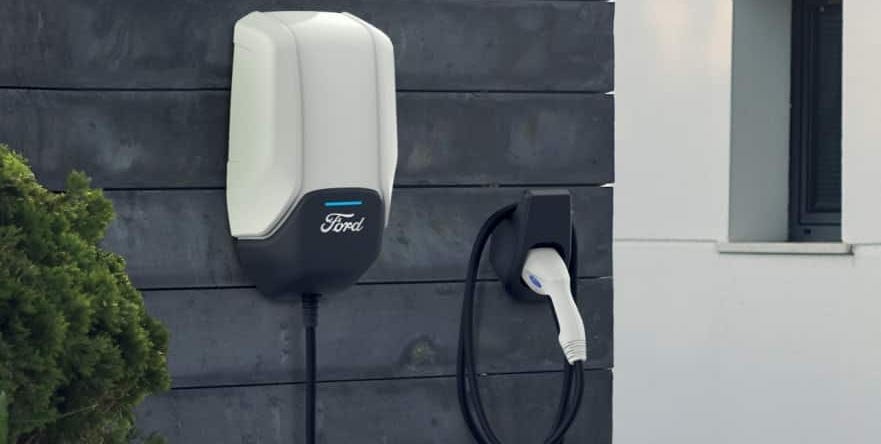

Ford is not treating electric vehicle charging like a polite side dish anymore. It is moving it to the center of the table, adding the big spoon, and telling everyone to dig in. For years, the EV conversation has circled the same practical question: “Where will I charge?” Ford’s answer is becoming much bigger than a home wall box in the garage. The company is building, expanding, partnering, and stitching together a North American charging ecosystem meant to make Ford electric vehicles easier to live with from Monday commutes to cross-country road trips.
The headline is simple: Ford is planning and expanding a huge North American electric charging network through its BlueOval Charge Network, Tesla Supercharger access, Ford Charge dealership fast chargers, and fleet-focused charging services. The strategy is not only about adding plugs. It is about making public charging feel less like a scavenger hunt and more like something normal people can use without downloading six apps, creating three accounts, and sacrificing a granola bar to the software gods.
For shoppers considering a Mustang Mach-E, F-150 Lightning, E-Transit, or future Ford EV, this matters. Charging confidence is one of the biggest factors separating curious buyers from actual EV owners. Ford knows that range alone does not sell an electric vehicle. Reliability, convenience, payment simplicity, route planning, and charger availability all matter. In other words, the EV itself is only half the product. The other half is the road around it.
What Is Ford Building?
Ford’s North American charging plan is best understood as several connected layers. The first layer is the BlueOval Charge Network, Ford’s integrated public charging platform. It brings together multiple public charging providers so Ford EV drivers can find stations, view availability, see pricing where available, and pay through the Ford app. Instead of acting like every charging company lives on a different planet, Ford is trying to make them feel like one coordinated network.
The second layer is access to Tesla Superchargers. Ford became the first major automaker to open Tesla Supercharger access for its EV customers in the United States and Canada. That move dramatically expanded fast-charging options for drivers of compatible Ford EVs, especially along major travel corridors where Tesla’s network has long been praised for convenience and reliability. Ford owners with eligible vehicles can use a fast-charging adapter to connect to compatible Tesla Superchargers, while future Ford EVs are expected to support the North American Charging Standard more directly.
The third layer is Ford Charge, a newer public fast-charging network built around Ford dealerships. Ford announced nearly 1,200 Ford-branded DC fast chargers at more than 320 dealerships across the United States and Canada. These chargers are designed to serve compatible EVs, not only Ford vehicles. That detail is important. Ford is not merely building a private clubhouse for Blue Oval fans; it is trying to turn dealership real estate into useful EV infrastructure.
The fourth layer is Ford Pro charging for commercial customers. Businesses running electric vans, trucks, or mixed fleets need more than a charger and a cheerful thumbs-up. They need billing, usage records, depot planning, public charging access, driver tools, and uptime support. Ford Pro’s charging services are aimed at those customers, giving fleets a more organized way to electrify without turning the operations manager into a full-time charging detective.
Why Ford’s Charging Network Matters
EVs have improved quickly, but charging remains the part of ownership that makes some buyers hesitate. A gasoline driver does not usually ask whether a station will recognize their car, accept their payment, or exist when the map says it exists. EV drivers, unfortunately, have learned to ask those questions. That is the gap Ford is trying to close.
The company’s charging strategy is also a competitive move. Tesla built a reputation not only because its vehicles were early and exciting, but because its Supercharger network made long-distance electric driving feel realistic. Traditional automakers have learned the lesson. The car is the product, but the charging experience is the promise. If the promise fails, the car gets blamed, even when the charger belongs to someone else.
Ford’s plan directly targets three common EV pain points: location, reliability, and simplicity. More locations reduce range anxiety. Better integration reduces app overload. Access to faster chargers reduces waiting time. Together, these improvements make electric driving easier to recommend to someone who does not want their road trip to include a 45-minute argument with a payment screen in a grocery store parking lot.
The Tesla Supercharger Deal Changed the Conversation
Ford’s agreement with Tesla was one of the biggest turning points in North American EV charging. When Ford announced that its EV customers would gain access to thousands of Tesla Superchargers, it signaled a broader industry shift toward the North American Charging Standard, also known as NACS. Other automakers later followed, but Ford moved first among major legacy brands.
For Ford drivers, this matters because Tesla Superchargers are often placed along heavily traveled routes and are known for a streamlined charging experience. The addition of compatible Tesla fast chargers more than doubled Ford customers’ fast-charging options when the rollout began. By 2025, Ford said its EV customers had access to more Tesla Superchargers than at launch, expanding the practical usefulness of the network.
There are still details drivers must understand. Not every Tesla charger is automatically open to every Ford EV. Older Supercharger hardware, local compatibility, adapter availability, and software support all matter. But from a customer perspective, the direction is clear: Ford is trying to make “Can I charge there?” a less stressful question.
Ford Charge: Turning Dealerships Into Charging Stops
Ford’s dealership-based charging plan is especially interesting because it uses a resource the company already has: thousands of local dealer relationships. Dealerships sit near highways, suburbs, commercial corridors, small towns, and city edges. Many have parking lots, electrical service, customer lounges, bathrooms, and staff on-site. In EV charging terms, that is not just real estate. That is potential.
With Ford Charge, the company is putting fast chargers at participating Ford dealerships and making them publicly available to compatible electric vehicles. This can help fill gaps in areas where dedicated charging networks have not yet built enough capacity. It also gives dealers a new role in the EV era. Instead of only selling and servicing vehicles, dealerships can become charging destinations.
That may sound simple, but the implications are big. A driver passing through a smaller city could stop at a Ford dealer for a quick charge. A non-Ford EV owner could use the charger and become familiar with Ford’s electric lineup while waiting. Fleet operators could gain more predictable charging options near service centers. And dealers could bring new foot traffic onto their lots without needing to convince everyone to buy a truck before they use the restroom.
How the Ford App Fits Into the Charging Experience
The Ford app is central to the company’s charging strategy. Through the app, Ford EV owners can search for public chargers, manage payments on supported networks, check charging details, and plan trips more easily. The goal is to reduce friction. EV charging should not require drivers to become part-time software engineers with a glovebox full of RFID cards.
Plug & Charge capability is another important piece. When supported, it allows the vehicle and charging station to communicate automatically after the driver plugs in. The session can start without a separate card swipe or app dance. That may sound like a small convenience, but small conveniences matter when it is raining, your phone is at 4 percent, and your passengers are asking whether the snack bag is “for everyone” or “mostly for Dad.”
Ford has also worked on route planning features that help drivers find compatible chargers along a trip. Better navigation is essential because EV road trips are not only about distance. They are about charger speed, charger location, weather, terrain, battery temperature, and how long you actually want to stop. A smart route planner can turn charging from a guessing game into a manageable routine.
Why North America Needs More Reliable EV Charging
The United States and Canada have added public EV chargers quickly, but quantity alone does not solve the problem. Drivers need chargers that work, are easy to find, are safe to use, and do not require a mysterious combination of app updates and optimism. Public charging has improved, yet studies and driver surveys continue to show that reliability and satisfaction remain major issues.
This is where Ford’s brand is on the line. If a Ford driver has a bad charging session on a third-party charger, the frustration may still attach to the vehicle. That is not entirely fair, but it is how customer experience works. People remember the badge on the hood more easily than the company name on the charger cabinet. By integrating networks, partnering with Tesla, and adding Ford-branded chargers, Ford gets more influence over the experience customers associate with its EVs.
Reliability also affects EV adoption beyond current owners. Many shoppers who are open to electric vehicles still worry about charging access. A larger and more dependable Ford charging ecosystem can help turn EVs from “interesting, but risky” into “practical enough for my real life.” That shift is essential if electric trucks, SUVs, and vans are going to reach mainstream buyers rather than only early adopters.
What This Means for the Mustang Mach-E and F-150 Lightning
The Mustang Mach-E and F-150 Lightning are two of Ford’s most visible electric vehicles, and both benefit from stronger public charging access. The Mach-E is often used like a family crossover, commuter vehicle, and road-trip car. More fast chargers make it easier for owners to take longer drives without planning every stop like a moon landing.
The F-150 Lightning has a different challenge. It is a truck, and truck buyers often expect flexibility. They may tow, carry tools, drive rural routes, visit job sites, or use the vehicle as a mobile power source. Charging access matters because a truck owner does not want to feel boxed into a narrow use case. A larger fast-charging network helps the Lightning feel more like a true F-Series truck that happens to be electric, rather than an electric experiment wearing work boots.
Ford’s charging expansion also supports the E-Transit. Commercial van customers care deeply about uptime. If a delivery van misses a route because charging was confusing or unavailable, the spreadsheet will not politely forgive the mistake. More integrated charging options can help fleet managers plan routes, control costs, and keep vehicles moving.
Commercial Fleets May Be the Quiet Winners
Personal EV owners often get the spotlight, but fleet customers may gain some of the biggest benefits from Ford’s charging network. Businesses think differently from retail buyers. They do not only ask, “Can I charge?” They ask, “Can I charge ten vehicles, track the cost, reimburse drivers, schedule downtime, and prove the savings to finance?” That is a more complicated question.
Ford Pro’s charging approach is designed for that world. Public charging access, depot charging advice, software, billing tools, and usage data can help businesses electrify without losing operational control. A contractor running several electric trucks, a city using E-Transit vans, or a delivery company testing EV routes needs charging that works like infrastructure, not a hobby.
If Ford can make charging easier for fleets, it can strengthen its position in one of its most important business segments. Ford has deep commercial vehicle roots. Electrification does not erase that advantage, but it does require new support systems. Charging is one of them.
The Big Challenges Ford Still Faces
Ford’s charging plan is ambitious, but it is not magic. Several challenges remain. First, charger reliability must be consistent. A network that looks impressive on a map but disappoints in real life will not build trust. Second, charger speed matters. Level 2 chargers are useful for long stops, workplaces, hotels, and overnight parking, but road-trip drivers need DC fast chargers placed where they naturally travel.
Third, dealership charging must be genuinely convenient. If chargers are blocked by inventory, unavailable after hours, hard to find, or awkwardly placed behind a service building, customers will not care that the idea looked good in a press release. Ford and its dealers need to make the experience feel public, visible, safe, and easy.
Fourth, pricing transparency matters. EV drivers want to know what a session will cost before they plug in. Confusing prices can make charging feel unpredictable, especially for new EV owners comparing electricity costs with gasoline. Ford’s app-based experience can help, but only if the information is clear and current.
Finally, Ford must balance EV investment with changing market demand. EV sales growth has not always moved in a straight line, and automakers have adjusted timelines as buyers react to price, incentives, charging access, and economic uncertainty. A smarter charging network helps reduce one barrier, but affordability and vehicle choice still matter.
Examples of How Ford’s Charging Network Could Help Drivers
A Family Road Trip in a Mustang Mach-E
Imagine a family driving a Mustang Mach-E from Chicago to Nashville. In the early EV days, that trip might have involved multiple apps, backup chargers, and a parent whispering battery percentages like a nervous sports commentator. With BlueOval integration and Tesla Supercharger access, the family can plan stops around faster, more reliable charging locations. The trip still requires planning, but it becomes normal planning, not “print the map and pray” planning.
A Contractor Using an F-150 Lightning
Now picture a contractor driving an F-150 Lightning between job sites. Public fast charging near highways and Ford dealerships gives that driver more flexibility. If the truck spends the morning powering tools and the afternoon hauling supplies, a convenient DC fast charger can help keep the day on schedule. For work customers, time is not just comfort. It is money wearing steel-toe boots.
A Small Business Running E-Transit Vans
A small delivery company using E-Transit vans may charge mostly at its depot, but public charging still matters. A driver may need extra range during a longer route, a vehicle may be reassigned unexpectedly, or a charger at the business may be temporarily unavailable. Access to a broader public network gives managers a backup plan, and backup plans are what keep businesses from turning Tuesday into a group therapy session.
How Ford’s Network Compares With the Broader EV Charging Race
Ford is not the only company investing in charging. Tesla remains a dominant force in fast charging. Other automakers have joined charging partnerships, retailers are adding chargers, and federal and state programs continue to influence infrastructure growth. The market is becoming more crowded, but that is not bad news for drivers. Competition can push networks to improve reliability, pricing, locations, and customer experience.
Ford’s advantage is its combination of vehicle ownership, software integration, dealer footprint, fleet relationships, and Tesla access. The company does not need to build every charger itself to offer a strong charging experience. Instead, it can combine owned infrastructure, partner networks, and app-based access into something that feels unified for Ford customers.
That approach is practical. Building a nationwide charging network from scratch is expensive and slow. Partnering with existing networks allows Ford to scale faster. Adding Ford Charge at dealerships fills strategic gaps and gives the company more direct control where it matters. The result is less like building one giant wall of chargers and more like connecting many useful dots across North America.
Real-World Experiences: What Ford Drivers May Notice on the Road
The real test of Ford’s electric charging network will not happen in a corporate presentation. It will happen at 7:42 p.m. on a rainy Thursday when someone is driving home from a long weekend, the kids are asking for fries, and the battery icon is politely suggesting that confidence is not a charging strategy. That is where Ford’s expanded network has to prove itself.
For many Ford EV owners, the first noticeable improvement may be psychological. A bigger charging network changes how drivers think. When more chargers appear in the app, and when more fast chargers are compatible with the vehicle, the route feels less fragile. Drivers stop asking, “What if the charger is broken?” every twenty minutes and start thinking about ordinary travel questions, such as where to eat, when to stop, and whether anyone really needs another souvenir magnet.
The Ford app experience can also make ownership feel smoother. Instead of opening one app for station locations, another for payment, and a third to figure out whether a charger is currently occupied, drivers can rely more heavily on Ford’s integrated tools. That does not mean every charging session will be perfect. Public charging still has quirks. But fewer digital hoops can make a big difference, especially for new EV owners who are still learning charging speeds, battery percentages, and the difference between “available” and “technically available but blocked by a very confident pickup truck.”
Road trips may feel more flexible because Tesla Supercharger access adds recognizable, high-speed stops along many major corridors. A Ford driver who once skipped a route because charging looked thin may now see more realistic options. This is especially useful for families, business travelers, and anyone who drives across regions with uneven charging coverage. A strong fast-charging stop can turn a stressful detour into a coffee break.
Dealership charging may create another practical advantage. If Ford Charge locations are easy to access, clearly marked, and available outside normal sales hours, they could become dependable community charging points. A traveler might stop at a Ford dealership in a smaller town, charge for twenty or thirty minutes, use a restroom, stretch, and continue. That sounds boring, which is exactly the point. The best charging experiences are not dramatic. Nobody wants their EV road trip to become a character-building wilderness documentary.
For truck owners, the experience could be even more meaningful. F-150 Lightning drivers often ask more from their vehicles than simple commuting. They may tow a trailer, carry equipment, drive to rural worksites, or use onboard power features. More charging options can make those use cases less intimidating. A contractor who knows there is a reliable fast charger near a job corridor can plan the day with more confidence. A weekend traveler towing recreational gear can build in charging stops without feeling like the vehicle is controlling the vacation.
Fleet drivers may experience the network in a quieter way. Their employer may handle accounts, billing, and charging rules in the background. The driver simply needs to plug in, charge, and get back to work. That kind of invisible convenience is valuable. When infrastructure works well, people stop talking about it. Nobody praises a light switch every time the room turns bright. EV charging needs to reach that same level of boring reliability.
Of course, drivers should still build smart habits. Check charger availability before leaving, keep the adapter in the vehicle if needed, have a backup stop on long trips, and learn how weather, speed, towing, and payload affect range. Ford’s network can reduce anxiety, but it does not repeal physics. Driving 80 mph into a winter headwind while towing a trailer will still use more energy than cruising gently on a warm day. The battery is powerful, not magical.
Overall, the experience Ford is aiming for is confidence. Not perfection. Not instant charging everywhere. Not a fantasy where every parking space has a glowing plug and a complimentary muffin. Confidence means drivers have enough options, enough information, and enough reliability to use their EVs like normal vehicles. If Ford can deliver that feeling across North America, its charging network may become one of the most important parts of its electric future.
Conclusion
Ford’s plan for a huge North American electric charging network is more than an infrastructure announcement. It is a statement about what modern automakers must become. Selling an EV is no longer only about horsepower, range, touchscreen size, or how futuristic the headlights look at night. It is about creating an ownership experience that works after the customer leaves the showroom.
By expanding the BlueOval Charge Network, opening Tesla Supercharger access, launching Ford Charge at dealerships, and supporting fleets through Ford Pro, the company is trying to make charging easier, broader, and more dependable. The strategy is not flawless, and execution will matter. Chargers must work. Pricing must be clear. Dealership locations must be accessible. The app must be simple. But Ford is clearly moving in the right direction: toward an EV ecosystem where charging feels less like a barrier and more like part of the drive.
For consumers, that could mean more confidence in buying a Ford EV. For fleets, it could mean better operational control. For the broader industry, it adds pressure to make charging networks more open, reliable, and customer-friendly. And for anyone who has ever stared at a charging app in a parking lot while muttering, “Please, just work,” Ford’s plan offers a welcome possibility: electric driving that finally feels as easy as it should.