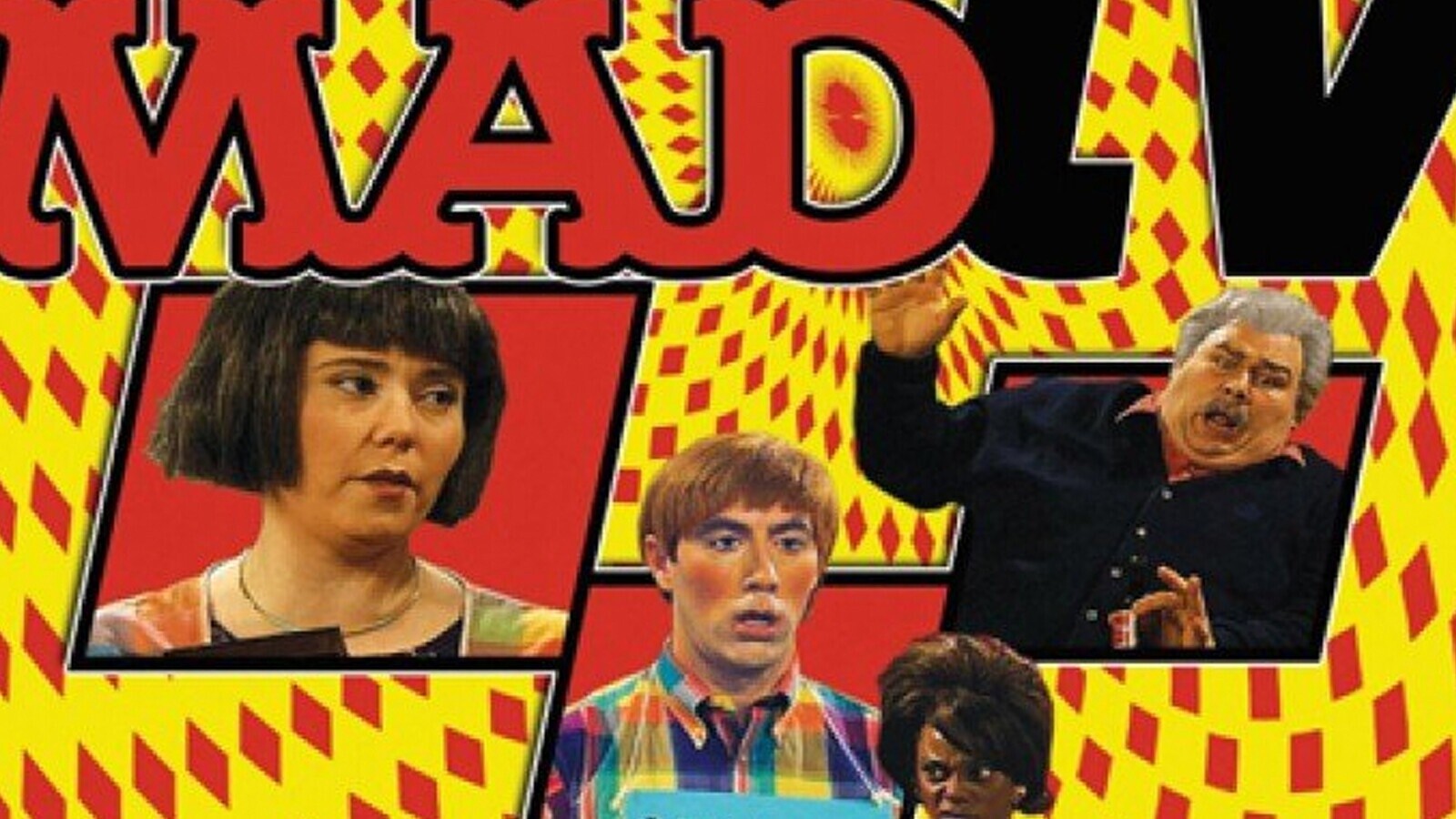

Let’s clear one thing up before we go any further: this Michael McDonald is not the silky-voiced king of yacht rock. This Michael McDonald is the sketch-comedy lifer, writer, director, and performer who spent a decade helping make MADtv feel like television had accidentally wandered into a comedy lab where nobody feared chaos, bad wigs, loud characters, or women who could absolutely flatten a room with one look.
That is what makes his praise for MADtv’s female performers so revealing. He wasn’t just reminiscing about a fun old job. He was pointing to something structural about the show: it made room for women who didn’t have to be the tidy, supportive sidekick in a sketch built for a man. They could be the engine. They could be the problem. They could be the payoff. And sometimes they could be all three before the commercial break.
In an era when sketch comedy often talked a big game about ensemble work but still had a habit of orbiting around whichever guy was doing the loudest impression, McDonald’s point lands with real weight. MADtv may never have worn the same prestige halo as Saturday Night Live, but it understood something essential: dominant female performers aren’t a side feature in sketch comedy. They are the electricity bill. They keep the lights on.
Why McDonald’s Comment Matters
What McDonald admired wasn’t simply that MADtv hired funny women. Plenty of shows say they want funny women, usually right before giving them a girlfriend role, a news-anchor chair, or a single line about brunch. His admiration was more specific. He loved that MADtv didn’t seem scared of women who could dominate the comic space.
That distinction matters. A show can cast talented women and still treat them like decorative proof of progress. MADtv, at its best, often did something messier and more interesting. It let women be grotesque, aggressive, absurdly confident, emotionally deranged, physically committed, and gloriously unflattering. It let them go broad without apology. In sketch comedy, that is not a minor thing. That is oxygen.
McDonald’s observation also feels credible because he wasn’t speaking as an outsider tossing flowers from the audience. He was one of the show’s defining figures. He knew who got laughs at the table read, who could rescue a weak premise, and who could turn a sketch from passable to quotable. When someone with that kind of tenure says the women on MADtv were destroyers, that isn’t nostalgia talking. That’s field reporting.
The Women of MADtv Weren’t There To Behave
Part of the reason MADtv left such a distinct imprint is that its female performers rarely felt boxed into one mode. Debra Wilson could project command, chaos, and razor-sharp mimicry in the same stretch of a season. Nicole Sullivan had a gift for playing characters who seemed like they had personally declared war on social grace. Alex Borstein weaponized specificity. Mo Collins could make frazzled desperation feel like an art form. Stephnie Weir had the kind of dead-eyed intensity that can make a small reaction feel funnier than someone else’s entire monologue.
These women did not merely “hold their own.” That phrase undersells the whole thing. They frequently set the tone. In many sketches, the funniest move was not a clever punchline but total comic possession. The character walked in, claimed the air, and forced everyone else to adjust. That is the kind of dominance McDonald was talking about.
Debra Wilson, for example, brought a star presence that could be polished one second and gloriously unruly the next. Nicole Sullivan excelled at characters who felt hilariously invasive, as if boundaries were a rumor she had heard about but declined to verify. Alex Borstein was all sharp edges and commitment, the kind of performer who could make even a bizarre premise feel weirdly exact. Mo Collins turned discomfort into a renewable resource. Stephnie Weir made off-center characters feel both absurd and suspiciously plausible, which is a dangerous combination if you enjoy laughing helplessly.
That lineup helps explain why McDonald remembered the women as self-sufficient comic forces. They were not waiting for permission. They didn’t need the sketch to be politely built around them. If a door opened, they kicked it wider.
MADtv Built a Different Kind of Ensemble
One of the smartest things MADtv did was embrace a less polished, more feral ensemble identity. The show often felt rowdier than its late-night rival, more willing to swing between satirical precision and outright cartoon lunacy. That looseness could be a bug, sure, but it was also a feature. It created a playground where dominant performers could thrive.
Female cast members benefited from that elasticity. On some shows, women are allowed to be funny as long as they remain likable, aspirational, or vaguely adorable. MADtv had a stronger stomach than that. It let women be abrasive. It let them be loud. It let them be the comic bully, the lunatic authority figure, the nightmare customer, the family tyrant, the smug media diva, the melodramatic regional oddball, the human tornado in capri pants. In other words, it treated female comedy as comedy, not as a carefully supervised outreach program.
That spirit made the show feel democratic in a useful way. Not equal in every measurable industry sense, and certainly not free of problems, but democratic in the sense that the funniest person in the sketch could be anybody. If a woman had the stronger character, the bigger commitment, or the weirder instinct, the sketch usually followed her. That is a deeply healthy impulse for ensemble comedy.
McDonald Understood the Value of Comic Control
McDonald’s own career on MADtv helps explain why he noticed this so clearly. He was not just a performer with a memorable face and a knack for playing unhinged innocence. He was a writer and director as well, a behind-the-scenes craftsman who understood how sketches are actually won. Not with theory. Not with prestige. With control of rhythm, point of view, escalation, and reaction.
That is why his praise carries more substance than a generic “the women were amazing.” He knew what dominance looks like in practice. Sometimes it means getting the biggest laugh. Sometimes it means making everyone around you funnier. Sometimes it means shifting the energy of a sketch so completely that the audience starts following your logic instead of the premise’s logic. The best MADtv women did that over and over.
And McDonald, to his credit, never sounds defensive when discussing it. He does not frame strong women as an exception the men nobly tolerated. He frames them as a strength. That is the right instinct and, frankly, a more mature understanding of ensemble comedy than television has always shown.
The Show Wasn’t Perfect, and That Matters Too
Praising MADtv’s comfort with dominant female performers does not mean pretending the show aged like a fine Bordeaux kept in a temperature-controlled comedy vault. Some of its material has been heavily reassessed. Certain recurring bits that once landed as broad satire are now discussed more critically through the lenses of race, stereotype, and representation. That reappraisal is fair, and any honest discussion of the show has to make room for it.
MADtv also had the kind of edge that sometimes mistook shock for bravery. Even cast members recognized that the show could veer toward easy targets when it wanted press or provocation. That tension is part of its legacy. The same atmosphere that allowed performers to go huge also sometimes produced jokes that now read as lazy, blunt, or needlessly cruel.
There is another complication, and it is an important one. Debra Wilson later said she left the show after discovering a pay disparity involving newer white male cast members. That matters because it reminds us that on-screen freedom and off-screen fairness are not the same thing. A show can give women room to dominate sketches and still fail them institutionally. That contradiction does not erase McDonald’s point, but it does keep it honest.
In fact, the contradiction makes the conversation richer. The screen culture of MADtv could be notably welcoming to women who played big, but the business culture behind television in that era was still television in that era: imperfect, uneven, and often maddening. Two truths can live in the same studio.
Why the Female Bench Still Feels So Impressive
When people revisit MADtv, they often start with the recognizable alumni pipeline. Jordan Peele. Keegan-Michael Key. Alex Borstein. Bobby Lee. Will Sasso. Ike Barinholtz. That list alone would be enough to justify a minor shrine made of cue cards and fake mustaches. But McDonald’s point invites a different look, one focused less on celebrity afterlife and more on internal chemistry.
The female bench was not just good. It was varied. Debra Wilson could play with power. Nicole Sullivan could play with disruption. Alex Borstein specialized in pinpoint attack. Mo Collins was a virtuoso of social collapse. Stephnie Weir was elite at the simmering-freakout category. Arden Myrin and others extended that tradition later by keeping the show’s appetite for female eccentricity alive.
That variety matters because dominance in sketch comedy does not have one face. It is not always the loudest character. Sometimes it is the performer with the sharpest rhythm. Sometimes it is the one who refuses vanity. Sometimes it is the one willing to make a scene ugly, strange, or painfully specific. MADtv kept finding women who could do those things without blinking.
The result was a show that felt less like a boys’ club with a few talented exceptions and more like a comic food fight where women routinely grabbed the biggest handful. Beautiful. Terrible. Efficient.
The Legacy Proves McDonald Wasn’t Romanticizing the Past
If McDonald’s observation were just a sentimental memory, it would fade under inspection. Instead, the show’s long afterlife reinforces it. Many of the women from MADtv built lasting careers in television, film, voice acting, and writing. Alex Borstein became one of the most decorated comic performers of her generation. Debra Wilson evolved into a voice-acting powerhouse. Nicole Sullivan remained a television and animation mainstay. Mo Collins kept popping up wherever a production needed someone who could make normalcy feel like an unstable substance. Stephnie Weir moved into writing and producing as well as acting.
Even the repeated reunion energy around MADtv says something. The 20th-anniversary special, the short-lived CW revival, and the more recent social-media reunion photos all suggest that people still see this cast as a real comic ecosystem, not just a pile of old sketches. That sense of family does not happen by accident. It usually comes from a show where multiple performers felt essential.
And that gets us back to McDonald. His comment lands because it identifies a cultural truth hidden inside the show’s messiest qualities. MADtv could be uneven, offensive, brilliant, dumb, inventive, juvenile, pointed, and exhausting. But it also had room for women who didn’t shrink. That is one of the reasons it still sticks in comedy memory long after the wigs were boxed up and the studio applause went home.
Experience Section: What It Felt Like When the Women Took the Wheel
To understand McDonald’s point on a gut level, you have to think less like a historian and more like a viewer sitting down late at night, not entirely sure whether the next sketch will be smart satire, utter nonsense, or some radioactive cocktail of both. The experience of watching MADtv when the women seized a sketch was different from the experience of watching a lot of other TV comedy at the time. There was less of that careful sense that the show wanted you to admire a performer’s charm. More often, it wanted you to survive the blast radius.
When Debra Wilson came in hot, the room changed. When Nicole Sullivan played a character with absolutely no concept of shame, the comedy stopped asking for polite laughter and started demanding surrender. When Mo Collins appeared as a woman hanging onto composure by a single emotional thread bought at a discount store, the fun came from watching the whole scenario tilt in her direction. Alex Borstein had a way of making a sketch feel like it had been sharpened. Stephnie Weir could inject such specific oddness into a reaction that suddenly the “normal” character looked underprepared.
That viewing experience matters because it created anticipation. You weren’t just waiting for a celebrity impression or a catchphrase. You were waiting for comic authority to arrive. And often, on MADtv, comic authority arrived in heels, a wig that looked vaguely flammable, and the emotional energy of someone who had skipped lunch and chosen violence.
There was also something quietly liberating about how little vanity these performers seemed to carry into the work. They were willing to be unattractive, ridiculous, hostile, petty, clueless, and socially radioactive if the bit needed it. That may sound basic now, but television has long rewarded men for taking those swings while asking women to remain camera-friendly. MADtv often let its women be fully comic instead of selectively presentable. That changed the temperature of the show.
And because the show was so committed to escalation, once a female performer took control of a sketch, everyone else had to respond to her reality. That made the comedy feel alive. Not orderly. Not brand-managed. Alive. You could feel the ensemble recalibrating in real time around whoever had the strongest comic gravity. That is why the memory of these performers stays so vivid. They weren’t simply playing characters. They were altering the weather.
For viewers, that translated into a particular kind of trust. You trusted that if a sketch started slowly, somebody could still hijack it. You trusted that a woman could be the lunatic, the bully, the genius, the fraud, the authority figure, the emotional wreck, or all of the above. You trusted that the show, for all its rough edges and occasional disasters, was not going to ask its female stars to sit quietly in the corner and wait for the men to finish being hilarious.
That is the experience McDonald was really describing. Not a diversity slogan. Not a nostalgia-filtered compliment. A working comic ecosystem where strong women were allowed to hit hard, take space, and leave the scene smoking. In sketch comedy, that is not a footnote. That is the whole glorious mess.
Conclusion
Michael McDonald’s admiration for MADtv’s dominant female performers cuts right to the heart of why the show still matters. It was not merely a rougher cousin to SNL, or a cult object for people who enjoy pop-culture parodies and emotional instability in fake commercials. It was also a place where women were frequently trusted with the funniest, strangest, biggest comic choices in the room.
That didn’t make the show flawless. It didn’t protect it from aging badly in places. It didn’t erase larger industry inequities. But it did give MADtv a kind of internal fearlessness that still feels rare. The women weren’t there to decorate the ensemble. They were there to run it over with a shopping cart, steal the scene, and somehow make the wreckage even funnier.
McDonald recognized that because he lived inside the machine. And looking back now, his point feels less like a hot take and more like the obvious truth hiding in plain sight: one of MADtv’s great strengths was that it never seemed particularly interested in asking women to play small. Thank goodness. Small would have been boring.