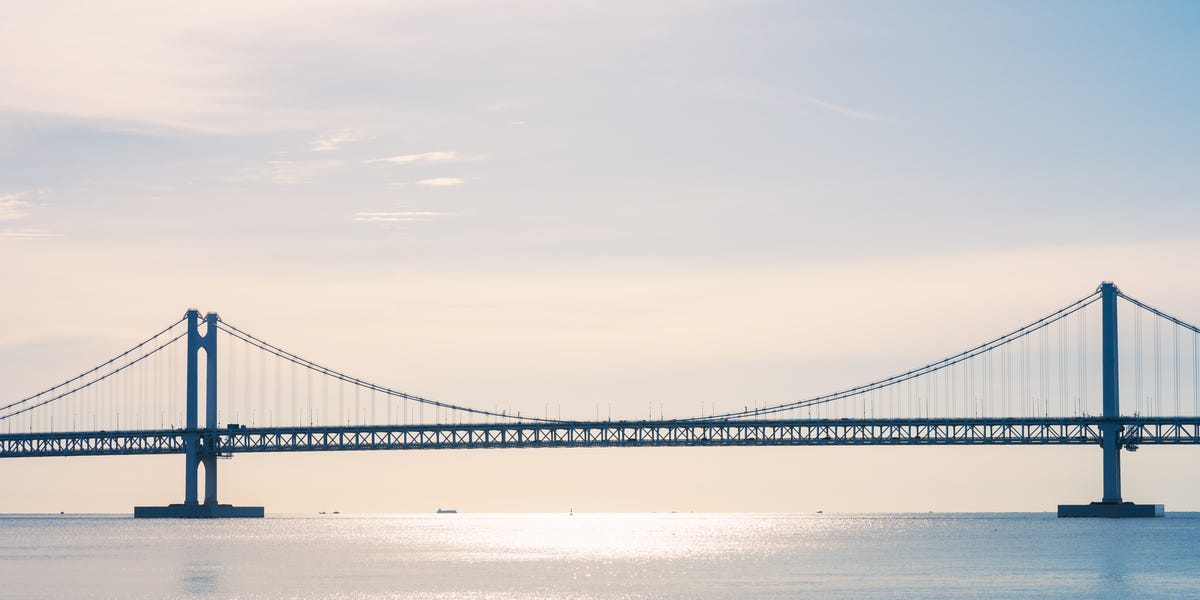

Italy has spent decades flirting with one of Europe’s most dramatic infrastructure dreams: a giant bridge across the Strait of Messina linking Sicily to the mainland. Now that dream is closer to reality than ever. The plan calls for a record-breaking single-span suspension bridge stretching between Calabria and Sicily, long enough to overtake Turkey’s 1915 Çanakkale Bridge and instantly muscle its way into engineering history.
But this is not a simple story of “government approves bridge, bridge appears, everyone claps.” It is a story about ambition, politics, regional inequality, transportation, national pride, environmental anxiety, earthquake risk, and a timetable that has already done more zigzags than a Vespa in Roman traffic. Italy’s government has approved the project and says it still wants work to move ahead, yet legal and procedural challenges have kept the Messina bridge in a stop-and-start phase. In other words, the bridge is both a real plan and a national argument with steel cables.
That tension is exactly what makes the project fascinating. On paper, it is a marvel. In public debate, it is a test of whether Italy can deliver a mega-project that supporters call transformative and critics call expensive, risky, and misplaced. Either way, the Messina bridge is no longer just a rumor with pretty renderings. It is one of the boldest infrastructure bets in Europe.
What Exactly Is Italy Planning to Build?
The proposed Strait of Messina Bridge is designed as the world’s longest single-span suspension bridge. The overall length is planned at about 3,666 meters, with a central suspended span of 3,300 meters. That is the record-breaking number everyone circles in red ink. It is the part that would put the structure ahead of the current champion and make bridge nerds everywhere spill their espresso.
The bridge is not just about cars. It is meant to carry road and rail traffic in one sweeping structure: six traffic lanes, railway tracks, and service access. The deck is designed to be around 60 meters wide, while the towers would rise roughly 399 meters. That makes them tall enough to dominate the skyline and remind everyone nearby that this is not a modest little local crossing. This is Italy trying to build a statement piece.
The crossing would connect Messina in Sicily with Villa San Giovanni in Calabria, tying the island more directly into the mainland’s road and rail network. Supporters argue that this is the missing physical link between Sicily and the rest of the country. Critics respond that a physical link is nice, but only if the transportation systems at both ends actually work well enough to deserve it.
Why This Bridge Has Been Dreamed About for So Long
A bridge over the Strait of Messina has been imagined for generations. In modern form, the project has been studied, redesigned, suspended, revived, canceled, and resurrected so many times that it practically has its own reincarnation schedule. The first major international competition dates back to the late 1960s, and the idea has survived multiple governments, changing budgets, and more than one round of national skepticism.
That long history matters because the bridge is not just an engineering project. It is a symbol. For supporters, it represents a chance to integrate southern Italy more fully into national and European transport corridors. For opponents, it represents a recurring political fantasy that keeps returning whenever leaders want to sound bold, visionary, and conveniently photogenic near a map.
The project gained real momentum again under Prime Minister Giorgia Meloni’s government, with Transport Minister Matteo Salvini as one of its loudest champions. In August 2025, Italy gave the bridge a major official green light. Then came another twist: in October 2025, the Court of Auditors rejected the plan in a serious procedural setback. By February 2026, the government was still insisting it would address those objections and push forward. So yes, Italy is building the bridge in the sense that the state remains committed to it. But it is building it the Italian mega-project way: with determination, paperwork, political chest-thumping, and a legal calendar within arm’s reach.
The Engineering: Big Numbers, Bigger Ambition
A Record-Breaking Span
The headline number is the 3,300-meter suspended span. That is what would make the Messina bridge the longest single-span suspension bridge on Earth. Engineers do not chase a span like that just for bragging rights, though the bragging rights are admittedly excellent. A longer uninterrupted span helps avoid placing supports in the strait itself, where navigation, currents, and seismic concerns complicate everything.
The bridge is also designed as a multimodal crossing. That means it is supposed to handle both highway traffic and rail service, a combination that raises the technical stakes. You are not just hanging a roadway between two towers. You are creating a transport link that has to deal with variable loads, wind behavior, vibration control, long-term durability, and the lovely fact that nature does not care about human schedules.
Wind, Water, and Earthquakes
The Messina Strait is not exactly famous for being mellow. The location is associated with strong winds, complex marine conditions, and serious seismic history. That is why bridge designers have leaned heavily on aerodynamic deck design, wind-tunnel testing, and earthquake resistance in their public case for the project.
The official design materials describe a “Messina Type Deck” meant to remain aerodynamically stable in very high winds. Project documents also emphasize that suspension bridges can perform well in seismic zones when designed correctly. That does not make the strait easy. It just means the engineering argument is not “nothing to worry about,” but rather “this is difficult, expensive, and technically possible if done to a very high standard.” There is a difference, and it is about the width of a billion-euro budget.
The Scale Around the Bridge
The bridge itself gets all the dramatic headlines, but the larger transportation package matters just as much. The plan includes more than 40 kilometers of connected road and rail infrastructure, much of it through tunnels, plus new stations and supporting works. That is an important detail because a bridge without efficient links at either end can become a very glamorous bottleneck.
Project backers also say the structure could handle around 200 trains a day and up to 6,000 vehicles per hour. Those are serious capacity claims, and they help explain why the bridge is sold not as a postcard object but as a system-level upgrade. The promise is bigger than a crossing. The promise is a reshaped map of mobility in southern Italy.
Why Supporters Think the Bridge Could Change Southern Italy
The strongest case for the Messina bridge is economic. Sicily has long struggled with weaker infrastructure, slower logistics, and the feeling of being connected to mainland Italy by ferry schedules rather than by fully integrated transport. Supporters argue that a fixed link would reduce travel friction, improve freight movement, attract investment, and make Sicily feel less like an appendage and more like a core part of the national network.
That argument is not crazy. Fixed links can change the economic psychology of a region. Investors, manufacturers, tourists, and commuters all respond to predictability. A ferry works, but a permanent rail-and-road connection signals something different: continuity, speed, and permanence. If the supporting rail and highway upgrades are delivered too, the bridge could have an outsized symbolic and practical impact.
Supporters also pitch the project as a jobs machine. Official materials frame it as a catalyst for employment, construction activity, and broader regional development. The bridge is often described as part of a much larger southern Italy modernization push, not a standalone monument. In that vision, the bridge becomes both infrastructure and message: the south is worth major investment, and the state is finally serious about proving it.
There is also a political and cultural layer. Big bridges have always been about more than moving people from Point A to Point B. They say something about confidence. They are public declarations in steel. Italy already has art, ruins, mountains, cathedrals, coastlines, and enough beauty to make half the world book a flight. What it does not always have is a reputation for quickly finishing colossal infrastructure on schedule. The Messina bridge is partly an attempt to rewrite that narrative.
Why Critics Are Still Pushing Back Hard
If supporters see the bridge as overdue modernization, critics see a mega-project with familiar warning signs. One major concern is cost. The bridge has been pegged around €13.5 billion, and anyone who has watched major public works anywhere on Earth knows the same golden rule applies: first comes the estimate, then comes the estimate wearing a bigger estimate.
Another concern is whether the money would do more good elsewhere. Critics argue that Sicily and Calabria need better local roads, more reliable railways, stronger public services, and better maintenance before they need a headline-grabbing icon. Their question is blunt: what is the point of building the most spectacular front door in Europe if the hallways behind it are still a mess?
Environmental risks are another flashpoint. Opponents worry about the project’s impact on landscapes, habitats, and migratory bird routes in a sensitive coastal area. Some local residents also face disruption from land acquisition and construction impacts. Even for people who are not anti-bridge in principle, the scale of the project raises hard questions about who absorbs the inconvenience and who benefits first.
Then there is the issue of seismic danger and public trust. The region’s earthquake history makes people understandably cautious. Yes, designers say the bridge is engineered for these risks. But engineering confidence and public confidence are not identical things. Add Italy’s long history of delayed public works and long-running concerns about corruption or mafia infiltration around major contracts, and you can see why some locals hear “historic breakthrough” and respond with something closer to “show me the paperwork, then show me the concrete.”
So, Is Italy Really Building It?
The honest answer is: yes, officiallybut with a giant asterisk attached by lawyers, auditors, and recent history. Italy has approved the project and continues to back it politically. Contractors and official project partners have treated it as active. At the same time, court and audit challenges have already interrupted the rollout, and the exact timetable remains fluid.
That means the bridge sits in a very modern category of infrastructure story: real enough to matter, contested enough to wobble, and famous enough to be discussed as if it were already casting a shadow over the water. It is not vaporware. It is also not a finished fact. As of early 2026, the project is best understood as an approved, technically detailed, politically defended, legally battered mega-project still trying to force itself into the real world.
If it gets built, it will be one of the most astonishing suspension bridges ever attempted. If it stalls again, it will become another chapter in Italy’s very long saga of magnificent ambitions meeting Mediterranean resistance.
What the Bridge Would Mean for Travelers, Locals, and the Italian Imagination
There is a reason the Messina bridge grips people who do not normally spend their afternoons admiring cable diameters. The Strait of Messina already feels theatrical. Stand on the Calabrian shore on a clear day and Sicily looks close enough to touch, like someone forgot to finish connecting the map. Ferries slice across the water. Trains roll in, pause, and continue on their peculiar island-bound journey. The distance is short, but the sense of separation is larger than the mileage suggests.
Travelers crossing today get an experience that is charming, slightly chaotic, and completely memorable. You smell salt and diesel at the same time. You watch trucks queue beside families with backpacks and commuters who look like they have made this crossing a thousand times without ever deciding whether to love it or curse it. From the deck, the water can look calm one minute and bossy the next. The whole trip feels like a reminder that geography still has the upper hand.
That is why the bridge produces such strong emotional reactions. For some Sicilians, the idea of driving or riding a train directly onto the mainland without waiting for a ferry sounds like common sense delayed by politics. For others, the ferry crossing is not an inconvenience but part of the place’s identity, a ritual that marks arrival and departure. Replace it with a giant fixed link, and you do not just change transport. You change the feeling of Sicily.
Imagine arriving from the north by rail in a future where the bridge exists. Instead of the old choreography of transfer, pause, loading, and water crossing, the landscape would unspool in one continuous movement. Calabria behind you, Sicily ahead, the strait beneath you, towers towering like they were hired by a movie director who hates understatement. For tourists, it would be dramatic. For freight companies, it would be efficient. For locals, it would probably become both ordinary and profound, which is what real infrastructure does when it succeeds. It disappears into daily life while quietly changing it.
There is also the psychological experience of living near a project like this. In places such as Messina and Villa San Giovanni, people are not arguing over an abstract diagram. They are arguing over the view from their neighborhoods, the future of their coastline, the value of their homes, the pace of local business, and the identity of their region. One person sees jobs. Another sees disruption. One sees the south finally getting something big. Another sees a giant promise that could swallow money and deliver headaches.
And yet that is exactly why the bridge remains such a powerful subject. It compresses modern Italy into one frame: engineering brilliance, bureaucratic drama, regional inequality, beauty, controversy, and a deep national habit of dreaming on an operatic scale. Whether the bridge becomes a triumph or another almost-there legend, the experience around it is already real. You can feel it in the reporting, in the politics, and especially in the strait itself, where the shores seem to stare at each other like two relatives who have been discussing a reunion for half a century.
Conclusion
Italy’s plan to build the world’s longest single-span suspension bridge is both thrilling and complicated. The proposed Messina crossing is enormous, technically daring, and potentially transformative for southern Italy. It could strengthen road and rail links, reshape logistics, and become one of Europe’s defining infrastructure projects of the 21st century.
But ambition does not erase the hard questions. Cost, environmental impact, seismic risk, local disruption, and administrative credibility all remain part of the story. That is what makes this project worth watching. It is not just about whether a bridge gets built. It is about whether Italy can turn one of its most persistent national dreams into a functioning piece of modern reality.
If it does, the Messina bridge will not just connect two shores. It will connect mythology, politics, and engineering in one enormous sweep of steel over water.
Note: This article reflects public reporting and project materials available as of March 2026. The bridge remains officially backed, but the exact construction schedule may still shift because legal, financial, and administrative hurdles have not fully disappeared.