
Some stories read like a movie script somebody rejected for being a little too on-the-nose. This is one of them. A violent white-power skinhead spends years covering his face and body in racist tattoos, becomes a father, realizes he does not want his kids growing up inside a culture of hate, and then begins the long, painful process of removing the very symbols he once used to frighten the world. It sounds dramatic because it was dramatic. It was also painfully real.
At the center of this story is Bryon Widner, a former white-power skinhead whose transformation became one of the most widely discussed examples of extremist disengagement in modern America. His journey was not tidy, photogenic, or magically complete after one emotional breakthrough. It was messy, expensive, humiliating, physically brutal, and morally complicated. In other words, it was human.
This is why the story still matters. It is not just about racist tattoos removed from a former extremist’s face. It is about what happens when a person tries to peel off a violent identity that has been welded onto his body, his social circle, and his self-image. It is also about fatherhood, accountability, and the hard truth that changing your mind is only the first step. Changing your life is the part that hurts.
The Story Behind the Headline
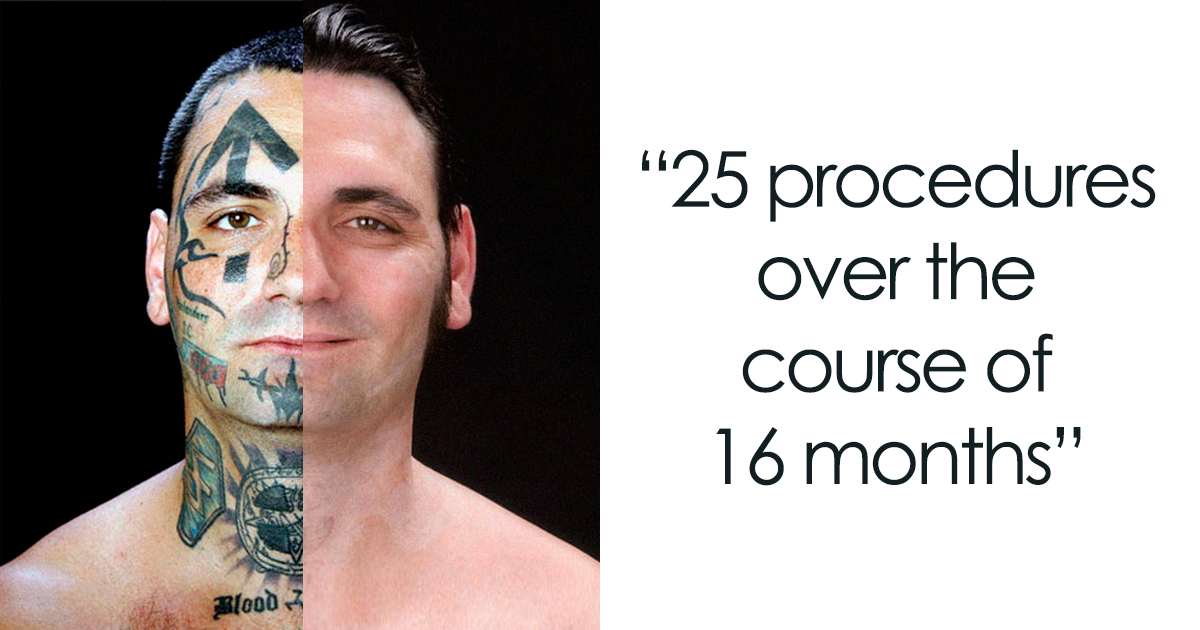
Widner had spent years in the white-power skinhead movement and helped found the Vinlanders Social Club, a violent racist skinhead group with roots in the Midwest. By the time he decided to leave, he was not carrying around a quiet little regrettable ankle tattoo from his rebellious phase. He had hate symbols and threatening imagery visible on his face, neck, and hands. Those tattoos did not simply decorate his past. They advertised it.
Then came marriage, family life, and eventually fatherhood. That shift seems to have hit him like a cold splash of reality. The man who had once built a life around violence and white supremacy was now driving kids to school, helping with homework, and trying to function like a husband and dad. That contrast was impossible to ignore. It is hard to play the role of nurturing father while your face is still broadcasting menace at every grocery store checkout line.
And that is where this story becomes more than tabloid bait. Widner did not just decide he wanted a cleaner look. He wanted a different life. The problem was that his face kept introducing him before he could say a word. Employers recoiled. Parents stared. Strangers judged. He knew he had earned that fear, but he also knew he could not move forward while his skin kept dragging his old identity into every room.
Why Becoming a Dad Changed the Equation
There is a reason the phrase after becoming a dad keeps showing up in discussions of this story. Parenthood often changes how people measure risk, loyalty, and purpose. In research on crime desistance and gang disengagement, fatherhood is not a magical cure-all, but it can be a turning point. It can force a person to think beyond the next fight, the next drink, or the next ideological performance and ask a much less theatrical question: what kind of life am I building for my child?
For Widner, fatherhood appears to have made the contradiction unbearable. He was no longer just a man serving an ideology or defending a crew. He was responsible for children who needed stability, safety, and a parent who would not drag chaos through the front door. Suddenly, loyalty to his old circle came into direct conflict with loyalty to his family. And when those two loyalties finally collided, family won.
That part deserves emphasis. People do not usually leave hate movements because of one lightning-bolt argument they saw online between two strangers with anime profile pictures. They often leave because real life begins to expose the emotional bankruptcy of the worldview. A spouse, a child, a job, a community, a crisis, or a moment of shame can make the ideology feel less like armor and more like a trap.
Why the Tattoos Had to Go
Visible hate tattoos are not neutral marks. They can function as threats, recruitment signals, social badges, and barriers all at once. In the context of extremist culture, they often announce belonging and intimidation on purpose. That was part of their original job. But once someone exits the movement, those same tattoos can become a daily punishment and a public confession worn on the skin.
Former extremists and tattoo-removal advocates have described that burden in strikingly similar ways. The ink becomes a billboard for beliefs they no longer hold, but cannot easily explain away. It follows them into job interviews, school events, doctor’s offices, and ordinary errands. Even when internal change is real, the exterior message keeps shouting over it.
That helps explain why tattoo removal can matter so much in stories of reintegration. It is not cosmetic in the shallow sense. It is structural. Removing racist tattoos can make it easier to work, to parent in public, to walk into a room without causing immediate alarm, and to stop retraumatizing yourself with the symbols of who you used to be. No, laser treatment does not erase harm. But it can remove one of the loudest physical obstacles to building a different future.
The Brutal Reality of Laser Tattoo Removal
This is the point where Hollywood usually throws in a montage, a meaningful song, and a dramatic final reveal. Real life, meanwhile, hands you repeated procedures, pain, swelling, healing time, and a bank account that starts sweating. Laser tattoo removal is the most common professional method used to lighten or remove tattoos, but it usually takes multiple sessions because tattoo ink sits in layers and your body needs time to clear shattered pigment particles between treatments.
That means no, this is not a one-and-done “fresh start” button. It is a long medical process. Patients can experience pain, redness, blistering, swelling, pigment changes, and sometimes scarring or textural changes. Complete removal is not guaranteed. Some colors are harder to remove than others, and some outlines can linger. The body does part of the cleanup work, which is great in theory and very inconvenient when you want your past gone by Tuesday.
Widner’s case was especially severe because the tattoos were extensive and highly visible. Reports on his treatment described a grueling sequence of procedures over many months. That tracks with what dermatology and clinical sources say more generally: tattoo removal can take numerous sessions, and facial work is not some casual lunch-break errand sandwiched between coffee and dry cleaning pickup.
It also explains why his desperation became so dangerous. At one point, he reportedly considered using acid on his face. That detail is shocking, but it also says something important about shame. When people feel trapped inside a visible past they cannot afford to undo, desperation starts whispering terrible ideas. That is why medical sources and regulators warn against do-it-yourself tattoo removal creams, acids, and other home-brewed nonsense. It is not edgy ingenuity. It is a terrible skin-care plan with a strong chance of burns, scars, and regret.
Leaving Hate Is Not a Haircut. It Is a Rebuild.
One of the most interesting parts of this story is who helped Widner move forward. The path reportedly involved anti-racist activists, the Southern Poverty Law Center, and others who had every reason to distrust him. They did not hand him a free redemption coupon and a cupcake. They evaluated whether he was serious, whether he was willing to do the work, and whether helping him would reduce future harm.
That matters because disengagement from violent extremism is not the same thing as rebranding. It usually requires sustained support, accountability, social replacement, and practical help. People leaving hate groups can lose friendships, status, income, housing stability, and the only community they have known. Exit organizations have learned that moral lectures alone are not enough. People also need case management, mental health support, safer networks, and realistic pathways back into ordinary life.
That is where programs from groups like Life After Hate and removal initiatives like Removery’s INK-nitiative become relevant. They reflect a broader idea that if society wants fewer violent extremists, it cannot only focus on recruitment and punishment. It also has to think seriously about off-ramps. The work is not glamorous. It is administrative, emotional, skeptical, compassionate, and often slow. But slow is still better than stuck.
Redemption Without Amnesia
There is always tension in stories like this. Some readers hear “second chance” and worry the harm will be minimized. That concern is fair. A person does not get to injure others, spread hate, terrify communities, and then walk away with a tidy feel-good ending because fatherhood gave him perspective and lasers gave him a softer jawline.
The strongest version of this story is not that hate vanished in a cloud of enlightenment. It is that change required pain, sacrifice, outside intervention, and visible accountability. The goal was not to pretend the past never happened. The goal was to make sure it did not keep happening.
That distinction is crucial. Ex-skinhead tattoo removal is not morally meaningful because scars look better than swastikas. It is meaningful when it accompanies a real break from violent ideology, a rejection of racist networks, and a sustained effort to live differently. The removal is a signal, not the whole substance.
What This Story Says About America
The Widner story also reveals something uncomfortable about the American extremist landscape. White-supremacist movements are not just fringe museum pieces from a dusty era. Anti-extremism researchers and civil-rights organizations continue to document white-supremacist activity, violence, and the role of gangs and prison networks in sustaining those subcultures. Hate is adaptable. It changes language, aesthetics, and platforms, but it does not politely disappear because decent people are tired of hearing about it.
That makes stories of disengagement valuable, but only when read correctly. They are not proof that the problem is solved. They are proof that exit is possible. Those are not the same sentence. One is hopeful. The other is fantasy with better branding.
And yet hope does matter here. A former extremist choosing family over ideology, accountability over ego, and painful treatment over a permanent alliance with hate is not a small thing. It does not erase what came before. But it shows that identity can be rebuilt, sometimes one excruciating appointment at a time.
Additional Experiences and Reflections Related to This Topic
Stories like this are often told in headlines, but lived in tiny, awkward moments. The first school pickup where a former extremist wonders whether another parent will recognize an old symbol. The first job interview where the room goes cold before he has even introduced himself. The first time a child asks a question simple enough to flatten a grown man: “Dad, what was that tattoo for?” Those moments are where ideology stops sounding abstract and starts feeling embarrassingly personal.
People who leave hate groups often describe a strange emotional whiplash. At one stage, the symbols made them feel powerful, protected, and important. Later, those same symbols feel suffocating. A tattoo that once acted like a badge becomes a trap. A slogan that once sounded heroic starts sounding ridiculous, cruel, or both. The old crew that once felt like family starts to look less like brotherhood and more like a debt collector with bad ideas and worse social skills.
Then comes the loneliness. That part rarely gets enough attention. Leaving a hate movement is not simply a moral decision; it is also a social breakup. People can lose friends, routines, housing, status, and the addictive certainty that comes from living inside a worldview where every problem has a villain and every villain has a label. Ordinary life, by comparison, can feel very plain. And that is exactly why it is hard. Ordinary life asks for patience, bills, child care, humility, and conversations that cannot be won by shouting.
The tattoo-removal process adds another layer. It is repetitive and humbling. There is no cinematic “before and after” after one appointment. There is just progress measured in fading lines, tender skin, and the odd disappointment of realizing that your past has excellent staying power. Many people start the process expecting a dramatic erasure and instead get a long lesson in incremental change. That lesson is harsh but useful. Real transformation is usually not one revelation. It is dozens of boring, painful, disciplined decisions stacked together until a different life appears.
There is also the emotional complexity of forgiveness. Some former extremists say they do not expect it. Some do not think they deserve it. Many seem to understand that remorse is not a transaction that automatically produces acceptance. That may be the most mature part of the entire journey. The point is not to be applauded for finally rejecting what should never have been embraced. The point is to stop causing harm and to accept that repair takes longer than regret.
And then there is parenthood, which often strips away performance. Kids have a way of making ideology look flimsy. They need breakfast, school supplies, medicine, bedtime stories, and somebody who shows up. They are not impressed by slogans, tribal posturing, or macho mythology. They need consistency. For some people, that reality becomes a mirror they cannot dodge. If hate promised meaning, fatherhood demands usefulness. One is theatrical. The other is real.
That may be the deepest reason this story still resonates. It is not just about a former skinhead removing racist tattoos. It is about a man confronting the fact that the life he built was unfit for the people he loved. Once he saw that clearly, the tattoos stopped looking like identity and started looking like evidence. Removing them did not make him innocent. But it did make one thing visible: he was finally willing to suffer for change instead of making everyone else suffer for who he had been.
Conclusion
“I Was Totally Prepared To Douse My Face In Acid” is a headline built for clicks, but the real story is bigger and more uncomfortable than the quote. Bryon Widner’s journey from white-power skinhead to father trying to remove racist tattoos is not a neat redemption arc. It is a case study in how identity, shame, family, and social reintegration collide.
The most useful takeaway is not that laser tattoo removal can make a past life disappear. It cannot. The takeaway is that real change usually requires more than belief. It demands distance from the old network, commitment to the new life, accountability for the harm done, and practical support that makes staying changed possible. In that sense, this is not just an article about a former extremist. It is an article about what it actually costs to stop being one.