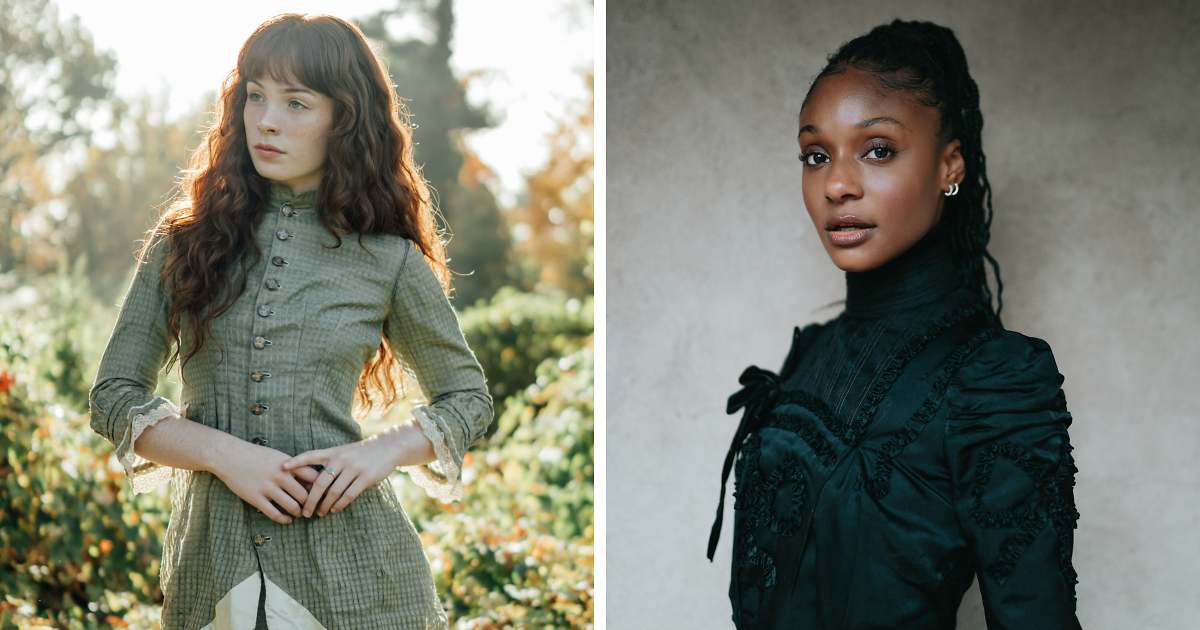

Some photo shoots are loud. There are garment racks squeaking across studio floors, assistants sprinting around with tape, somebody yelling about batteries, and at least one person pretending they absolutely meant to spill coffee near the lighting bag. This is not that kind of shoot.
Photographing models in 200-year-old dresses is a quieter, stranger, and far more reverent experience. It feels less like producing fashion content and more like negotiating with time itself. These garments were sewn for real bodies, real rooms, real candlelight, and real lives long finished. Yet the minute a dress from the 1810s or 1820s is carefully mounted, styled, and photographed, it begins speaking again. The result can be eerie, elegant, and unexpectedly emotional. That is the magic behind haunting historical fashion photography: it turns fabric into memory.
And no, “hauntingly beautiful” is not just a dramatic phrase borrowed from the internet’s favorite mood board. Antique dress portraits often feel ghostly because they sit at the intersection of beauty, absence, craftsmanship, and mortality. The dress remains. The wearer does not. Photography bridges that gap in a way that is both visually rich and a tiny bit spine-tingly, which is exactly why viewers cannot look away.
Why 200-Year-Old Dresses Feel So Visually Powerful
A 200-year-old dress does not arrive with the same energy as modern clothing. It carries a different silhouette, different construction logic, and a very different relationship to the body. Early 19th-century dresses moved away from the neoclassical, high-waisted look of the 1810s and shifted into the fuller skirts, lowered waistlines, and increasingly dramatic sleeves of the 1820s. That evolution matters in photographs because shape is story. One dress suggests restraint and classical order; another suggests romance, theatricality, and a touch of delicious excess.
In visual terms, antique garments create instant atmosphere. Hand-sewn seams, fading dyes, fragile trims, and softly collapsing structure do what filters wish they could. They create texture with actual history baked in. Modern styling often tries to fake age through distressing, muted colors, or cinematic lighting. A genuine historical dress does not need to pretend. It has already lived.
That authenticity changes the emotional temperature of an image. A crisp contemporary editorial can look chic. A portrait featuring a centuries-old gown can look uncanny, intimate, and layered. Viewers are not only responding to fashion; they are responding to evidence. The clothing becomes proof that another era existed in full color, on actual skin, under actual weather, with all the longing and messiness that implies.
The Dress Is the Star, but Conservation Is the Boss
Here is where the fantasy meets reality. You cannot treat a 200-year-old dress like it just arrived from a showroom with overnight shipping and a steamer the size of a small submarine. Historic garments are fragile, light-sensitive, and highly vulnerable to stress. In museums, costumes and textiles are examined, documented, stabilized, and stored with protective materials because abrasion, dust, insects, humidity shifts, and careless handling can do permanent damage.
That means historical fashion photography is not only about artistry. It is also about restraint. The real professionals in this space understand that the image is never more important than the object. If the dress is authentic, every decision must serve preservation first. Movement is limited. Handling is minimal. Styling is gentle. Exposure to strong light is carefully controlled. In many cases, the garment’s condition should determine what is even possible in front of the camera.
That is part of what makes this genre so compelling. It requires creativity inside strict boundaries. You are not commanding the clothing. You are collaborating with it. Or, more accurately, you are asking it very politely whether it is willing to participate.
Why Fragility Makes the Image Better
Oddly enough, the restrictions improve the work. When a photographer cannot rely on dramatic motion, endless wardrobe adjustments, or heavy styling tricks, the image has to breathe through subtler elements: posture, gaze, hands, fabric fall, background, and light. That limitation creates focus. The photograph becomes more deliberate, and the viewer feels it.
In the best antique dress portraits, the model does not overpower the garment, and the garment does not swallow the model. They create a temporary alliance. One body is living; the other is historical. The tension between those two realities is what gives the image its charge.
How To Make Historical Fashion Photography Feel Haunting, Not Costume-Party Cute
There is a fine line between atmospheric and absurd. One wrong choice and the photograph says “timeless portrait.” Another wrong choice and it says “regional theater rehearsal in a fog machine accident.” The difference usually comes down to intention.
Haunting photography is rarely loud. It is often built from softness, restraint, and suggestion. Light plays a huge role. Portrait history repeatedly shows how pose, gaze, clothing, and lighting shape personality and mood. A slight turn of the face, a lowered chin, or an almost-but-not-quite direct stare can transform a still image from pretty to unforgettable.
When working with antique dresses, photographers often lean into directional light, subdued color, and uncluttered compositions. The goal is not to drown the scene in fake gloom. It is to create enough visual quiet that the dress can carry emotional weight. Historic garments already have the drama. They do not need a thunderstorm, a raven, and three symbolic candles trying too hard in the corner.
Elements That Create the “Ghost in the Frame” Feeling
First, there is stillness. Because antique gowns cannot always handle energetic movement, stillness becomes expressive rather than limiting. A model standing with measured posture can feel more charged than someone spinning across a field. Second, there is silhouette. The exaggerated sleeve, the dropped waist, the bell of the skirt, the unusual hem treatment, all of it reads instantly as another time. Third, there is fabric behavior. Old silk, cotton, lace, and trim do not reflect light the way modern synthetics do. They absorb and scatter it with a softness that the camera loves.
Then there is the emotional trick no lens can fake: absence. These dresses once belonged to people with names, routines, and private thoughts that are mostly lost. A portrait built around such a garment feels full and empty at the same time. That is where the haunting quality lives.
What These Dresses Reveal About the Women Who Wore Them
Historical dress is not just decorative evidence. It records social expectations, labor, status, taste, and technology. Fashion has always responded to culture, and garments tell us who had access to materials, who understood elite codes, who followed trends, and who altered them. A dress is never just a dress. It is design, body politics, economics, and performance stitched together.
Even details that seem small now would have mattered enormously then. Hem decoration, sleeve scale, lace use, and textile quality all signaled something. Early 19th-century wedding gowns, for example, did not automatically follow the later convention of white bridal wear. Many women married in colored gowns they could rewear. That reminder alone can disrupt modern assumptions and make historical portraits feel more alive and less like fairy-tale wallpaper.
In other words, antique dress photography works best when it respects clothing as material culture. The image should not flatten the garment into “vintage vibes.” It should let viewers sense the personhood, social world, and craftsmanship embedded in the object.
The Ethics of Photographing Antique Dresses
This is the part that separates serious historical fashion photography from aesthetic scavenging. A 200-year-old dress is not a prop in the casual sense. It is a surviving artifact. That means ethics matter: who owns the garment, how it is documented, whether conservators are involved, what the condition allows, how long it is exposed to light, and whether the styling distorts or misrepresents the piece.
Sometimes the smartest creative decision is not to place an original garment on a moving model at all. A mannequin, carefully structured support, or a reproduction may be the safer and more honest choice. Purists may grumble, but preservation should win every time. The goal is not to squeeze one dramatic photo out of a dress and leave the object weakened for everyone who comes after.
That ethic does not reduce the artistry. It deepens it. When the photographer acknowledges the object’s fragility and historical value, the resulting image gains seriousness. Viewers may not know the technical details, but they can often feel when a portrait has been made with care instead of appetite.
Why Audiences Love These Images So Much
Because they do more than show old clothes. They activate the imagination. A viewer looks at a portrait of a model in a 200-year-old dress and starts building stories without even meaning to. Who first wore it? Was it made for mourning, visiting, courtship, dinner, travel, or a wedding? Was it expensive? Altered? Loved? Outgrown? Saved for a reason? Forgotten by accident?
Great historical portraits leave room for those questions. They create narrative tension without overexplaining. That is especially powerful online, where images are constantly competing for attention. Most photographs scream. These whisper. Ironically, the whisper wins.
There is also a deeper appeal. In a culture obsessed with speed, novelty, and disposable trend cycles, a 200-year-old dress represents endurance. It has survived changing tastes, changing technologies, and changing bodies. It reminds us that beauty can outlast its original moment. That idea lands hard, especially now.
How the Best Photographers Approach the Process
The strongest work in this niche usually combines research, conservation awareness, and visual discipline. The photographer studies the period silhouette, understands how the garment would have been supported, avoids modern styling shortcuts that break the illusion, and thinks carefully about the emotional language of the frame.
That means background matters. A blank studio wall can work, but so can an old room, weathered plaster, muted landscape, or sparse architectural setting. The environment should feel like it belongs to the dress without turning the image into a theme park. Hair and makeup should support the mood, not stage a hostile takeover. Pose should feel informed by period portraiture while still remaining natural enough for a modern viewer to connect.
Most importantly, the photographer knows when to stop. Historical objects do not need overproduction. A centuries-old garment already arrives with narrative, form, texture, and mystery. Good photography reveals that. Bad photography smothers it with gimmicks.
What the Experience Feels Like on Set
Spending time around a photo shoot built on antique clothing feels nothing like working with regular wardrobe. The room changes. People speak softer. Movements become slower, smaller, more intentional. Nobody tosses a dress onto a chair and says, “We’ll fix it in post,” because everyone understands that there is no “post” for a split seam in a surviving piece of history.
The preparation alone changes your mindset. Before a frame is made, there is usually a long period of looking, not shooting. You study the garment’s weight. You notice where the fabric pulls, where the trim has softened, where light catches worn silk differently from newer thread. You begin to understand that the dress has rules. That is oddly humbling. A lot of photography is about control. Historical dress photography begins by removing some of that control and handing it back to the object.
Then the model steps in, and the emotional center of the room shifts again. Suddenly the dress is no longer just an artifact. It starts acting like clothing. The sleeve rounds into shape. The skirt gains architecture. The neckline becomes human. That moment can be startling, even for experienced stylists and photographers. You are seeing two time periods occupy the same frame at once. It is beautiful, yes, but also a little uncanny in the best possible way.
What makes the experience memorable is the way every tiny detail becomes loud. A hand lifted an inch too high can look modern. A smile that is too broad can break the spell. A shoulder softened just slightly can turn stiffness into melancholy. The shoot becomes an exercise in precision, but not cold precision. More like listening closely. The best images often happen when everyone on set starts paying attention to the smallest signals: the bend of a wrist, the tilt of a face, the breath before stillness settles in.
There is also a strange emotional responsibility involved. When you photograph a centuries-old dress, you are not only making a picture. You are temporarily representing people who are no longer here to speak for themselves. That does not mean the work has to be solemn or joyless. It just means it benefits from respect. Humor still exists on set, of course, because humans are incapable of spending hours together without making at least one terrible joke. But even the laughter tends to be gentler. The object sets the tone.
And then there is the final moment, the one photographers chase. Everything aligns for half a second: the dress sits properly, the light falls like a remembered dream, the model’s expression feels suspended between presence and disappearance, and the image clicks into place. You can sense it immediately. It is not just pretty. It feels inhabited. That is when historical fashion photography becomes more than documentation. It becomes atmosphere.
Afterward, when the garment is carefully removed and the set returns to ordinary life, the feeling lingers. That may be the most fascinating part of all. The dress goes back to stillness, but the photograph keeps carrying the illusion that time can be touched. Viewers see the final image and call it haunting. They are right. But what they are really responding to is care: care for history, care for material, care for mood, and care for the fragile distance between the past and the present. That distance is exactly what makes the image beautiful.
Conclusion
Photographing models in 200-year-old dresses is not simply a niche aesthetic trend. At its best, it is a collaboration between fashion history, portrait artistry, and conservation ethics. The dresses bring structure, mystery, and lived texture. The model brings breath and gesture. The camera brings memory into focus. Put all three together, and you get images that feel suspended between beauty and disappearance.
That is why these portraits stay with people. They are not only about how the garments looked. They are about what survives: craftsmanship, identity, longing, and the strange comfort of seeing the past return for one quiet frame.