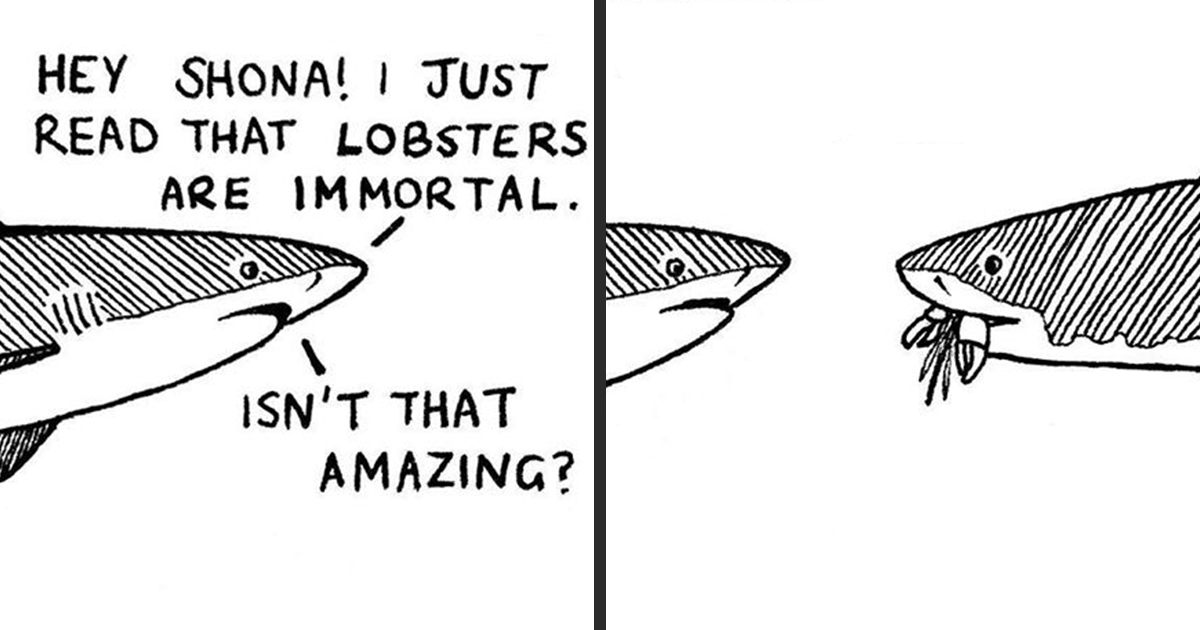

If you think the ocean is a silent blue desert where sharks just glide around looking dramatic for documentary cameras, you’re missing the best part: the conversations. At least, that’s the premise behind a wildly popular wave of shark comics that imagine what would happen if great whites, hammerheads, and their aquatic neighbors were as sarcastic as your group chat.
Online, readers have fallen in love with webcomics that give sharks razor-sharp punchlines along with their razor-sharp teeth. One standout series, The Life of Sharks, pairs real shark facts with dry, deadpan humor, turning these misunderstood predators into anxious coworkers, exhausted parents, and painfully relatable introverts. The result feels like “Shark Week” meets workplace comedy, with a dash of marine biology thrown in for good measure.
This article dives into the appeal of these snarky shark comics, highlights 30 classic gag types you’ll spot again and again, and explores how a few talking fish are quietly changing how people think about the ocean.
Why We’re Obsessed With Snarky Sharks
Sharks have spent decades being cast as Hollywood villains. Blockbusters turned them into jump-scare machines, even though most of the 500+ shark species are either shy, small, or more interested in plankton than people. Comics flip that script by making sharks the underdogsawkward, misunderstood, and hilarious instead of monstrous.
Humor also makes real shark facts easier to remember. U.S. science and ocean organizations frequently emphasize that sharks are cartilaginous fish (no bones, just flexible cartilage) and that many species are more threatened by humans than the other way around. When a comic casually drops a line like, “I’d be boneless even without the anxiety,” the joke sticksand so does the fact.
And then there’s the relatability factor. These comics turn everyday human problems into underwater melodramas: social anxiety at a support group, awkward flirting at a reef party, existential dread in the deep sea. The more absurd the setting, the more familiar the dialogue feels.
Meet the Sharks Behind the Snark
On sites like Bored Panda, one of the most beloved shark comic collections features a duo: a writer and an illustrator who created The Life of Sharks, a black-and-white webcomic that pairs real marine facts with sharply written punchlines. The sharks complain about work, misunderstand pop culture, and overthink their social liveswhile a little caption quietly drops a genuine shark fact above or below the panels.
That pairing of education and comedy helps explain why these strips are shared so widely. Other humor platforms and cartoon archives also host ocean-themed comics, from scuba divers negotiating with skeptical sharks to fish who are clearly more concerned with Wi-Fi than currents. The tone is consistent: salty, self-aware, and surprisingly wholesome.
Now, let’s swim through 30 classic “conversation types” you’ll recognize in shark comics that celebrate snark, science, and saltwater chaos.
30 Types of Snarky Conversations Between Sharks and Other Aquatic Life
1. The Shark Who’s Overqualified for Everything
This shark has 300 teeth, eight senses, and still can’t get promoted. While pilot fish ask for mentoring, the shark just wonders why no one takes its LinkedIn endorsements seriously.
2. The Anxious Great White at Group Therapy
Group therapy sessions in these comics often feature sharks apologizing for their reputations while dolphins overshare and sea lions treat it like open-mic night. The punchline usually lands on how sharks are “terrifyingly misunderstood.”
3. The Literal-Minded Hammerhead
Tell a hammerhead to “nail it,” and it will show up with hardware. These comics lean hard on puns: hammerhead as contractor, therapist, or union rep for underpaid reef fish.
4. The Octopus Multitasking in Every Panel
An octopus juggling coffee, a phone, and three side hustles next to a shark who “just swims” is a classic contrast. The shark’s snarky remark? Usually something like, “Try having eight schedules to manage.”
5. The Shark Who’s Bad at Being Scary
Some strips star a great white practicing its “menacing face” in the reflection of a submarine window, only for a nearby clownfish to rate the effort: “3/10, very anxious golden retriever energy.”
6. The Climate-Concerned Coral Reef Crew
Sharks, parrotfish, and coral polyps gossip about rising water temperatures like office workers gossip about budget cuts. The snark is aimed at humans, with punchlines about sunscreen, plastic, and oil spills.
7. The Shark Who Just Wants a Salad
When other fish panic at the sight of a fin, this shark is just trying to order kelp noodles. The running gag: everyone assumes carnage; the shark is craving seagrass and therapy.
8. The Overdramatic Clownfish
Clownfish in these comics act like sitcom neighborsloud, theatrical, and constantly narrating their lives. The shark’s default response is a deadpan “Please stop talking.”
9. The Old-Timer Shark Telling “Back in My Day” Stories
Elderly sharks reminisce about “prehistoric tuna” and complain that modern rays are “too soft.” The humor comes from mixing dinosaur-era timelines with very current trends like streaming shows and dating apps.
10. The Whale Who Treats Everyone Like Tiny Coworkers
A blue whale shows up as the world’s most enormous middle manager, calling performance reviews for sharks and shrimp alike. The shark’s snark usually boils down to, “We’re literally plankton compared to you.”
11. The Shark Who Misunderstands Human Tech
From mistaking a GoPro for a robot fish to assuming a cage diver is on a “floating elevator,” tech jokes highlight the absurdity of humans bringing gadgets into a wild ocean.
12. The Anemone with Trust Issues
Anthropomorphic sea anemones often appear as prickly introverts who assume everyone is an “enemy” (or anemone, depending on the pun). The shark’s attempt at small talk usually ends in wounded pride.
13. The Shark at a Support Group for Misunderstood Predators
This recurring setup puts sharks, barracudas, and moray eels in a circle of folding chairs. Each one vents about bad PR while a gentle sea turtle moderates like a seasoned therapist.
14. The Fact-Dropping Narrator Shark
Some comics feature a “host” shark who interrupts the jokes to share actual biology factslike how sharks don’t have bones or how many species are smaller than a human. The tension between silly and serious is where the magic happens.
15. The Shark Who’s Afraid of the Dark Deep Sea
Despite being perfectly adapted to low-light depths, this shark is irrationally terrified of bioluminescent jellyfish, glowing fish, and anything labeled “mysterious trench.” The other creatures lovingly roast it for being scared of its own ecosystem.
16. The Ray Who’s Done With Everyone’s Drama
Rays are often portrayed as extremely tired, flat-lined versions of zen. They glide past hot-tempered sharks and hyperactive dolphins, dropping one-liner observations that feel like tweets from someone too exhausted to care.
17. The Shark Who’s Learning About Its Extra Senses
When comics reference sharks’ impressive sensory abilitieslike detecting electrical signalsthere’s usually a gag where the shark wishes it had fewer feelings instead of more senses.
18. The Fashion-Forward Seahorse
Seahorses strut through panels with accessories: seaweed scarves, shell earrings, or tiny crowns. The shark becomes the reluctant hype friend who doesn’t understand fashion but supports the look.
19. The Shrimp Running a Questionable Side Business
Cleaner shrimp become quirky entrepreneurs. One panel might show a shrimp offering “spa packages” while a shark negotiates a loyalty card for regular tooth-cleaning.
20. The Shark Who’s Tired of Shark Week
Every year, this shark dreads the spotlight. It complains about documentaries using dramatic music and slow-motion shots, while gentle background text reminds readers that sharks are more threatened than threatening.
21. The Nerdy Shark Who Loves Ocean Documentaries
These comics double down on meta-humor: a shark binge-watches shows about its own species and complains about inaccuracies in the narration, much like people nitpicking movies about their jobs.
22. The Dolphin Who Thinks It’s Funnier Than It Is
Dolphins show up cracking jokes, but the shark steals the scene by undercutting every punchline with even sharper sarcasm. Think of it as the ocean version of a stand-up mic battle.
23. The Shark Who’s Too Honest on Dates
When sharks try dating other fish in these strips, the small talk quickly turns into blunt observations about mortality, migration, and food chains. It’s dark, awkward, and completely on-brand.
24. The Reef Gossip Network
Coral reefs turn into small towns where everyone knows everyone’s business. Sharks become the unwilling stars of rumor mills about “who ate what” and “who swam where at midnight.”
25. The Shark Who Wants to Be a Vegetarian but Can’t
Strips about diet culture show sharks trying to give up fish, only to get distracted by a convenient school of tasty snacks. The humor taps into real science about shark diets while poking fun at fad diets on land.
26. The Marine Biologist Cameo
Occasionally, a human scientist appears in a comicscribbling in a notebook while sharks speculate wildly about what’s being written. The punchline: the scientist is usually just noting something basic while the animals overcomplicate everything.
27. The Shark Who’s Tired of Being a Metaphor
From “corporate sharks” to “loan sharks,” language is stacked against these fish. Comics that call out those metaphors remind readers how often we associate sharks with greed and violence, even when it doesn’t fit.
28. The Overly Sensitive Pufferfish
One wrong word and the pufferfish inflatesliterally and emotionally. Sharks walk on conversational eggshells while the pufferfish interprets everything as a personal attack.
29. The Shark Who’s Secretly an Introvert
In these comics, sharks dread crowded reefs, noisy pods, and school visits. They dream of a quiet patch of open water far from social obligationsrelatable to anyone who’s ever hidden in the bathroom at a party.
30. The Big Philosophical Deep-Sea Chat
Sometimes the jokes get existential. A shark and an anglerfish might debate the meaning of life, food webs, and whether humans will figure out how important the ocean is before it’s too late. Somehow, the punchline still lands with a smirk.
How Shark Comics Sneak in Real Ocean Science
Beneath the jokes, many of these comics are carefully grounded in actual marine biology. Science outlets highlight that sharks have unique adaptations: flexible skeletons, specialized senses, and a huge variety of species, many of which are small and nonthreatening. Comics integrate these facts into speech bubbles and captions so smoothly you barely notice you’re learning.
For instance, a strip might show a small shark complaining about not being cast in scary movies because it’s “shorter than a surfboard,” a nod to the reality that roughly half of shark species are under three feet long. Another comic may show a shark bragging about its extra senses, only to admit that all those sensory inputs just make it overthink every social situation.
By translating complex biology into punchlines, artists help readers remember key details: sharks’ role in keeping food webs balanced, the importance of preserving coral reefs, and how overfishing and pollution threaten marine life. Once you’ve laughed with a character, it’s harder to ignore what happens to their real-world counterparts.
From Fear to Empathy: Why These Comics Matter
There’s a subtle emotional shift that happens when people binge-read snarky shark comics. Fear turns into fascination, then into empathy. Instead of picturing sharks as anonymous silhouettes beneath surfboards, readers imagine them as characters with routines, friendships, and annoyances.
Educational organizations and conservation groups often emphasize that sharks are crucial for ocean health. They help control prey populations and keep ecosystems from tipping out of balance. When comics show sharks as tired colleagues in a vast underwater workplace, the metaphor becomes crystal clear: if the “management team” disappears, everything collapses.
And while a four-panel strip won’t single-handedly save the ocean, it can nudge someone to click on a shark fact article, support a marine charity, or at least rethink the idea that the only good shark story is a scary one.
What It’s Like to Dive Into These Comics (A Reader’s Experience)
Spending time with these comics feels a little like attending a party at the bottom of the sea where everyone is both deeply weird and painfully familiar. At first, you scroll out of curiosity“Okay, fine, show me the talking sharks.” Then you notice you’ve read twenty strips, saved five to your phone, and accidentally learned more about marine life than you did in school.
One of the most striking experiences readers report is how quickly their emotional reactions to sharks change. Instead of a jolt of fear, they feel a spark of recognition: the shark who’s awkward at parties, the one who’s overworked and underappreciated, the one who secretly worries about the future of its habitat. The more you laugh with them, the more they stop being monsters and start being characters you care about.
These comics also become shared cultural touchstones. Friends send panels back and forth with captions like “you” or “this is us.” A shark complaining about “just trying to survive late-stage ocean capitalism” suddenly becomes a meme in a group chat of tired office workers. Humor around ocean life sneaks into everyday conversationssomeone mentions a beach trip and another person jokes about looking for the anxious shark from their favorite strip.
For many people, shark comics offer a low-pressure entry point into environmental awareness. You might start out laughing at a pun about anemones and end up reading about coral bleaching or shark conservation measures. The fact that the information arrives wrapped in sarcasm and cute drawings makes it easier to absorb instead of tuning out heavy news about climate change or biodiversity loss.
There’s also a quiet comfort in seeing the ocean portrayed as a community rather than a horror movie set. These comics show the sea as a messy, crowded, funny place where every creaturefrom shrimp to whaleshas a voice. That perspective can soften the sense of distance between people and the ocean, especially for readers who live far from the coast. Suddenly, the deep blue doesn’t feel like an alien world; it feels like another neighborhood with its own drama, office politics, and running jokes.
Ultimately, reading through “our 30 best comics” isn’t just a quick laugh. It’s an emotional journey from surface-level fear to deep appreciation. By the time you finish, you’re not only quoting your favorite punchlinesyou’re also thinking about how fragile and extraordinary the real underwater world is. That’s the secret power of snarky shark comics: they make you care without ever sounding like a lecture.
Conclusion: Let the Sharks Have the Last Word
Snarky shark comics may look simplefour panels, a few lines of dialogue, a silly visual gagbut they’re doing a lot of work below the surface. They humanize one of the ocean’s most misunderstood animals, sneak in real science, and gently nudge readers toward empathy and curiosity.
Whether you discovered these comics through Bored Panda, a meme shared by a friend, or a late-night social-media scroll, they offer the same promise: come for the jokes, stay for the sharks. If laughing at a sardonic great white makes you more likely to support ocean conservation, that’s a win for both comedy and the sea.