
Note: This article treats Le Morandine as an art-and-design concept. Do not assume every vessel is suitable for a live flame; always follow the maker’s instructions for a specific piece.
A candle can make a dinner table feel intentional, a rainy afternoon feel cinematic, and an ordinary shelf feel unexpectedly polished. In Le Morandine, however, the candle is not merely mood lighting. It becomes one part of a still life: an object valued for its silhouette, color, distance from neighboring forms, and conversation with light.
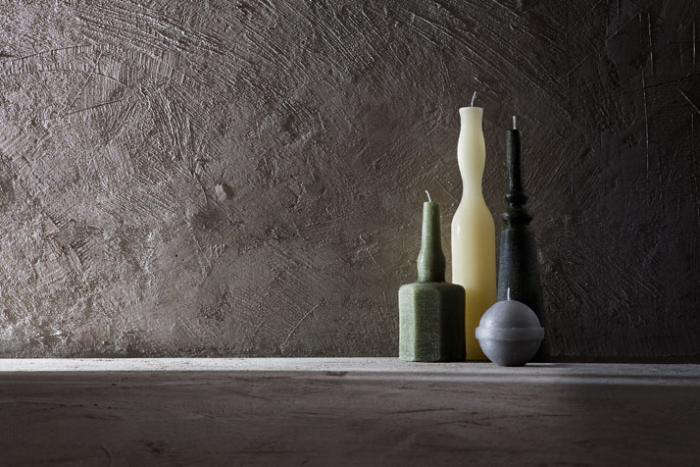
Candles as Still Life: Le Morandine is an invitation to treat a tabletop as a small work of art. Inspired by the restrained arrangements associated with Italian painter Giorgio Morandi, the project encourages people to compose bottles, vases, candle forms, and vessels in three dimensions. No towering fruit bowl or Renaissance banquet is needed. The drama comes from humble shapes and the confidence to leave a little empty space.
What Is Le Morandine?
Le Morandine is a design project by Sonia Pedrazzini that brings the visual language of Giorgio Morandi’s still lifes into real interiors. It began with an idea for candles and centerpieces, then developed into ceramic bottles, vases, and related vessels. Its essential move is simple and clever: return Morandi-like forms to the physical world, where people can arrange them themselves.
That makes it more than a conventional home-decor collection. A typical object has one job: hold flowers, contain a candle, or sit on a console table looking busy. A Le Morandine-style object has another job: respond to the pieces around it. A narrow neck beside a round body, a pale vessel placed partly in front of a darker one, or one carefully preserved gap can change the entire scene. The “finished” composition happens on a dining table, windowsill, bookshelf, or the coffee table that usually hosts remote controls and a receipt of unknown origin.
Why Morandi’s Still Lifes Work So Well for Candle Decor
Attention Turns Ordinary Forms Into Art
Giorgio Morandi repeatedly painted everyday shapes: bottles, jars, bowls, boxes, and pitchers. He was not chasing spectacle. He studied proportion, surface, light, and the small distances between forms. His arrangements were often modest and muted, but they feel intense because every object has a role.
Vessels in his paintings often sit close together, sometimes almost touching. Their edges overlap, their heights step up and down, and the quiet background leaves the objects to carry the conversation. That approach is a welcome alternative to filling every surface in a room. A single candle is pleasant. A compact group of candles and ceramic forms can create rhythm, provided it does not tip into the visual energy of a yard sale.
Muted Color Is Not Boring Color
The Morandi-inspired palettechalky white, faded terracotta, warm gray, tobacco brown, foggy blue, muted green, and beige with a little backboneallows shadow and texture to do more of the work. This is especially effective with candles, because wax and flame already bring softness. A pale clay candle beside a warm putty vessel can feel more dimensional than a high-contrast pairing that announces itself from across the room. The objects get to be interesting without wearing sequins.
How Candles Become a Three-Dimensional Still Life
Style this way by thinking less about “decorating” and more about composing. Each piece should bring height, volume, texture, color, or negative space. A taper may provide a slender vertical line; a rounded vase adds weight; a shallow bowl settles the arrangement; a visible empty area keeps the group from becoming a ceramic traffic jam.
Start With Silhouettes
Choose three to five forms with distinct outlines: one tall taper or candleholder, one squat cylinder, one bottle-shaped vase, and perhaps one low, rounded piece. They do not need to match. A little variation is useful, as long as they seem to belong to the same visual sentence. Dim the lights and view the arrangement from a few feet away. If it becomes one lumpy skyline, adjust the heights or remove a piece.
Build a Limited Palette
Choose two to four related hues, then let finishes add nuance. Warm ivory, faded brick, and soft brown make an easy trio; misty gray, stone, and muted blue feel cooler. Matte ceramic, unglazed clay, colored wax, and a lightly reflective glaze can coexist comfortably. Repeat an accent color only once or twiceperhaps a brick-red taper echoed by a terracotta bowlso the grouping feels connected rather than uniformed.
Overlap Carefully, Then Let Light Finish the Job
Gentle overlap makes a group feel composed rather than displayed for sale. Let a small vessel sit partly in front of a taller one, or allow a round shoulder to interrupt the base of a candleholder. Then use side light from a window or a nearby lamp to reveal curves and create soft shadows. Light is the final material in a still life, and conveniently, it does not require shelf space.
When a real candle is lit, the flame becomes the focal point and adds movement to an otherwise quiet scene. That can be beautiful, but it also requires practical restraint. Use an appropriate holder on a stable, heat-resistant surface, keep flames away from combustible decor, and never leave them unattended. For daytime arrangements or high-traffic surfaces, unlit candles and flameless options can preserve the sculptural effect.
Le Morandine Style in Real Rooms
Dining Table
Keep the composition low and narrow so it leaves room for plates, elbows, and dramatic reaches for the salt. Anchor the scene with a shallow bowl or short vessel, add two tapers at uneven heights, and leave a gap on one side. It should look considered from across the table, not like an obstacle course for mashed potatoes.
Bookshelf or Console
On a shelf, group objects by visual weight rather than function. A candleholder can sit beside a small bottle-shaped vase even when neither holds anything. Use one book or framed print only when it supports the scale. The aim is a quiet pause between larger architectural elements, not a miniature gift shop.
Bedroom or Reading Corner
Use fewer pieces: one candle form, one small vessel, and perhaps a dish for jewelry or reading glasses. Choose calming colors and keep the grouping easy to move. This is a scene for a deep breath, not a design dissertation with a side of insomnia.
Five Mistakes That Flatten a Candle Still Life
Matching everything too perfectly: Aim for a family resemblance, not identical twins in matching sweaters.
Adding every accent at once: Flowers, books, beads, trays, matches, branches, and miniature animals can drown out the vessels. Start with the forms and make every extra item earn its place.
Forgetting negative space: A clear margin around the group lets outlines register and gives the composition confidence.
Ignoring sight lines: Check the scene from a chair, doorway, and sofa. A beautiful standing-height arrangement may hide its best shapes from where people actually sit.
Ignoring safety: A burning candle belongs in a suitable holder, within sight, well away from children, pets, curtains, paper, dried botanicals, and anything combustible. Artful is good. Accidental fire drill is not.
Why the Le Morandine Idea Feels Current
Le Morandine answers a modern desire for objects that reward attention. In a world of disposable trends and rooms filled with things that look expensive yet anonymous, a still-life approach feels slower and more personal. It asks us to notice finish, wear, spacing, and how a shadow changes through the day.
It also makes decorating flexible. You do not need a renovation or a delivery truck of identical beige furniture. You need a few forms you genuinely like and the willingness to move them. One bottle slides left. One taper disappears. A new bowl enters and somehow behaves as though it has always lived there. The arrangement is not frozen; it changes with the season, the light, and your mood.
Conclusion: Make the Tabletop the Artwork
Le Morandine turns decorating into a thoughtful practice. Use candles and vessels not as isolated accessories, but as partners in a living composition. Borrow Morandi’s love of humble forms, restrained color, close observation, and purposeful spacing, then make the arrangement your own.
Begin with three objects. Vary the silhouettes. Leave breathing room. Let the light do its part. A candle may burn down, a flower may wilt, and a vessel may move from table to shelf, but the scene can become new again. That is not a failure of the composition. That is the composition living.
Experiences: Living With a Le Morandine-Inspired Candle Still Life
The experience of a Le Morandine-style arrangement often begins before anyone lights a wick. Picture an early-morning kitchen, when the room is still too quiet for a podcast and the coffee has not yet convinced you to participate in society. On the table sits a short matte vessel, a narrow candle, and a rounded bottle in a color somewhere between oatmeal and a very polite mushroom. None is flashy. Yet as daylight arrives from one side, their shadows separate. The bottle looks taller, the candle looks more fragile, and the low vessel quietly becomes the anchor. The room has not changed, but the morning has acquired a little ceremony.
At a dinner gathering, the same objects create another experience. Two candles at uneven heights give the table rhythm without blocking eye contact. A muted ceramic bottle holds a clipped branchor nothing at all. Guests may not know the design reference, but they notice the atmosphere. The scene feels considered without looking overworked. Someone moves a glass, another person reaches for bread, and the composition survives because it was built from sturdy forms rather than a fragile tower of decorative ambition.
After the meal, rearranging becomes its own small pleasure. Slide the rounded vessel in front of the bottle. Move the taper to the opposite end of the table. Remove one object, then wait before adding it back. This is not a high-stakes creative crisis. It is a five-minute exercise in attention. Often, the best arrangement appears through subtraction: one object leaves, and the others finally have room to speak.
In a bedroom corner or home office, an unlit candle can be just as meaningful as a burning one. It gives shape, color, and the reminder that not every comforting object must perform on command. During a late-afternoon work slump, the outline of a candle beside a small ceramic vessel can make a desk feel less like a spreadsheet outpost and more like a place where a human being is allowed to have thoughts.
Seasonal shifts offer another reason to see the arrangement with fresh eyes. In winter, a soft brown bottle and ivory candle can create a quiet, cocooning mood without turning the room into a department-store holiday display. In spring, add a single pale branch or one small bloom rather than an entire botanical parade. Summer may invite washed-out blues and sandy neutrals; fall can bring faded rust, warm gray, and smoked amber. The trick is not to decorate at the objects. Let the objects remain the primary event, while the season whispers from the edges.
Photography adds another layer. A low phone-camera angle can exaggerate the conversation between a tall taper and a squat vase, while a close crop turns several vessels into an abstract study of curves and shadows. Elaborate props are unnecessary; the objects already provide the structure. More importantly, living with this kind of still life builds a habit of noticing: a chip in the glaze, a waxy texture, the gap between two forms, or a shadow that lengthens at 5 p.m. The arrangement never asks for a grand reaction. It simply rewards a second look. In a home full of hurried routines, that quiet invitation may be the most luxurious thing on the table.