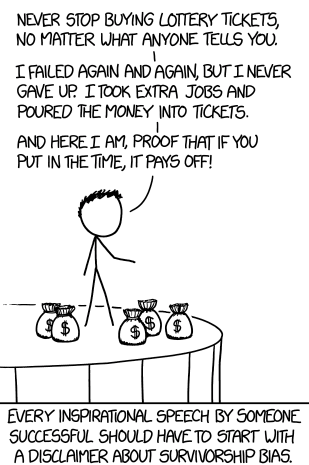

Imagine two people offering financial advice. One spent 30 years saving, investing, paying taxes, surviving recessions, and resisting the mysterious urge to buy a boat named Bad Decision. The other bought a lottery ticket on Tuesday and became a multimillionaire on Wednesday.
Which person gets the bigger audience?
Probably the lottery winner. Wealth attracts attention, and sudden wealth arrives with excellent lighting. A giant ceremonial check makes almost any opinion sound profound. Unfortunately, possessing money does not automatically reveal how someone acquired financial skillor whether skill was involved at all.
That does not mean lottery winners have nothing useful to teach us. They may offer valuable lessons about taxes, privacy, generosity, lifestyle inflation, family pressure, and the psychological shock of receiving a financial windfall. The trick is knowing which advice reflects genuine experience and which advice is simply luck wearing an expensive jacket.
Why Financial Advice From a Lottery Winner Sounds Convincing
People naturally connect visible success with expertise. When someone has millions of dollars, we assume that person must know something important about money. This tendency is understandable, but it can confuse an outcome with the process that produced it.
A lottery winner is unquestionably successful at having a winning ticket. That does not necessarily make the winner an expert in budgeting, portfolio construction, retirement planning, business management, or risk assessment. The event that created the wealth was random, not repeatable.
Outcome bias makes luck look like wisdom
Outcome bias occurs when we judge a decision mainly by its result rather than by the quality of the decision at the time it was made. Suppose someone spends $100 on lottery tickets and wins $10 million. The outcome is wonderful. The underlying strategy, however, remains statistically unreliable for everyone else.
If another person spends the same amount and wins nothing, we do not invite that person onto a podcast to explain the secrets of wealth creation. We mostly invite the unusually successful survivor. This creates survivorship bias: the winners become visible while the enormous population of unsuccessful players quietly returns to work on Monday.
A compelling story is not a repeatable system
“I followed my intuition and chose my lucky numbers” is a good human-interest story. It is not a financial plan. A repeatable financial strategy should be based on behaviors that other people can realistically use, such as controlling expenses, maintaining emergency savings, reducing costly debt, diversifying investments, and allowing time to work.
Lottery success cannot be reproduced through discipline. A savings rate can. A low-cost investment plan can. A sensible insurance strategy can. Choosing the birthday of a beloved golden retriever cannotunless that golden retriever is also a licensed financial planner, in which case we have several additional questions.
What a Lottery Winner May Actually Know About Money
Winning does not create investment expertise overnight, but it does create a rare form of firsthand experience: managing sudden wealth. In that area, responsible winners may have genuinely useful insights.
Sudden wealth should create a pause, not a shopping spree
Financial windfalls can produce excitement, fear, guilt, and a sudden belief that every relative has always been “really close.” FINRA advises recipients of financial windfalls to understand what they have received, evaluate tax consequences, review their goals, and avoid rushing into major decisions. The boring period between receiving money and spending it may be the most valuable part of the entire process.
A sensible winner may temporarily place funds in secure, liquid accounts while assembling a professional team and developing a plan. That is not glamorous. Nobody has ever filmed a music video about carefully reviewing account registrations. It is still more useful than buying six sports cars before learning what the tax bill looks like.
Taxes arrive even when the money feels magical
Lottery winnings are taxable income in the United States, and state or local taxes may also apply depending on where the ticket was purchased and where the winner lives. The amount initially withheld may not equal the winner’s final tax liability, which is why a qualified tax professional should be involved before large gifts, purchases, or investments are made.
This is one area where a lottery winner’s warning deserves attention. A headline jackpot is not the same thing as spendable money. The tax authorities do not accept “but the giant check said a billion dollars” as a complete filing strategy.
Cash versus annuity is a planning decision
Major U.S. jackpot games commonly offer winners a choice between a lump-sum cash payment and an annuity. Powerball and Mega Millions describe annuity structures involving an initial payment followed by 29 annual payments, with later payments increasing over time. Advertised prizes are stated before applicable taxes.
Neither option is universally superior. A lump sum provides flexibility, immediate control, and investment opportunities, but it also creates more opportunities for impulsive mistakes. An annuity can limit overspending and provide predictable future income, but it reduces immediate flexibility. The right choice depends on taxes, age, goals, estate plans, self-control, expected investment returns, and tolerance for complexity.
A winner can describe how the choice felt and what consequences followed. That experience is valuable. Declaring that everyone should make the same choice is not.
Privacy can become a financial asset
Publicity may attract scammers, aggressive salespeople, distant acquaintances, and people with investment opportunities involving phrases such as “guaranteed,” “exclusive,” and “my cousin knows a guy.” Reporting on large jackpots has repeatedly highlighted safety and privacy concerns for winners, while the Federal Trade Commission warns that legitimate prizes do not require recipients to pay upfront fees to collect them.
A cautious winner may therefore teach an excellent lesson: tell fewer people, protect personal information, verify every request, and establish formal procedures for gifts and charitable support.
Financial Advice You Should Not Copy Blindly
“Take bigger risks because risk made me rich”
A jackpot winner may interpret an extraordinary outcome as proof that bold risks are rewarded. That is dangerous reasoning. The lottery paid because a rare random event occurred, not because the winner discovered a superior method of evaluating risk.
In ordinary financial life, concentrated bets can create both impressive gains and permanent losses. Diversification cannot eliminate market risk, but spreading money across investments can reduce dependence on a single company, sector, asset, or prediction.
“Quit your job immediately”
Leaving work may be reasonable for someone who has enough after-tax wealth to support decades of expenses. It is not automatically sensible for a person who receives a modest prize, inheritance, settlement, or bonus.
Work provides more than a paycheck. It may provide health insurance, retirement contributions, social structure, purpose, and professional identity. Before walking into the office wearing sunglasses and carrying a resignation letter written on a napkin, calculate sustainable spending, taxes, insurance costs, inflation, and long-term goals.
Research on lottery wealth suggests that winners often reduce earnings or labor somewhat, but the effects are generally more nuanced than the cartoon version in which everyone throws a laptop into the nearest fountain.
“Buy what makes you happy”
Money can improve security, comfort, freedom, and access to experiences. Large-prize research has found sustained improvements in overall life satisfaction among winners, contradicting the simplistic claim that winning inevitably ruins happiness. However, greater wealth does not automatically solve every emotional, relational, or mental-health problem.
The useful lesson is not that spending is bad. It is that spending should be intentional. A family vacation, safer home, education fund, or reduction in working hours may improve life more reliably than an expanding warehouse of luxury objects that require insurance, maintenance, and their own zip code.
“My adviser handled everything, so hire the same kind of person”
Professional guidance can be extremely helpful after a major windfall, but job titles alone do not establish competence or trustworthiness. Investors should understand how a professional is paid, what services are provided, whether conflicts exist, and whether the person has a disciplinary history. Investor.gov provides tools for checking investment professionals and reviewing registration information.
A lottery winner who found an excellent adviser may have a useful referral. A winner who signed paperwork without understanding it has a cautionary tale.
How to Evaluate Advice From Any Wealthy Person
The same filter used for lottery winners can be applied to celebrities, entrepreneurs, influencers, professional athletes, and the person at a barbecue who explains cryptocurrency immediately after asking to borrow your phone charger.
1. Identify how the wealth was created
Was it earned through a repeatable business process, long-term investing, inheritance, property appreciation, concentrated stock ownership, or chance? Advice is most credible when it concerns the process the person actually understands.
2. Separate pre-wealth behavior from post-wealth behavior
Growing wealth and preserving wealth are different skills. Someone who received millions may become highly knowledgeable about trusts, taxes, charitable giving, and asset protection without knowing how an average household can build its first $100,000.
3. Ask whether the advice works without extraordinary luck
A useful recommendation should improve your financial position across many plausible outcomes. Saving automatically works even when markets are dull. Paying off high-interest debt works without applause. Buying lottery tickets as a retirement strategy requires the universe to develop a personal interest in your checking account.
4. Look for discussion of risk and trade-offs
Credible financial advice includes disadvantages, uncertainty, taxes, fees, and situations in which the recommendation may fail. Anyone promising high returns with little or no risk is not simplifying finance; that person is removing the warning label.
5. Check whether incentives are disclosed
Is the speaker selling a course, investment, insurance product, newsletter, or membership community? Compensation does not automatically make advice wrong, but hidden compensation should make you more skeptical.
6. Test the advice against your own plan
Your income, debt, dependents, retirement horizon, tax situation, and risk tolerance may bear no resemblance to those of a multimillionaire. Advice should be adapted, not adopted like a stray puppy that arrived with a brokerage account.
Better Financial Lessons to Take From Lottery Winners
The best lessons are usually not about picking numbers. They are about what happens after financial circumstances change.
Build a decision buffer
After any major windfalla jackpot, inheritance, business sale, legal settlement, or unusually large bonusdelay irreversible decisions. Create a temporary plan for securing the money, paying required taxes, and covering immediate needs. Excitement is a poor substitute for due diligence.
Protect cash properly
Large balances should not be placed thoughtlessly into one ordinary bank account. Standard FDIC coverage is generally at least $250,000 per depositor, per insured bank, for each ownership category. Account structure matters, so anyone holding unusually large cash balances should verify coverage rather than assuming every dollar is protected.
Create rules for generosity
Sudden wealth can turn family relationships into an endless committee meeting. A written giving policy can help. Decide how much will be allocated to gifts, loans, education, charity, and emergencies. Require requests to follow a consistent process, and use attorneys or financial professionals when necessary.
Generosity works better with boundaries. Otherwise, the winner may become a human ATM whose customer-service department is open during Thanksgiving dinner.
Design a sustainable lifestyle
A large fortune can support a high standard of living, but recurring expenses deserve more attention than purchase prices. A mansion brings property taxes, maintenance, utilities, staffing, insurance, and repairs. A yacht is an elegant method of converting money into invoices.
Estimate annual spending before buying assets that permanently raise it. The question is not merely, “Can I buy this?” It is, “Can I comfortably own this for 20 years while still meeting every other goal?”
Use separate experts
A strong sudden-wealth team may include a tax professional, estate-planning attorney, investment adviser, insurance specialist, and security or privacy adviser. Separating responsibilities creates checks and balances. No single person should control the money, interpret the tax rules, prepare every document, and assure you that everything is perfectly normal.
Experience-Based Lessons: What Lottery-Winner Stories Often Reveal
The following experiences are illustrative composites based on recurring sudden-wealth situations, not biographies of specific named winners.
The winner who tried to solve every problem
One common experience begins with generosity. The winner pays off a sibling’s mortgage, buys a friend a truck, covers a cousin’s business debts, and offers college money to several children. Each individual decision feels manageable. Together, they become a financial system with no budget and dozens of emotional shareholders.
The practical lesson is not to become coldhearted. It is to decide in advance what portion of the windfall is available for other people. A structured family fund, charitable account, or annual giving limit protects both relationships and assets. Saying, “I have a formal process for requests,” is easier than evaluating every crisis during an emotional phone call.
The winner who upgraded everything at once
Another familiar pattern is the total lifestyle replacement. The house changes, then the cars, vacations, wardrobe, hobbies, restaurants, and social circle. The winner does not merely spend part of the prize; the winner creates a permanent monthly expense level that requires the fortune to keep producing large returns.
This experience teaches an important distinction between one-time purchases and recurring commitments. A $100,000 purchase is expensive. A lifestyle requiring an extra $100,000 every year is a different animalone that eats dividends and sleeps on the retirement plan.
The winner who became everyone’s business partner
Sudden wealth attracts business ideas at impressive speed. Restaurants, real estate developments, entertainment projects, inventions, and mysterious technologies all appear. Many pitches come from people the winner knows, making objective evaluation uncomfortable.
A safer practice is to treat private investments as a limited, high-risk category. Every proposal should undergo independent legal, accounting, and commercial review. Friendship should not replace financial statements. Enthusiasm should not replace a contract. A laminated presentation containing a rocket ship is not evidence of revenue.
The winner who did almost nothing for a year
The least dramatic experience may be the most instructive. The winner secures the ticket, consults an attorney and tax professional, limits publicity, places the proceeds safely, pays existing obligations, and postpones major purchases. Friends may describe this approach as boring. That is a compliment.
During the pause, the winner learns the difference between nominal wealth and after-tax wealth, calculates long-term spending, prepares an estate plan, and decides which goals genuinely matter. By the time major decisions are made, the initial adrenaline has faded. The money becomes a resource rather than an emergency.
The winner who found that money changed choices, not personality
A financial windfall can remove many constraints, but it may amplify existing habits. A careful person may become a careful wealthy person. An impulsive person may gain access to larger impulses. Someone who disliked conflict may struggle to reject requests, while someone who enjoyed attention may become vulnerable to flattering promoters.
This is why psychological preparation matters alongside tax and investment planning. Winners may benefit from private counseling, family meetings, and written decision rules. Money can purchase time and flexibility, but it does not automatically provide patience, boundaries, or confidence.
The most useful experience of all
The strongest lesson from responsible lottery winners is surprisingly ordinary: slow down, protect the money, understand the taxes, verify the professionals, diversify risk, establish boundaries, and make decisions according to a written plan.
None of those steps requires winning a jackpot. They also apply to a raise, bonus, inheritance, home sale, business profit, or the gradual accumulation of savings. The numbers may be smaller, but the principles remain stubbornly similar.
Conclusion: Listen to the Experience, Not the Halo
Taking financial advice from a lottery winner is not automatically foolish. The winner may have hard-earned knowledge about sudden wealth, taxes, privacy, family pressure, professional advisers, and the emotional consequences of having more options than expected.
The mistake is assuming that wealth itself proves financial expertise. Winning a random drawing demonstrates good fortune. Preserving the proceeds for decades may demonstrate discipline and sound judgment. Those are two completely different achievements.
Evaluate the source, the process, the risks, and the incentives behind every recommendation. Keep lessons that are repeatable and relevant to your life. Discard advice that depends on exceptional luck, concentrated bets, or a giant novelty check.
A lottery winner can tell you what it feels like when money arrives overnight. For guidance on building wealth slowly, look to boring habits, qualified professionals, diversified investments, manageable expenses, and long-term consistency. Boring rarely goes viral, but it pays its bills.