
Reviews are weird. They’re part customer feedback, part public diary entry, and part “I was hungry and now I’m a critic.” If you run a local business, reviews can feel like a daily pop quiz that counts toward your rent payment.
And if you’ve ever felt anxious opening Google, Yelp, Facebook, or TripAdvisorlike you’re bracing for impactyou’re not dramatic. You’re human. The goal isn’t to become a robot who “doesn’t care.” The goal is to build a system that keeps reviews in their rightful place: useful information, not a personal verdict.
This guide breaks down a practical, calm approach to local business reviewsso you can respond confidently, reduce stress, handle spam, and even turn the occasional one-star tantrum into a reputation win.
Why Reviews Feel So Scary (And Why That Fear Is Legit)
1) People can be shockingly bold online
In real life, most customers don’t walk up to the counter and announce, “Hello, I have opinions and I will now perform them.” Online? They’ll write a five-paragraph saga with a plot twist and three emojis that suggest they’re not okay.
When someone’s rude, extreme, or unfair, it can feel like getting heckled while you’re trying to work. Fear makes sense because the experience can be genuinely unpleasant.
2) Review platforms hold the microphone
Reviews live on platforms you don’t control. You can’t rewrite them. You can’t “explain the context” inside the review itself. Even when a review is misleading, the process of disputing it can feel slow, confusing, or inconsistent.
3) Your livelihood is attached to a star rating
Local reviews influence clicks, calls, foot traffic, and trust. A bad review can feel like a threat to your stabilitynot just your ego. That pressure is real, especially for small teams and owner-operators.
The Mindset Shift: Reviews Are Data, Not Destiny
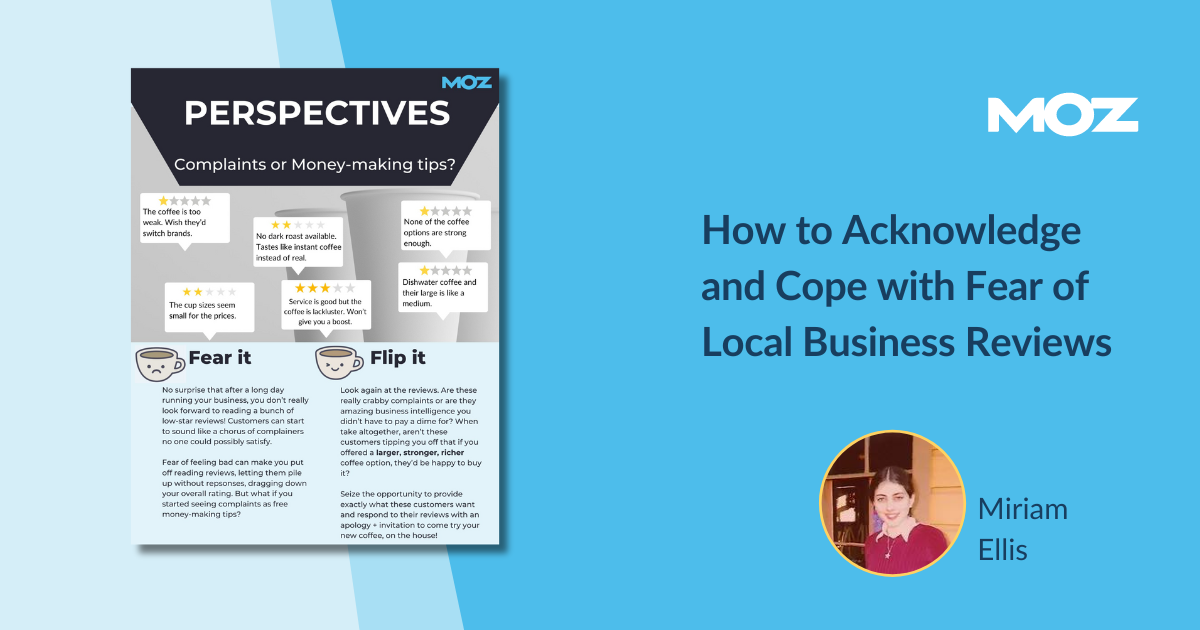
Turn “judgment” into “business intelligence”
A review is not a court ruling. It’s a data point from one person’s experience on one day with one set of expectations. Even harsh reviews can reveal patterns:
- Were wait times unclear?
- Did pricing surprise people?
- Was communication inconsistent?
- Did a process break under pressure (weekends, holidays, staffing gaps)?
If you treat reviews like intelligence rather than insults, you gain leverage. You can adjust operations, messaging, training, and expectations. That’s not “letting the reviewer win.” That’s using information to make your business stronger.
Separate your identity from your rating
This sounds cheesy until it saves your sleep: you are not your reviews. Your work ethic, character, and effort don’t get reduced to a number. Reviews measure how well your experience matched a customer’s expectationsometimes accurately, sometimes not.
Build a Complaint-Friendly Business Plan (So Problems Reach You First)
Here’s a simple truth: customers complain somewhere. Your job is to make sure the “somewhere” is to you, not just about you.
Create obvious off-ramps before they go public
- Signage and scripting: “If anything isn’t right, please tell uswe’ll fix it.”
- Receipts and follow-ups: Add a line like: “Questions or concerns? Reply to this email/text.”
- A visible manager path: Make escalation easy and stigma-free.
Train your team on the “two-minute save”
Many negative reviews begin as small annoyances. Train staff to recognize early warning signs (confusion, frustration, delays) and to offer quick solutions:
- Clarify expectations (“It’ll be 20 minutesdo you want to keep the order or adjust it?”)
- Offer options (remake, refund, store credit, priority remake, free add-on)
- Escalate fast when needed (don’t argue; solve)
Have a “service recovery toolkit”
Decide in advance what you can offer when something goes wrong. Pre-approved options reduce panic and inconsistency:
- Partial or full refund thresholds
- Replacement policy
- “Make-good” freebies (within reason)
- Who can approve what
A Review Response System That Keeps You Calm
Fear grows when you avoid reviews. But reading and responding without a system is like free-climbing a mountain because you “don’t like ropes.” Let’s add ropes.
Step 1: Set a review-check schedule (and stop doom-scrolling)
Pick a cadence you can sustain: daily, every other day, or twice a weekdepending on volume. Consistency beats intensity. Set a calendar reminder, then leave.
Step 2: Use the “cool-down rule” for negative reviews
If a review triggers anger or anxiety, don’t respond immediately. Draft it, save it, and revisit after a short break. Your best responses come from professionalism, not adrenaline.
Step 3: Follow a simple response framework
For most platforms, a strong reply looks like this:
- Thank them for the feedback
- Acknowledge the issue (specific, not generic)
- Apologize when appropriate (without self-incrimination theater)
- Explain briefly if needed (no excuses, no essays)
- Offer a fix or next step
- Take it offline with contact info
- Close warmly (future-focused)
Examples you can adapt (without sounding like a robot)
Example: Negative review about wait time
“Thanks for taking the time to share this. I’m sorry the wait felt longer than expectedour goal is to be upfront about timing and keep things moving. We’re reviewing staffing and our queue updates so guests aren’t left guessing. If you’re open to it, please contact us at [phone/email] so we can learn more and make this right.”
Example: Complaint about a specific issue (food/service/quality)
“Thank you for the feedback, and I’m sorry your experience didn’t match what we aim for. What you described isn’t the standard we want to deliver. If you reach out at [phone/email], we’ll look into what happened and work on a solution. We appreciate the chance to improve.”
Example: The “we can’t find your visit” situation
“Thanks for posting. We take concerns seriously, but we’re not finding a record that matches what you described. We’d like to understand what happenedplease contact us at [phone/email] with the date/time and any details so we can investigate.”
Handling Different Types of Reviews Without Losing Your Mind
Five-star reviews: don’t waste the gift
Replying to positive reviews shows future customers you’re engaged. Keep it short, specific, and grateful. Bonus points if you mention a service detail (“So glad you enjoyed the patio” or “Happy the repair was quick”).
Three-star reviews: treat them like a conversation starter
These are often “good but…” reviews. Thank them, acknowledge the “but,” and invite details. You’ll look proactive and mature (which is surprisingly rare on the internet).
One-star rants: respond for the readers, not the ranter
You’re not only talking to the reviewer. You’re talking to everyone who will read your reply. Stay calm, focus on facts, and offer a path forward. No sarcasm, no finger-pointing, no “Actually…” (even when you want to).
Review bombing or off-topic attacks: document, then act
If you suspect coordinated attacks, misinformation, or clearly irrelevant content, take screenshots, note dates, and report through the platform’s processes. Keep your public reply minimal and professional if you reply at all.
Spam, Fake, or Policy-Violating Reviews: What to Do
Not every bad review is “spam.” But some reviews truly violate platform rules (harassment, hate, unrelated content, conflicts of interest, fake experiences). When that happens, use a two-track approach:
Track A: Public response (short and steady)
“We take feedback seriously and are looking into this. If you contacted us directly, we’d be glad to help at [contact].”
Track B: Platform reporting (organized and documented)
- Google Business Profile: follow the platform’s review management and reporting steps; remember replies can be reviewed before posting.
- Yelp: respond professionally and use reporting options if a review violates guidelines.
- TripAdvisor: use the Management Center to respond; follow content and response guidelines.
- Facebook: report reviews/recommendations that violate standards.
- Nextdoor: businesses can reply to recommendations and report problematic content where applicable.
Pro tip: Build a one-page internal cheat sheet: what counts as spam on each platform, where to report it, and what documentation to attach. When you’re stressed, you’ll thank Past You for being organized.
Ask for Reviews Ethically (So One Bad Review Doesn’t Feel Like a Meteor)
A steady flow of honest reviews reduces fear because it creates context. One negative review hits differently when it’s surrounded by consistent feedback.
Simple, ethical ways to request reviews
- Ask at the right moment: right after a successful service, delivery, or solved problem.
- Make it easy: a short script, a receipt reminder, a follow-up email or text.
- Ask everyone, not just happy customers. “Review gating” can backfire and may create legal/compliance risk.
- Don’t buy reviews. Don’t trade discounts for ratings. Don’t get your cousin’s roommate to “help you out.”
Beyond ethics, there’s practical reality: regulators and platforms are increasingly focused on deceptive review practices. Keeping your process clean protects your reputation long-term.
Delegate, Automate, and Protect Your Mental Bandwidth
If reviews trigger real anxiety, delegation is not weaknessit’s leadership. Decide who handles what:
- Review reader: checks new reviews on schedule
- First drafter: writes draft responses using your framework
- Approver: signs off on sensitive cases
Create a brand voice guide (so replies don’t sound like five different people)
- Friendly vs. formal tone
- Words you avoid (snark, sarcasm, blame)
- Required elements (thanks, empathy, next step)
- When to escalate (legal threats, discrimination claims, safety issues)
Measure What Matters (So Reviews Improve Operations, Not Just Emotions)
Reviews aren’t only reputationthey’re operations feedback. Track:
- Response time: are you replying consistently?
- Theme frequency: what complaints repeat?
- Location/team patterns: is one shift or location struggling?
- Resolution outcomes: do customers come back after an issue?
When you turn reviews into measurable improvements, the fear often dropsbecause you’re no longer “hoping people are happy.” You’re actively improving what you control.
Real-World Experiences: Living With Reviews (And Getting Better at It)
The first time a business owner gets a nasty review, it can feel personal in a way that’s hard to explain to someone who hasn’t been there. You remember the day, the tone, the words, and the hot flash of panic when you realize it’s public. For many owners, the fear doesn’t come from “a dislike.” It comes from the idea that a stranger can write something unfair and it can influence hundreds of future customers who never meet you.
One common experience is avoidance: you stop checking reviews because you don’t want the emotional hit. But then a week becomes a month, and suddenly you’re responding to five reviews at oncesome of them old, some of them still painful, and now you feel behind. That backlog creates its own anxiety, and the cycle repeats. Owners who break this cycle usually do it by making review checks small and scheduledten minutes, a few times a week, like brushing your teeth. Not glamorous, but surprisingly effective.
Another experience is realizing that the best review response isn’t written for the reviewer. It’s written for everyone else watching. Plenty of reviewers never come back to read your reply. But future customers do. When your response is calm, specific, and solution-oriented, it changes the story from “this business has problems” to “this business handles problems.” That shift is powerful. It turns a negative moment into proof of professionalism.
Owners also learn that not all negative reviews are equal. Some are legitimate: a miscommunication, a delay, a product issue. Those reviews can be uncomfortable but useful, because they often point to a fix you can actually implementclearer signage, better confirmation texts, tighter training, a new checklist. Other reviews are pure emotion or nonsense. The experience there is different: you’re not improving operations, you’re practicing boundaries. You document, report if it violates policies, and keep your public reply short. The “win” is not convincing the reviewerit’s staying steady and protecting your brand voice.
There’s also the long-game experience: once you consistently ask for reviews ethically and build a steady stream of feedback, the fear shrinks. One harsh review stops feeling like a meteor and starts feeling like… weather. Not fun, but manageable. Owners often describe a turning point where they stop chasing a perfect rating and start chasing a trustworthy onebecause a mix of reviews, handled well, feels more believable to real customers than a suspicious wall of five-star praise.
Ultimately, coping with fear of reviews isn’t about “not caring.” It’s about caring with structure. A system gives you distance. A framework gives you words when you’re upset. A complaint-friendly plan gives customers a way to reach you before they go public. And that combination is what lets you run a business without letting the internet run your nervous system.