
Some decorations whisper. Some decorations shout. And then there are DIY India ink paper garlands, which stroll into the room wearing a black linen jacket and somehow make your bookshelf, party table, window, or mantel look like it has a private gallery opening at 7 p.m. The best part? This project does not require a studio, a trust fund, or the emotional stamina needed to assemble flat-pack furniture. You need paper, ink, a brush, string, scissors, and a little courage.
India ink paper garlands combine two things crafters love: dramatic handmade marks and lightweight paper décor. Instead of buying mass-produced banners that look like they escaped from a party-supply aisle, you create your own repeatable shapes, brush patterns, stamped motifs, dots, stripes, moons, leaves, diamonds, or abstract splatters. Each piece dries into a tiny work of art. String them together, and suddenly your room has movement, rhythm, and personality.
This guide walks you through the materials, paper choices, ink techniques, step-by-step assembly, styling ideas, troubleshooting, and hands-on experience behind making a garland that looks intentional rather than “I cut this while answering emails.” Whether you are decorating for a dinner party, wedding shower, holiday gathering, nursery, studio wall, or everyday home refresh, this DIY paper garland project is affordable, flexible, and surprisingly meditative.
What Makes India Ink Paper Garlands So Appealing?
India ink has a deep, velvety black quality that ordinary marker ink rarely matches. On the right paper, it can look crisp and graphic, smoky and painterly, or wonderfully imperfect. Because many India inks are pigment-based and water-resistant when dry, they work especially well for decorative paper projects that need strong contrast and lasting visual impact.
The garland format adds charm because it turns individual inked pieces into a connected design. A single painted circle is cute. Twenty painted circles floating on thread? That is décor with a passport. You can hang a garland across a wall, frame a doorway, layer it over a mirror, drape it along open shelving, or use it as party backdrop trim. It is light enough to hang with removable hooks or painter’s tape, yet bold enough to transform a blank wall.
Understanding India Ink Before You Start
India ink is traditionally known for its intense black color and permanence. Modern versions vary by brand, but most are designed for drawing, calligraphy, illustration, mixed media, and brushwork. Some formulas contain shellac or resin binders, which help the ink dry with water resistance. That is excellent for paper garlands because your designs are less likely to smear once dry.
However, “waterproof when dry” does not mean “invincible against every substance in the universe.” Strong cleaners, alkaline products, and aggressive rubbing can still disturb some inks. Translation: do not wash your finished paper garland in the sink. It is art, not a salad spinner.
India Ink vs. Acrylic Ink vs. Fountain Pen Ink
For this project, India ink gives the most classic black-and-white look. Acrylic ink can also work if you want color and strong adhesion. Fountain pen ink is beautiful and fluid, but many fountain pen inks are dye-based and may be less water-resistant or more prone to fading in strong sunlight. If your garland will hang for a long time near a window, choose lightfast ink and paper whenever possible.
For a softer look, dilute India ink with a little water and test it first. For bolder results, use it straight from the bottle. If you enjoy controlled chaos, use both. The paper will tell on you immediately, which is part of the fun.
Best Paper for DIY India Ink Paper Garlands
Paper choice determines whether your garland looks refined or like it lost a fight with a puddle. India ink can be watery, so thin copy paper may buckle. That does not make copy paper useless, but it does mean you should expect wrinkles unless you use very light brushwork.
Recommended Paper Types
- Watercolor paper: Best for heavy ink washes, splatters, brush marks, and layered designs.
- Mixed-media paper: A practical middle ground for painting, stamping, and cutting.
- Cardstock: Great for crisp shapes, banners, circles, moons, and geometric pieces.
- Cotton rag paper: Beautiful for an artful, handmade finish with subtle texture.
- Text-weight colored paper: Good for lightweight garlands, especially if you use minimal ink.
- Recycled paper or old book pages: Excellent for vintage style, but test first because old paper can be fragile.
If you plan to sew through the paper with a machine, avoid extremely thick board. Heavy cardstock can stress the needle and make the garland stiff. A medium-weight paper is usually the sweet spot: strong enough to hold shape, flexible enough to hang naturally.
Materials You Will Need
You can make this project with a small supply list. Fancy tools are optional. Patience is recommended but, as always, slightly negotiable.
- India ink, black or colored
- Watercolor paper, mixed-media paper, or cardstock
- Calligraphy brush, round brush, foam brush, or bamboo brush
- Small dish or palette for ink
- Water cup for rinsing brushes
- Pencil and ruler
- Scissors, craft knife, or paper punch
- Cutting mat if using a craft knife
- Twine, cotton thread, embroidery floss, fishing line, or thin ribbon
- Needle, hole punch, glue dots, tape, or sewing machine
- Scrap paper or drop cloth to protect your table
- Paper towels or a soft rag
- Optional: rubber stamps, antique textile stamps, stencils, clips, beads, tassels, or pom-poms
Plan Your Garland Design
Before the ink comes out, decide what kind of garland you want. This avoids the classic craft-table moment where you are surrounded by 73 unrelated shapes and whispering, “This is fine.”
Shape Ideas
- Circles: Modern, simple, and perfect for sewn garlands.
- Triangles: Great for classic bunting and party banners.
- Leaves: Organic and elegant for mantels, weddings, and seasonal décor.
- Moons and stars: Dreamy for bedrooms, nurseries, and celestial party themes.
- Rectangles or flags: Ideal for stamped patterns or calligraphy-style brush marks.
- Abstract torn pieces: Beautiful if you want a handmade, wabi-sabi effect.
Pattern Ideas
India ink looks fantastic in minimalist patterns. Try dots, stripes, grids, half-moons, brush swashes, tiny crosses, irregular lines, or stamped motifs. You can paint every shape differently or repeat one motif for a cleaner look. If your home style leans modern, use black ink on white paper. If it leans bohemian, mix inked pieces with kraft paper, handmade paper, or soft colors. If it leans “I own too many plants and no regrets,” make leaf shapes and hang them near greenery.
Step-by-Step: How to Make India Ink Paper Garlands
Step 1: Protect Your Workspace
India ink is not shy. It stains. Cover your table with scrap paper, a drop cloth, or an old cardboard box flattened into submission. Wear an apron or old shirt. This is not the moment for your favorite white sweater unless you want it to become a “conceptual textile piece.”
Step 2: Test Ink on Scrap Paper
Before painting your final paper, test the ink. Try full-strength brush marks, diluted washes, dots, dry-brush strokes, and stamped patterns. Let the samples dry. Check for feathering, buckling, and color intensity. Testing saves materials and prevents regret, which is the least decorative emotion.
Step 3: Paint or Stamp Your Paper
Paint your designs on full sheets before cutting, or cut shapes first and paint each one individually. Painting first is faster and gives you more freedom. Cutting first gives you better control over placement. For a handmade look, brush loose marks across the sheet, leaving white space between patterns. For a graphic look, use a ruler and create clean stripes or grids.
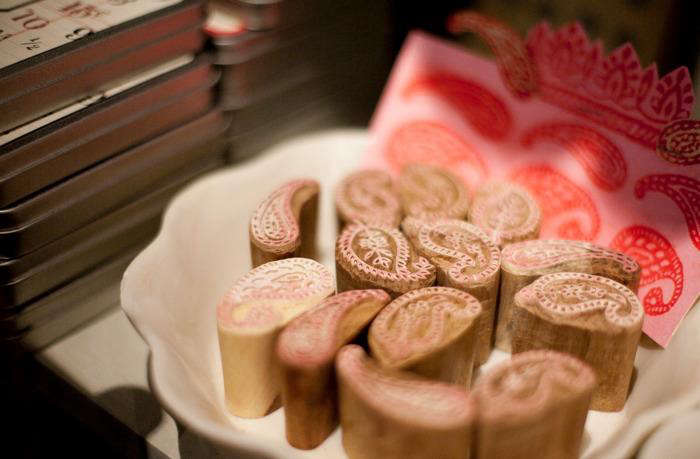
If you are using stamps, apply ink with a brush instead of dipping the stamp directly into the bottle. This keeps the ink layer thin and prevents blobs. Press firmly, lift straight up, and resist the urge to wiggle. Wiggling is how crisp motifs become mysterious smudges with self-esteem issues.
Step 4: Let the Ink Dry Completely
Place painted sheets flat and let them dry. Drying time depends on paper thickness, ink amount, humidity, and whether you diluted the ink. Do not stack wet sheets. Do not cut damp paper. Do not touch the glossy puddle “just to check.” Every crafter has done this. Every crafter has learned.
Step 5: Flatten the Paper if Needed
If the paper buckles, place it under clean heavy books once dry. You can also sandwich it between clean sheets of paper first to avoid transferring any residue. For lightly warped watercolor paper, a night under books usually helps. For paper that looks like a potato chip, call it texture and move forward with confidence.
Step 6: Cut Your Shapes
Use scissors, a craft knife, or a paper punch. A circle punch speeds up production and makes evenly sized pieces. For bunting, cut triangles or rectangles. For leaves, fold paper lightly and cut symmetrical shapes. For a more artistic look, tear shapes by hand instead of cutting them. Torn edges catch light beautifully and make the garland feel less manufactured.
Step 7: Arrange the Pieces
Lay everything on the floor or table before stringing. Alternate dark and light pieces, large and small shapes, or patterned and plain paper. This helps balance the design. A good garland has rhythm. Think of it like a playlist: not every song should be a drum solo.
Step 8: Attach Pieces to String
You have several options. For a quick garland, punch two small holes at the top of each piece and thread twine through. For a cleaner floating look, sew through the paper pieces with a sewing machine using a medium stitch. For hand assembly, use a needle and thread. You can also tape thread to the back of each piece or fold shapes over string and glue them shut.
If sewing, leave a little thread before the first shape and after the last shape for hanging. Feed pieces slowly and maintain even spacing. You can stitch through the center of circles, down the middle of leaves, or across the top of flags. Do not backstitch on paper; it can perforate the shape too much.
Step 9: Hang and Adjust
Hang your garland using removable hooks, small nails, washi tape, painter’s tape, or tied loops. Let it drape naturally. If pieces twist, that can be charming, especially with double-sided designs. If you want a polished look from every angle, paint both sides or glue two matching pieces back-to-back with the string sandwiched between them.
Design Variations for Every Style
Minimalist Black-and-White Garland
Use white watercolor paper, black India ink, and simple brush dots or half circles. Cut into circles or squares. Sew with white or black thread. Hang above a desk, shelf, or bed for a calm, gallery-style accent.
Bohemian Stamped Garland
Use kraft paper, handmade paper, or warm ivory cardstock. Stamp repeating motifs with India ink, then cut into flags. Add wooden beads or small tassels between sections. This version looks beautiful over a mantel or outdoor dinner table, as long as it stays dry.
Party Backdrop Garland
Make multiple strands in different lengths. Use circles, triangles, and strips. Mix inked paper with metallic paper or bright colored paper. Hang vertically behind a dessert table, photo area, or bar cart. The bar cart will appreciate the attention.
Seasonal Garland
For fall, cut leaves and paint veins with India ink. For winter, cut stars, moons, or abstract snowflake shapes. For spring, use ink outlines over pastel paper. For summer, make bold brushstroke flags and hang them near a sunny window, away from direct moisture.
Common Mistakes and How to Fix Them
The Ink Bleeds Too Much
Switch to heavier paper or use less ink on the brush. Highly absorbent paper can feather, especially with watery washes. If you like the soft bleed, make it intentional by repeating it throughout the design.
The Paper Warps
Use thicker paper, reduce water, or paint both sides lightly to balance tension. Flatten dry sheets under books. For future batches, tape paper edges down while painting if you are using wet washes.
The Garland Looks Too Random
Limit your palette and repeat shapes. A garland can handle variation, but it still needs unity. Choose one ink color, two paper colors, and one shape family. Suddenly it looks designed instead of accidentally festive.
The Thread Tears the Paper
Use a smaller needle, lighter tension, or reinforce holes with tiny pieces of clear tape on the back. If sewing, avoid very close stitches because they can create a perforated tear line.
Safety, Cleanup, and Storage
Use India ink in a ventilated area and keep the bottle capped when not in use. Follow the safety label on your specific ink, especially if children are helping. Many art inks are suitable for studio use but should not be treated like finger paint. Keep ink away from mouths, eyes, upholstery, pets, and the one rug you cannot replace.
Clean brushes promptly with water unless the ink label says otherwise. Once waterproof ink dries in a brush, it can stiffen the bristles. Wipe spills immediately. Store finished garlands flat in a folder or loosely wrapped around cardboard. Avoid crushing them in a decoration bin under ceramic pumpkins, holiday lights, and whatever that mystery cord belongs to.
Where to Use India Ink Paper Garlands
These garlands are surprisingly versatile. Use them as wall décor in a home office, a nursery accent, a handmade wedding detail, a birthday party backdrop, or a simple seasonal refresh. They work especially well in rooms that need contrast. A black-and-white garland can sharpen a neutral space, while colored paper and ink can bring energy to a plain wall.
For shelves, string a short garland along the front edge and secure it discreetly at both ends. For doorways, make a longer strand with larger shapes so it does not disappear visually. For table décor, lay a garland down the center like a runner and mix in candles, small vases, or greenery. Just keep open flames away from paper. “Spontaneous combustion chic” is not a recommended design style.
Budget-Friendly and Eco-Friendly Tips
This DIY project can be very affordable. Use leftover paper, damaged book pages, packaging paper, scrap cardstock, or paper offcuts from other projects. If you already own black ink, the only new purchase may be string. You can also make mini garlands from tiny scraps, which is deeply satisfying if you are the kind of person who saves paper pieces because “they might be useful someday.” Today is their day.
To make the project more sustainable, avoid glitter-coated paper, choose recyclable paper when possible, and store your garlands for reuse. Handmade decorations often last longer emotionally because you remember making them. A store-bought banner says “party.” A handmade India ink garland says “party, but with taste and possibly good cheese.”
Creative Experiences With DIY India Ink Paper Garlands
The first time you make India ink paper garlands, you may discover that the project has two personalities. The first personality is calm and elegant: dipping a brush, dragging ink across paper, watching dark marks bloom into soft edges. The second personality appears when you realize you have ink on your elbow and somehow on the bottom of your coffee mug. This is normal. It means the craft is working.
One of the most useful experiences is learning how much ink your paper can handle. On mixed-media paper, a loaded brush creates dramatic strokes without too much buckling. On thin text paper, the same brush can create ripples almost instantly. That is not failure; it is information. After a few test sheets, you begin to understand pressure, speed, and moisture. A quick dry-brush stroke feels crisp and modern. A slow wet stroke feels moody and organic. Small dots look playful. Uneven stripes look sophisticated, especially when you pretend every wobble was inspired by ancient textiles.
Another practical lesson is that spacing matters more than perfection. Individual pieces do not need to be flawless. Once strung together, the eye reads the whole garland as pattern and movement. A slightly crooked circle or a stamp with a faded edge can actually make the finished piece feel warmer. Handmade décor becomes stiff when every element tries too hard to be identical. Let a few pieces have personality. Not chaos, just charisma.
In real rooms, India ink paper garlands work best when they respond to the space. A narrow shelf may need a short, delicate strand with small shapes. A wide blank wall can handle oversized flags or several vertical strands. For parties, layering is your secret weapon. One garland looks sweet; three garlands at different heights look styled. Add warm lighting, and the paper casts tiny shadows that make the wall feel alive. Guests may ask where you bought it. Try not to answer too smugly.
If children or friends join the project, give everyone a limited format. For example, ask each person to paint only circles, only dots, or only leaf veins. This keeps the final garland cohesive while still allowing creative freedom. Group crafting can go off the rails quickly when everyone has unlimited options. Suddenly one person is painting a dragon, another is cutting trapezoids, and someone has introduced neon stickers. Boundaries are not boring; boundaries are how the garland survives.
The biggest experience-based tip is to make more pieces than you think you need. Garlands shrink visually once hung. A pile of fifty paper circles looks enormous on the table but surprisingly modest across a doorway. Extra pieces also let you remove any that feel too heavy, too pale, or too “what happened here?” Save leftovers for gift tags, place cards, bookmarks, or mini ornaments. India ink scraps have a way of becoming useful later.
Finally, enjoy the imperfection. The appeal of DIY India ink paper garlands is not that they imitate factory-made décor. Their beauty comes from brush pressure, paper texture, tiny variations, and the visible presence of a human hand. In a home filled with screens, smooth plastics, and suspiciously perfect online images, a handmade paper garland offers something refreshing: a little movement, a little shadow, a little ink, and a very reasonable excuse to avoid doing laundry for an hour.
Conclusion
DIY India ink paper garlands are simple to make, inexpensive to customize, and stylish enough for everything from everyday home décor to special events. With the right paper, a small bottle of ink, and a clear design plan, you can create garlands that feel modern, handmade, and memorable. Start with test marks, choose sturdy paper, repeat a few shapes, and let the ink do what it does best: add drama without asking for a spotlight.
Whether you sew circles into a floating strand, stamp flags with antique-inspired motifs, or brush abstract marks onto handmade paper, the result is décor with soul. It is easy, flexible, and forgiving. Even better, it gives you permission to play. And honestly, any project that turns paper scraps into art while making your wall look smarter deserves a permanent place in the DIY hall of fame.
Note: This article synthesizes practical guidance from established home design, paper craft, and professional art-material resources, including U.S. craft publishers, interior design references, and major art-supply guidance on India ink, paper, brushwork, garland construction, drying, water resistance, and safe studio cleanup.