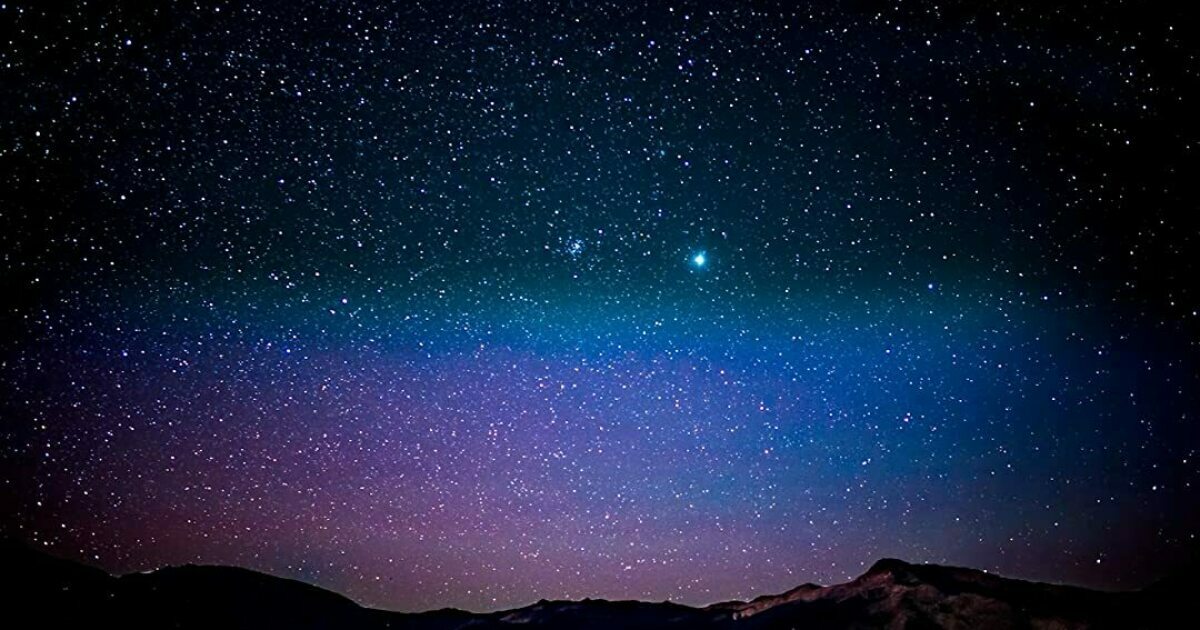

There is something wonderfully dramatic about the night sky. It is the original widescreen entertainment: no subscription, no buffering, no “Are you still watching?” guilt trip. Just darkness, stars, the moon, clouds, maybe a planet or two, andif you are lucky enough to escape city lightsa hazy ribbon of the Milky Way that looks like the universe spilled powdered sugar across black velvet.
So, hey pandas, draw a night-sky. Not because your drawing has to be perfect. Not because your stars must be astronomically accurate enough to impress a telescope. Draw one because the night sky is one of the friendliest subjects in art: beginners can make it beautiful, experienced artists can make it emotional, and everyone can add one tiny glowing dot and claim, with full confidence, “That’s Venus.” Probably. Maybe. Let’s not ask an astronomer before coffee.
This guide explores how to create a memorable night-sky drawing, from real stargazing inspiration to composition, color, texture, symbolism, and shareable creative prompts. Whether you are sketching with pencil, digital brushes, markers, watercolor, chalk pastel, or a suspiciously overworked ballpoint pen, the night sky gives you room to experiment. It can be peaceful, spooky, romantic, cosmic, funny, lonely, magical, or all of the above before the paint dries.
Why Night-Sky Art Never Gets Old
A night-sky drawing works because it blends two huge human habits: looking up and making meaning. People have watched the sky for navigation, farming seasons, storytelling, science, religion, poetry, and late-night “Why am I awake?” thinking. Artists love it because darkness is not empty. It is a stage.
The stars become characters. The moon becomes a spotlight. Clouds become curtains. Mountains, rooftops, trees, lakes, deserts, and city skylines become the audience. Even a simple drawing of a crescent moon over a quiet hill can feel like a whole story waiting to happen.
Real night skies also teach artists a useful lesson: contrast creates magic. A star only looks bright because the space around it is dark. A moon glows harder when the nearby clouds are soft and muted. A silhouette becomes powerful because it hides detail instead of explaining everything. In other words, night-sky art proves that sometimes less detail is not lazinessit is atmosphere wearing a fancy hat.
Start With the Mood Before the Stars
Before drawing, ask one question: What should this night sky feel like?
A calm night-sky drawing might use deep blues, gentle gradients, a smooth moon, and widely spaced stars. A fantasy sky might include oversized constellations, purple clouds, glowing mushrooms, or a dragon who clearly ignored air-traffic control. A dramatic sky might use sharp mountain silhouettes, meteor streaks, storm clouds, and strong light around the moon. A cozy sky might feature a cabin, a campfire, and enough stars to make the drawing smell faintly like marshmallows.
Choosing the mood first helps every visual decision. It tells you whether your lines should be soft or scratchy, whether the colors should be cold or warm, and whether the stars should look realistic or delightfully chaotic.
How to Draw a Night-Sky Step by Step
1. Build a Simple Composition
Start with the horizon. It can be low, middle, or high. A low horizon gives the sky most of the page and creates a grand, cosmic feeling. A high horizon makes the land more important and can create intimacy. For a classic night-sky drawing, place the horizon low and let the sky dominate like the dramatic main character it is.
Add a foreground shape: pine trees, rooftops, mountains, a person sitting on a hill, a lake, a beach, or a lonely fence. Keep the foreground mostly dark. Silhouettes are your best friend because they add structure without forcing you to draw every leaf, brick, or blade of grass. The night is generous like that.
2. Create a Gradient Sky
A night sky usually looks more natural when it is not one flat color. Try a gradient from near-black navy at the top to slightly lighter blue near the horizon. In traditional media, layer colored pencil, pastel, watercolor, or marker slowly. In digital art, use a soft brush or gradient tool, then add texture so it does not look too plastic.
For extra depth, blend small touches of violet, indigo, teal, or smoky gray. Avoid making the whole sky pure black unless you want a graphic, poster-like style. Realistic night skies often contain subtle color shifts, especially near the horizon where moonlight, atmosphere, or distant city glow may lighten the darkness.
3. Place the Moon With Intention
The moon is not just a circle; it is the boss lamp of the night. Put it where it supports the composition. A moon in the upper corner creates quiet balance. A huge moon behind a tree or mountain creates fantasy drama. A small moon near the horizon can feel lonely and poetic.
Use a soft halo around the moon by lightly blending outward. If you are drawing with pencil, leave the moon area white and shade around it. If you are painting, protect the moon shape first, then add glow. For a crescent moon, draw the outer circle first and “cut away” part of it with sky color. Congratulations, you have now performed lunar surgery.
4. Add Stars Like You Mean It
Stars should not be evenly spaced like wallpaper dots. Real night skies have variety: bright stars, dim stars, clusters, empty patches, and occasional patterns that invite the eye to wander. Make some stars tiny, some medium, and a few bright enough to sparkle.
With white gel pen, paint, correction pen, or digital brushes, tap in stars lightly. For traditional art, a toothbrush splatter technique can create a beautiful star field, but practice first unless you enjoy redecorating your desk, shirt, and possibly your cat. For digital work, scatter brushes help, but do not rely on them completely. Add a few hand-placed stars afterward so the sky feels intentional.
5. Use Clouds, Mist, and the Milky Way
Clouds can make a night sky more believable and emotional. Soft clouds around the moon create mystery. Thin horizontal clouds near the horizon add depth. Storm clouds can make the sky feel cinematic, like something important is about to happen and everyone forgot to bring an umbrella.
To suggest the Milky Way, draw a pale, uneven band across the sky. It should not look like a straight white stripe. Use soft, cloudy texture with scattered bright stars inside it. A sponge, dry brush, tissue lift, pastel smudge, or low-opacity digital brush can help create that dusty cosmic look. Keep it irregular. The universe is not a ruler enthusiast.
Color Palettes for Night-Sky Drawings
One reason night-sky art is so popular is that the color palettes are delicious. A realistic palette might include midnight blue, black, gray-blue, silver, and soft white. A dreamy palette might mix navy, lavender, violet, peach, and pale yellow. A fantasy palette might use turquoise, magenta, electric purple, and glowing gold.
For a dramatic scene, use deep blue-black with a warm moon. For a peaceful scene, keep the contrast softer and use cooler tones. For a magical scene, push the saturation. The sky can be purple. The stars can glow aqua. The clouds can blush pink. The art police are not coming, and if they do, distract them with glitter.
Still, color harmony matters. Pick one dominant color, one supporting color, and one accent. For example: navy as the main color, violet as the supporting color, and pale yellow as the accent. This keeps the drawing from becoming visual soup.
Texture Makes the Sky Feel Alive
A flat sky can still look nice, but texture adds life. Pencil hatching can create wind and movement. Pastel smudges can create mist. Watercolor blooms can look like nebulae. Digital noise or grain can make a polished illustration feel more organic.
Try different mark-making methods: dots, short strokes, curved swirls, dry-brush scratches, soft blending, or layered transparent washes. The National Gallery of Art’s art education materials emphasize that different line qualities can suggest texture and pattern, and that idea fits night-sky drawing perfectly. A sky can be smooth and silent, scratchy and electric, or swirled like it has had three espressos and a cosmic revelation.
Learning From Famous Night-Sky Art
When people think of night-sky art, Vincent van Gogh’s The Starry Night often enters the room wearing a dramatic scarf. The painting is famous not because it is a photographic copy of the sky, but because it transforms observation into emotion. MoMA describes the work as a night sky dominated by the bright moon and Venus, while also emphasizing mood, expression, symbol, and feeling.
That is a powerful lesson for anyone drawing a night sky. You do not need to reproduce the sky exactly. You can exaggerate the stars, bend the clouds, stretch the moon, or swirl the air. If the drawing communicates wonder, loneliness, joy, mystery, or awe, it is working.
Artists have also used “nocturne” scenes to explore atmosphere, limited color, and quiet drama. A night scene allows you to simplify shapes and focus on value: what is light, what is dark, and what sits in between. This is why even a small sketchbook drawing can feel cinematic if the contrast is well planned.
Real Stargazing Tips That Improve Your Drawing
Observation makes night-sky drawing stronger. You do not need expensive equipment; your eyes, patience, and a safe viewing spot are enough. NASA notes that darker skies away from city lights reveal more stars, and the Milky Way appears as a faint band of light in dark locations. The National Park Service also recommends red flashlights because they help preserve night vision better than bright white light.
If possible, go outside after your eyes adjust to the dark. Notice that stars are not all the same brightness. Notice how the moonlight changes cloud edges. Notice whether the sky near the horizon looks lighter. Notice how trees become solid shapes instead of detailed objects. These observations make your art more convincing, even when your style is whimsical.
Light pollution matters too. Artificial light scattered through the atmosphere can wash out stars, reduce contrast, and make it harder to see faint celestial features. For artists, this means a city night-sky drawing will naturally look different from a desert, mountain, beach, or national park sky. A city sky may be hazier and warmer near the horizon; a dark-sky landscape may show more stars, deeper contrast, and a visible Milky Way.
Creative Ideas for “Hey Pandas, Draw A Night-Sky”
A Cozy Campfire Sky
Draw a small campfire at the bottom of the page with orange light touching the ground. Above it, create a vast blue-black sky full of stars. Add two tiny silhouettes sitting near the fire. This contrast between warm foreground and cool sky creates instant storytelling.
A City Rooftop Sky
Draw a person on a rooftop looking at the moon. Use rectangular building silhouettes and a soft glow near the horizon. Add fewer stars because city light hides many of them. This version feels modern, thoughtful, and a little cinematic.
A Fantasy Galaxy Sky
Let the sky go wild. Add oversized planets, sparkling dust, a crescent moon, floating islands, or constellations shaped like animals. A fantasy night sky is where realism politely steps aside and says, “You know what? Add the space whale.”
A Quiet Window View
Draw the night sky seen through a bedroom window. Add curtains, a plant, a mug, or a sleeping pet. This composition turns the sky into something personal and cozy. It is perfect for artists who like small details and gentle moods.
A Stormy Moonlit Sky
Use dark clouds, sharp moonlight, and a dramatic landscape. Add highlights only where the moon touches cloud edges, water, rooftops, or mountain ridges. This drawing works well in graphite, charcoal, ink, or digital grayscale.
Common Night-Sky Drawing Mistakes
The first common mistake is making every star the same size. Variety is essential. Use tiny specks, medium dots, and a few larger stars. The second mistake is placing stars evenly across the page. Leave some empty space. The sky needs breathing room.
The third mistake is using pure white for every highlight. Try soft yellow, pale blue, lavender, or warm cream for different kinds of glow. The fourth mistake is over-detailing the foreground. A dark silhouette can be more powerful than a fully rendered tree with 9,000 leaves. Your wrist will thank you.
The fifth mistake is forgetting the light source. If the moon is on the left, highlights should generally appear on the left-facing edges of clouds, trees, rooftops, or mountains. Consistent light makes even stylized drawings feel believable.
How to Make Your Night-Sky Drawing Shareable
If you are posting your artwork online, think about the thumbnail. Strong contrast helps people notice the image quickly. A clear moon, bold silhouette, or bright star cluster can make the artwork readable even when small.
Pair the drawing with a short caption. Try: “I drew the sky I wish I could see from my window,” or “Tonight’s forecast: 90% stars, 10% emotional damage.” A little humor fits the “Hey Pandas” spirit. Community art prompts work best when people feel invited, not judged.
You can also include a mini-process: first sketch, gradient layer, stars, final glow. People love seeing how a simple page becomes a finished night sky. It reminds beginners that art is built step by step, not summoned fully formed by a wizard with excellent lighting.
Why Drawing the Night Sky Feels So Personal
Night-sky drawings often reveal more about the artist than the sky. Some people draw huge moons because they want drama. Some draw tiny figures under enormous galaxies because they are thinking about scale, wonder, or their unread emails. Some draw soft clouds and quiet stars because they want peace. Others draw meteor showers because one shooting star is nice, but thirty-seven is a personality.
This is why the prompt “Hey Pandas, Draw A Night-Sky” is so flexible. It does not demand one correct answer. It invites many interpretations: realistic, cute, spooky, romantic, minimalist, surreal, scientific, emotional, or silly. A child’s crayon moon and a professional digital galaxy can both belong to the same prompt because both begin with the same human instinct: look up, feel something, make a mark.
Experiences Related to “Hey Pandas, Draw A Night-Sky”
The best night-sky drawings often begin with a real moment, even a small one. Maybe you once looked out a car window on a long drive and saw the moon following you like a loyal glowing potato. Maybe you stood in a backyard and noticed that one bright “star” was actually a planet. Maybe you visited a park, beach, mountain road, or rural field where the sky suddenly looked crowded with stars, and for a second you understood why ancient people built stories around constellations.
One experience many artists share is the shock of seeing a truly dark sky after living near city lights. In a bright urban area, the night sky can look like a plain gray-blue ceiling with three heroic stars doing all the work. But under darker conditions, the sky becomes layered. There are bright stars, faint stars, cloudy star bands, and dark gaps that feel almost textured. Drawing after that kind of experience changes your choices. You stop making the sky flat. You start adding depth, clusters, haze, and quiet spaces.
Another common experience is drawing the moon from memory and realizing memory is a funny little liar. The moon in your mind may be huge, golden, and perfectly placed behind poetic clouds. The actual moon may be smaller, whiter, and photobombed by power lines. Both versions are useful. Observation gives you believable details; memory gives you emotion. Combine them and your night-sky drawing becomes stronger than either one alone.
Many people also connect night-sky art with childhood. A lot of us drew stars before we understood perspective, shading, or why markers always run out at the worst possible moment. We drew five-point stars, crescent moons with sleepy faces, rocket ships, aliens, and houses under giant skies. Returning to that subject as an older artist can feel comforting. It brings back the playful part of creativitythe part that does not ask whether the composition is marketable, only whether the moon needs a smile.
There is also a quiet emotional side to the prompt. Drawing a night sky can become a form of reflection. When the world feels noisy, sketching stars is slow and repetitive in a good way. Dot by dot, the page fills. The act itself becomes calming. You decide where the light goes. You decide how dark the dark should be. You decide whether the tiny figure under the sky is alone, peaceful, curious, or about to be abducted by extremely polite aliens.
For digital artists, the experience may be about layering: gradient, texture, glow, stars, blur, foreground, final highlights. For traditional artists, it may be about materials: the dusty softness of pastel, the shine of gel pen, the watery bloom of watercolor, the scratch of white pencil on black paper. Each medium gives the night a different personality. Black paper can make stars pop instantly. Watercolor can create dreamy skies. Ink can create bold, graphic silhouettes. Digital tools can make glow effects easy enough to feel slightly illegal.
Sharing the finished drawing can be its own experience. A prompt like “Hey Pandas, Draw A Night-Sky” invites comparison without competition. One person may post a tiny moon over a cat on a windowsill. Another may create a galaxy exploding with color. Someone else may upload a wobbly but charming sketch and say, “I tried.” That is the heart of community art: not perfection, but participation.
In the end, drawing a night sky is less about copying the heavens and more about borrowing their mood. The sky gives you darkness, distance, light, rhythm, and wonder. You give it your hand, your humor, your memories, and maybe a few stars that are scientifically questionable but emotionally correct. That trade is more than fair.
Conclusion
“Hey Pandas, Draw A Night-Sky” is more than a cute art prompt. It is an invitation to explore contrast, color, mood, observation, imagination, and storytelling. A strong night-sky drawing can be simple or complex, realistic or dreamy, quiet or wildly cosmic. Start with the feeling, build a thoughtful composition, create depth with gradients and texture, vary your stars, and let the moon do what the moon does best: glow dramatically without asking permission.
Whether your final artwork looks like a peaceful stargazing scene, a fantasy galaxy, a stormy moonlit landscape, or a tiny window view at midnight, it belongs under the same big creative sky. So sharpen the pencil, charge the tablet, open the sketchbook, or uncap that white gel pen with heroic confidence. The universe is waiting, and it has excellent lighting.