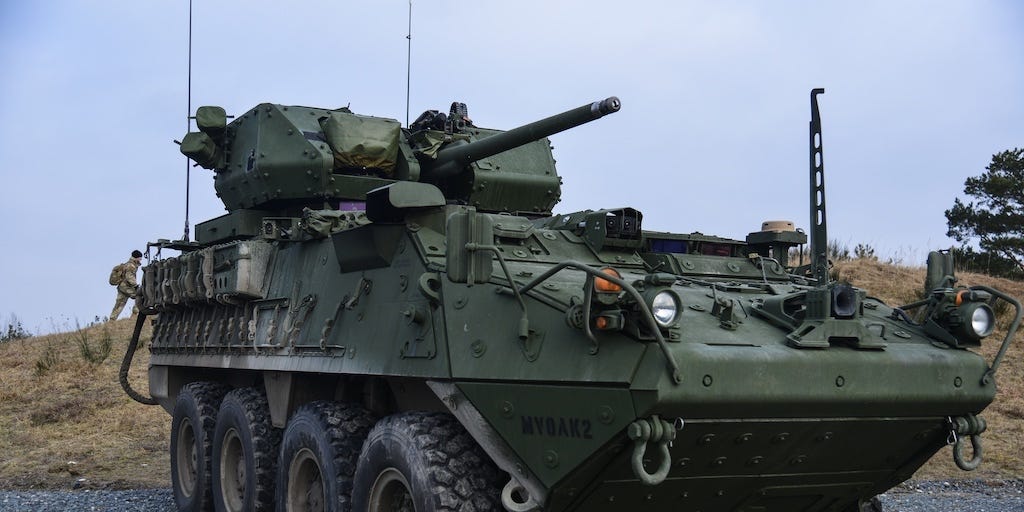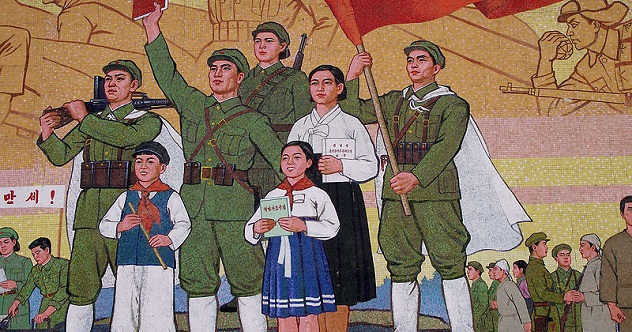

When most people hear the word propaganda, they imagine stiff posters with pointing fingers, dramatic slogans, and somebody in a hat looking extremely serious about buying war bonds. Fair enough. Posters were everywhere in the 20th century, and many were designed with all the subtlety of a marching band in a library. But governments have never limited themselves to paper on walls. When the stakes were high, they turned almost anything into a message machine: cartoons, gardens, jazz tours, fake mail, board games, balloons, Olympic pageantry, and even paintings that looked like someone lost a wrestling match with a bucket of paint.
The strange thing about political messaging is that it works best when it does not always look like political messaging. A leaflet says, “Read me, I am propaganda.” A cartoon duck says, “Relax, I am entertainment,” right before delivering a lecture on taxes, war production, or national identity. A government-backed art exhibition may not mention ideology at all, yet still whisper, “Our system creates freedom; theirs creates gray concrete and suspicious soup.”
This article explores 10 unusual forms of propaganda actually used by governments. Some were clever. Some were creepy. Some were so bizarre they sound like deleted scenes from a spy comedy. All of them show how power tries to shape public opinion not only through speeches, but through culture, emotion, fear, humor, and everyday life.
What Counts As Propaganda?
Propaganda is not just “a lie with better graphic design.” It can include truth, half-truth, exaggeration, emotional framing, selective facts, and symbols designed to push people toward a desired belief or action. Governments have used propaganda to build morale, recruit soldiers, encourage sacrifice, demonize enemies, calm panic, win foreign sympathy, or make citizens feel they are part of a grand national mission.
The unusual examples below matter because they reveal a larger pattern: propaganda rarely stays in official press releases. It moves into entertainment, food, music, sports, childhood, mailboxes, and even the family garden. In other words, the message does not always knock on the front door. Sometimes it arrives as a dancing turtle.
1. Fake Mail Delivered By The Enemy’s Own Postal Service
Operation Cornflakes: propaganda in an envelope
One of the strangest Allied psychological warfare operations of World War II was Operation Cornflakes. The plan was almost cartoonishly sneaky: attack German mail trains, drop bags of fake letters nearby, and hope the German postal service would accidentally collect and deliver Allied propaganda along with the real mail.
The letters were addressed to actual German citizens and contained anti-Nazi newspapers, forged materials, and messages designed to undermine confidence in Hitler’s regime. The brilliance of the method was not simply the content. It was the delivery system. A leaflet falling from the sky could be spotted, reported, and destroyed. But a sealed envelope delivered by the official postal service felt personal, private, and legitimate.
That is what made this form of government propaganda so unusual. It hijacked trust. People trusted mail because mail was ordinary. The propaganda did not scream from a billboard; it slipped quietly through the door like an invoice with a political agenda.
2. Inflatable Tanks, Fake Radio Traffic, And A Phantom Army
The Ghost Army turned theater into military deception
During World War II, the U.S. Army created a special deception unit known as the Ghost Army. Its job was not to defeat the enemy with firepower, but with imagination. The unit used inflatable tanks, dummy artillery, fake vehicle tracks, sound recordings, phony radio transmissions, and staged activity to convince German forces that large Allied units were positioned where they were not.
This was propaganda on a battlefield scale. Instead of persuading civilians to buy bonds or save food, it persuaded enemy commanders to misread reality. The Ghost Army’s performances were part military operation, part stage production, and part practical joke with potentially enormous consequences. Imagine a group of artists, sound engineers, radio operators, and soldiers creating an entire fake armybasically Broadway with camouflage netting and higher stakes.
The deception worked because military intelligence depends on patterns. If aerial reconnaissance sees tanks, radio operators hear traffic, and scouts detect movement, commanders start believing the story. The Ghost Army gave them a story to believe.
3. Cartoon Ducks Selling War Messages
Disney characters became patriotic messengers
World War II propaganda did not only march; sometimes it waddled. The U.S. government worked with Hollywood studios, including Walt Disney Productions, to create training films, educational shorts, insignia, and morale-boosting materials. Donald Duck became more than a grumpy bird with no pants and a questionable temper. He became a cultural ambassador for the American war effort.
Animated propaganda was powerful because cartoons lowered the audience’s defenses. A lecture about taxes might feel boring. A Donald Duck short about taxes could make the same message funny, memorable, and far less painful than actually paying taxes, which remains one of civilization’s boldest character-building exercises.
Films such as Der Fuehrer’s Face mocked Nazi Germany through absurdity, turning authoritarian imagery into comedy. Other Disney productions explained military procedures, encouraged civic duty, and helped connect familiar characters with national purpose. The result was propaganda wrapped in entertainment, which is often the most digestible packaging of all.
4. Bert The Turtle And Nuclear Survival For Children
Cold War civil defense used a cartoon mascot
In the early Cold War, the U.S. Federal Civil Defense Administration promoted Duck and Cover, a civil defense campaign that used Bert the Turtle to teach children what to do in case of an atomic attack. The campaign appeared as a film, pamphlet, radio program, record, and school lesson. Its message was simple: when danger flashes, duck and cover.
From today’s perspective, the image of schoolchildren hiding under desks during a nuclear threat can seem painfully inadequate. A wooden desk is not exactly a superhero shield against thermonuclear destruction. But the campaign had a psychological function as well as a practical one. It gave children and parents a ritual of control in a terrifying age.
This was propaganda designed to manage fear. It did not merely inform; it shaped emotional behavior. Instead of telling children, “The world has entered an era of possible instant vaporization,” the government offered a cheerful turtle with a catchy instruction. Was it comforting? Yes. Was it strange? Also yes. Was Bert probably underpaid for the emotional labor he performed? Absolutely.
5. Victory Gardens: Vegetables With A Patriotic Mission
Home gardening became wartime messaging
During both World War I and World War II, governments encouraged citizens to plant victory gardens. In the United States, posters and campaigns told families that growing vegetables could support soldiers, reduce pressure on food supplies, and show patriotic commitment.
This is one of the most fascinating examples of propaganda because it transformed a domestic chore into a national act. A tomato plant was no longer just a tomato plant. It was a tiny green soldier standing bravely beside the basil. A backyard became a battlefield of morale. A carrot became political.
Victory garden propaganda worked because it gave ordinary people something tangible to do. Not everyone could fight overseas, build aircraft, or decode enemy messages. But many could plant beans. The campaign linked food, sacrifice, family, and citizenship into one simple activity. It also created a sense that the home front mattered deeply, which was essential for sustaining long wars.
6. Balloons That Dropped Leaflets Across The Iron Curtain
Cold War messages literally floated into enemy territory
During the Cold War, Radio Free Europe and related organizations used balloons to carry printed materials across borders into Soviet-controlled Eastern Europe. These balloon campaigns dropped millions of leaflets, pamphlets, and booklets into places where media was censored and outside information was restricted.
This sounds whimsical until you remember the context. Borders were guarded. Radio broadcasts were jammed. Newspapers were controlled. So the solution was: attach information to balloons and let the wind become a courier. It was part weather experiment, part psychological operation, and part “we have a warehouse of balloons, let’s make history.”
The method mattered because it bypassed official information barriers. A radio signal could be blocked, but a leaflet landing in a field, street, or village created a physical object someone could read, hide, pass along, or discuss. Governments understood that information becomes more powerful when people feel they have discovered it rather than received it from a loudspeaker.
7. Jazz As A Diplomatic Weapon
The State Department sent musicians into the Cold War
In the 1950s and beyond, the U.S. State Department sponsored jazz tours featuring legendary musicians such as Dizzy Gillespie, Louis Armstrong, Duke Ellington, and others. These Jazz Ambassadors performed around the world as part of American cultural diplomacy during the Cold War.
The idea was simple but clever: show audiences that American culture was creative, improvisational, energetic, and free. Jazz became an answer to Soviet propaganda that portrayed the United States as materialistic, racist, and culturally shallow. Of course, the program also carried a serious contradiction. Many of the musicians were Black Americans representing freedom abroad while segregation and racial injustice still existed at home.
That tension made jazz diplomacy unusually complex. It was propaganda, but not empty propaganda. The music genuinely expressed freedom, individuality, and collaboration. At the same time, the tours served strategic national interests. A trumpet solo could not end the Cold War, but it could do something speeches often failed to do: make people feel a version of America before judging it.
8. A CIA-Backed Animated Farm
Animal Farm became Cold War messaging
George Orwell’s Animal Farm is one of the most famous political fables of the 20th century. In the 1950s, the CIA covertly supported an animated film adaptation as part of anti-Soviet propaganda efforts. The film version changed key elements of the story, especially the ending, to make its anti-communist message clearer and more optimistic.
This is unusual because it shows propaganda moving through literature, animation, and adaptation. Instead of creating a crude government pamphlet titled Communism: Probably Not Great, officials helped push a barnyard allegory that families could watch. Pigs, horses, and chickens became ideological messengers.
The power of this strategy came from narrative. People resist slogans, but they follow stories. A story lets audiences identify with characters, feel outrage, and reach conclusions emotionally. By reshaping a famous novel for film, the propaganda did not simply argue against Soviet-style authoritarianism; it dramatized it in a way that could travel across languages and age groups.
9. Abstract Art As A Cold War Flex
Modern art became a symbol of freedom
At first glance, Abstract Expressionist painting seems like the least obvious propaganda tool imaginable. A giant canvas of splatters and gestures does not exactly say, “Please support Western liberal democracy.” And yet, during the Cold War, American modern art became part of cultural diplomacy. Exhibitions of abstract art were promoted abroad to contrast American creative freedom with Soviet Socialist Realism, which was more controlled and politically direct.
The logic was surprisingly sharp. In the Soviet model, art was often expected to serve the state by showing heroic workers, idealized leaders, and approved ideology. In the American cultural campaign, abstraction suggested that artists could experiment freely, even confusingly. The message was: in a free society, painters may do strange things, and no committee forces them to add a smiling tractor.
This kind of propaganda worked indirectly. It did not say, “Our government is better.” It displayed a cultural environment where wild creative expression could exist. Whether viewers loved or hated the paintings, the very freedom to make them became the point.
10. The Olympics As A Stage-Managed Political Spectacle
Nazi Germany used sports to launder its image
The 1936 Berlin Olympics were among the most infamous examples of sports used as propaganda. Nazi Germany used the Games to project an image of strength, unity, modernity, and international legitimacy while hiding or softening evidence of persecution and militarism from foreign visitors.
Olympic flags, grand architecture, choreographed ceremonies, film, photography, and controlled hospitality all worked together to create a polished national performance. For two weeks, Germany presented itself as orderly, impressive, and peaceful. The reality behind the curtain was far darker.
The unusual feature here is that the propaganda was not a single message but an entire environment. Visitors did not just read about Nazi Germany; they walked through a carefully staged version of it. That is why mega-events can be so politically useful. They turn national image into theater, with athletes, crowds, cameras, and architecture all playing roles.
11. Board Games And Toys That Trained Young Minds
Play became political conditioning
Children’s games and toys have also been used to normalize political ideas. In Nazi Germany, some board games and play materials reflected militarism, antisemitism, racial ideology, and fantasies of conquest. One notorious example, Juden Raus!, turned antisemitic persecution into a game mechanic, revealing how hatred could be made casual, social, and even “fun” inside a poisoned culture.
Not every propaganda game was officially endorsed by the state, but many fit into broader political environments created by governments. That distinction is important. Propaganda does not always require a ministry stamp on the box. If a regime creates the worldview, publishers, teachers, clubs, and families may reproduce it through ordinary objects.
This form of propaganda is especially disturbing because play is how children practice the world. A game teaches rules, rewards, enemies, and goals. When the rules reward exclusion, cruelty, or conquest, play becomes rehearsal. The toy shelf becomes a classroom, and the lesson is not innocent.
Why Governments Use Strange Propaganda
Unusual propaganda works because it avoids looking like propaganda. People expect persuasion in speeches and campaign posters. They are less guarded when the message arrives through a garden, song, cartoon, sports ceremony, or children’s game. The stranger the medium, the more easily it can slip past mental security.
There are several reasons governments use these unexpected forms:
- Emotion beats information: Music, cartoons, and sports reach feelings before facts.
- Familiarity builds trust: Mail, gardens, toys, and beloved characters feel safe and ordinary.
- Culture travels well: Jazz, films, and art can cross borders where official speeches fail.
- Participation creates loyalty: Victory gardens and scrap drives made citizens feel useful.
- Indirect messages are harder to resist: A painting or film can suggest an idea without demanding agreement.
The lesson is not that every government campaign is automatically evil. Some public messaging promotes health, safety, disaster preparedness, or civic cooperation. The danger begins when persuasion hides its purpose, erases complexity, dehumanizes enemies, or trains people to obey without thinking.
Experience Section: What These Propaganda Stories Teach Us Today
Studying unusual government propaganda is a little like learning how stage magic works. Once you know where the trapdoor is, the trick becomes harder to miss. These historical examples teach us that persuasion is rarely limited to obvious political language. It often enters through emotion, identity, entertainment, convenience, and repetition. That makes the subject useful not only for historians, but for anyone living in a world overflowing with media.
One practical experience from examining these cases is that the medium changes the way we judge the message. If someone hands us a government leaflet, we instinctively evaluate it as official persuasion. But if the same idea appears in a movie, song, school activity, sports ceremony, meme, or lifestyle trend, we may not apply the same skepticism. The message feels less like instruction and more like atmosphere. That is exactly why unusual propaganda can be so effective.
Another lesson is that propaganda often offers people a role. Victory gardens told citizens, “You can help win the war from your backyard.” Civil defense campaigns told children, “You can do something if danger comes.” Jazz diplomacy told foreign audiences, “Listen to the sound of freedom.” These messages were not merely informational; they invited participation. Humans like to feel useful, brave, modern, loyal, or morally right. Propaganda often succeeds by giving people a flattering part to play.
There is also a warning about humor and charm. Funny propaganda can be more persuasive than angry propaganda because it feels voluntary. A cartoon duck, cheerful turtle, or catchy song does not feel like a command. It feels like entertainment. But laughter can carry assumptions. A joke can simplify an enemy, normalize a policy, or make a serious issue seem obvious. Humor is not bad, of course. It is one of humanity’s best survival tools. But when governments use humor, it is worth asking what the punchline wants us to believe.
These stories also show that propaganda can contain real truth and still be manipulative. Jazz really was a brilliant expression of American creativity. Victory gardens really did help with food pressure. Civil defense really did try to create public readiness. The issue is not always whether a message is completely false. Often, the better question is: What is being emphasized, what is being hidden, and what emotional reaction is being engineered?
For modern readers, the biggest takeaway is media awareness. Today’s propaganda may not arrive as a wartime poster or radio broadcast. It may appear as a viral video, influencer campaign, patriotic sports production, state-backed news clip, educational cartoon, or cultural event. The old tools have changed shape, but the strategy remains familiar: make the message feel natural, repeatable, and socially rewarding.
A healthy response is not cynicism toward everything. That would be exhausting, and frankly terrible at parties. The better response is curiosity. Who made this? Who paid for it? What emotion does it want from me? What facts are missing? Why this format? Why now? Those questions do not ruin media; they sharpen our understanding of it.
Unusual propaganda reminds us that public opinion is not shaped only by politicians behind podiums. It is shaped by stories, symbols, songs, games, rituals, celebrities, classrooms, and shared habits. In the end, the most powerful propaganda may be the kind people do not notice until much later, when they realize the message was not just on the wall. It was in the mailbox, the movie theater, the school assembly, the radio, the garden, and maybe even the toy box.
Conclusion
The history of government propaganda is far weirder than a gallery of stern posters. Governments have used fake postal deliveries, inflatable armies, cartoon animals, backyard vegetables, jazz concerts, balloons, films, modern art, Olympic spectacle, and children’s games to influence what people believe and how they behave. Some campaigns built morale or spread useful information. Others concealed injustice, promoted hatred, or manipulated fear.
The important point is that propaganda is not always loud. Sometimes it is charming, funny, beautiful, musical, patriotic, playful, or oddly practical. That is why the unusual forms matter most. They teach us to look beyond the obvious slogan and ask how messages travel through culture. In a media-saturated age, that skill is not just historical trivia. It is self-defense for the mindwith fewer inflatable tanks, hopefully.
Note: This article is based on real historical records, museum materials, government archives, and reputable educational sources, rewritten in original language for web publication.