
The Four Corners game is one of those rare activities that sounds almost too simple to be fun: label four corners, send players to choose one, call a corner, and watch the room explode into laughter, strategy, and occasionally suspicious tiptoeing. Yet this easy game has survived classrooms, youth groups, summer camps, birthday parties, PE lessons, and rainy-day recess for a reason. It takes almost no equipment, works for small or large groups, and can be adapted for kids, teens, adults, review lessons, team-building, and pure chaoscontrolled chaos, of course.
At its core, Four Corners is a movement-based game where players choose one of four marked areas. Depending on the version, a caller may eliminate a corner, ask a trivia question, invite players to defend an opinion, or use the corners as answer choices. That flexibility is the magic. You can play it as a quiet classroom brain break, a high-energy party game, a discussion strategy, or a sneaky educational review activity where students learn before they realize what happened. Teachers love that part. Students, less suspiciously, just think they are escaping their desks.
This guide explains how to play Four Corners, the classic rules, setup tips, fun variations, safety ideas, sample questions, and real-world experience for making the game run smoothly without turning your room into a tiny stampede.
What Is the Four Corners Game?
The Four Corners game is an indoor or outdoor group activity where four areas are labeled as Corner 1, Corner 2, Corner 3, and Corner 4. Players move to one corner, and the leader, caller, or “It” selects a corner. In the classic elimination version, anyone standing in the selected corner is out for the round. The game continues until one player remains.
In classrooms, Four Corners often becomes a discussion or learning strategy. Instead of eliminating players, each corner represents an answer, opinion, category, or choice. For example, corners might be labeled “strongly agree,” “agree,” “disagree,” and “strongly disagree.” Students move to the corner that matches their view, then explain their reasoning. Suddenly, everyone has participatedeven the student who usually tries to become invisible behind a water bottle.
Why Four Corners Is So Popular
Four Corners is popular because it is easy to organize and instantly engaging. You do not need expensive materials, complicated rules, or a whistle dramatic enough to start a sports movie montage. A room with four corners, a little open space, and a leader are enough.
The game also offers several benefits:
- It gets players moving: Great for brain breaks, PE warmups, parties, and long meetings that need a pulse check.
- It encourages quick decision-making: Players must choose a corner before time runs out.
- It works with many ages: Young children can play a simple version, while older students and adults can handle trivia, debates, or strategy-based variations.
- It builds social interaction: Players notice who shares their choices, opinions, or guesses.
- It is easy to customize: Use it for review questions, icebreakers, holiday themes, vocabulary practice, or team-building.
What You Need to Play Four Corners
The basic Four Corners game requires very little equipment. That is part of its charm. It is the activity equivalent of a peanut butter sandwich: simple, dependable, and somehow always useful.
Basic Supplies
- A room, gym, playground, or open space with four clearly marked areas
- Four signs or labels: 1, 2, 3, and 4
- Tape, cones, paper signs, sticky notes, or floor markers
- A timer, optional
- Music, optional
- Trivia questions or prompts, optional
If you are playing in a space without actual corners, use cones, chairs, posters, or floor tape to create four zones. The corners do not need to be fancy. A handmade sign works perfectly, even if your number 4 looks like it has been through a minor earthquake.
How to Set Up the Four Corners Game
Before you begin, choose a safe playing area. Remove backpacks, chairs, loose cords, water bottles, and anything else that could turn an innocent game into an obstacle course. Label each corner clearly from 1 to 4. Make sure players can see the labels from the center of the room.
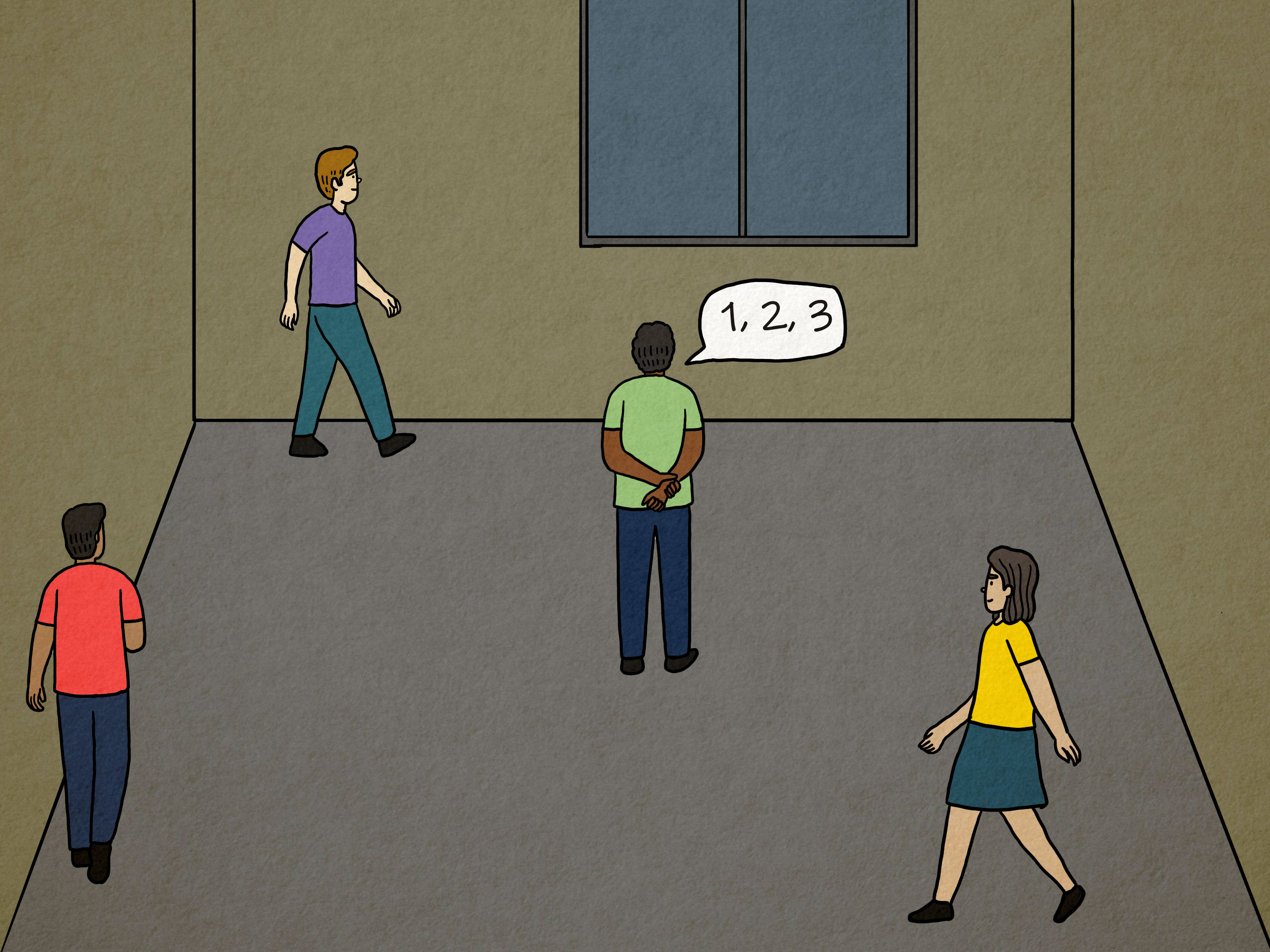
Next, choose one player to be the caller, counter, or “It.” This person stands in the middle, closes their eyes, and counts while the other players quietly move to one of the four corners. Once the count ends, the caller names or points to one corner. Players in that corner are out, or they complete whatever action your version requires.
For younger children, do a practice round first. Demonstrate where to stand, how to move safely, and what happens when a corner is called. This prevents the classic first-round confusion where everyone runs to the same corner because one enthusiastic child shouted, “This one is lucky!”
Classic Four Corners Game Rules
The classic version is simple, fast, and perfect for parties, classrooms, recess, and youth groups.
Step 1: Label the Corners
Number the four corners of the room 1, 2, 3, and 4. Use signs that are large enough to see from across the room.
Step 2: Choose the Caller
Select one person to stand in the middle. The caller closes their eyes or turns away so they cannot see where players go.
Step 3: Players Choose a Corner
The caller counts slowly from 10 to 0, or from 20 to 0 for larger groups. During this time, players move quietly to one of the four corners. They may switch corners while the caller is counting, but they must be in a corner when the count ends.
Step 4: The Caller Picks a Corner
With eyes still closed, the caller points to or announces one corner number. Anyone in that corner is eliminated for the round and sits down.
Step 5: Continue Playing
The caller counts again, remaining players choose corners again, and another corner is selected. Play continues until one player is left.
Step 6: Name the Winner
The last player standing wins the round. That player can become the caller for the next round, or you can rotate callers so more people get a turn.
Important Rule Options
Four Corners is flexible, so choose the rule style that fits your group. Before the game starts, explain what happens in each situation.
If No One Is in the Chosen Corner
You have two good options. First, nobody is eliminated and the game continues. Second, all eliminated players return to the game. The second option is especially fun because it adds suspense and gives players a comeback opportunity. It also prevents early-out players from sitting for too long, quietly questioning all their life choices.
If Players Are Between Corners
Set a clear rule: when the count reaches zero, everyone must be inside a corner area. Players caught in the middle are out or must return to the nearest corner. For younger kids, use a warning first rather than immediate elimination.
If Players Make Too Much Noise
Some versions allow players to trick the caller by stomping in one direction and tiptoeing to another. That can be hilarious, but it can also get loud. Decide whether sneaky noise is allowed, limited, or banned. In classrooms, “silent feet” is usually the teacher’s best friend.
Four Corners Game Variations
The best thing about Four Corners is how easily it changes. You can make it silly, thoughtful, educational, competitive, cooperative, or low-pressure.
1. No-Elimination Four Corners
In this version, nobody is out. When a corner is called, players in that corner perform a quick action: five jumping jacks, a funny pose, a vocabulary definition, or a team cheer. This is ideal for younger children, inclusive classrooms, and groups where sitting out may reduce participation.
2. Trivia Four Corners
Label corners A, B, C, and D. Ask a multiple-choice question, and each player moves to the corner that represents their answer. Reveal the correct answer after everyone chooses. Players with the correct answer stay in, earn points, or celebrate with a victory dance that should remain brief for everyone’s safety.
This variation works well for reviewing math facts, science concepts, history dates, grammar rules, book chapters, or pop culture trivia.
3. Opinion Four Corners
Label the corners “strongly agree,” “agree,” “disagree,” and “strongly disagree.” Read a statement such as, “Homework should be optional,” or “Pineapple belongs on pizza.” Players move to the corner that matches their opinion, then discuss why they chose it.
This version is excellent for classroom discussion, debate practice, social-emotional learning, and team-building. It gives everyone a visible way to respond without forcing players to speak immediately.
4. Icebreaker Four Corners
Use corners as personality or preference choices. Ask questions like, “Which vacation would you choose?” Corner 1 might be beach, Corner 2 mountains, Corner 3 city, and Corner 4 theme park. Players move, look around, and discover who shares their preferences.
This is great for the first day of school, camp orientation, staff meetings, church groups, clubs, and family gatherings where people need to mingle without the horror of saying, “Tell us a fun fact about yourself.”
5. Movement Challenge Four Corners
Instead of walking, players move in different ways each round: crab walk, tiptoe, slow motion, bunny hop, robot walk, or penguin shuffle. This variation adds physical activity and laughter, but keep safety in mind. Avoid slippery floors and overly wild movements.
6. Team Four Corners
Divide players into teams. Each team sends members to different corners, trying to avoid elimination or earn points. Teams may discuss strategy before each round. This version adds cooperation and is useful when you want players to think instead of simply following the crowd.
7. Mystery Caller Four Corners
The leader secretly writes down a corner number before players move. After everyone chooses a corner, the leader reveals the number. This removes any suspicion that the caller heard or guessed where people went. It is a good fairness option for competitive groups.
8. Music Four Corners
Play music while players move around the room. When the music stops, everyone must choose a corner. The caller then selects a corner to eliminate or challenge. This version feels like musical chairs with fewer chairs and far less furniture-related drama.
9. Holiday or Theme Four Corners
Replace numbers with themed choices. For Halloween, corners might be ghost, pumpkin, vampire, and black cat. For winter, try snowman, hot cocoa, sledding, and fireplace. For a book unit, label corners with characters, themes, settings, or plot events.
10. Virtual Four Corners
For online groups, assign each corner to a reaction, chat answer, hand signal, or on-screen choice. Players can type 1, 2, 3, or 4 in the chat, hold up fingers, or move to labeled areas on a shared slide. It is not as physically active, but it still creates quick engagement.
Four Corners Questions and Prompts
Good prompts make the game more interesting. Use simple, clear choices so players can decide quickly.
Fun Icebreaker Questions
- Which snack would you choose: popcorn, chips, cookies, or fruit?
- Which pet would you rather have: dog, cat, bird, or turtle?
- Which superpower is best: flying, invisibility, super strength, or time travel?
- Which season do you like most: spring, summer, fall, or winter?
Classroom Review Questions
- Which word is a verb?
- Which fraction is equal to one-half?
- Which event happened first in the story?
- Which answer best explains the main idea?
Discussion Prompts
- Students should have more choice in what they read.
- Technology makes learning easier.
- Winning is less important than teamwork.
- Characters should always be judged by their actions, not their intentions.
Tips for Playing Four Corners Safely
Four Corners should be active, not alarming. To keep the game safe, set boundaries before the first round. Remind players to walk quickly instead of sprinting, keep hands to themselves, and avoid pushing into crowded corners. If the room is small, limit group size or use a no-running rule.
For younger children, make the corner areas large and clear. Use cones or tape so they know exactly where to stand. For older players, explain that strategic movement is allowed, but body-checking someone into Corner 3 is not strategyit is a future apology.
If a player has limited mobility, adapt the game. Let players point to a corner, hold up a number, use cards, or move at their own pace. Four Corners works best when everyone can participate comfortably.
Common Mistakes to Avoid
The biggest mistake is failing to explain the rules before starting. Four Corners is simple, but players still need to know when to move, whether switching corners is allowed, what happens when they are out, and how the winner is chosen.
Another mistake is letting eliminated players sit for too long. If you have a large group, use quick rounds, allow comeback rules, or switch to a no-elimination version. Nobody enjoys being out in the first ten seconds and then spending five minutes studying the carpet.
Finally, avoid unclear corners. If players cannot tell whether they are in Corner 2 or Corner 3, arguments will bloom like weeds. Make labels big, boundaries obvious, and instructions short.
Best Age Groups for Four Corners
Four Corners can work for nearly any age with the right version. Preschool and early elementary players enjoy simple movement and color-based choices. Upper elementary students often love the classic elimination version. Middle school and high school students respond well to trivia, debate, and opinion prompts. Adults may prefer icebreaker, training, meeting, or team-building versions.
The key is matching the pace and purpose to your group. A room full of second graders may need short rounds and silly movements. A group of adults at a workshop may need thoughtful prompts and permission to laugh at themselves, which is sometimes harder than the game.
Real-World Experience: What Actually Makes Four Corners Work
After watching and running Four Corners in classrooms, group events, and informal gatherings, one thing becomes obvious: the game succeeds when the leader controls the rhythm. The rules are easy, but the energy can rise quickly. A good leader keeps the pace brisk, explains only what players need to know, and starts with a practice round. That first practice round is worth its weight in gold. It clears up confusion, lowers anxiety, and prevents the first real round from becoming a comedy sketch called “Nobody Knows Where Corner 4 Is.”
The best sessions also use clear voice cues. Phrases like “Choose your corner,” “Freeze,” “Caller, pick a corner,” and “Reset” help players understand what to do without long explanations. When children are involved, consistency matters even more. If the leader changes the wording every round, younger players may hesitate, copy others, or sprint late. Clear cues create smooth gameplay.
Another practical lesson: players love feeling clever. In the elimination version, some will try to trick the caller by making noise near one corner and sneaking to another. This can be hilarious in a gym or youth group space, but it can overwhelm a classroom. A smart compromise is to allow “quiet strategy” but not loud stomping. Players can switch corners, fake a direction, or wait until the last second, but they cannot create a thunderstorm with their sneakers.
For educational versions, the strongest results come from asking players to explain their choices after they move. Movement creates engagement, but discussion creates learning. If students answer a reading question by moving to Corner B, ask them to turn to someone nearby and explain why. Then invite one or two volunteers to share. This keeps the activity from becoming a guessing race and turns it into a quick formative assessment.
For icebreakers, use low-stakes questions first. Start with snacks, seasons, favorite activities, or dream vacations before moving into deeper topics. People need time to warm up. Asking a brand-new group a serious values question in the first round can make the room feel like a courtroom with posters.
Finally, the most enjoyable Four Corners games end before players are tired of them. Two or three strong rounds may be better than ten dragging ones. Stop while the room still has energy. That way, the next time someone says “Four Corners,” players cheer instead of silently calculating whether they can hide behind the bookshelf.
Conclusion
The Four Corners game is simple, flexible, and surprisingly powerful. You can use it as a classic elimination game, a classroom review strategy, a debate activity, an icebreaker, a PE warmup, or a team-building exercise. With four labeled areas, clear rules, and a little creativity, you can turn almost any room into an active, social, laughter-filled space.
The secret is choosing the right version for your group. If you want energy, play the classic elimination game. If you want learning, use trivia or review questions. If you want conversation, use opinion corners. If you want everyone included, skip elimination and use challenges or discussion prompts instead. However you play, Four Corners proves that great games do not need complicated equipment. Sometimes, all you need is four signs, a good prompt, and a group of people willing to move before the countdown hits zero.