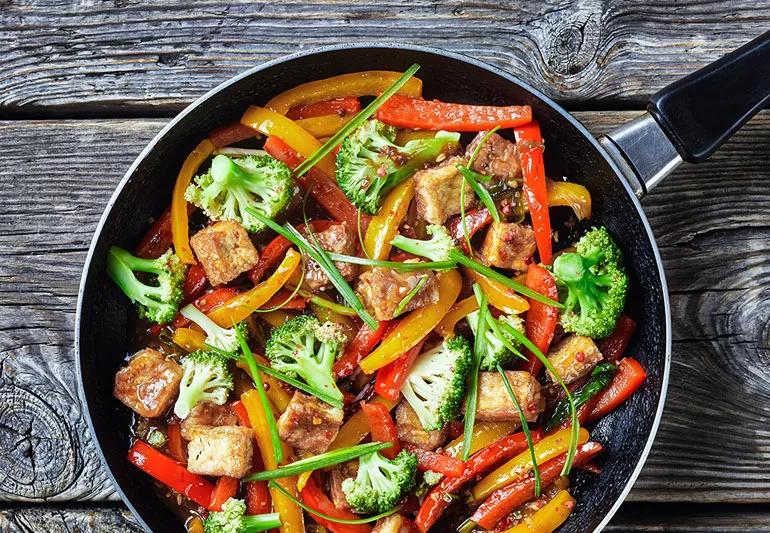

If weeknight dinner had a personality test, skillet tofu with broccoli and peppers would score “organized, colorful, secretly exciting.” It is the kind of meal that looks like you tried hard, even if your biggest culinary achievement today was remembering where the skillet lives. Crispy-edged tofu, bright broccoli, sweet bell peppers, garlic, ginger, and a glossy soy-sesame sauce come together in one pan for a plant-based dinner that is fast, flexible, and far more satisfying than the sad “I guess I’ll just eat cereal” option.
This recipe is built for real kitchens: no deep fryer, no mystery ingredients, no twelve bowls waiting to judge you from the sink. The secret is simple: use firm or extra-firm tofu, dry it well, coat it lightly with cornstarch, and cook it separately before adding it back to the vegetables. That small move keeps the tofu golden instead of soggy. The broccoli stays crisp-tender, the peppers stay juicy, and the sauce hugs everything like it has excellent manners.
Whether you are vegan, vegetarian, tofu-curious, or simply trying to add more easy plant-based meals to your rotation, this skillet tofu recipe delivers big flavor with everyday ingredients. Serve it over rice, noodles, quinoa, or straight from the skillet while standing at the counter. We do not judge. We have also done that.
Why You Will Love This Skillet Tofu With Broccoli and Peppers
This dish works because it balances texture, flavor, and speed. Tofu brings plant-based protein and a mild flavor that happily absorbs sauce. Broccoli adds crunch and earthy freshness. Bell peppers bring natural sweetness, color, and that “I am eating something vibrant and responsible” feeling. The sauce ties everything together with salty, tangy, lightly sweet, garlicky flavor.
The best part is that the recipe is practical. You can make it in about 35 minutes, including prep. It uses one large skillet and pantry staples like soy sauce, rice vinegar, sesame oil, cornstarch, garlic, and ginger. It is also easy to customize. Want spice? Add chili garlic sauce or red pepper flakes. Want more richness? Add peanut butter or tahini to the sauce. Want more vegetables? Snow peas, carrots, mushrooms, zucchini, or green beans can join the party.
Recipe Overview
- Prep time: 15 minutes
- Cook time: 18 to 22 minutes
- Total time: About 35 minutes
- Servings: 4
- Skill level: Easy
- Best served with: Steamed rice, brown rice, noodles, cauliflower rice, or quinoa
Ingredients
For the Tofu and Vegetables
- 1 block extra-firm tofu, about 14 to 16 ounces
- 2 tablespoons cornstarch
- 1 tablespoon low-sodium soy sauce or tamari
- 2 tablespoons neutral oil, divided
- 3 cups broccoli florets, cut into small bite-size pieces
- 1 red bell pepper, sliced thin
- 1 yellow or orange bell pepper, sliced thin
- 3 green onions, sliced, white and green parts separated
- 2 cloves garlic, minced
- 1 tablespoon fresh ginger, grated or finely minced
- 1 tablespoon sesame seeds, optional
For the Sauce
- 1/4 cup low-sodium soy sauce or tamari
- 2 tablespoons rice vinegar
- 1 tablespoon maple syrup, honey, or brown sugar
- 1 tablespoon toasted sesame oil
- 1 tablespoon water
- 1 teaspoon cornstarch
- 1 to 2 teaspoons chili garlic sauce or sriracha, optional
- Black pepper, to taste
How to Make Skillet Tofu With Broccoli and Peppers
Step 1: Press and Dry the Tofu
Drain the tofu and wrap it in a clean kitchen towel or several paper towels. Place it on a plate, set another plate or small cutting board on top, and add something moderately heavy, such as a can of beans. Press for 10 to 15 minutes. You do not need to build a tofu gymnasium; just remove enough moisture so the tofu can brown instead of steam.
After pressing, cut the tofu into 3/4-inch cubes. Pat the cubes dry again. This extra drying step is small but mighty. Wet tofu in a hot skillet tends to sputter, stick, and sulk. Dry tofu browns beautifully.
Step 2: Coat the Tofu
Place the tofu cubes in a bowl. Drizzle with 1 tablespoon soy sauce or tamari and gently toss. Sprinkle with 2 tablespoons cornstarch and toss again until the tofu is lightly coated. The coating should look thin and dusty, not like the tofu fell into a snowstorm. Cornstarch helps create crisp edges without deep-frying.
Step 3: Mix the Sauce
In a small bowl, whisk together soy sauce, rice vinegar, maple syrup, sesame oil, water, cornstarch, chili garlic sauce if using, and black pepper. Set it near the stove. Stir-fries move quickly, and nobody wants to be frantically searching for vinegar while the broccoli is staging a mutiny.
Step 4: Pan-Fry the Tofu
Heat 1 tablespoon oil in a large skillet over medium-high heat. Add the tofu in a single layer. If your skillet is small, cook it in two batches. Crowding the pan traps steam, and steam is the enemy of crispiness.
Cook the tofu for 8 to 10 minutes, turning occasionally, until golden on several sides. It does not need to be perfectly browned on every microscopic corner. Aim for crisp edges, warm centers, and enough color to make you feel proud. Transfer the tofu to a plate.
Step 5: Cook the Broccoli and Peppers
Add the remaining 1 tablespoon oil to the skillet. Add the broccoli and cook for 2 minutes, stirring often. If the pan seems dry, add 1 to 2 tablespoons water and cover for 1 minute to help the broccoli turn bright green and crisp-tender.
Add the bell peppers and the white parts of the green onions. Cook for 3 to 4 minutes, stirring frequently. The vegetables should be tender but still lively. You want bite, not baby food.
Step 6: Add Garlic, Ginger, Sauce, and Tofu
Add garlic and ginger to the skillet. Stir for about 30 seconds, just until fragrant. Pour in the sauce and stir as it bubbles and thickens. Return the tofu to the pan and gently toss until everything is coated in glossy sauce.
Turn off the heat. Sprinkle with sesame seeds and the green parts of the green onions. Taste and adjust. Add more vinegar for brightness, more soy sauce for saltiness, or more chili sauce if dinner needs a tiny fireworks show.
Pro Tips for Crispy Tofu That Does Not Taste Like a Sponge Wearing a Sauce Hat
Use Extra-Firm Tofu
Extra-firm tofu holds its shape well in a skillet. Firm tofu also works, but it may be a little softer. Avoid silken tofu for this recipe. Silken tofu is wonderful in smoothies, sauces, and soups, but in a hot skillet it can collapse faster than your motivation to fold laundry.
Dry the Tofu Well
Moisture is the main reason tofu refuses to crisp. Pressing removes excess water, and patting the cubes dry gives them a better chance of browning. If you are short on time, even a quick towel press helps.
Cook in Stages
Cooking the tofu first, removing it, then cooking the vegetables helps each ingredient get the heat it needs. This keeps the tofu crisp and the vegetables colorful. If everything goes into the skillet at once, the pan cools down, steam builds up, and the final dish can become soft and watery.
Do Not Overdo the Sauce
A good skillet tofu sauce should coat, not drown. The cornstarch in the sauce helps it thicken quickly, creating a shiny finish. If the sauce becomes too thick, add a splash of water. If it is too thin, let it bubble for another minute.
Flavor Variations
Peanut Skillet Tofu
Whisk 1 tablespoon creamy peanut butter into the sauce. Add a squeeze of lime at the end and top with chopped peanuts. This version is rich, nutty, and dangerously easy to eat straight from the pan.
Orange-Ginger Tofu
Replace 1 tablespoon water with orange juice and add 1 teaspoon orange zest. This gives the dish a sweet, citrusy lift that works beautifully with broccoli and peppers.
Spicy Garlic Tofu
Double the garlic and add 1/2 teaspoon red pepper flakes. Finish with a drizzle of chili crisp for a bolder, restaurant-style skillet tofu recipe.
Gluten-Free Tofu Stir-Fry
Use tamari instead of soy sauce and check that your chili sauce is gluten-free. Serve with rice or rice noodles for a gluten-free dinner that still tastes full and satisfying.
What to Serve With Skillet Tofu With Broccoli and Peppers
This dish is complete on its own, but a good base makes it even better. Steamed jasmine rice is classic because it soaks up the sauce. Brown rice adds nuttier flavor and extra fiber. Rice noodles turn the recipe into a slurpable bowl. Quinoa adds a hearty, protein-rich twist. Cauliflower rice keeps the meal lighter and vegetable-forward.
For toppings, try toasted sesame seeds, sliced green onions, crushed peanuts, cilantro, lime wedges, or chili crisp. A side of cucumber salad also works well because the cool crunch balances the warm, savory tofu.
Storage, Reheating, and Meal Prep
Store leftovers in an airtight container in the refrigerator for 3 to 4 days. For best texture, keep the rice or noodles separate from the tofu and vegetables. The tofu will soften slightly as it sits, but the flavor becomes even deeper by the next day.
To reheat, warm the tofu and vegetables in a skillet over medium heat with a small splash of water. Stir until hot. You can also microwave it, but the tofu will be softer. If food safety is your love language, reheat leftovers until steaming hot, especially if they have been fully chilled.
For meal prep, press and cube the tofu ahead of time, chop the vegetables, and whisk the sauce up to two days in advance. Store each component separately. When dinner time arrives, the skillet work is fast and almost suspiciously easy.
Nutrition Notes
Tofu is made from soybeans and is naturally rich in plant-based protein. Depending on the brand and firmness, it may also provide calcium, iron, magnesium, and other minerals. Broccoli contributes fiber, vitamin C, and a satisfying crunch. Bell peppers bring more vitamin C, natural sweetness, and bright color. Together, they create a balanced skillet dinner that feels hearty without being heavy.
For a lower-sodium version, use low-sodium soy sauce and reduce the amount slightly. For more protein, serve the tofu over quinoa or add edamame. For more vegetables, increase the broccoli or add mushrooms, carrots, cabbage, or snap peas.
Common Mistakes to Avoid
Skipping the Press
You can technically cook tofu straight from the package, but pressing improves texture. Even 10 minutes makes a difference. Think of it as sending the tofu to finishing school.
Using Too Much Cornstarch
A light coating is enough. Too much cornstarch can make the tofu chalky or gummy once sauce hits the pan. Toss gently and stop when the cubes are evenly dusted.
Cooking Over Low Heat
Medium-high heat helps tofu brown and vegetables stay crisp. If the heat is too low, everything steams. If it is too high, garlic can burn. Keep the pan hot, but stay nearby and stir often.
Adding Sauce Too Early
Sauce should go in near the end. If it cooks too long, it can reduce too much or make the tofu lose its crisp edges. Add it after the vegetables are nearly done, then toss everything quickly.
Frequently Asked Questions
Can I make this recipe without cornstarch?
Yes. Arrowroot starch works well as a substitute. You can also skip the starch, though the tofu will be less crisp. If you skip it, make sure the tofu is very dry and cook it patiently until browned.
Can I use frozen broccoli?
Yes, but thaw it and pat it dry first. Frozen broccoli contains more moisture, so it may soften faster and release water into the skillet. Cook it over high heat and avoid overcrowding.
Can I bake the tofu instead?
Absolutely. Toss the tofu with soy sauce, oil, and cornstarch, then bake at 400 degrees Fahrenheit until golden and crisp, usually 25 to 30 minutes. While it bakes, cook the vegetables and sauce in the skillet.
Is this recipe vegan?
Yes, if you use maple syrup or brown sugar instead of honey. The rest of the recipe is naturally plant-based.
Kitchen Experience: What This Recipe Teaches You About Tofu, Timing, and Not Panicking
The first time many home cooks make tofu in a skillet, they expect magic. They open the package, toss the tofu into the pan, add sauce, and wait for golden cubes of greatness. Instead, they get pale little pillows that taste fine but feel suspiciously like damp packing material. The good news is that tofu is not difficult; it is just honest. It shows you exactly what happened in the pan. Too much moisture? It steams. Too crowded? It sulks. Sauce too early? It softens. Once you learn those patterns, skillet tofu becomes one of the easiest dinners to master.
This recipe is a great teacher because every step has a purpose. Pressing the tofu is not busywork. It removes water so the surface can brown. Cornstarch is not a fancy chef trick. It creates a thin, crisp coating that grabs sauce later. Cooking the tofu before the vegetables is not extra fuss. It protects the texture you worked to build. These little decisions turn a simple tofu stir-fry into a meal that tastes intentional.
Broccoli and peppers are also excellent practice vegetables. Broccoli tells you when it is ready by turning bright green and becoming slightly tender. Bell peppers soften quickly but still keep a juicy bite. Together, they help you understand the rhythm of high-heat skillet cooking: add the firmest vegetable first, add quicker-cooking vegetables later, and keep everything moving. A skillet dinner should feel lively, not chaotic. Think of it as a small kitchen dance, except the broccoli never steps on your foot.
One useful habit is to prepare everything before turning on the stove. Chop the vegetables, whisk the sauce, slice the green onions, and place the tofu near the skillet. Once the pan is hot, there is no graceful way to pause and mince garlic. That is how garlic becomes burnt confetti. Stir-fries reward readiness. They are fast because the prep happens first.
Another lesson is that flavor does not have to be complicated. Soy sauce adds salt and umami. Rice vinegar adds brightness. Sesame oil adds aroma. A little sweetness rounds the edges. Garlic and ginger bring warmth. When these ingredients meet tofu, broccoli, and peppers, the result tastes bigger than the ingredient list suggests. That is the beauty of a good skillet recipe: it respects your time but still gives dinner a personality.
Finally, this dish is forgiving. If your tofu is not perfectly crisp, it will still be tasty. If your peppers are a little softer than planned, nobody needs to file a report. If you want to add mushrooms, carrots, cashews, or leftover rice, go ahead. Skillet tofu with broccoli and peppers is less about rigid rules and more about building confidence. Make it once, and you will understand the method. Make it twice, and you will start improvising. Make it three times, and you may become the kind of person who says, “I had tofu in the fridge, so I just threw together dinner,” which is a very powerful sentence.
Conclusion
Skillet tofu with broccoli and peppers is the kind of recipe that makes weeknight cooking feel smart, colorful, and completely doable. With extra-firm tofu, a quick cornstarch coating, crisp-tender vegetables, and a savory sesame-soy sauce, you get a satisfying plant-based dinner without complicated techniques or a pile of dishes. It is flexible enough for meal prep, fast enough for busy evenings, and flavorful enough to win over people who claim they “do not really do tofu.” Spoiler: they might do tofu now.
Serve it over rice, noodles, quinoa, or your favorite grain bowl base. Add spice, peanuts, citrus, or extra vegetables to make it your own. Most importantly, remember the big skillet rules: dry the tofu, avoid crowding the pan, cook in stages, and add the sauce at the end. Dinner will reward you with crisp edges, glossy vegetables, and the deep satisfaction of making something delicious from simple ingredients.