
Note: This article is written for web publication based on publicly reported entertainment coverage and online reactions. It is original, rewritten content and does not include source links in the publishable body.
JoJo Siwa has never exactly been a “quietly enter through the side door” kind of celebrity. From glittery bows the size of small aircraft to rainbow merch, arena-sized kid-pop energy, and a later rebrand that practically arrived wearing black face paint and a fog machine, Siwa has built a career on being impossible to ignore. So when her latest tattoo appeared online, the internet did what the internet does best: it formed a committee, held an emergency meeting, and immediately started arguing.
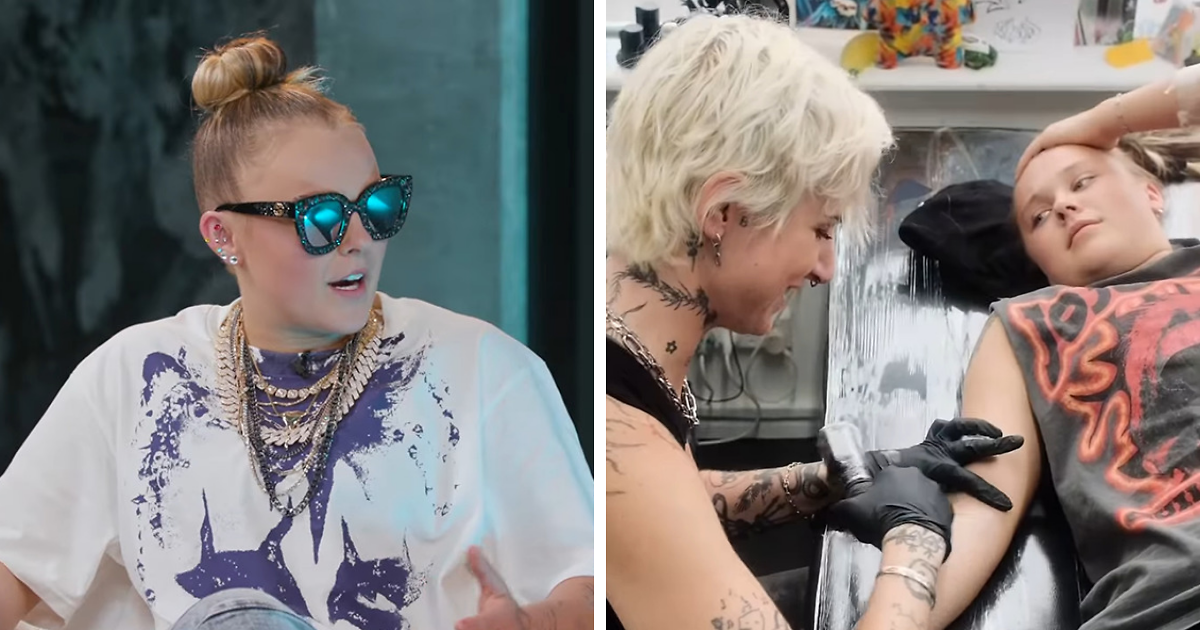
The tattoo in question reads “CEO OF GAY POP” in bold capital letters on her forearm. For some fans, it looked like classic JoJo: theatrical, self-aware, loud, and very much in on the joke. For others, it felt like a permanent monument to a controversy that many thought she should have quietly retired. One social media comment summed up the harshest side of the backlash: “Ego so big she could float to space.”
That one-liner traveled fast because it captured the central debate around JoJo Siwa’s new tattoo. Is she poking fun at herself? Is she reclaiming an awkward viral moment? Or is she doubling down on a title that sounds less like an artistic statement and more like a LinkedIn promotion written during a glitter shortage?
What Is JoJo Siwa’s New Tattoo?
JoJo Siwa’s new tattoo says “CEO OF GAY POP.” The phrase is not random. It traces back to her 2024 comments about wanting to create, promote, or formalize “gay pop” as a recognizable music category. The remark triggered pushback almost instantly because queer pop music existed long before Siwa’s adult-era debut. Fans and critics quickly pointed to artists such as Elton John, Freddie Mercury, Madonna, Lady Gaga, David Bowie, George Michael, Tegan and Sara, Cher, Lil Nas X, Troye Sivan, and many others who helped define, expand, or influence queer pop culture.
The tattoo took that debate and made it permanent. That is why the reaction was so intense. A celebrity can walk back an interview quote. A social media caption can be deleted. A tattoo, however, has a way of saying, “No, actually, we are framing this and hanging it in the lobby.”
Reports described the tattoo as being inked on Siwa’s forearm, with the phrase appearing in capital letters. The moment quickly became a fresh chapter in her ongoing public transformation from bow-wearing child star to adult performer trying to define her own sound, image, and audience. And because the internet remembers everything, the tattoo reopened the earlier debate around whether Siwa had overstated her role in queer pop music.
Why Did the Tattoo Spark Backlash?
The backlash was not only about the ink. It was about context. Earlier in 2024, while promoting her single Karma, Siwa discussed a new musical direction and described “gay pop” as a genre she wanted to bring forward. Many listeners interpreted her comments as if she were claiming to invent the style. That interpretation did not land well, especially with audiences who knew queer artists had been making bold, campy, rebellious, emotional, dance-floor-ready pop for decades.
To be fair, Siwa later clarified that she did not mean she invented gay pop. She said her point was that queer pop music deserves more recognition as a formal category. That clarification softened the issue for some people. But for others, the phrase “CEO OF GAY POP” still felt like a victory lap after a stumble.
That is where the “ego” criticism comes in. A title like “CEO” is intentionally grand. It sounds funny, bossy, corporate, and camp all at once. In the right context, that can be hilarious. In the wrong context, it can sound like someone appointing themselves ruler of a kingdom where the citizens did not vote, the crown was borrowed, and Cher is still very much alive.
JoJo Siwa’s Rebrand Made the Tattoo Even More Controversial
JoJo Siwa’s public image has always been a major part of her career. She first became widely known through Dance Moms, then built a massive brand around bows, bright colors, positivity, and kid-friendly entertainment. For years, she was associated with rainbow outfits, energetic choreography, Nickelodeon projects, YouTube success, and an instantly recognizable look.
Then came the adult-era pivot. With Karma, Siwa traded candy-colored sparkle for a darker, more theatrical aesthetic. The black makeup, rhinestones, dramatic costumes, and bolder choreography seemed designed to announce that the old JoJo had left the building, though perhaps she still owned the building, the gift shop, and three branded tour buses parked outside.
This kind of rebrand is not new. Many former child stars eventually try to separate their adult work from their younger image. Miley Cyrus did it with Bangerz. Demi Lovato did it through heavier music and raw public storytelling. Christina Aguilera had her Stripped era. The difference is that Siwa’s transition happened in the hyper-reactive age of TikTok, quote tweets, reaction videos, and instant meme cycles. Every outfit, phrase, tattoo, dance move, and facial expression becomes content for public trial.
Is the “CEO OF GAY POP” Tattoo Self-Aware or Self-Important?
The most interesting question is whether the tattoo is actually serious. Some fans argued that JoJo Siwa might be laughing with the internet rather than fighting it. By tattooing the title on herself, she may be turning criticism into branding. In celebrity culture, that can be a powerful move. When a public figure turns the joke into merchandise, a catchphrase, or a performance bit, the joke sometimes loses its sting.
That interpretation gives the tattoo a sense of camp. Camp has always thrived on exaggeration, theatricality, and playful self-importance. “CEO OF GAY POP” is not exactly subtle, but subtlety has never been JoJo Siwa’s native language. Her career was built on sparkle, volume, and a level of enthusiasm that could probably power a small theme park. From that angle, the tattoo is less a corporate appointment and more a wink.
Still, critics have a point. Self-awareness only works when the audience believes you are in on the joke. If people think the joke is covering insecurity, ignorance, or a refusal to listen, the same gesture can backfire. That is what happened here. Some viewers saw humor; others saw ego. Some saw reclamation; others saw cultural amnesia. One tattoo, two very different readings.
The Bigger Issue: Who Gets to Name a Culture?
At the heart of the backlash is a bigger cultural question: who gets to name, define, or lead a movement? “Gay pop” is not just a catchy phrase. It points to decades of music shaped by queer artists, queer audiences, drag culture, club culture, camp performance, heartbreak anthems, liberation politics, and pop stars who became icons because LGBTQ+ fans found something powerful in their work.
That history matters. When a young celebrity appears to claim leadership over a space with deep roots, fans may react defensively. It is not necessarily because they hate JoJo Siwa. Many critics simply want the past acknowledged. Queer pop did not appear in 2024 wearing a rhinestone bodysuit and asking for a corner office. It came from generations of artists who took risks, broke rules, challenged gender expectations, and created safe emotional spaces through music.
Siwa’s defenders might respond that she is part of a younger generation trying to push queer pop further into mainstream visibility. That is also fair. Pop culture evolves because new artists remix old ideas, sometimes clumsily, sometimes brilliantly, and often both in the same week. The problem is not that Siwa wants to celebrate gay pop. The problem is that language like “CEO” can sound like ownership rather than participation.
Why JoJo Siwa Keeps Going Viral
JoJo Siwa is a viral magnet because she combines confidence, controversy, nostalgia, and spectacle. People who grew up watching her now see her trying to become an adult artist. Parents who knew her as the bow girl are surprised by the darker image. LGBTQ+ fans are divided between support for her visibility and frustration with how she sometimes communicates. Pop culture watchers are fascinated because her rebrand feels both extremely calculated and strangely chaotic.
That mix is algorithm gold. A simple tattoo becomes a debate about ego, queer history, child stardom, branding, authenticity, and whether celebrities should be allowed to be cringey while figuring themselves out. The answer, uncomfortable as it may be, is probably yes. Growing up is awkward for everyone. JoJo Siwa just has to do it while millions of people pause the video, zoom in, and write think pieces about her forearm.
Does the Backlash Hurt or Help Her Brand?
Backlash can damage a celebrity, but it can also keep them visible. In Siwa’s case, controversy has become part of the rebrand. People may criticize the tattoo, but they are still talking about it. They are searching for it, reposting it, joking about it, and debating what it means. For an entertainer trying to move from child-star nostalgia into adult pop relevance, attention is not everything, but it is definitely not nothing.
The risk is that attention without musical credibility can become a trap. If every conversation about Siwa focuses on outfits, tattoos, quotes, and online drama, the music itself can become secondary. That is dangerous for someone trying to be taken seriously as an artist. A bold tattoo can create buzz, but a strong catalog is what keeps an audience around after the meme cycle gets bored and wanders off to judge someone else’s haircut.
For Siwa, the challenge is to make the phrase “CEO OF GAY POP” feel like a playful slogan rather than a substitute for artistic growth. If she continues making music that resonates with LGBTQ+ audiences and acknowledges the artists who came before her, the tattoo may eventually look like a cheeky artifact from a messy but memorable era. If not, critics will keep treating it like a permanent reminder of a joke that got away from her.
Experience Section: What This Tattoo Debate Feels Like From the Audience Side
Watching the JoJo Siwa tattoo backlash unfold feels like sitting in the front row of a very modern celebrity lesson: confidence is powerful, but confidence without context can turn into a group project nobody asked for. For many fans, the reaction was not simple hatred. It was more like secondhand embarrassment mixed with curiosity. People have watched Siwa grow up in public, so every bold adult decision carries extra emotional baggage. She is not just another pop singer getting a tattoo. She is a former child star trying to redraw her own outline while the public still remembers the old coloring book.
That is why the “CEO OF GAY POP” tattoo feels so personal to so many viewers. Fans who spent years seeing Siwa as a symbol of bright, kid-friendly joy now see her experimenting with a louder, messier, more provocative identity. Some people find that exciting. Others find it forced. And a large group sits somewhere in the middle, thinking, “I support the journey, but did we need the job title in permanent ink?”
The experience also reveals how harsh online audiences can be toward young celebrities. Siwa is in her early twenties, an age when most people are trying on identities, making questionable fashion choices, and saying things they may explain differently later. The difference is that most people do not have millions of strangers archiving every awkward sentence. A normal person can cringe at an old post and delete it. Siwa gets a headline, a reaction thread, a parody, and a tattoo discourse cycle that refuses to clock out.
At the same time, public criticism is not automatically unfair. When someone with a huge platform speaks about a cultural space like queer pop, audiences have the right to ask for respect, accuracy, and humility. The frustration around the tattoo comes from that tension. People want Siwa to be proud, visible, and expressive, but they also want her to recognize that queer music history did not begin with her rebrand. The best version of this controversy would be one where Siwa leans into the humor while also giving flowers to the artists who paved the road she is dancing on.
For anyone building a public identity, the lesson is surprisingly practical: be bold, but know the room. A confident slogan can become iconic when it feels earned. It can become annoying when it feels disconnected from history. JoJo Siwa’s tattoo may be funny, campy, and intentionally over-the-top, but the backlash proves that audiences are paying close attention to the difference between celebrating a culture and crowning yourself its boss. In pop, as in life, the sparkle gets people looking. The self-awareness keeps them from rolling their eyes.
Conclusion
JoJo Siwa’s new tattoo sparked backlash because it sits at the intersection of celebrity branding, queer pop history, public reinvention, and internet humor. The phrase “CEO OF GAY POP” is bold enough to be funny, but it is also bold enough to irritate people who feel Siwa has not earned that title. The viral comment that her “ego is so big she could float to space” may be brutal, but it reflects a real audience reaction: some viewers think the tattoo is campy self-awareness, while others see it as a tone-deaf flex.
The truth is probably somewhere in the middle. Siwa is a performer who understands spectacle, and the tattoo keeps her name in the conversation. But the backlash also shows that pop culture audiences care about context. If she wants to champion queer pop, she will need to do more than wear the title. She will need to honor the genre’s past, contribute meaningfully to its present, and prove that the “CEO” label is a joke with heart rather than a crown made of glitter and controversy.