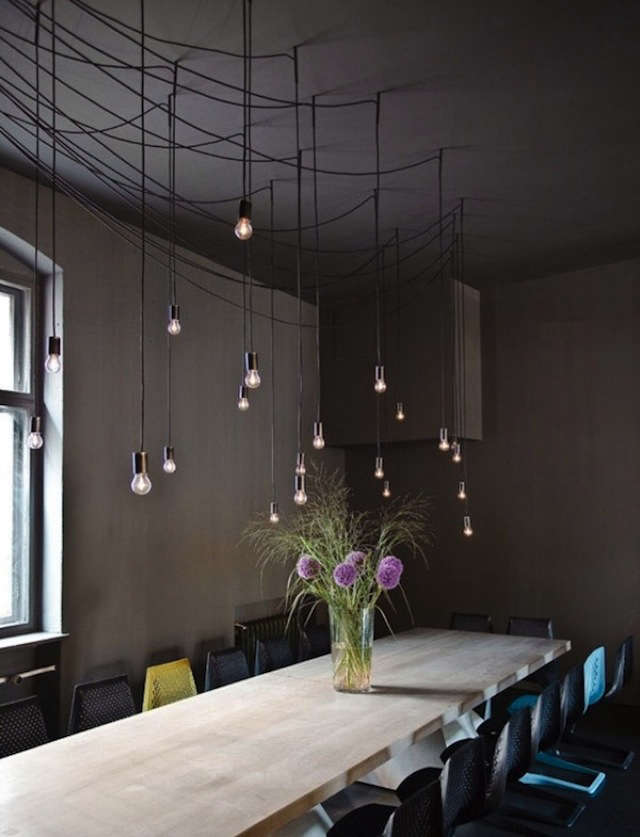

Some restaurants want to impress you with velvet ropes, imported marble, and lighting so flattering it should have its own agent. Tin Restaurant and Bar in Berlin takes the opposite route. It walks into the room wearing gray, concrete, zinc, and a look that says, “I didn’t try too hard,” while obviously trying exactly the right amount. That tension is what makes the place memorable. Tin turns humble materials into high drama, proving that gritty glamor does not need crystal chandeliers or gold leaf. Sometimes all it needs is a hammered metal bar, a galaxy of bulbs, and the kind of confidence only Berlin can pull off without blushing.
Set in Kreuzberg along Paul-Lincke-Ufer, Tin emerged as more than a place to eat and drink. It became a design statement about the city around it. Berlin has long been admired for its raw creative energy, its refusal to over-polish, and its gift for making the unfinished feel intentional. Tin captures that spirit in a way that still feels sharp. It is industrial, but not cold. Minimal, but not boring. Stylish, but never precious. In other words, it feels very Berlin.
Why Tin Still Matters
Tin matters because it understands something many restaurants miss: atmosphere is not decoration layered on top of a room. Atmosphere is the room. The project was designed by studio karhard, a Berlin practice known for translating the city’s nightlife and industrial edge into spaces with personality. At Tin, the design does not merely frame the dining experience. It creates the emotional temperature of the place.
That approach helps explain why the venue keeps showing up in conversations about restaurant interiors. Design lovers talk about the materials. Travel fans talk about the setting in Kreuzberg. Food-minded visitors remember the hybrid mood: restaurant, bar, and almost-club. Tin sits at the intersection of all three, which is much harder to do than it sounds. Plenty of places serve dinner. Plenty pour drinks. Far fewer manage to make you feel as if the night might turn into something else after dessert.
A Kreuzberg Address With Attitude
Location matters, and Tin had the good sense to plant itself in one of Berlin’s most character-rich settings. Paul-Lincke-Ufer runs along the canal in Kreuzberg, a district long associated with counterculture, nightlife, creative experimentation, and the kind of street life that makes even a short walk feel cinematic. This part of Berlin has never been about polished perfection. It is about contrast: scruffy and stylish, gritty and warm, casual and surprisingly curated.
That makes Tin’s setting more than an address. It is context. A canal-side neighborhood filled with locals, visitors, artists, and night owls creates the perfect backdrop for a venue that blurs the lines between dinner destination and social stage. Kreuzberg’s broader food and bar culture also helps explain Tin’s appeal. Berlin dining is often less about hushed formal luxury and more about mood, identity, and individuality. Tin fits that local logic beautifully. It does not try to imitate Paris, Milan, or London. It speaks Berlin fluently, with a slightly smoky accent.
The Design Trick: Making Ordinary Materials Look Expensive
If Tin has a superpower, it is this: it makes everyday materials look glamorous without pretending they are anything else. The palette is famously restrained. Concrete, gray paint, zinc, cast iron, cement-bonded wood particle boards, and standard halogen bulbs do most of the heavy lifting. On paper, that sounds less like a chic restaurant and more like the inventory list for a very moody hardware store. In practice, it works because the materials are handled with discipline and wit.
The room leans into gray rather than fighting it. Instead of using color to create excitement, the design relies on texture, reflection, contrast, and scale. Dark walls and floors create depth. Raw radiators remain visible instead of being disguised. Tables have weight. Surfaces feel tactile. Every finish seems selected not because it is conventionally luxurious, but because it catches light in an interesting way. Tin is not interested in obvious beauty. It is interested in beautiful tension.
The Hammered-Zinc Bar Is the Star
Every memorable restaurant has a focal point, and Tin’s is the bar. The zinc countertop was hammered by hand until it developed a shimmering, almost jewel-like surface. That decision says a lot about the project as a whole. Zinc is not typically the material people daydream about when imagining glamour. But give it enough craft, enough repetition, and enough contrast against darker surroundings, and suddenly it glows like a hidden treasure.
This is where Tin becomes clever rather than merely cool. The bar is not flashy in the obvious sense. It does not sparkle because it is expensive-looking. It sparkles because labor transformed a plain material into a visually rich one. That is a very Berlin move: take something industrial, emphasize the making of it, and let that process become the luxury.
82 Bulbs, Zero Nonsense, Maximum Mood
Then there is the lighting, one of Tin’s most discussed design features. The room uses 82 standard halogen bulbs suspended from the ceiling with specially made fittings and fasteners. In lesser hands, that many exposed bulbs could feel trendy, chaotic, or suspiciously like a set designer got carried away. At Tin, the effect is softer and stranger. The bulbs hang like a loose constellation over the room, creating a dim, atmospheric glow that turns gray surfaces velvety and metal surfaces liquid.
The lighting is a perfect example of the venue’s larger philosophy. The bulbs themselves are basic. The idea is not. By multiplying an ordinary element and arranging it with restraint, the designers create intimacy without coziness and drama without theatrical excess. Tin feels lit for conversation, flirtation, people-watching, and the occasional existential sip of wine. That is a lot of work for a bunch of humble bulbs.
Custom Furniture That Knows Its Role
Almost all of the furniture was custom-designed for the space, aside from the well-known Myto chairs by Konstantin Grcic. That choice matters. Custom pieces allow the room to feel integrated rather than assembled from trendy catalog finds. The furniture, much of it made from cement-bonded wood particle boards, reinforces Tin’s rough-luxury identity. It is sturdy, graphic, and unapologetically solid.
One standout element is the long communal table at the rear, stretching over 4 meters and seating around 20 people. That table changes the social rhythm of the room. It invites groups, shared meals, accidental conversations, and the kind of social spillover that makes a restaurant feel alive rather than staged. Tin understands that hospitality design is not only about what things look like. It is also about how they choreograph behavior.
Restaurant, Bar, Club: Tin Refuses to Pick One
One reason Tin feels so modern is that it was conceived as more than a straightforward restaurant. The original concept needed to work as a place for dining, drinking, and nightlife. That hybrid ambition is essential to the atmosphere. A pure dining room often settles into predictability. A pure bar can become transient. A club can overwhelm the senses. Tin borrows from all three while keeping the volume at a stylish murmur.
Local descriptions from the period called the space “clubby” in a distinctly Berlin way, and that rings true. The gray palette, raw radiators, industrial furniture, dim bulbs, and canal-side Kreuzberg setting create a subtle nightlife charge even before the music does anything. You can imagine arriving for dinner and realizing, somewhere between the first drink and the second glance around the room, that the design is preparing you to stay longer than planned. Tin does not shout “party.” It smirks it.
The menu, as described in local coverage from the time, leaned toward imaginative European cooking with Turkish and Mediterranean influence. That also makes sense in context. Berlin’s food culture has always been shaped by migration, crossover, and the city’s openness to hybrid identities. Tin’s design speaks one language; its food mood speaks another; together they sound unmistakably urban and contemporary.
What Tin Says About Berlin
Tin is not just a restaurant interior. It is a mini-portrait of Berlin. The city has long been associated with creative reuse, industrial remnants, nightlife mythology, and a suspicion of anything too polished. Yet Berlin also has an appetite for beauty, precision, and design intelligence. Tin bridges those impulses. It keeps the rough edges, but edits them. It preserves rawness, but composes it. It understands that Berlin style is not messy by accident. At its best, it is controlled looseness.
That quality helps explain why so many travel and design publications remain interested in Berlin’s hospitality spaces. The city has cultivated a reputation for venues that feel specific rather than generic. In Berlin, a bar can feel like a living room, a gallery, a workshop, or a nightclub with better snacks. Tin belongs to that lineage. It is not trying to please everyone. That is exactly why it is so easy to admire.
Lessons Designers and Restaurateurs Can Learn From Tin
The first lesson is that budget limitations do not automatically reduce ambition. Tin emerged from a design strategy shaped by constraints, yet the result feels deliberate rather than compromised. Instead of spreading money across dozens of decorative gestures, the project concentrates visual impact in a few memorable moves: the zinc bar, the lighting, the tonal room, the communal table. That is smart editing, and great interiors usually depend on it.
The second lesson is that materials matter most when they are allowed to be themselves. Tin does not cover industrial surfaces with faux refinement. It lets zinc look like zinc, cast iron look like cast iron, and gray look gloriously gray. The sophistication comes from composition, craft, and contrast. That is a useful reminder in an era when many restaurants chase “Instagrammable” design with gimmicks that age faster than avocados on toast.
The third lesson is that a restaurant should have social range. Tin can accommodate a date, a group dinner, a late drink, or a slow evening of people-watching. It is serious enough to feel intentional, casual enough to feel unforced, and atmospheric enough to make an ordinary night feel lightly cinematic. That flexibility is part of what gives the place longevity in the imagination, even years after the first round of design buzz.
Why the Gritty-Glamor Look Still Feels Fresh
The phrase “gritty glamor” gets thrown around a lot, usually by people trying to make exposed brick sound like a moral achievement. Tin earns the phrase. Its glamor comes from discipline, not decoration. Its grit comes from material honesty, not staged roughness. That balance is difficult. Too much grit and the room feels unfinished. Too much glamor and the edge disappears. Tin lands precisely in the middle, where the room feels both self-possessed and alive.
It also avoids a trap that sinks many stylish interiors: over-explaining itself. There is no need for quirky signage, theatrical references, or visual gimmicks begging to be photographed. Tin trusts surfaces, proportions, and light. It trusts the city around it. It trusts guests to notice details. That kind of restraint is rare, and it is often what separates a fashionable room from a lasting one.
The Experience of Tin: 500 Extra Words on What the Space Feels Like
To understand Tin fully, it helps to think less like a design critic and more like a guest stepping in from the street. The first impression is not luxury in the traditional sense. It is mood. The room does not try to dazzle you all at once. Instead, it unfolds slowly. Outside, Kreuzberg offers its usual urban choreography: canal air, passing bikes, conversations drifting between tables, the low-voltage hum of a neighborhood that knows how to stay interesting after dark. Inside, Tin gathers that energy and distills it.
You notice the gray first, but it is not a dead gray. It is layered, tonal, smoky, almost atmospheric. It behaves differently depending on where you stand. Near the bar, the hammered zinc catches the light and gives the room a pulse. At the communal table, the deeper shades make the setting feel more intimate, as if the room is leaning in to hear what people are saying. Around the raw radiators and heavier furniture, the industrial character becomes more obvious. Nothing feels soft in a sugary way, yet the room never becomes harsh. That is the trick. Tin manages to be hard-edged and welcoming at the same time.
The lighting deserves its own applause. So many restaurants claim to understand mood lighting and then proceed to blind you with pendant lamps the size of small planets. Tin goes another way. The suspended bulbs create sparkle without glare, enough illumination to reveal texture and faces, but not so much that the room loses mystery. The effect is less spotlight and more low-burning electricity. It makes a conversation feel better dressed. It probably makes a cocktail feel smarter too.
Then there is the social experience. Tin seems designed for people who do not want the night to be over-managed. A couple can settle into a quieter corner and enjoy the room’s subtle drama. A larger group can claim the long table and turn dinner into an event without renting a private room or behaving like a corporate retreat escaped into the wild. Solo visitors can sit at the bar and absorb the place like a film set with excellent taste. Because the design blends restaurant logic with bar energy and club undertones, the room can shift personalities over the course of an evening. Early on, it feels composed. Later, it feels charged. That change is part of the experience.
What makes the venue especially memorable is that its atmosphere does not depend on spectacle. There is no giant gesture screaming for attention. The glamour is cumulative. A reflection on zinc here. A soft glow on a gray wall there. A black cable tracing the ceiling. A chair with just enough design pedigree to keep furniture nerds happy without sending normal people running for the exit. The details work together until you realize the room has been seducing you with restraint the whole time.
And that may be Tin’s most Berlin quality of all. Berlin rarely gives you its charm in a neat gift box. The city asks you to notice things: texture, attitude, contradiction, timing. Tin operates the same way. It is not a place that begs to be loved instantly. It is a place that gets better as you pay attention. The longer you stay, the clearer its personality becomes. What starts as industrial cool gradually reveals warmth, intelligence, and a sly theatricality. By the end of the night, the room has done what all great hospitality spaces do: it has changed your sense of time a little. You came in for dinner or drinks. You leave with a mood attached to the memory. That is design doing its best work.
Conclusion
Tin Restaurant and Bar remains a compelling example of how hospitality design can be both restrained and unforgettable. By using ordinary materials with extraordinary care, it created a room that feels deeply tied to Kreuzberg, unmistakably Berlin, and refreshingly free of decorative clichés. The venue’s canal-side setting, industrial honesty, and nightclub-inflected atmosphere all contribute to a version of luxury that feels earned rather than announced.
For designers, restaurateurs, and travelers alike, Tin offers a lasting lesson: style is not about adding more. It is about choosing better, editing harder, and trusting mood to do as much work as furniture or finishes. In a city celebrated for reinvention and creative friction, Tin found a way to make roughness glow. That is not easy. It is also exactly why the place still matters.