
A big-hearted story from a big-hearted comedianand why it still matters for child actors, safe sets, and the adults who choose kindness.
Some Hollywood stories sparkle because they’re glamorous. This one sticks because it’s simple: an adult noticed a kid wasn’t okay, and acted like it mattered.
In the new documentary John Candy: I Like Me, Macaulay Culkin looks back on working with John Candy as a childyears before Culkin became a global
phenomenonand describes Candy as one of the first adults who recognized what was happening around him when his father was on set.
It’s not the loud, movie-montage kind of heroism. No dramatic speech. No slow clap. Just the kind of low-key care that can feel like a life raft when you’re
eight years old, on a professional set, and the adults closest to you are… complicated.
And yes, there’s irony here: the man famous for playing lovable chaos agentspolka kings, awkward road-trip buddies, and the world’s most patient
babysittermay have been quietly doing something far more meaningful off-camera. He was watching out for a kid.
Where the story comes from: a new documentary and a very old truth
The headline traces back to John Candy: I Like Me, a documentary that premiered at the Toronto International Film Festival and later arrived on Prime Video.
The film frames Candy not just as a comedy icon, but as a personbeloved by collaborators, adored by audiences, and remembered for how he treated people when
cameras weren’t rolling.
At the TIFF premiere, stories about Candy’s generosity and emotional intelligence came from friends and co-stars, but Culkin’s reflections hit differently.
They don’t just praise Candy’s talent. They describe the steadying presence of an adult who paid attention to a child’s reality.
Culkin’s memory is specific in its emotion, not in staged dramatics: Candy noticing a tense dynamic, giving a “side-eye,” and checking in with the kid. That may
sound small. For many child performers, it’s huge.
A quick refresher: Uncle Buck, an 8-year-old co-star, and an ‘80s set
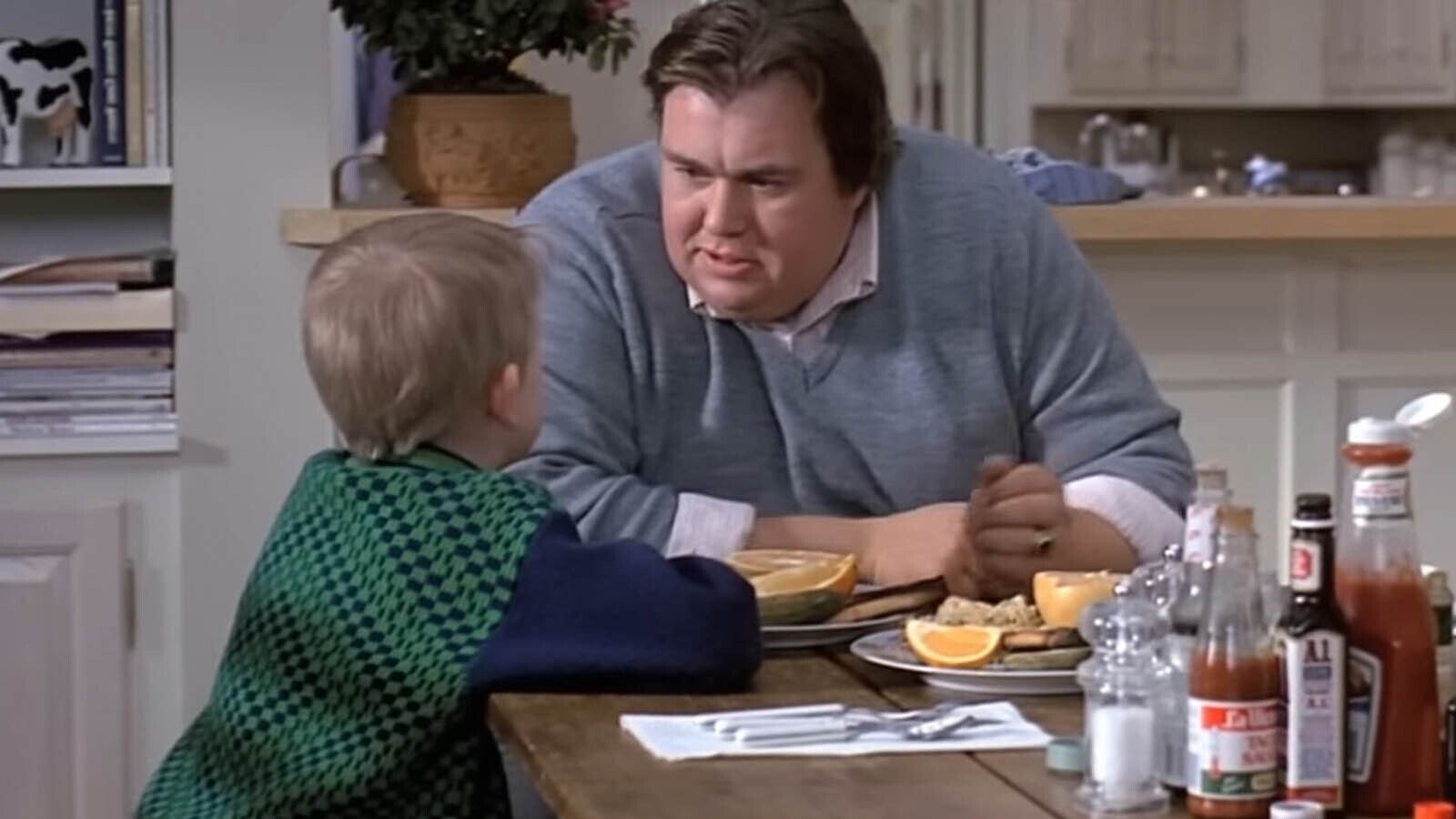
In 1989, John Candy starred in Uncle Buck, written and directed by John Hughes. Culkin played Miles, one of the kids Buck ends up caring for. The movie
became a hit, and it remains a cultural touchstone for a certain generation that can still quote the pancake scene like it’s a constitutional right.
Culkin was youngstill in that age range where you can memorize lines easily but can’t always explain why a room feels unsafe. And film sets, even friendly ones,
are weird places for children. They’re half workplace, half classroom, half circus. (Yes, that’s three halves. That’s what it feels like.)
A set can be structured and protectivestudio teachers, limited hours, rules and permits. It can also be emotionally messy, especially when a child’s guardian
brings stress into the environment. The kid doesn’t get to “clock out” of that dynamic just because the scene is over.
“He was already a monster”: what Culkin saidand what Candy did with that information
In the documentary coverage, Culkin describes his father as a “monster,” saying the behavior was visible even before his fame explodedand that it became worse as
the money and attention increased. He also points to Candy as someone who picked up on it early.
The important part is not turning this into a neat little fable where one nice co-star “fixes” a family situation. That’s not how life works, and it’s not what
Culkin claims. Instead, Culkin describes something more realistic: Candy noticing, caring, and making sure the kid knew at least one adult in the room was paying
attention.
If you’ve never been a child around volatile adults, that might sound like a sentimental detail. If you have, you understand it can be the difference between
feeling invisible and feeling human.
What “looking out” can actually look like (without turning it into a superhero story)
When people hear “looked out for,” they often imagine formal intervention. But on film setsespecially decades agoprotection often arrived in quieter forms:
- Checking in privately. A simple “You good?” that gives a child permission to be honest.
- Modeling calm. An adult who stays steady can lower the temperature of the whole space.
- Redirecting attention. Keeping the focus on work, not on a guardian’s mood.
- Creating small moments of safety. A joke, a snack break, a respectful toneanything that says, “You’re not alone here.”
None of this makes headlines in the moment. But years later, the person who received it remembers.
Why this hits so hard: child stardom is a business, and family is not a neutral workplace
Child acting is a strange collision of two worlds: the intimacy of family and the pressure of commerce. A kid’s face sells a movie, but the kid can’t sign most
legal documents, negotiate working conditions, or always recognize when boundaries are being crossed. That means adultsparents, guardians, producers, crewbecome
the system.
And systems are only as good as the people running them.
The money factor can intensify everything
Culkin’s family story became public in the 1990s, including a custody battle that raised questions about management, commissions, and the complicated overlap
between “caretaker” and “career gatekeeper.” You don’t need every legal detail to understand the emotional math: when money enters the family dynamic, it can
sharpen control issues and turn normal disagreements into power struggles.
That context doesn’t prove any single moment on a set. But it explains why an attentive adult co-star might have sensed tension, and why that attention mattered.
Financial safeguards existemotional safeguards are still catching up
The entertainment industry has long recognized the financial risks to child performers. Laws and regulationslike Coogan-style blocked trust accountswere created
to prevent adults from draining a child’s earnings. The core idea is simple: set aside a portion of the child’s pay so it belongs to the child later.
Financial protection is important. But it doesn’t automatically create emotional safety. A kid can have a trust account and still feel scared in a room. That’s why
stories like Culkin’s land with such force: they point to the gap between “legal compliance” and “basic human care.”
John Candy’s kindness wasn’t a rumorit was a pattern
The documentary chatter around Candy keeps circling back to the same theme: he made people feel safe, seen, and included. That kind of reputation doesn’t come
from one viral moment. It’s built from hundreds of small choiceshow you treat assistants, how you talk to nervous co-stars, whether you listen to kids like their
opinions count.
And Candy had an unusual skill for a famous person: he didn’t just perform warmth. People describe him as practicing it. That’s why Culkin’s memory makes sense
inside the larger portrait. A man who could play the everyman convincingly often did the everyman thing off-screen toohe noticed when someone needed help and
acted like it was normal to care.
It’s also why “paternal presence” doesn’t sound like a stretch
Culkin has used words like “paternal” when describing Candy’s presence. That doesn’t mean Candy replaced anyone or stepped into a formal role. It means Candy
behaved like a stable, decent adult around a kidsomething that can feel extraordinary when your world is unstable.
What this story teaches us about safer sets (and safer childhoods)
If you work with kidson film sets, in sports, in theater, in schoolsthe takeaway isn’t “be a legend.” The takeaway is “be attentive.”
Here’s what “looking out” can mean today in practical, non-performative ways:
For productions and employers
- Make safety roles real, not decorative. Clear reporting paths, not “talk to whoever is available.”
- Separate power whenever possible. The person who signs checks shouldn’t be the only person a kid can talk to.
- Train the adults. Not just on labor rules, but on child development, stress cues, and respectful communication.
- Normalize check-ins. “How’s school going?” shouldn’t be the most personal question a kid hears all day.
For parents and guardians
- Remember: the kid is not the family business. They’re a child first, a performer second.
- Watch for burnout. If everything becomes about “the next job,” you’re losing the plot.
- Invite a neutral adult into the circle. Someone whose loyalty is to the child’s wellbeing, not to a career outcome.
For co-stars and crew
- Be the calm adult. Your tone can change the temperature of the room.
- Ask simple questions. “You doing okay today?” is not invasive; it’s humane.
- Don’t gossip about a child’s family. Protecting a kid means not making them the subject of adult chatter.
- Use your status wisely. If you have clout, use it to make the set kinder, not just more efficient.
Experiences: what it feels like when one adult has your back
People sometimes talk about “safe adults” like it’s a formal job title, the way you’d say “boom operator” or “script supervisor.” But for a lot of kids, a safe
adult is simply the first person who treats their feelings like information, not inconvenience.
Imagine being a child on a set. You’re surrounded by grown-ups who are kind, but busy. They’re moving lights, fixing wardrobe, checking continuity, and watching
the clock. Someone calls “quiet,” and suddenly the room becomes a museum: everyone staring, everyone waiting, everyone expecting you to do a very specific thing
on cue. If you nail it, adults cheer. If you don’t, adults keep smilingwhile the schedule gets louder in their eyes.
Now add a guardian who’s stressed, controlling, or unpredictable. The kid doesn’t have the vocabulary for “emotional volatility.” They just learn to scan faces.
They learn which version of the adult is walking into the room. They learn whether today is a “don’t talk back” day or a “perform happiness” day. And because
children are brilliant at survival, they become excellent at reading the room long before they become old enough to name what they’re reading.
In that environment, the smallest kindness can land like a spotlight. Not a spotlight that exposes youthe kind that warms you.
A safe adult is the one who notices your shoulders are tight and doesn’t joke about you being “so serious.” They quietly offer a break, a glass of water, a calm
moment between takes. They don’t ask you to be a mascot. They don’t treat you like an investment portfolio with a cute haircut. They treat you like a person who
happens to be small.
Sometimes that adult’s support looks almost boring from the outside. They keep conversations age-appropriate. They praise effort, not perfection. They redirect
an aggressive tone without escalating it. They speak to you directly instead of over your head. They remind you it’s okay to be tired. They ask about school.
They make sure you eat something real, not just a handful of “craft service candy” (which, to be fair, is a sacred food group on set).
And here’s the part adults often underestimate: kids remember the feeling of being protected more than the details of how it happened. Years later, the child
might not recall exactly what was said. But they remember that someone noticed. Someone didn’t laugh it off. Someone made eye contact that said, “I see what’s
going on, and you’re not crazy for feeling it.”
That’s why Culkin’s memory of John Candy resonates. It’s not just celebrity nostalgia or a sweet behind-the-scenes anecdote. It’s a reminder that when you work
around kidsespecially kids under pressureyou don’t have to solve everything to matter. You can do the human thing: show up with steadiness, keep your
kindness consistent, and act like a child’s wellbeing is part of the job. Because it is.
Conclusion: the “Uncle Buck” lesson nobody wrote into the script
John Candy’s legacy will always include the laughsbecause the laughs are fantastic. But the older you get, the more you realize the best comedians aren’t just
funny. They’re observant. They notice who’s being ignored. They notice who’s tense. They notice what’s off.
Culkin’s story doesn’t require us to crown Candy a savior. It asks us to recognize something more attainable and, frankly, more useful: one decent adult can change
the emotional weather around a child. Sometimes all it takes is a look that says, “I’m paying attention,” and a question that says, “You matter.”
In an industry built on performance, that kind of sincerity is its own special effect.