
The space behind your stove is the kitchen’s “splash zone.” It gets hit with heat, steam, splatter, and the occasional
heroic tomato sauce eruption that somehow reaches places physics said it couldn’t. So while the rest of your kitchen
can get away with being purely pretty, the backsplash behind the range has to be pretty and practical.
The good news: tile is basically made for this job. It’s heat-friendly, wipeable, and it can turn your stove wall into
the focal point of the whole kitchenwithout you having to renovate everything else. The even better news: you don’t
have to pick between “boring but safe” and “gorgeous but impossible to clean.” You can have style and sanity.
What Makes the Stove Backsplash Different?
It’s a high-mess, high-visibility spot
If your backsplash is behind a toaster, life is forgiving. Behind a stove, life is…greasy. That means finish, grout,
and tile texture matter more here than anywhere else on the wall.
Heat and moisture change the rules
Tile holds up well near heat, but adhesives, grout, and sealers still need to be the right type and installed properly.
Also: always follow your range hood and stove manufacturer guidance and local building codes for clearances and materials.
Cleaning is a design feature
The best-looking backsplash is the one you can keep looking good on a Tuesday night. Think: fewer fussy crevices, grout
that resists staining, and finishes that don’t “collect” splatter like souvenirs.
20 Tile Backsplash Ideas Behind the Stove
1) Oversized Subway Tile (Fewer Grout Lines, Same Classic Look)
Subway tile is popular for a reasonbut behind the stove, going bigger is smarter. A 3×12 or 4×16 version gives you the
clean, timeless vibe with fewer grout joints to scrub. Choose a slightly warm white if you want it to feel less “sterile”
and more “I definitely bake sourdough (sometimes).”
2) A Herringbone Inset “Moment”
Keep the surrounding backsplash simple, then create a herringbone panel directly behind the range. It’s a subtle upgrade
that reads custom without screaming for attention. Pro tip: use the same tile as the rest of the backsplash, just laid
differentlyinstant design credibility.
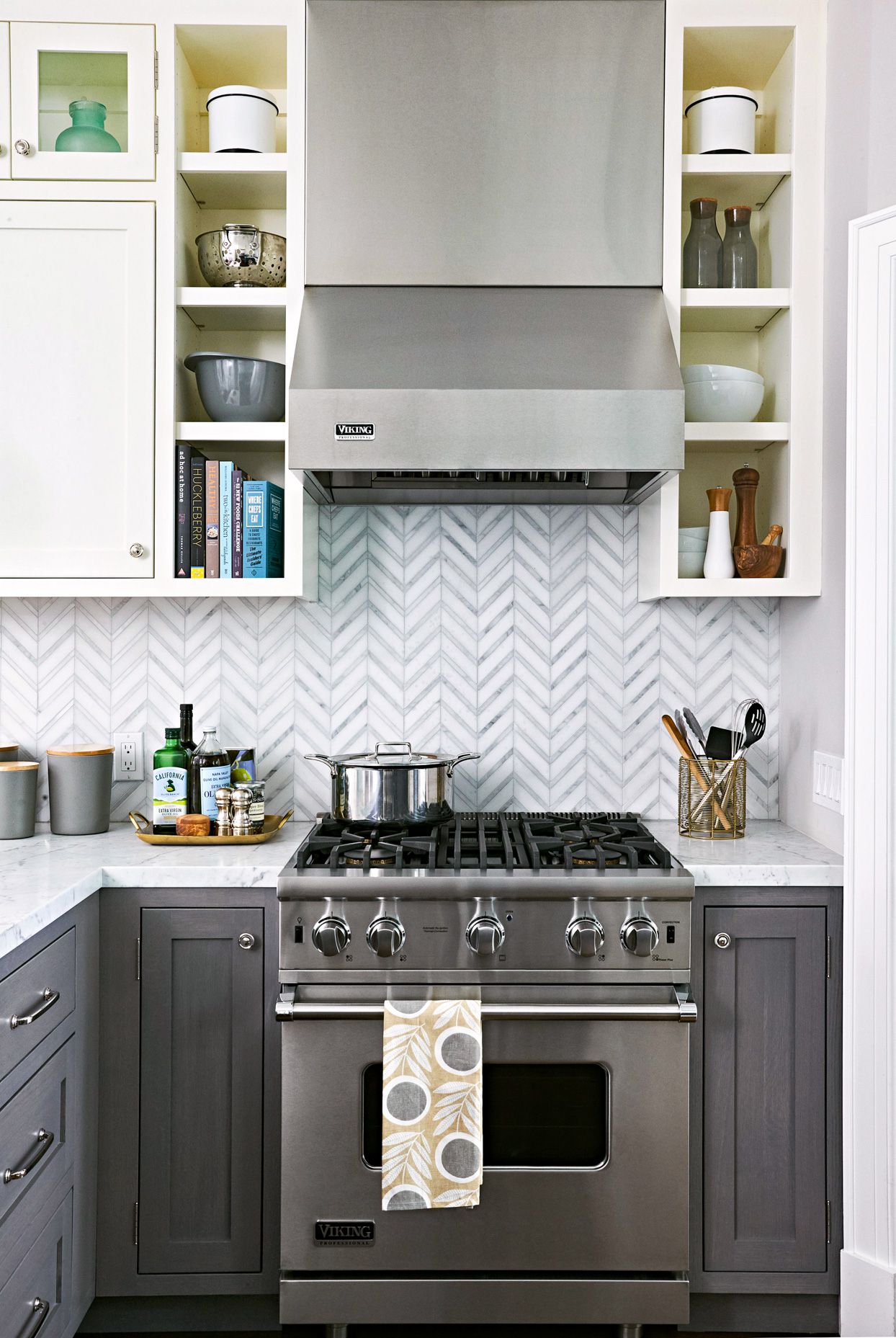
3) Chevron Pattern for Built-In Energy
Chevron brings movement, which is perfect if your cabinets and counters are minimal. It pairs especially well with modern
appliances and sleek hood vents. Keep the color palette calm so the pattern does the talking (and doesn’t start an argument
with your countertops).
4) Vertical Stack Tile to Make the Wall Feel Taller
Vertical stacked tile draws the eye up, which can make a standard-height kitchen feel loftier. It’s also a great way to
modernize classic shapes like subway. If your hood is a statement piece, this layout frames it beautifully.
5) Counter-to-Ceiling Tile Behind the Stove
If you want a “designer kitchen” upgrade without changing cabinets, tile all the way up behind the range and hood.
Functionally, it protects more wall. Visually, it creates a centerpiece that makes your stove look like it’s headlining
its own cooking show.
6) A Framed “Tile Rug” Panel
Create a bordered rectangle behind the stove using trim pieces or a contrasting tile. Inside the frame, use a different
layout (herringbone, basketweave) or a different color. This is perfect if you love detail but don’t want to tile the whole
kitchen like a Moroccan palace (unless you do, in which case, no judgment).
7) Handmade-Look Zellige for Soft Shine
Zellige-style tile (or true handmade zellige) has slight variation and glaze shimmer that makes a stove wall glow,
especially under under-cabinet lighting. It’s the backsplash equivalent of putting on lip glosssubtle, but it changes
the whole vibe.
8) Blue-and-White “Story” Tile Accents
One of the easiest ways to make a stove wall feel special is to add a small run of decorative tilesfloral, scenic, or
vintage-inspiredwithin a field of neutral tile. It nods to traditional kitchens but can still feel fresh with modern
cabinets and hardware.
9) Patterned Porcelain That Looks Like Encaustic Cement
Love old-world pattern, hate the upkeep? Choose porcelain tiles that mimic encaustic cement. You’ll get bold personality
with a more kitchen-friendly surface. Behind the stove, keep the pattern confined to that zone so it feels intentional,
not overwhelming.
10) Geometric Mosaic as a Focal Backdrop
Hex, arabesque, or lantern mosaics can turn the stove into the visual anchor of the room. If your counters are busy
(veined stone, bold quartz), choose a mosaic in a quieter color. If your counters are plain, go aheadlet the backsplash
bring the fun.
11) Penny Round Tile (With a Grout Strategy)
Penny rounds look charming and classic, but they come with a reality: lots of grout. Behind the stove, that can mean more
cleaning. If you love the look, choose a mid-tone grout that hides stains better, and consider a more stain-resistant grout
option so your backsplash doesn’t become a “before-and-after grout cleaning” hobby.
12) “KitKat” Finger Mosaics for Texture Without Chaos
These skinny, vertical mosaics add rhythm and texture while still feeling modern. They’re especially good behind a slim
range hood and in kitchens with flat-front cabinets. A satin or glossy finish helps with wipe-downs.
13) Fluted or 3D Textured Tile for Shadow Play
Ribbed, scalloped, or softly wavy tiles look incredible with good lighting. Behind the stove, keep the texture gentle
rather than deeply carvedbecause anything with deep grooves becomes a splatter museum. Consider using textured tile only
in a framed panel if you’re nervous about maintenance.
14) Matte Black Tile for a Dramatic Range Wall
A black backsplash behind the stove can look stunningespecially with brass hardware, warm wood, or white cabinetry.
The trick is choosing a surface that cleans well: some ultra-matte finishes can show smudges. A satin-matte or lightly
textured glaze often gives you drama with less fingerprint heartbreak.
15) Warm Terracotta or Clay-Look Porcelain
Want your kitchen to feel warm and lived-in? Terracotta tones do that instantly. For behind the stove, porcelain that
mimics clay is usually easier to maintain than real unglazed clay. Pair it with creamy cabinets or natural wood shelves
for a cozy, earthy look.
16) Marble-Look Porcelain for “Luxury” Without the Worry
If you love marble but don’t love the idea of babying it near tomato sauce and turmeric, marble-look porcelain is a smart
compromise. You get the veining and polish with a more forgiving surface. It’s also great if you want your stove wall to
look elevated without adding loud color.
17) Natural Stone Mosaic (If You’re Okay With Maintenance)
Real stonemarble, limestone, travertinecan be gorgeous behind the stove. Just be honest about upkeep: many stones are
porous and benefit from sealing and gentle cleaners. If you choose stone, keep grout lines tight and pick a finish that
suits your tolerance for patina.
18) Slab-Style Porcelain Panels for a “No-Grout” Look
If your dream backsplash is “zero grout lines” (a valid dream), look at large-format porcelain panels that mimic slab
stone. They deliver a sleek, continuous look and can be easier to wipe down. Behind the stove, that seamless surface can
feel like a cheat code for cleaning.
19) A Mixed-Material Look: Tile + Metal Accent Strip
You can add a thin stainless or metal-look accent strip within a tiled stove wall to echo your appliances and create a
professional-kitchen vibe. Keep the metal detail small and intentionallike a belt, not full body armor.
20) DIY Gingham or Color-Block Pattern with Solid Tiles
Want something playful without buying specialty pattern tile? Create your own pattern using solid colors. A gingham effect
(two blues + cream, or charcoal + gray + white) can look surprisingly high-end when the layout is precise. Behind the stove,
it becomes a focal art piece that still wipes clean like normal tile.
Quick “Pick the Right Idea” Guide
- If you want easiest cleaning: larger tiles, slab-style porcelain, satin/gloss finishes, and fewer grout lines.
- If you want maximum wow: framed inset panels, patterned porcelain, or counter-to-ceiling tile behind the hood.
- If your kitchen is already busy: choose one statement (either pattern, texture, or bold color), not all three.
- If you’re on a budget: classic ceramic with a new layout (stacked vertical, herringbone inset) often looks custom.
Maintenance Moves That Keep Your Backsplash Looking New
Choose grout like you choose shoes: for your real life
Behind the stove, grout takes the most abuse. Smaller grout joints can look cleaner longer, and many homeowners prefer
stain-resistant grout options in this area. If you’re choosing a light grout, plan to wipe the backsplash oftenbecause
grease doesn’t care about your design mood board.
Use gentle cleaners, especially on handmade or stone surfaces
Neutral cleaners and soft cloths go a long way. Avoid harsh abrasives that can scratch glazes or dull finishes. If you use
natural stone, avoid acidic cleaners that can damage it. A quick wipe after cooking is the easiest “deep clean” you’ll ever do.
Make splatter less of a thing
A good range hood, a splatter screen for high-sizzle foods, and quick wipe-downs after cooking can prevent that slow
buildup that makes your backsplash look like it’s wearing a greasy filter.
Real-World Lessons and Experiences from Stove-Backsplash Makeovers (Extra)
If you’ve ever remodeled (or even just changed a light fixture), you know the difference between “This looks amazing on
Pinterest” and “This still looks amazing after I cooked bacon.” The stove backsplash lives firmly in the second category:
it’s a design choice you’ll interact with every day. And the most helpful “experience” stories aren’t about perfect
magazine kitchensthey’re about what people wish they’d known before the first spaghetti night.
One common lesson: grout is the make-or-break detail. Plenty of homeowners fall in love with tiny mosaics
behind the stovepenny rounds, small glass squares, intricate patternsand then realize they’ve adopted a new part-time job:
grout management. It’s not that mosaics are “bad.” It’s that behind the range, every micro-joint is a tiny landing pad for
airborne oil. People who stay happiest with mosaics usually do two things: they pick a grout color that doesn’t highlight
every little mark, and they commit to a simple routinewipe after cooking, gentle scrub occasionally. The folks who end up
annoyed are often the ones who chose bright white grout because it looked crisp on day one, then felt personally betrayed
by day thirty.
Another repeat storyline: finish matters more than you think. Ultra-matte tiles look modern and soft, but
some can show smudges or take more elbow grease to clean. Glossy or satin finishes tend to wipe down faster, especially in
that “oops, curry splattered” zone. The sweet spot many people land on is a tile with subtle surface variation (so it
doesn’t feel flat), paired with a finish that doesn’t punish you for having hands. In other words: texture is fun; deep
crevices are not.
Then there’s the height debate: standard backsplash height versus going all the way to the ceiling behind the hood.
People who do the full-height treatment almost never regret it. It makes the stove area feel taller, more intentional,
and easier to keep clean because you’re not leaving a strip of painted drywall right where steam likes to hang out. The
biggest surprise is how “finished” it lookslike the kitchen came that way, not like you patched it together over a few
weekends and a mild existential crisis.
Handmade-look tilesespecially zellige-inspired stylestend to produce a different kind of experience: joy.
Not in a dramatic way. More like, “Wait, why does my kitchen look better at 7 p.m. than it did at noon?” The glaze
variation catches light and makes the stove wall feel alive. People who love them describe the backsplash as “soft,”
“warm,” or “glowy.” The only caution is expectation-setting: handmade variation means the wall won’t look perfectly uniform.
If you want crisp, identical tiles lined up like soldiers, go with a factory-finished option. If you want character, the
irregularity is the point.
Slab-style looksporcelain panels or a continuous surface effecthave their own “experience” pattern: amazingly easy wipe-downs
and a sleek, upscale feel. The tradeoff is that a big, continuous surface can sometimes show streaks if you clean it with
the wrong cloth or cleaner. But many people still prefer that to scrubbing grout. The best outcomes tend to come from
pairing the slab look with strong lighting and a simple cleaning habit: microfiber cloth, gentle cleaner, quick pass. Done.
Finally, don’t underestimate the satisfaction of a clever budget move. Many homeowners have gotten that “custom kitchen”
payoff by keeping the field tile simple and spending design energy on layout: a framed inset, a dramatic
herringbone panel, a vertical stack behind the range, or a DIY color-block pattern. Those upgrades often cost less than
premium materials but look like you planned your kitchen with a designer…even if your designer was you, at midnight,
whispering “please fit” while holding a tape measure.
The best stove backsplashes don’t just photograph wellthey live well. If your final choice makes you smile when
you turn on the under-cabinet lights and doesn’t make you dread cleanup after taco night, congratulations: you picked the
right one.
Conclusion
The backsplash behind your stove is equal parts protection and personality. Whether you go classic with oversized subway
tile, playful with a DIY gingham layout, or ultra-sleek with slab-style porcelain, the smartest choices balance three
things: the look you love, the cleaning you’ll actually do, and the materials that stand up to heat and splatter. Pick a
direction, commit to it behind the range, and your whole kitchen will feel more polishedno full remodel required.