
In Minecraft, “going up” is easy until it suddenly isn’t. One minute you’re peacefully mining, the next you’ve dug a vertical shaft that looks like a cartoon trap.
The good news: Minecraft gives you multiple ways to climb safelywhether you want a classic wooden ladder, a builder-friendly scaffolding tower, or a living wall of vines.
This guide covers three practical ways to “make a ladder” in Minecraft (including two ladder alternatives that often work even better),
plus version-specific tips for Java and Bedrock, common mistakes, and a longer “real player experience” section at the end.
Before You Build: What Counts as a “Ladder” in Minecraft?
The game has an actual item called Ladder, but players also use “ladder” to mean “anything that lets me climb a wall without screaming.”
In this article, you’ll get:
- Way #1: The real craftable Ladder block (sticks, simple, classic).
- Way #2: Scaffolding (bamboo + string, the builder’s best friend).
- Way #3: Vines and vine-like plants (free climbing with a side of jungle décor).
Way 1: Craft a Classic Ladder (The OG Stick “H” Recipe)
What you need
- 7 Sticks (crafted from wooden planks)
- Crafting Table (recommended, because the recipe uses a 3×3 grid)
How to craft ladders step-by-step
- Open your crafting table (3×3 grid).
- Place 7 sticks in an “H” pattern:
- Top row: stick, empty, stick
- Middle row: stick, stick, stick
- Bottom row: stick, empty, stick
- Collect the result: you’ll get 3 ladders per craft.
How to place and use ladders (without accidentally inventing gravity)
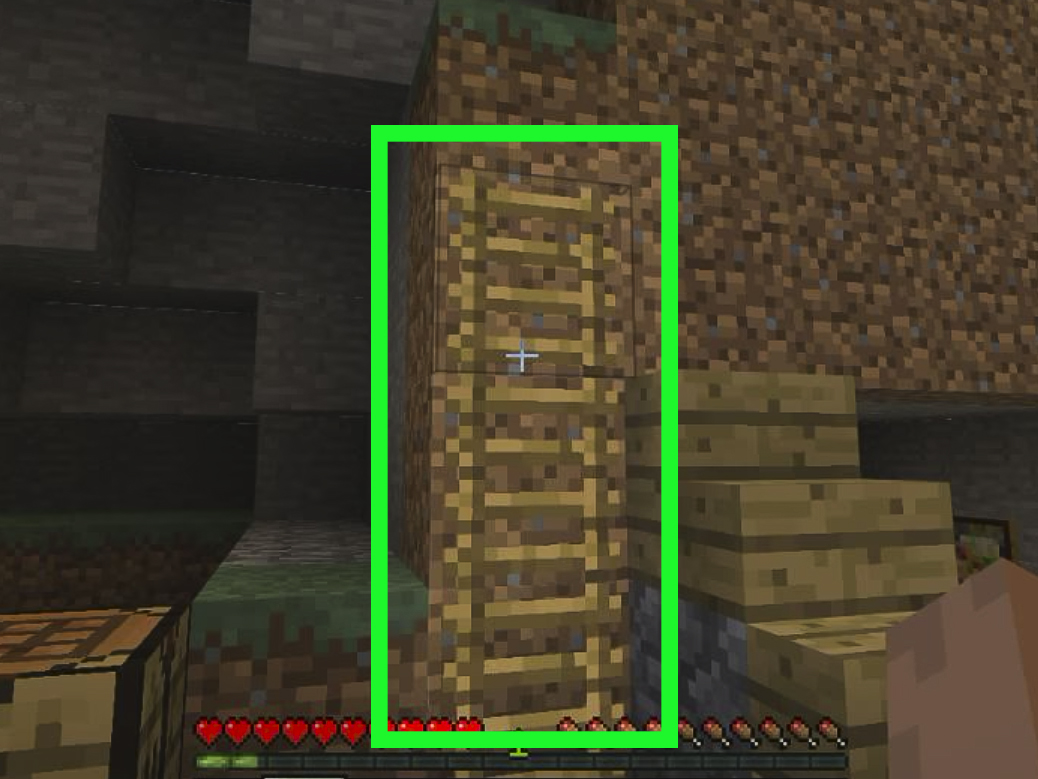
Ladders attach to the side of a block. Walk into the ladder and hold forward to climb.
To descend, hold backward or sneak (depending on your control setup).
- Pro tip (safety catch): If you fall into the space next to a ladder, it can slow your fall and save you from fall damagegreat for vertical mines and base shafts.
- Bedrock-specific tip: On Bedrock Edition, holding the jump button while climbing can increase your climb speed. (Your legs become tiny pistons.)
- Trapdoor trick (Java): Placing a trapdoor directly above a ladder and opening it can make the trapdoor “climbable,” helping you pop up onto the top level more smoothly.
- Water warning (Bedrock): Waterlogged ladders exist in Bedrock, but they can’t be climbed while waterloggedso don’t turn your ladder shaft into a decorative aquarium by accident.
Best uses for classic ladders
Ladders are cheap, reliable, and perfect for permanent routes where you don’t plan to move your climbing setup every five minutes.
They shine in:
- Mine shafts: A ladder line on one wall keeps your exit path consistent.
- Basements and storage towers: Easy vertical navigation without taking up much space.
- Early survival builds: When you have wood but not fancy materials.
Example: Building a 20-block mine shaft? Place ladders along one wall, add torches every few blocks, and you’ll always have a safe way outno stair-digging marathon required.
Way 2: Craft Scaffolding (A Builder’s “Ladder” That Packs Up Fast)
What you need
- 6 Bamboo
- 1 String
- Crafting Table
How to craft scaffolding
Scaffolding is crafted using bamboo + string and produces multiple blocks per craft,
making it efficient when you’re building tall structures or doing roof work.
How to use scaffolding like a pro
- Stack fast: Place one scaffolding block, then keep interacting with the bottom block to build a quick vertical tower.
- Climb through it: You can climb up and down the scaffolding column. Sneaking helps you descend smoothly.
- Break instantly: When you’re done, scaffolding is easy to removegreat for temporary access during construction.
- Horizontal building limit: Scaffolding can extend outward from support only so far before it fallsperfect for safe “work platforms,” but not a forever bridge.
- Water-friendly builds: Scaffolding can be waterlogged, which is handy in certain builds (just remember water + climbing rules differ by block type).
When scaffolding beats ladders
If you’re building a big base, a tower, or anything where you’ll move up and down constantly,
scaffolding often feels like ladders on a productivity drink:
- Speed: Fast to place, fast to remove.
- Convenience: Build straight up without placing ladders on a wall.
- Safety: Easy to create temporary “work access” without carving your build apart.
Example: Building a watchtower roof? Put scaffolding next to the wall, climb up, place your roof details, then tear the scaffolding down in seconds.
Your tower stays pretty, and you don’t leave a permanent ladder line like an awkward “construction phase selfie.”
Way 3: Use Vines (and Vine-Like Plants) for a Natural Climbing “Ladder”
Vines are one of the most underrated vertical tools in Minecraft. They’re climbable, decorative, and often free (if you can find them).
Think of them as ladders that decided to major in landscaping.
Overworld vines (classic green vines)
- Where to find: Common in jungles and other lush areas.
- How to collect: Use shears for reliable harvesting.
- Growth note: Regular overworld vines spread and grow on their own, but you generally can’t “force-grow” them with bone meal the way you can with some other plants.
- Best use: Cliff paths, treehouses, hidden entrances, and aesthetic builds where a wooden ladder would look out of place.
Cave vines (glow berry vines)
Cave vines can create a climbable route that also doubles as soft lighting and snack production (glow berries).
If you’re building a cozy underground base, this is the “vibes” optionliterally.
- Bonus: Bone meal can help produce glow berries if the vine isn’t currently bearing any, which makes them useful for farming and décor.
Nether vines: weeping vines and twisting vines
In the Nether, you get two superstar climbers:
- Weeping vines: Grow downward from ceilingsexcellent for descending from high places.
- Twisting vines: Grow upwardgreat when you want a climbable column that feels a bit like organic scaffolding.
- Bone meal boost: Unlike regular overworld vines, Nether vines can be extended using bone meal, letting you build climb routes quickly.
When vines beat ladders and scaffolding
- Stealth builds: Vines blend into nature builds and hidden bases.
- Decor-first design: Perfect for ruins, jungle temples, fantasy towers, and “abandoned” builds.
- Resource-light exploration: If you find vines early, you can climb without crafting a single ladder.
Which “Ladder” Should You Choose? A Quick Decision Guide
- Pick classic ladders if you want a tight, permanent vertical route (mine shafts, basements, utility towers).
- Pick scaffolding if you’re actively building and want fast up/down access you can remove cleanly afterward.
- Pick vines if you want natural aesthetics, stealthy paths, or a quick climb in the wild without spending sticks.
Common Mistakes (and How to Fix Them)
1) “Why won’t the ladder place here?”
Ladders must attach to a block face. If you’re trying to place ladders on air, glass panes, or the wrong side of a block,
it may refuse. Put down a solid backing block first, then attach the ladder.
2) “I keep missing the ladder and face-planting into the shaft.”
Add a small platform at the top and bottom, and consider surrounding the opening with trapdoors, slabs, or railings.
Also, lighting helpspanic jumping in the dark is a proud Minecraft tradition, but it’s not a safe one.
3) “My vines won’t ‘grow faster’ with bone meal.”
Regular overworld vines don’t behave like bone-meal-friendly crops. If you need quick growth with bone meal,
consider Nether vines (weeping/twisting) or use vines mainly as décor and gradual growth.
4) “Scaffolding keeps falling when I extend it.”
Scaffolding has a horizontal support limit. If you’re pushing it outward, add a support pillar below or reset the support point.
Think of it like real scaffolding: it’s brave, but it’s not magic.
Player Experiences: 3 Ladder Lessons I Learned the Hard Way (and You Can Learn the Easy Way)
Every Minecraft world eventually hands you a vertical problem. Mine started with a “quick” mining trip that turned into a straight-down tunnel.
I told myself I’d dig a staircase back up later. That was optimistic. After the third “later,” I crafted laddersand immediately realized
ladders aren’t just a convenience item. They’re a planning tool.
The first lesson: count your sticks before you commit. Ladders are cheap, but big ladder shafts eat sticks fast.
I used to craft a few ladders, run out halfway up, and then stare at the remaining wall like it personally betrayed me.
Now I craft in batches and treat ladders like torches: if you think you have enough, you probably don’t.
(Also, once you start building taller bases, “enough ladders” becomes “how many trees are left in this biome?”)
The second lesson: scaffolding is the MVP of construction days. The first time I used scaffolding the “right” wayplacing one block
and then stacking upward by interacting with the bottomI felt like I’d unlocked a secret builder perk.
Roof work became painless. Tower detailing became fun instead of terrifying.
And cleanup was shockingly satisfying: break the bottom, collect the pieces, walk away like a responsible adult who definitely didn’t leave
a dirt pillar in the background. Scaffolding also made me build more creatively, because I wasn’t afraid of heights anymore.
When access is easy, experimentation skyrockets (sometimes literally).
The third lesson: vines are for builders who want style and function. I used to think vines were just nature decoration
something you accidentally punch while trying to cut a jungle tree. Then I built a cliffside entrance and realized vines were the perfect “ladder”
that didn’t scream “PLAYER WAS HERE.” They blended into the wall, made the entrance feel secret, and gave my base a lived-in, adventurous vibe.
Later, in cave builds, glow-berry vines became my favorite mix of cozy lighting and practical climbing.
And in the Nether, weeping and twisting vines taught me that not all vines are created equalsome are basically organic elevators when you use bone meal.
The biggest takeaway from all of this is simple: vertical travel is part of your base design, not an afterthought.
Ladders are reliable, scaffolding is flexible, and vines are stealthy and beautiful. Once you start choosing the right tool for the job,
you waste less time climbing, fall less often, and spend more time doing the fun stufflike building something ridiculous on top of a mountain
and then immediately needing a safe way to get down.
Conclusion
If you want the straight answer, crafting a ladder in Minecraft is easy: 7 sticks in an “H” makes 3 ladders.
But if you want the best answer, the best “ladder” depends on your goal. Use ladders for permanent shafts,
scaffolding for fast building access, and vines when you want a natural climb that looks like it belongs in the world.
Pick the right option, and vertical travel stops being a headacheand starts being part of your build’s personality.