
Chairs are the unsung heroes of your home. They hold your tired legs, rescue your awkward dinner party,
andwhen you buy the wrong onesilently judge you every time you try to “sit normally” and fail.
The good news: choosing the right chair isn’t about memorizing fancy furniture words. It’s about matching
function, fit, and style to how you actually live.
Below you’ll find 25 popular chair types (from classics to modern staples), what they’re best for, and what
to watch out for. After that, we’ll get into a practical, tape-measure-friendly method to pick the perfect seat
for any roomwithout turning your living room into a chair “adoption center.”
25 Types of Chairs (and What They’re Really For)
1) Armchair
The “workhorse” lounge chair: supportive arms, upright-to-relaxed posture, and enough presence to anchor a room.
Best for: living rooms, reading corners, bedroom seating.
Watch for: oversized arms that steal sitting space or feel bulky in small rooms.
2) Accent Chair
A chair chosen as much for personality as for comfortthink bold fabric, sculptural shape, or a fun silhouette.
Best for: adding color or pattern; filling an empty corner; balancing a sofa.
Watch for: “pretty-but-punishing” designs that look great and sit… not great.
3) Club Chair
Traditionally low-backed, deep-seated, and cozylike a hug with upholstery.
Best for: lounging, conversation areas, cozy dens.
Watch for: deep seats that can feel awkward if you’re shorter (or if you like upright posture).
4) Wingback Chair
Tall back with “wings” that frame your head and shouldersoriginally designed to block drafts near fireplaces.
Best for: reading, formal living rooms, statement seating.
Watch for: tall profiles that can overwhelm low ceilings or small spaces.
5) Slipper Chair
Armless, low, and compact. Historically used in bedrooms; now a small-space favorite.
Best for: tight corners, bedrooms, extra seating without visual bulk.
Watch for: low seats that can be harder to stand up from.
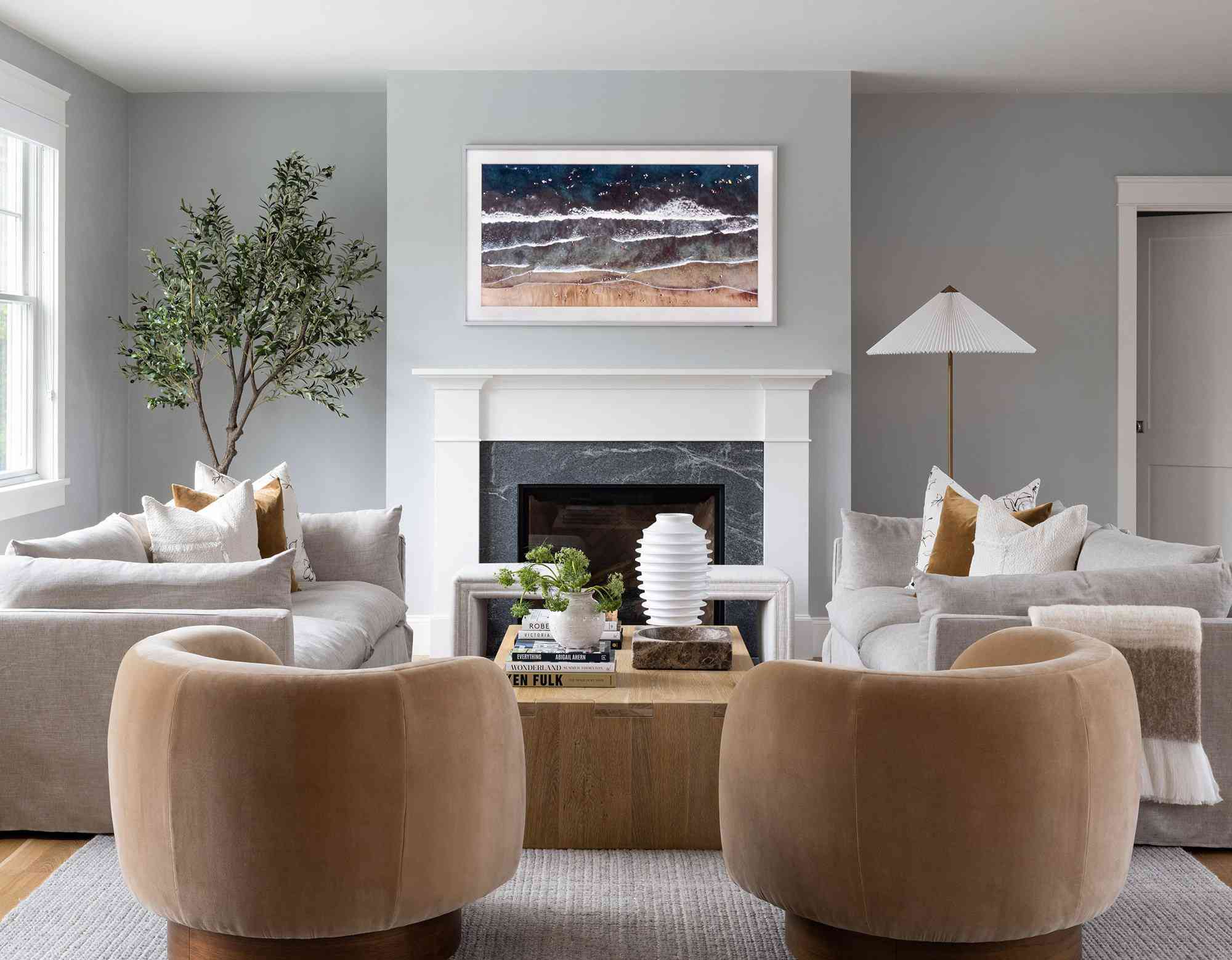
6) Barrel Chair
Curved back that wraps around like a barrel. Comfortable and compact, often swiveling in modern versions.
Best for: conversation nooks, small living rooms, bedrooms.
Watch for: narrow seat widthssome are better for “perching” than lounging.
7) Papasan Chair
Bowl-shaped cushion on a framemaximum casual, minimum posture rules.
Best for: teen rooms, laid-back reading, movie nights.
Watch for: footprint; they can take up more floor space than they look like they should.
8) Chaise Lounge
Part chair, part “I’m not napping, I’m resting my eyes.” Built for reclining with legs supported.
Best for: bedrooms, large living rooms, sunny window spots.
Watch for: traffic flowchaises can block pathways if the room is tight.
9) Recliner
The comfort specialist: footrest + reclining back, from manual levers to power controls.
Best for: TV rooms, people who love leg support, recovery or mobility comfort.
Watch for: clearance behind the chair and the “recliner sprawl” when fully open.
10) Rocking Chair
A classic that still earns its keepsoothing motion, timeless vibe.
Best for: nurseries, porches, reading, calming routines.
Watch for: floor protection; rocking can scuff certain surfaces without pads or a rug.
11) Glider Chair
Like a rocker, but it glides smoothly on a base (often quieter, often more nursery-friendly).
Best for: nurseries, reading, gentle motion without the “rocking arc.”
Watch for: base size and mechanism qualitycheap glides can squeak or feel wobbly.
12) Dining Side Chair
Armless dining chair designed to tuck neatly under a table.
Best for: maximizing seats around a dining table.
Watch for: comfort over timegreat for dinner, not always great for a three-hour board game.
13) Dining Armchair
Dining chair with armsadds comfort and formality, often used at the table ends.
Best for: “host” chairs, long meals, adding a high-end look.
Watch for: arm heightsome won’t slide under the table.
14) Parsons Chair
A simple, upholstered dining chair with clean lineseasy to blend with many styles.
Best for: transitional interiors, comfort-forward dining.
Watch for: staining; consider performance fabric if you’re living with kids, pets, or red wine.
15) Windsor Chair
The spindle-back classic with a solid seatfarmhouse-friendly and eternally popular.
Best for: casual dining, cottage styles, mixing with modern tables for contrast.
Watch for: seat shape; some are flatter and less comfy for long sits.
16) Ladder-Back Chair
Horizontal slats on the back (like a ladder). Often wood, often rustic.
Best for: farmhouse kitchens, casual dining spaces.
Watch for: back comfortslats can feel firm without a cushion.
17) Cross-Back (X-Back) Chair
A crossed “X” detail on the backpopular in French country and modern farmhouse looks.
Best for: dining rooms that want charm without looking fussy.
Watch for: weight; some sturdier versions are heavier to move.
18) Cantilever Chair
A modern icon style where the seat “floats” with a springy base (often tubular metal).
Best for: contemporary dining, desks, minimalist rooms.
Watch for: floor friendlinessmetal legs can scratch without protective glides.
19) Folding Chair
The practical MVP: easy storage, quick extra seating, always ready for surprise guests.
Best for: small homes, entertaining, multipurpose rooms.
Watch for: comfort; choose padded seats if people will sit longer than 20 minutes.
20) Stacking Chair
Designed to stack vertically for storage, often used in dining, offices, and events.
Best for: flexible seating, apartments, craft rooms.
Watch for: back supportmany stackers prioritize storage over ergonomics.
21) Bar Stool
Taller seating for bar-height counters and high-top tables.
Best for: bar-height kitchens, entertaining spaces.
Watch for: foot support (a must) and the correct seat height for your counter.
22) Counter Stool
Slightly shorter than a bar stool, made for standard kitchen counters.
Best for: kitchen islands, casual breakfasts, homework stations.
Watch for: overhangmake sure knees have room under the counter.
23) Office Task Chair
Built for desk work: wheels, adjustable height, and basic support.
Best for: work-from-home setups, study spaces, short-to-medium sitting sessions.
Watch for: limited adjustabilitycheap task chairs often skip arm and lumbar adjustments.
24) Ergonomic Office Chair
A task chair’s more serious cousin: more adjustability (lumbar, arms, tilt, depth) and better long-sit support.
Best for: daily desk work, back comfort, productivity.
Watch for: fitan ergonomic chair should match your body, not a mythical “average person.”
25) Adirondack Chair
Low, reclined outdoor chair with wide armsbasically a patio vacation in chair form.
Best for: patios, decks, fire pits, lakeside vibes (even if it’s just a kiddie pool).
Watch for: low seat heightgreat for lounging, tougher for anyone who prefers easier standing.
How to Choose the Right Chair for Your Space
1) Start with the job (what will this chair actually do?)
Before you fall for a chair’s looks, decide what you need it to do.
Is it for daily dining? Occasional guests? Reading? Working? TV marathons? Nursing a baby?
The job determines the non-negotiables:
- Daily use: prioritize comfort, durability, and easy cleaning.
- Occasional seating: you can lean more into style and compact size.
- Work seating: prioritize adjustability and support over “cute.”
- Lounging: look for supportive back angles, soft cushioning, and a seat depth that fits you.
2) Measure like you mean it (chair size + room flow)
The fastest way to regret a chair is to guess. Measure your space and the chair dimensions, then think in
“real life” termswalking, pulling out chairs, opening recliners, and not kneeing the coffee table.
Dining chairs: match seat height to table height
For standard dining setups, chair seat heights commonly land around 18–23 inches and pair well with tables
around 28–30 inches high. Counter-height seating is typically taller (often 24–26 inches at the seat)
for counters around 34–36 inches. The comfort goal is a gap that gives your legs room under the table without
making you feel like a toddler at a grown-up table.
Leave breathing room for movement
If chairs are for sitting, the space around them is for living. In dining areas, plan for enough clearance to
pull out chairs and walk behind seated guests. In living rooms, leave comfortable paths between seating and
doorways so your home doesn’t become an obstacle course (starring your shins).
Seat depth matters more than people think
Seat depth is the difference between “ahhh” and “why are my legs dangling?” Many people find a
moderate seat depth comfortable for upright sitting and everyday lounging, while deeper seats suit taller
bodies or curl-up lounging. If you like to sit upright, a too-deep seat can push you into slouch mode unless
you add a lumbar pillow.
3) Do a comfort check in 30 seconds
You don’t need a lab coat to evaluate comfort. When you sit:
- Feet: can they rest flat on the floor (or on a footrest)?
- Hips and knees: do they feel supported, not jammed?
- Lower back: is there support where your spine naturally curves?
- Shoulders: do you feel relaxed, not shrugged?
- Arms (if applicable): do armrests support without forcing your elbows outward?
For office seating, adjustability is a big deal: seat height, back support, arm height, and tilt settings can turn a
“fine” chair into a “why didn’t I buy this sooner?” chair.
4) Pick materials based on your real household, not your fantasy household
It’s okay to love white upholstery. It’s also okay to admit you live with grape juice, pets, or a tendency to eat
tacos “carefully” (no one believes you). Match materials to your life:
- Performance fabric: often designed for easier cleaning and better durability.
- Leather: classic, can age beautifully, but needs care and can show scratches.
- Velvet/bouclé: stylish and cozy; check maintenance needs and snag resistance.
- Wood: timeless and sturdy; consider a cushion for long sitting.
- Metal: sleek and modern; confirm it won’t scratch floors.
- Outdoor materials: look for weather resistance and UV durability for patios and porches.
5) Keep the chair in proportion to the room (and to other furniture)
Chairs have “visual weight.” A wingback can dominate a small room; a tiny slipper chair can look lost next to a
giant sectional. A few proportion tips:
- Small room: choose armless or lighter-profile chairs (slipper, barrel, slim armchairs).
- Large room: bigger chairs can workespecially when you need balance against a large sofa.
- Low ceilings: avoid ultra-tall backs that crowd the vertical space.
- Open layouts: consider swivel or easily movable chairs to flex the space.
6) Decide whether you’re matching or mixing
Matching sets are easy and polished. Mixing is more interesting (and forgives you when one chair sells out).
A simple mixing formula:
- Keep one common thread (wood tone, color family, or silhouette style).
- Vary one thing (fabric, shape, or leg style) to create a “collected” look.
- Use the room’s largest piece (usually the sofa or dining table) as the anchor.
7) Budget for the “hidden” stuff that makes a chair work
The chair price isn’t always the full story. Plan for:
- Rug pads or floor protectors (especially for rocking, metal, or wheeled chairs)
- Seat cushions for wooden dining chairs if you host long meals
- Fabric protection or professional cleaning, depending on upholstery
- Return shipping (because sometimes the chair arrives and says, “Hello, I’m much larger in person.”)
Quick Chair-Picking Checklist (Save This)
- Function: dining, lounging, working, occasional seating?
- Fit: seat height and depth comfortable for your body?
- Flow: can you walk around it, pull it out, and live normally?
- Support: back support where you need it; arms if you like them; foot support for stools.
- Material: matches your cleaning tolerance and your household chaos level.
- Style: complements the room’s anchor pieces without copying everything.
- Longevity: solid frame, stable legs, and upholstery that fits your lifestyle.
Experience-Based Tips: What People Learn After Buying “The Wrong Chair” (So You Don’t Have To)
Here’s the part nobody tells you when you’re staring at a gorgeous chair online: the best chair on the internet
can still be the wrong chair in your home. So below are experience-based lessons that come up again and again
in real spacesapartments, family homes, home offices, and the mysterious in-between world known as “the corner
where laundry collects.”
Lesson #1: Tape is your friend. Before committing, outline the chair’s footprint on the floor with painter’s
tape. Add the “movement zone” toospace to pull it out, recline it, or swivel without smacking a side table.
People are often shocked to discover that a chair that looks sleek in photos takes up a whole zip code once
you account for real-life clearance.
Lesson #2: Seat depth is the silent dealbreaker. In stores, many shoppers do a quick sit, nod politely, and
move on. But at home, seat depth decides whether you sit upright comfortably or slowly melt into slouch mode.
If you’re shorter or like an upright sit, a super-deep club chair can feel like you’re trying to host a meeting
from the bottom of a bowl. If you’re tall or love curling up, a shallow seat can feel like you’re perched on
the edge of a diving board.
Lesson #3: “Statement chair” is a job title, not a personality test. A statement chair can be incredibleif it
still works for how you use the room. The win is when a chair looks bold and still feels inviting. The loss
is when it becomes the designated “coat chair” because nobody wants to sit in it for more than five minutes.
If the chair is mostly decorative, that’s finejust be honest and put it somewhere it won’t be demanded to do
heavy seating duty.
Lesson #4: Households with pets and kids don’t need “perfect,” they need “forgiving.” If your home includes
shedding, sticky fingers, or the occasional zoomies, upholstery choices matter. Many people end up happiest
with durable weaves, performance fabrics, or finishes that don’t show every tiny mark. The goal is a chair
you can enjoy, not a chair you tiptoe around like it’s a museum exhibit.
Lesson #5: Mixing dining chairs often looks better than matchingif you keep one rule. The rule: unify by
either color, material, or shape. For example, you can mix a simple Parsons chair with Windsor chairs if the
color palette is consistent. Or mix modern cantilever chairs with wood chairs if the table ties everything
together. The result feels collected and intentional, not like you hosted a “bring-your-own-chair” potluck.
Lesson #6: Office chairs are worth treating like equipment. If you sit for hours daily, prioritize
adjustability and support over aesthetics. People who upgrade their work chair often notice they fidget less,
feel less strain, and end the day with more energy. If you can adjust seat height, armrests, lumbar support,
and tilt tension, you can dial the chair to your body instead of forcing your body to adapt to the chair.
Lesson #7: The “right” chair can change a room’s behavior. Add two comfortable accent chairs facing a sofa,
and suddenly people talk instead of scrolling. Add a chaise by a window, and that corner becomes a reading
spot. Add counter stools, and the kitchen island becomes the place where everyone hangs out while you pretend
you’re not rushing dinner. Chairs don’t just fill spacethey create habits.
If you take one practical step from this section, make it this: treat chair shopping like a quick “fit test.”
Measure, tape, sit, imagine the daily routine, and choose the chair that supports your lifenot just your
Pinterest board.