
Shopping for bathroom tiles is a little like ordering coffee: you think you want “something simple,”
and 15 minutes later you’re debating finishes, slip resistance, and whether “greige” is a real color or a cry for help.
The good news? There’s a tile for every style and every walletwhether you’re building a spa-like retreat or just trying
to survive a family bathroom that gets more traffic than a freeway on a holiday weekend.
This guide breaks down 14 bathroom tile typesfrom budget-friendly classics to high-end showstoppers
with practical advice on where each one shines (and where it can disappoint you like a bargain bathmat that refuses to dry).
Along the way, we’ll talk real-world costs, maintenance, and smart ways to get a designer look without a designer invoice.
Before You Buy: The 5 Things That Actually Matter
1) Where the tile is going
A shower floor tile needs traction and lots of grout lines (yes, grout lines can be your friend).
A shower wall tile needs water resistance and easy cleaning. A bathroom floor needs durability,
and if you have kids, pets, or a household that treats towels as optional… it needs forgiveness.
2) Slip resistance (your future self will thank you)
Glossy tile looks glamorousuntil it’s wet. For floors, lean toward matte, textured, or small-format tiles that
create extra grip. Save the high-gloss drama for walls, niches, and backsplashes where nobody is doing surprise
ice-skating routines.
3) Maintenance tolerance
If you love low-maintenance living, porcelain and ceramic are your ride-or-die. If you love natural stone,
just know you’re also signing up for sealing, careful cleaning, and the occasional existential crisis about
whether that’s a “patina” or a “stain.”
4) Grout strategy
More grout lines = more traction and flexibility for slopes (great for shower floors), but also more cleaning.
Larger tiles mean fewer grout lines, but they demand a flatter subfloor and more precise layout. Choose your
adventure.
5) True cost (tile is only the beginning)
Your budget needs to include underlayment/backer board, waterproofing (especially in showers), thinset, grout,
sealers (for many stones), trim pieces, and labor. A “cheap tile” can turn expensive fast if it’s slow to install
(hello, mosaics) or needs special care.
14 Types of Bathroom Tiles for Every Budget
Prices vary wildly by region, brand, and design. Think of the ranges below as “typical ballpark” guidancehelpful
for planning, not a blood oath.
1) Ceramic Tile (Budget MVP)
Best for: Walls, low-to-moderate traffic floors, powder rooms, backsplashes.
Why people love it: Ceramic is affordable, widely available, easy to cut, and comes in a ridiculous
number of colors and styles. It’s also a friendly option if you’re trying to keep labor costs sane.
Watch-outs: Ceramic is generally more porous and less dense than porcelain, so it’s not always the
best choice for high-abuse floors unless it’s rated appropriately and installed well.
Budget tip: Use a classic ceramic on most surfaces, then “splurge small” with a bold accent tile in a niche
or a single statement wall.
2) Porcelain Tile (The Bathroom Workhorse)
Best for: Floors, showers, high-traffic bathrooms, wet rooms, radiant heat floors.
Why people love it: Porcelain is denser and less porous than typical ceramic, which makes it a top pick for
moisture-heavy spaces. It’s durable, stain-resistant, and can mimic stone, concrete, or wood convincingly.
Watch-outs: It can be harder to cut, which may increase labor. Very polished porcelain can be slippery when wet,
so choose a floor-appropriate finish.
Budget tip: Use porcelain on the floor where performance matters most, and pair it with a less expensive wall tile.
3) Wood-Look Porcelain Planks (Warm Style, Wet-Room Ready)
Best for: Bathroom floors, spa-style designs, rustic-modern looks.
Why people love it: You get the warmth of wood visuals with tile durabilitygreat for bathrooms where real hardwood is a risk.
It’s a popular way to make a small bathroom feel less “clinical” and more “boutique hotel that charges for bottled water.”
Watch-outs: Planks need careful layout to avoid lippage. And because many are porcelain, cutting can be more demanding.
Budget tip: Choose a mid-range plank and upgrade the grout color choice (a near-match grout can look more realistic and seamless).
4) Glass Tile (Glow-Up for Walls)
Best for: Shower walls, accent bands, niches, backsplashes.
Why people love it: Glass reflects light, adds depth, and instantly makes a bathroom feel brighter.
It’s also nonporous, which helps in wet environmentsespecially on walls.
Watch-outs: Glass can scratch or chip, and it can be slippery on floors. Installation may require extra precision
(and the right setting materials), which can raise labor costs.
Budget tip: Use glass in small “high-impact” zones like niches or a vanity backsplash rather than an entire shower.
5) Mosaic Tile Sheets (Small Pieces, Big Personality)
Best for: Shower floors, curved areas, decorative accents, feature walls.
Why people love it: Mosaics can follow slopes and shapes more easily than large tiles, making them a strong option for shower floors.
They also deliver color and pattern without requiring custom cutting of individual tiny pieces (most come on sheets).
Watch-outs: More grout lines mean more cleaning, and mosaics can cost more to install because they’re slower to set neatly.
Budget tip: Pair a simple large-format wall tile with a mosaic shower floor for a “custom” look that’s still controlled.
6) Subway Tile (The Classic That Refuses to Quit)
Best for: Shower walls, tub surrounds, bathroom backsplashes.
Why people love it: Subway tile is timeless, widely available, and can swing modern or vintage depending on grout,
layout (stacked, offset, herringbone), and finish.
Watch-outs: The tile is affordable, but pattern-heavy layouts can increase labor. Also: white grout in a busy bathroom is a bold choice.
Budget tip: Use standard white subway tile and spend your “style budget” on a statement floor or a playful grout color.
7) Marble Tile (Luxury, With a Little Drama)
Best for: Feature walls, vanity backsplashes, low-traffic floors, spa-like shower walls.
Why people love it: Marble is iconic. It photographs beautifully, feels upscale, and brings natural variation that
manufactured tile can only imitate.
Watch-outs: Marble is porous and can stain or etch. It often needs sealing and gentle cleaning products.
If you want “set it and forget it,” marble may not share your life philosophy.
Budget tip: Use marble as an accent (niche, small backsplash) and choose marble-look porcelain for the big surfaces.
8) Travertine Tile (Old-World Warmth)
Best for: Floors and walls when you want a warm, earthy look.
Why people love it: Travertine offers a natural, Mediterranean vibe and can make a bathroom feel grounded and calm.
Watch-outs: It’s porous and usually needs sealing. Some travertine has pits/holes that may be filled; those can
wear over time in heavy-use areas.
Budget tip: Look for larger travertine tiles to reduce grout lines (and cleaning), or choose travertine-look porcelain if you want easier upkeep.
9) Slate Tile (Naturally Slip-Friendly)
Best for: Bathroom floors, shower floors (in appropriate finishes), rustic-modern designs.
Why people love it: Slate often has natural texture, which can help with traction. It has a moody, organic look that pairs well with simple fixtures.
Watch-outs: Slate can vary by type; some need sealing and can shed or flake if the stone is lower quality. Always choose a bathroom-suitable product.
Budget tip: Use slate on the floor and keep walls simple to let the texture do the talking.
10) Limestone Tile (Soft, Subtle, Sophisticated)
Best for: Walls, low-traffic bathrooms, elegant neutral palettes.
Why people love it: Limestone has a quiet, natural beautyless veiny than marble, more refined than “busy” stones.
If you want calm luxury, it’s a contender.
Watch-outs: Limestone is softer and can be sensitive to acids and staining. Sealing and gentle cleaning are typically part of the deal.
Budget tip: Use it on walls rather than floors if you want the look but not the wear-and-tear stress.
11) Granite Tile (Durable Stone with Bold Variation)
Best for: Floors, countertops (depending on application), heavy-use bathrooms.
Why people love it: Granite is generally tough and can hold up well in busy spaces. It also brings natural patterning that reads “high-end.”
Watch-outs: Many granites are still porous to some extent and may need sealing. Dark granites can show water spots, while light ones can show stains.
Budget tip: Granite tile can be more budget-friendly than granite slabs while still giving you the stone look.
12) Quartzite Tile (Stone That Can Take a BeatingWith Care)
Best for: Floors and walls when you want natural stone strength and a crisp, upscale look.
Why people love it: Quartzite is known for hardness and a bright, clean aesthetic (often with subtle movement).
It’s popular for people who want a “stone bathroom” that feels fresh rather than heavy.
Watch-outs: Quartzite can still be porous and may need sealing to help prevent staining. Not all quartzite behaves the same, so confirm care needs before buying.
Budget tip: If your budget is tight, choose quartzite for one focal area and use porcelain elsewhere.
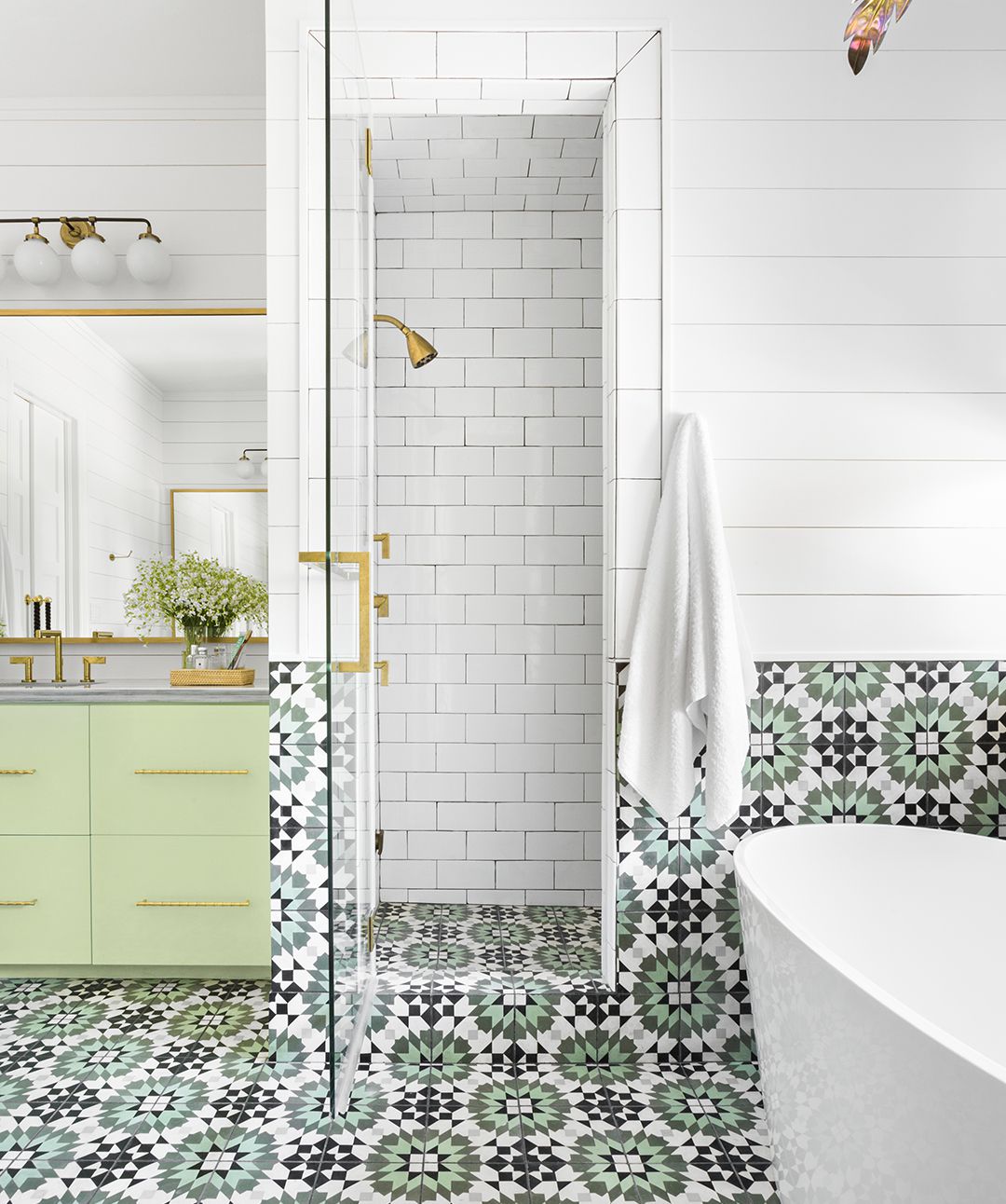
13) Cement Tile / Encaustic-Style Tile (Pattern Power)
Best for: Statement floors, feature walls, vintage-inspired bathrooms.
Why people love it: Cement tile brings bold pattern and a matte, old-world charm. It can make even a simple bathroom
feel curatedlike you have a “design concept” instead of “I panic-bought tile at midnight.”
Watch-outs: Cement tile can require sealing and careful maintenance. It may stain if neglected, and some products need specific cleaners.
(If you want the look with less maintenance, encaustic-look porcelain is your best cheat code.)
Budget tip: Do a “rug” layout: use patterned tile in the center of the floor and a simpler border tile around it.
14) Terrazzo Tile (Playful, Modern, Surprisingly Versatile)
Best for: Floors, shower walls, contemporary bathrooms, mid-century vibes.
Why people love it: Terrazzo’s speckled look hides minor dust and adds visual interest without feeling busy.
It works with modern, classic, and eclectic stylesbasically the social butterfly of tile.
Watch-outs: Depending on the type (cement-based vs. resin/epoxy-based, tile vs. poured terrazzo),
cost and maintenance can vary. Some finishes may need sealing or specific care.
Budget tip: Terrazzo-look porcelain can deliver the vibe for less, but if you love real terrazzo, consider using it on the floor and simplifying everything else.
How to Match Tile to Your Budget (Without Sacrificing Style)
If you’re on a tight budget
- Prioritize durable, widely available choices like ceramic and porcelain.
- Keep layouts simple (straight stack or offset) to reduce labor time.
- Choose a neutral main tile and add personality with paint, hardware, lighting, or a bold mirror.
If you’re mid-range
- Use porcelain on floors and shower walls for longevity.
- Add a mosaic floor in the shower (more traction + more design).
- Upgrade grout choice (color-matched grout can make basic tile look expensive).
If you’re splurging
- Spend on high-impact areas: a statement floor, a dramatic shower wall, or real stone accents.
- Keep at least one surface simple to avoid a “tile museum” effect.
- Budget for sealing and correct maintenance if you choose natural stone or cement tile.
of Real-World Tile Experience (So You Don’t Learn the Hard Way)
Here’s what tends to happen in real bathroomsnot in showroom bathrooms where nobody showers, nobody uses hairspray,
and the towels are somehow always folded like origami swans.
First: the sample you loved online will look different under your bathroom lighting. Warm bulbs can turn a “crisp white” tile into
“buttery marshmallow.” Cool bulbs can make beige look… confused. Always bring home a few samples and look at them in the morning, afternoon, and at night.
Bonus points if you look at them while you’re half-awake and grumpybecause that’s the energy most bathrooms are used in.
Second: grout is not an afterthought. It’s basically the outline on your tile drawing. A high-contrast grout emphasizes pattern and shape.
A close-match grout makes tile look bigger, smoother, and more expensive. Also, white grout in a busy bathroom is like wearing white sneakers to a barbecue:
brave, optimistic, and possibly doomed. If you want light grout, consider a slightly warm gray or greige that still looks fresh but forgives daily life.
Third: small tiles are amazing… and also a commitment. Penny rounds, mosaics, and pebble floors can be gorgeous and grippy,
but they come with more grout lines. That can mean more scrubbing unless you keep up with ventilation and quick wipe-down habits. If you love mosaics
but hate cleaning, reserve them for a shower floor (where traction matters) and use larger tiles on the walls.
Fourth: shiny tile is a “yes” for walls and a “hmm” for floors. Many homeowners pick glossy finishes because they look bright and luxe.
Then the first wet-foot moment happens and everyone in the house becomes oddly cautious, like they’re walking past a sleeping tiger. Matte or textured
finishes are usually the safer, calmer choice for floorsespecially in a family bathroom.
Fifth: order extra tile. Not “one extra tile.” Extra as in 10–15% extra for cuts, waste, and future repairs.
Tiles get discontinued. Batches vary. The one time you need a replacement is the one time the exact match disappears from the planet.
Buying extra now is cheaper than trying to time-travel later.
Finally: if you’re choosing a higher-maintenance material (natural stone, cement tile), be honest about your lifestyle.
If you’re the kind of person who enjoys a Sunday ritual of gentle cleaners and careful drying, great. If you’re the kind of person who thinks
“maintenance” means “I own a mop,” porcelain is your soulmate. The best bathroom tile isn’t the fanciestit’s the one that still looks good
when real life shows up with wet towels, toothpaste splatter, and a shampoo bottle that apparently can’t stand upright.
Conclusion
The best bathroom tile choice is the one that fits your budget and your daily reality. Ceramic and porcelain cover most needs at almost every price point.
Mosaics add traction and detail where it counts. Natural stone, cement tile, and terrazzo bring serious stylejust be sure you’re on board with their care.
Mix and match smartly, splurge where it shows, and keep at least one surface easy to clean. Your future self (and your knees) will be grateful.