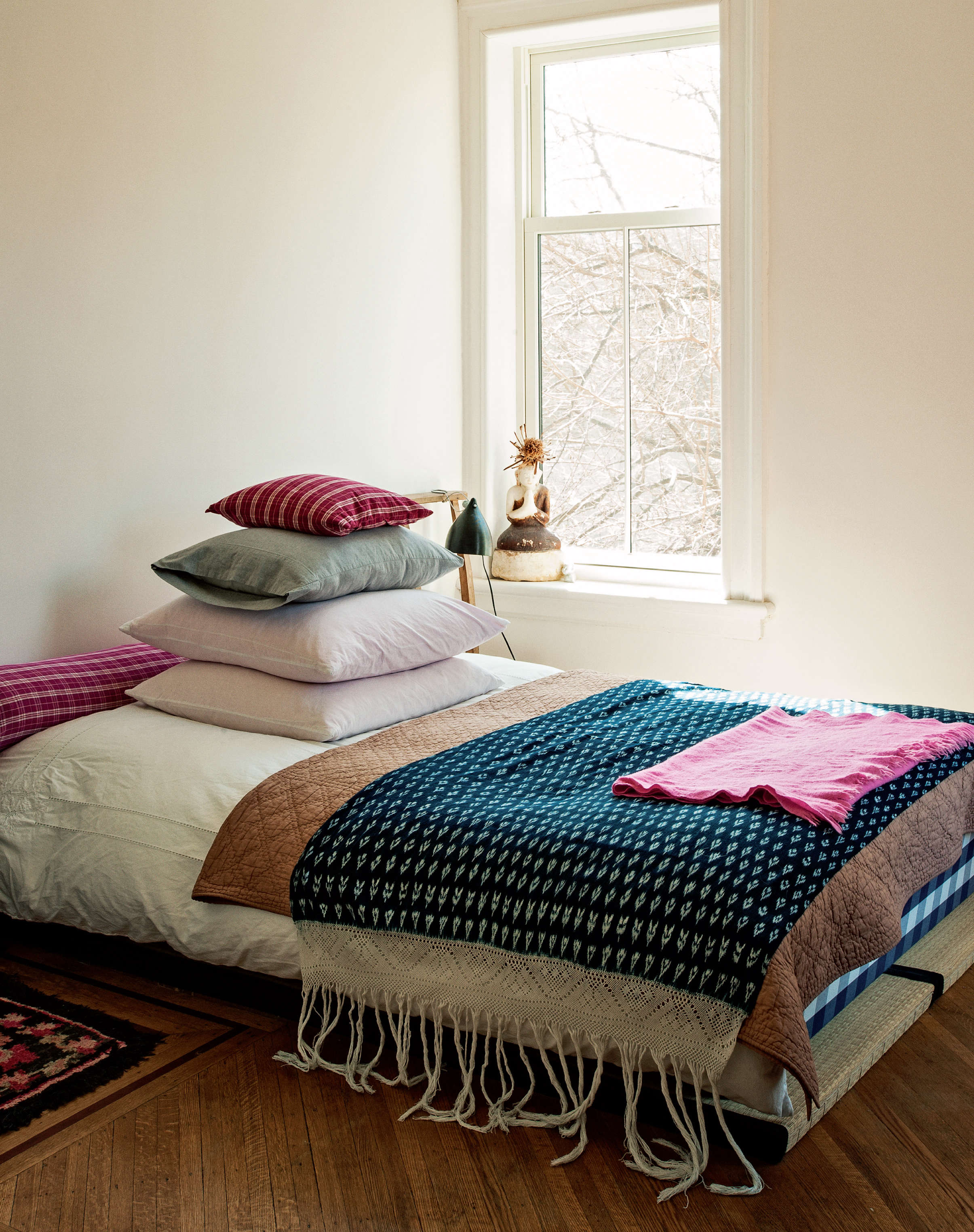

Some home upgrades involve contractors, permits, and at least one mysterious screw left over at the end. And then there are upgrades like an indigo ikat throw:
you toss it over a sofa, step back, and suddenly your living room looks like it drinks sparkling water on purpose.
A woven ikat throw in indigo hits a sweet spot: it’s functional (warmth, texture, instant “finished” vibes) and it’s also a miniature masterclass
in textile craft. Ikat isn’t a print pretending to be handmade; it’s a technique where the pattern is planned, tied, dyed, and then wovenmeaning the design is baked into the yarns
before the fabric even becomes fabric.
What “Ikat” Actually Means (and Why It Looks a Little Blurry in the Best Way)
Ikat (pronounced “ee-kaht”) comes from a word meaning “to tie” or “to bind.” That’s not poetic brandingit’s literally the method.
In traditional ikat, bundles of yarn are tightly bound in specific areas so dye can’t reach those sections. The yarns are dyed (often multiple times),
the bindings are removed, and only then are the yarns woven into cloth.
The signature ikat lookthose slightly feathered edges and soft-focus geometrycomes from the challenge of lining up dyed yarns perfectly on a loom.
Instead of sharp, printed outlines, you get a design with a human pulse. In a world of copy-paste décor, ikat is basically the textile equivalent of handwriting.
Warp, Weft, and Double Ikat: A Quick Cheat Sheet
- Warp ikat: the pattern is dyed into the lengthwise yarns (warp) before weaving.
- Weft ikat: the pattern is dyed into the crosswise yarns (weft).
- Double ikat: both warp and weft are resist-dyedrare, time-consuming, and often the kind of textile people whisper about in museum galleries.
You don’t need to memorize this for a quiz, but it helps you understand why true ikat has depth: it’s engineered in thread, not stamped on top like a costume.
Why Indigo Is the Power Color of Ikat Throws
Indigo is the color of midnight denim, inky oceans, and that one perfect paint sample that somehow makes every other blue look like it’s trying too hard.
It’s also historically one of the most beloved dye colors across cultures because it delivers rich blues that can age beautifully over time.
Indigo is often used as a vat dye, which means it behaves differently from many other dyes: it’s applied in a reduced, soluble form and then turns blue
as it oxidizes in the air. Translation: the magic happens after the dip. This is part of why indigo textiles can develop charactersubtle shifts, gentle fading, and that lived-in look
people pay extra for (see: jeans).
Indigo’s Personality Trait: “I Might Transfer Color”
Indigo can be a little… expressive. Fresh indigo-dyed textiles may rub off on light upholstery or clothing, especially if the dye hasn’t fully set or the textile is new.
This is called crocking (which sounds like a casserole, but is less delicious). It’s not automatically a flawit’s often a reality of deep dyes and certain dye processes.
The good news: with smart care and a little common sense, you can enjoy the drama without letting it ruin your beige sofa’s entire life story.
Meet the “Woven Ikat Throw, Indigo” as a Real Object (Not Just a Pretty Idea)
If you’ve seen the phrase “Woven Ikat Throw, Indigo” online, it’s been used as a product name for a specific throw described as an
indigo-dyed ikat throw with fringe, made of 100% cotton, and handcrafted by artisan weavers in Peru.
The listed size has been described as approximately 90 inches by 36 inches (not including fringe).
That long, narrow shape matters. It’s more of a throw-and-drape piece than a full-bed blanket, which makes it perfect for styling:
across the end of a bed, along a bench, or folded over the arm of a sofa like it belongs in a catalogbut in a relaxed, “I live here” way.
What Those Details Suggest About the Feel and Use
- 100% cotton usually means breathable comfort and a texture that softens with time.
- Handcrafted weaving often brings subtle variationtiny shifts in pattern alignment that make it feel alive.
- Fringe adds movement and a casual finish, like the throw is permanently caught in a gentle breeze of good taste.
- Approx. 90″ x 36″ makes it ideal for layering, wrapping around shoulders, or dressing up furnitureless “bedspread,” more “style weapon.”
How to Spot the Difference Between True Ikat and “Ikat-Look” Printing
There’s nothing wrong with a printed patternprints have their place. But if you’re shopping for a handwoven ikat blanket,
it helps to know what you’re paying for.
Clues You’re Looking at Woven Ikat
- Soft-edged pattern: genuine ikat often has slightly blurred outlines because the pattern is aligned in yarn, not printed with a crisp screen.
- Pattern on both sides: because the yarns are dyed before weaving, both faces typically show the design (though not always identical in intensity).
- Small irregularities: tiny “imperfections” are actually the signaturelike brushstrokes in a painting.
- Texture changes with light: woven textiles have dimension; prints tend to look flat.
Clues It’s a Printed Imitation (Again: Not Illegal, Just Different)
- Perfectly sharp edges and identical repeats.
- Pattern looks strong on one side and faint or absent on the reverse.
- Surface feels smooth like a graphic tee, rather than integrated into the weave.
If you’re decorating for warmth and convenience, a print can be great. If you want craft, depth, and that “this has a story” feeling, woven ikat is the move.
Styling an Indigo Ikat Throw Without Making Your Home Look Like a Theme Restaurant
Indigo ikat is bold, but it doesn’t have to shout. Think of it as a supporting actor that steals the scene quietly.
Here are practical, non-cringey ways to use it in real homes.
1) The Sofa Upgrade (a.k.a. “Instant Adult” Mode)
Drape the throw over one arm of a sofa, then let it fall naturally. If your sofa is neutralcream, gray, tanindigo becomes an anchor color.
Add one pillow that pulls a hint of blue or echoes the ikat geometry (not five pillows; we’re not staging a pillow convention).
2) The Bed Layer Trick (Hotel Energy, No Room Service)
Fold the throw lengthwise and place it across the foot of the bed. Indigo works especially well with white bedding, warm woods,
and natural textures (linen, rattan, jute). It’s the simplest way to make a bed look “designed” instead of “I woke up and ran.”
3) The Bench or Reading Chair Move
If you’ve got a bench in an entryway or a reading chair that needs personality, an ikat throw adds softness and color without the commitment of reupholstery.
Bonus: it’s actually there when someone says, “Is it chilly in here?” (Yes. Always. Somehow.)
4) Pairing Indigo Like a Pro
- Indigo + warm neutrals (camel, sand, oatmeal): cozy, grounded, never fussy.
- Indigo + crisp white: clean, classic, high-contrast.
- Indigo + terracotta: earthy and modern, especially in boho or Southwest-leaning spaces.
- Indigo + brass: a little glam without turning into a disco ball.
- Indigo + black accents: bold and graphic, great for contemporary rooms.
Care and Keeping: How to Live With Indigo Without Panicking
A woven indigo throw is meant to be used, not sealed in a glass case like a rare trading card. Still, a little care goes a long wayespecially early on.
Step 1: Test for Colorfastness (Two Minutes That Can Save Your Week)
If the throw is deeply dyed, do a quick colorfastness test before draping it over light upholstery.
Dampen a small, hidden area with water and a mild detergent, then blot with a white cloth. If blue transfers, treat it gently until it settles.
Step 2: First Weeks = “Be Smart About Contact”
- Avoid long contact with white leather or very light fabric at first.
- If you use it on a pale sofa, place a light cotton layer underneath until you know how the dye behaves.
- Keep it away from damp conditions on light surfaces (moisture makes transfer more likely).
Step 3: Washing and Drying That Respects the Dye
Always follow the maker’s care label if you have one. If you don’t, a conservative approach is usually best:
cold water, gentle cycle or hand wash, mild detergent, and air dry. Indigo can fade over timethat’s part of its charmbut harsh washing can speed it up.
Step 4: Don’t Fear FadePlan for Patina
The goal isn’t to freeze indigo in time. The goal is to let it age gracefully. Over months and years, indigo often shifts into a softer blue,
especially where fabric gets handled most. That wear pattern is basically the textile version of laugh lines: proof of a life well lived (and well napped).
Is It Worth It? A Practical “Value” Check for an Artisan Ikat Throw
A handwoven ikat throwespecially one tied to artisan productioncan cost more than a basic throw from a big-box store. The question is: what are you actually buying?
You’re paying for labor-intensive steps
Ikat requires planning the pattern, binding yarns, dyeing (often repeatedly), drying/oxidizing, removing ties, setting up a loom, and weaving.
If it’s artisan-made, you’re also paying for skill passed through generations and the slower pace of hand production.
You’re buying a functional design piece
Décor that earns its keep is the best décor. A throw adds warmth, protects furniture from everyday wear, and lets you change the look of a room instantly
(no paint fumes required). It’s one of the few items that works in every season: cozy in winter, stylish layer in summer with the AC blasting like it’s a competitive sport.
It’s a “bridge” item for mixed styles
Indigo ikat plays well with modern, rustic, bohemian, coastal, and eclectic spaces. If your home aesthetic is “I like everything,”
this is the rare piece that says “intentional” instead of “yard sale.”
What to Look for When Buying a Woven Indigo Ikat Throw
- Fiber content: cotton for everyday softness, wool for warmth, silk blends for sheen (and usually more delicate care).
- Construction: handwoven pieces often show subtle variation; machine-woven tends to be more uniform.
- Finish: fringe can be gorgeous, but check if it’s tightly secured if you have pets or curious little hands.
- Size: long-and-narrow throws are great for styling; wider throws are better for full-body couch burrito mode.
- Indigo behavior: ask about dye transfer or test early, especially if your home is a sea of white upholstery.
Experiences With a Woven Ikat Throw, Indigo ( of Real-World “What It’s Like”)
People who bring home an indigo ikat throw often describe the same first moment: you unfold it, and the color looks deeper than it did onlinelike the difference between
“blue” and “ocean at midnight.” Indigo tends to read richer in natural light, and the woven texture adds a quiet sheen that photos don’t always capture. The pattern,
too, feels more dimensional in person. Instead of a flat graphic, the design looks like it’s hovering slightly above the weave because your eye catches tiny shifts in thread.
The second experience is the “where do I put it?” experiment. On a sofa, it can look instantly styled when draped casually over one side, but if the room already has a bold rug
or loud art, some people find it looks best folded neatly so the pattern becomes a controlled accent rather than a competing headline. On a bed, the long rectangular shape tends to
work like a finishing stripeespecially across crisp white beddingcreating that boutique-hotel vibe without the boutique-hotel bill. A lot of folks end up moving it around the house
for a week, testing it on chairs, benches, and even the back of a dining banquette until it “clicks.”
Then there’s the first-time indigo reality check: dye transfer worries. With deep indigo, many people do a quick test after hearing stories about denim-like bleeding. The practical
experience is usually simple: for the first few uses, you might avoid placing it directly on bright white upholstery for hours at a time, especially if there’s humidity or condensation
from a cold drink nearby. Some people put a light cotton layer underneath at firstlike a neutral “buffer”until they’re confident. After a handful of gentle washes (or even just regular
use and airing out), a lot of indigo throws settle down and become easier to live with.
The long-term experience is the most satisfying part: the throw starts to tell on youin a good way. The areas you grab most (the fold near the armrest, the edge you pull over your legs)
often soften first. The color may gently mellow, and the textile can pick up a relaxed, lived-in character that makes it feel more personal than a brand-new blanket ever could. People who love
indigo usually enjoy this evolution; it’s the same reason worn-in jeans feel better than stiff new ones. And because ikat patterns have that naturally soft edge, the throw tends to look even more
harmonious over timeless “new purchase,” more “always belonged here.”
Finally, there’s the surprisingly emotional experience: an artisan-style textile can make a space feel more human. Even if you’re not thinking about looms and dye vats day-to-day, a hand-driven
pattern brings warmth that mass production can’t quite fake. It’s the kind of object guests notice without knowing whyand the kind you reach for on the couch when you’re tired, because it looks
good but also feels like comfort. The highest compliment many owners give is simple: “I actually use it.” In home décor, that’s basically a standing ovation.