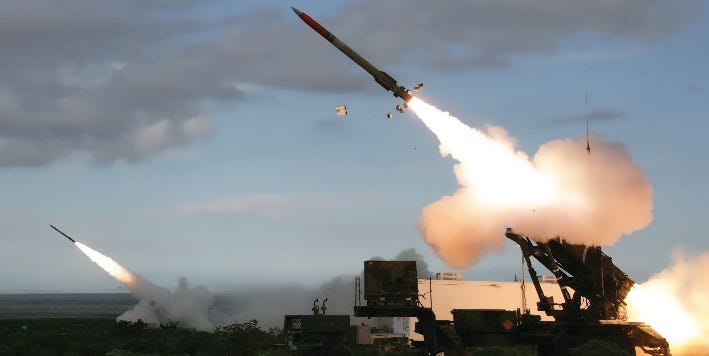

If you only remember one thing about Patriot missiles, make it this: Patriot is not a single “magic missile.”
It is a full air-defense ecosystemradar, control station, launchers, software, crews, maintenance teams, logistics, and a lot of
very expensive interceptors working together under intense pressure. In Ukraine, Patriot became a headline system because it can help
defend cities and critical infrastructure against some of the hardest aerial threats, including ballistic missiles. But it is also
costly, limited in supply, and never meant to do every job in the sky.
This guide gives you a clear, plain-English breakdown of how Patriot works in Ukraine, why it matters, what it can and cannot do, and
why future outcomes depend as much on production, training, and strategy as on hardware. We will cover the timeline, the technical basics
(without turning this into an engineering exam), operational realities, and what 2026 watchers should track next. You’ll also get a long,
experience-focused section at the end that captures what this issue feels like beyond policy briefs and press conferences.
Why Patriot Became a Big Deal in Ukraine
Ukraine has been facing recurring waves of missiles and drones targeting not only military positions but also energy infrastructure and urban
systems. In that environment, air defense is not a side storyit is the story behind whether lights stay on, trains keep moving, hospitals function,
and people sleep through the night.
Patriot matters because it adds a high-end layer in a layered defense architecture. Think of air defense like an orchestra: short-range systems handle
some threats, medium-range systems cover others, and Patriot is one of the few systems intended to engage advanced ballistic and cruise missile threats.
It does not replace everything else; it completes the stack.
And yes, this is where expectations can get unrealistic. Patriot is powerful, but it is not infinite. It cannot be everywhere at once, and it is not an
economical answer to every cheap drone in large swarms. Its strategic value comes from protecting high-priority zones and buying time for the rest of the
defense network to work.
What Patriot Actually Is (Without the Alphabet Soup Overload)
It’s a system, not a tube on a truck
Patriot stands for “Phased Array Tracking Radar to Intercept on Target.” In practical terms, a Patriot battery combines several core elements:
radar, engagement control, launcher stations, communications, power, and interceptors. If one piece is missing or degraded, overall effectiveness drops.
What’s inside a battery
A commonly cited setup includes multiple launchers, radar, an engagement control station, communications support, and generators. A battery is personnel-heavy
to sustain over time, even if fewer operators handle immediate engagement functions during combat operations.
PAC-2 vs PAC-3 in one paragraph
Patriot interceptors come in different variants. PAC-2 uses proximity fusing (detonating near a threat), while PAC-3 is built for “hit-to-kill” interception,
physically striking the incoming target. Launchers can carry different loadouts depending on mission needs, which matters because commanders constantly trade
depth of magazine, target type, and expected attack profile.
How Patriot Entered the Ukraine War Timeline
The U.S. announcement in late 2022 marked a major policy step, because Patriot had long been requested and is one of the most advanced U.S.-origin systems in
this category. After that, the next critical bottleneck was trainingno fast-forward button exists for a high-end air-defense system.
Ukrainian crews trained at Fort Sill in Oklahoma in early 2023. Reporting and official audit material later described a compressed but successful pipeline that
focused on operation and maintenance under wartime urgency. That “boring” partmaintenance and sustainmentis actually the part that keeps a system alive in
long conflicts.
Since then, Ukraine’s Patriot picture has evolved through U.S. support plus allied contributions, upgrades, and sustainment actions. The story is no longer just
“send one battery.” It is now about replacing interceptors, rotating equipment, keeping crews sharp, and making sure the system still works when attacks shift
tactics.
What Patriot Can Do Well in Ukraine
1) Defend high-value areas from harder threats
Patriot’s value is strongest when used to shield high-value infrastructure and population centers from complex missile threats. That role can significantly reduce
strategic damage when attacks are aimed at power systems, transportation nodes, and command-and-control links.
2) Add confidence to a layered network
Even when a Patriot battery does not fire, its presence can alter planning on both sides. Defenders can allocate other systems more efficiently, and attackers may
have to change routes, timing, or strike packages to avoid defended zones.
3) Improve integration with allied support
Patriot is a NATO-familiar platform with broad allied usage and long institutional knowledge. That helps with training models, interoperability, and pooling support
across donor countrieseven if each transfer remains politically and logistically complex.
What Patriot Cannot Fix by Itself
It cannot be “everywhere defense”
Ukraine is geographically large, and high-end air-defense assets are finite. Patriot works best when priorities are explicit: protect this city, this grid node, this
strategic corridor. If expectations turn into “cover the whole country equally,” disappointment is guaranteed.
It is not a cheap answer to cheap mass
One of the central wartime dilemmas is economic asymmetry: low-cost attack drones versus high-cost interceptors. Patriot is often the wrong tool for low-value targets.
Defenders therefore combine systems, reserving premium interceptors for premium threats.
It can be stressed by saturation tactics
Modern strike packages may combine drones, cruise missiles, ballistic missiles, and decoys to overload detection, engagement timing, and interceptor inventories.
Patriot remains effective, but attackers continuously adapt. This is less a “final-answer technology” and more an ongoing contest of tactics, software, and logistics.
The Cost Reality: Why Patriot Conversations Always Come Back to Money
Patriot is expensive at the battery level and at the interceptor level. Cost data cited by major defense reporting has repeatedly highlighted billion-dollar class
battery economics and multi-million-dollar interceptor economics. That pricing affects everything: stockpile policy, donation pace, replacement cycles, and battlefield
firing doctrine.
But cost is only one side. Availability is the other. Production lines are expanding, yet demand is global and not limited to Ukraine. Countries planning for regional
missile threats are also placing orders, which means lead times matter and political coordination matters even more.
In plain language: even when allies agree in principle, physically moving enough interceptors and sustainment support at the right tempo is hard. Patriot planning is
therefore as much industrial strategy as military strategy.
Sustainment Is the Unsexy Headline That Actually Decides Outcomes
A battery delivered once is not a one-time gift box. Sustainment includes spare parts, periodic technical support, diagnostics, software refresh, and trained personnel
continuity. If those lag, effectiveness erodes quietly until one day performance falls short at the worst possible moment.
Recent official sustainment approvals and allied procurement frameworks show that partners increasingly treat Patriot support as a long campaign requirement, not a symbolic
transfer. That shift is important because wars of attrition punish short-term thinking.
This also explains why policy debates keep circling back to procurement acceleration, burden sharing, and “who backfills whom.” If one ally transfers systems forward,
someone else often needs replacement priority to avoid creating a new vulnerability elsewhere.
What Changed in 2025–2026 and Why It Matters
Reporting through late 2025 and early 2026 points to heavier pressure on Ukraine’s energy network and continued large aerial strike patterns. In practical terms, that
means demand for air defense remains structurally high. Patriot therefore sits at the center of two linked questions: immediate protection and long-range sustainability.
We also saw more focus on pooled allied financing and procurement pathways for U.S.-made systems and munitions. Whether through bilateral transfers or multilateral funding
mechanisms, the emerging pattern is that Ukraine’s air-defense endurance depends on coalition throughput, not single announcements.
Another change: the conversation matured from “Can Patriot do this?” to “How do we optimize layered defense so Patriot is used where it brings the highest strategic return?”
That is a healthier question, and probably the only one that scales.
What to Watch Next If You Follow This Topic Closely
1) Interceptor production and allocation
Watch production capacity, contract awards, and delivery pace. The key issue is not just total production, but which customers receive what and when.
2) Sustainment decisions, not only new transfers
Pay attention to maintenance packages, upgrades, and support approvals. Sustainment often predicts future readiness better than headline announcements do.
3) Layered defense mix
Track how Patriot is paired with other systems designed for cheaper or shorter-range threats. A balanced mix preserves high-end missiles for high-end targets.
4) Strike-pattern adaptation
If attack profiles evolve toward larger mixed salvos, defenders will keep adjusting radar tasking, interceptor rules, and distribution of scarce assets.
Bottom Line
Patriot missiles in Ukraine are best understood as part of a long, adaptive defense ecosystem rather than a standalone “game changer” button.
The system is elite, but finite. It can save critical infrastructure and lives when integrated well, supplied consistently, and used with disciplined
prioritization. It can also be overhyped when people ignore cost, stockpile limits, and the need for layered defense.
So if you are reading headlines and wondering what really matters, here is the short version: capability + sustainment + smart allocation + coalition logistics.
Miss any one of those, and performance drops. Get all four right, and Patriot remains one of the most consequential defensive tools in the war.
Experience Lens (Extended ~): What This Looks Like in Real Life
To understand Patriot in Ukraine, it helps to step away from procurement language and imagine the human rhythm behind air-defense headlines. Not the cinematic version.
The real version. The version where people check weather, battery levels, and the nearest shelter route before they check social media.
In many cities, the “normal day” is now built around uncertainty windows: early-morning alerts, evening power fluctuations, and midnight phone notifications that push
families into stairwells or basements. When the grid is hit, daily habits shrink to essentialscharge devices, heat water, message relatives, conserve power. In that
environment, the phrase “air defense capacity” is not abstract. It affects whether elevators work for the elderly, whether insulin stays cold, and whether school can
open on schedule.
People living through this do not discuss systems the way policy panels do. They ask different questions: “Will tonight be quieter?” “Do we have backup light?” “Can my
kids sleep?” And after major strike nights, there is a familiar scene: small groups in courtyards, scanning the sky, trading updates from messaging channels, trying to
decode what was intercepted and what got through. Nobody is pretending this is normal, but routine forms anywaybecause routine is how civilians build emotional armor.
For frontline emergency teams and city services, high-end air defense can mean the difference between disruption and disaster. If incoming threats are reduced, repair crews
can restore power faster, hospitals can continue surgeries, and transport can resume sooner. If too many threats leak through, everything stacks: infrastructure damage,
medical strain, water disruption, transit delays, and compounding stress across families and institutions.
There is also the psychological layer. Effective defense does more than protect concrete and steel; it restores decision space. People begin planning one day ahead, then
one week ahead. Businesses reopen limited shifts. Schools keep hybrid schedules. Families make small purchases again because they believe tomorrow is not a coin flip.
That “confidence dividend” is hard to quantify, but in long wars it is real and strategically important.
At the same time, communities understand limits better than outsiders assume. Most civilians know a single system cannot protect every district every night. They have learned
to think in probabilities: some areas are prioritized, some windows are safer, some attacks are harder to stop. This realism is not surrender; it is adaptation.
And there is one final experience many observers miss: fatigue without collapse. People are tiredprofoundly tiredbut still organizing volunteer networks, sharing generators,
checking on neighbors, and rebuilding routines after each strike wave. In that context, Patriot is not a symbol of invulnerability. It is a symbol of margin: extra minutes,
fewer impacts, better odds, another morning with functioning services.
If you want one sentence that captures the lived reality, here it is: air defense is the thin line between crisis management and system breakdown. Patriots
are part of that linenot the whole line, but a crucial segment. Understanding that balance is the best way to read both policy announcements and battlefield headlines without
getting trapped by hype or despair.