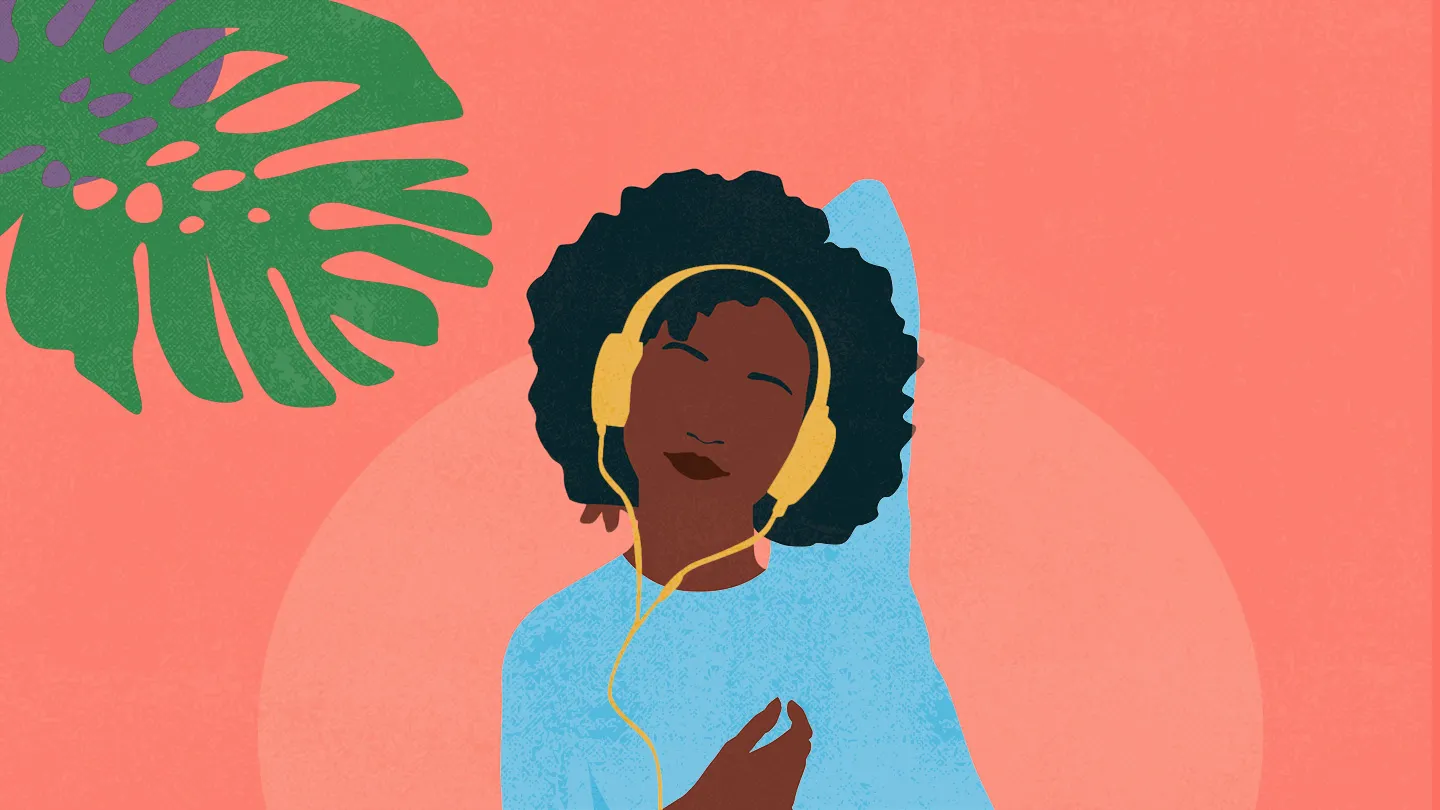

Ever notice how one song can make you feel like the main character in a movie… and another can make you text your ex (do not recommend)? Music has a weirdly powerful way of reaching into our brains, bodies, and memories. Music therapy takes that everyday magic and turns it into a structured, goal-focused healthcare serviceless “random playlist shuffle,” more “intentional tool for healing and coping.”
In standard terms, music therapy is an evidence-based clinical practice where a trained, credentialed professional uses music interventions to help someone meet individualized health goals. It can happen in hospitals, schools, rehab centers, mental health clinics, nursing homes, hospice programs, and community settings. And no, you don’t need musical talent. You can show up with zero rhythm and still get full benefits. (The therapist’s job is therapy, not judging your triangle solo.)
Music Therapy vs. “Music That Makes Me Feel Better”
Let’s clear up a super common confusion: music therapy is not the same thing as listening to music when you’re stressed (which can still be helpful!). The difference is like the difference between stretching at home and working with a physical therapist after an injuryboth involve movement, but one is a clinical service with assessment, goals, documentation, and specialized training.
In music therapy, the therapist:
- Assesses needs (physical, emotional, cognitive, social, spiritualdepending on the setting)
- Sets measurable goals with you (or with your care team/family when appropriate)
- Chooses music-based interventions on purpose (not randomly)
- Adjusts interventions based on your responses over time
- Tracks progress and coordinates with other professionals
Meanwhile, “music medicine” or “music-based interventions” can include experiences like curated playlists for relaxation or background music during procedures. Those can be valuable toojust not always the same as music therapy delivered by a credentialed music therapist.
Who Provides Music Therapy?
In the U.S., many practicing music therapists hold the credential MT-BC, which stands for Music Therapist–Board Certified. This credential signals that the therapist completed an approved academic program and clinical training and passed a board certification exam. MT-BCs also follow a professional code and maintain their credential through ongoing continuing education and recertification requirements.
When you’re looking for a provider, you can ask straightforward questions like:
- Are you MT-BC?
- What populations do you specialize in (pediatrics, oncology, mental health, neuro rehab, etc.)?
- What does a typical plan of care look like in your setting?
- How do you measure progress?
That may feel formal, but it’s a good thing. Music therapy is a real clinical professionwarm, creative, and human, yes, but still grounded in standards and scope of practice.
What Happens in a Music Therapy Session?
A music therapy session can look very different depending on the person and the goal. One session might be calm and reflective. Another might be active and movement-based. Some are one-on-one, others are in groups. And the music can be anythingpop, classical, gospel, hip-hop, country, jazzwhatever fits the client’s preferences, culture, and goals.
A common session flow
- Check-in: How are you feeling today? What’s different since last time?
- Goal focus: Maybe it’s reducing anxiety, supporting speech, improving gait, managing pain, or building coping skills.
- Music intervention: The therapist leads structured activities chosen for the goal.
- Reflection: What did you notice in your body, mood, or thoughts? What felt easier or harder?
- Carryover plan: When appropriate, you might identify ways to use music intentionally between sessions.
Examples of music therapy techniques
- Receptive listening: Listening to selected music to support relaxation, mood, pain management, or imagery.
- Active music-making: Drumming, simple instruments, or playing adapted parts (no “must be good at it” requirement).
- Singing and vocal work: For breath control, speech goals, emotional expression, or social connection.
- Songwriting: Creating lyrics and melodies to process experiences, build identity, or leave a “legacy” piece for loved ones.
- Improvisation: Making music in the moment to support emotional expression and interaction.
- Movement to music: Rhythm-based movement for rehab, coordination, or regulation.
- Guided imagery and music: A therapist-led relaxation/imagery experience supported by music.
- Lyric analysis: Using song lyrics to explore thoughts, feelings, values, and coping strategies.
If you’re thinking, “This sounds like therapy… with a soundtrack,” you’re not wrong. The music isn’t decorationit’s the intervention.
What Can Music Therapy Help With?
Music therapy is used across many settings because goals vary widely. The best way to think about it is not “music therapy treats everything,” but “music therapy can support specific outcomes in specific contexts.” Below are common areas where it’s often used.
Stress, anxiety, and mood support
Music-based interventions (including music therapy) have been studied for anxiety and stress in many healthcare settings. For some people, structured music therapy can help lower stress-related symptoms, reduce anxious feelings, and improve copingespecially when a therapist can tailor the music and the approach to the individual.
Example: Someone with hospital-related anxiety might work with a therapist on paced breathing with music, grounding through rhythm, or a personalized listening plan for proceduresthen adjust over time based on what actually helps.
Pain management and comfort during medical care
In hospitals and cancer centers, music therapy is often used as part of supportive carehelping people manage discomfort, distress, and fatigue. Sometimes the goal is distraction; other times it’s relaxation, emotional release, or rebuilding a sense of control when the body feels like it’s running the show.
Example: During a painful treatment week, a therapist might use a calming live music experience (matched to breathing) or facilitate songwriting so the person can express what’s hard without needing the “perfect words.”
Dementia, Alzheimer’s disease, and cognitive impairment
Music can remain emotionally meaningful even when memory and language change. In dementia care, music-based interventions are commonly used to support emotional well-being, reduce distress, and improve quality of life. The research is mixed on whether cognitive function improves, but many programs focus on mood, engagement, and connectionespecially in institutional or caregiving settings.
Example: A therapist might use familiar songs to spark engagement, encourage gentle movement, or reduce agitationwhile monitoring responses carefully (because the “wrong” song can sometimes trigger sadness or agitation, too).
Neurologic rehabilitation (stroke, Parkinson’s, MS, brain injury)
Rhythm is more than a musical featureit can be a motor cue. In neuro rehab, music-based techniques may be used to support gait training, balance, coordination, and speech or language goals. Some approaches use consistent rhythmic cues to help the brain and body synchronize movement (think: steady beat as a guide rail for steps). Other approaches use melody and rhythm to support speech practice after a stroke.
Example: In stroke rehab, a therapist might use rhythmic auditory cueing to help someone practice walking with a steadier cadence, or use structured melodic phrasing to support speech exercises.
Children, teens, and families in medical settings
Pediatric music therapy often focuses on coping with hospitalization, procedures, fear, isolation, pain, or stresswhile also supporting family bonding and emotional expression. For teens, music can be a socially “safe” bridge: it lets them express a lot without having to make eye contact and say, “So here’s my entire emotional situation.”
Example: A child prepping for a procedure might use musical play to learn coping skills (deep breathing, choice-making, distraction), while a teen might use songwriting to express feelings about illness or identity.
Cancer care, palliative care, and hospice
In supportive oncology and hospice settings, music therapy commonly aims to reduce anxiety, improve comfort, support emotional processing, and strengthen connection with loved ones. Some people use it for relaxation and symptom support; others use it to create meaninglike recording a song for family members or building a “legacy project.”
Example: A patient might co-write a song with a therapist that captures messages for their children or partnersomething tangible that says what matters, even when energy is limited.
How Does Music Therapy Work?
Researchers are still mapping the exact “how,” but several practical mechanisms help explain why music therapy can be effective in real life:
1) The body can sync with rhythm
Our nervous system responds to rhythm. A steady beat can support pacing for breathing or movement. That’s one reason rhythm-based techniques show up in rehab and stress regulation work.
2) Music influences stress physiology
Music can affect heart rate, breathing patterns, and stress-related feelings. In a therapy context, that means the therapist can use tempo, dynamics, structure, and familiarity as toolsthen adjust them based on your responses (not just your Spotify history).
3) Music taps emotion and memory networks
Music is strongly connected to memory and emotion. That’s helpful when the goal is expression, meaning-making, or connection. But it also means music can bring up powerful feelingsone reason professional guidance matters, especially in healthcare settings.
4) Music is social
Even without words, making music together can support connection, attunement, and trust. Group music therapy often leans into thishelping people feel less alone and more understood.
Is Music Therapy Safe? Side Effects and Precautions
Music therapy is generally considered low-risk, and many studies report few or no negative effects. That said, “low-risk” does not mean “never intense.” A few practical cautions matter:
- Emotional triggers: Certain songs can bring back grief, trauma, or stressful memories. A skilled therapist plans for this and helps you regulate if strong emotions come up.
- Volume safety: Very loud music can contribute to hearing damage. In clinical settings, therapists are mindful of volume and sensory needs.
- Movement safety: If sessions include movement or exercise, safety precautions matterespecially in rehab or with balance concerns.
- Sensory sensitivity: Some people (including some autistic individuals or those with migraines) may need careful adjustments to avoid overstimulation.
If you have specific medical concernshearing issues, severe anxiety triggers, seizure disorders, significant sensory sensitivitybring it up. Music therapy is meant to be tailored, not “one-size-fits-all with extra tambourine.”
How to Find a Qualified Music Therapist (and What It Might Cost)
Music therapy is offered in many U.S. hospitals and health systems, but access varies by location and setting. Some programs are funded by donations and provided at no charge to patients; others are billed through healthcare services or paid privately.
What to look for
- Credentials: MT-BC is a common credential in the U.S.
- Relevant experience: Ask if they’ve worked with your concern (oncology, dementia care, anxiety, stroke rehab, pediatrics, etc.).
- Clear goals and plan: Music therapy should have a purpose beyond “let’s play music.”
- Collaboration: In medical settings, therapists often work with your care team.
Cost and coverage
Coverage depends on the setting and your insurance plan. In some hospitals, it’s part of supportive care. In private practice, you may pay out of pocket or use coverage when available. If cost is a barrier, ask about community programs, training clinics, hospital-based services, or sliding-scale options.
Can You DIY the Benefits Without Formal Music Therapy?
You can absolutely use music intentionally for wellnessmany people do. But a key value of music therapy is clinical tailoring: a therapist can match interventions to your goals, monitor outcomes, and help you work through emotional responses safely.
If you’re experimenting on your own, try gentle, practical ideas like:
- Build two playlists: one for calming down, one for shifting energy (focus/motivation).
- Notice tempo: slower music may support relaxation; moderate tempos can help movement or focus.
- Use a “music boundary”: one specific song as a start-of-day ritual or end-of-day wind-down cue.
- Pair music with a coping skill: breathing, stretching, journaling, or a short walk.
And if you’re dealing with significant anxiety, depression, trauma, medical treatment stress, or rehab needs, consider working with a credentialed professional. That’s not “being extra.” That’s using the right tool for the job.
Experiences: What Music Therapy Can Feel Like in Real Life (Illustrative)
The best way to understand music therapy is to imagine what it feels like on the insidenot just what it looks like from the hallway. The following experiences are illustrative composites based on common practices in healthcare settings, not personal stories from the writer. Think of them as “this is the vibe” snapshots.
1) The hospital room that stops feeling like a hospital room (for a moment)
A child is anxious about a procedure. The room is full of unfamiliar sounds: beeps, footsteps, whispered conversations. A music therapist arrives with a small set of instrumentsmaybe a ukulele, a small drum, or even just their voice. The session starts with choices: “Do you want a steady beat, or a silly song?” The child picks silly (excellent decision). The therapist turns the child’s name into a playful melody and invites them to clap along. Slowly, shoulders drop. Breathing becomes more regular. The child isn’t “fixed,” and the situation isn’t suddenly funbut the child feels more in control. The procedure becomes something they can get through, not something that completely happens to them.
2) Anxiety gets a rhythmand suddenly it’s more manageable
An adult comes in feeling keyed up: racing thoughts, tight chest, that “I’m fine” voice that clearly is not fine. Talking about feelings feels like trying to untangle earbuds in the dark. The therapist starts with grounding: a simple, steady beat on a hand drum and an invitation to match it. No pressurejust listening and joining when ready. Then the therapist subtly slows the tempo, encouraging the body to follow. They add structured breathing: inhale for four beats, exhale for six. The person notices something small but important: their heart isn’t pounding as hard. The therapist asks what kind of music helps the person feel safenostalgic? instrumental? something with a strong bass line? Together they build a plan for using music as a cue for regulation, not as background noise. Over time, the client learns, “I can change my state,” which is a big deal when anxiety makes you feel trapped.
3) Rehab that feels less like “exercise” and more like “progress”
In neuro rehab after a stroke, walking practice can feel frustratinglike your body is arguing with your brain in public. A therapist uses rhythmic cueing to support gait training: a steady beat that matches the person’s current step rate, then a gradual adjustment toward a smoother cadence. The goal isn’t to turn someone into a dancer. It’s to support timing, coordination, and confidence. The person starts to anticipate steps rather than fight for them. The rhythm becomes a guide railsomething external, predictable, and supportive. In another part of rehab, the therapist may use structured melodic phrases to support speech practice, especially when verbal output is difficult. Progress can be slow, but the experience feels different: less like repeating failures, more like stacking small wins.
4) The song that becomes a “legacy project”
In oncology or hospice care, music therapy can take on a meaning-making role. A patient feels tired of being asked how they feel, because the answer changes every hour. But they want to say something important to their family. The therapist предлагает (gently offers) songwriting: not a performance, not a polished studio trackjust a real message shaped into music. The patient chooses a familiar style, maybe something that sounds like the music they loved at 17. They dictate lyrics in short bursts. The therapist captures the words, reflects them back, and helps shape them into verses. A family member adds a line. Someone laughs. Someone cries. Later, the patient listens to a recording and says, “That’s what I meant.” Even when symptoms are heavy, the person feels heard. The song becomes a keepsakesomething that holds connection when words are hard to find.
These experiences show a core truth: music therapy isn’t about musical perfection. It’s about using music as a flexible, personal tool to support health goalssometimes practical (pain, movement, stress), sometimes deeply human (connection, identity, meaning).
Conclusion
Music therapy is a clinical, evidence-informed practice that uses music intentionallyguided by a credentialed professionalto help people meet individualized goals. Depending on the setting, it may support stress reduction, coping with illness, pain management, rehabilitation, emotional expression, and quality of life. It’s not a replacement for medical treatment or mental healthcare when those are needed, but it can be a powerful part of a whole-person plan. If you’re curious, start by asking the simplest question: “What goal would I want help with?” Then let the music therapist do what they do bestturn sound into support, one tailored intervention at a time.