
If carbohydrates had a PR team, refined carbs would be the ones showing up to the party in a shiny suit, promising a good time, and then leaving you hungry again 45 minutes later. They’re not “bad” in a moral-failure way (bread is not your ex), but they are the carbs most likely to quietly crank up your calorie intake without giving you much back in return.
So what exactly are refined carbs, and does eating fewer of them actually help with weight loss? Let’s break it down in plain English, with real examples, a dash of humor, and zero “just drink lemon water at 4:00 a.m.” nonsense.
What are refined carbs?
“Refined carbs” is a casual umbrella term for carbohydrate-rich foods that have been processed in ways that remove much of their natural fiber (and sometimes nutrients), or that come packaged with lots of added sugars and starches. The two biggest buckets are refined grains and added sugars.
1) Refined grains (aka “the grain, but make it stripped-down”)
Whole grains have three parts: the bran (fiber-rich outer layer), the germ (nutrient-rich core), and the endosperm (starchy middle). Refined grains are milled in a way that removes the bran and germ. That makes the flour softer and the shelf life longerbut it also removes a lot of fiber and naturally occurring nutrients.
Common refined grain examples:
- White bread and many sandwich buns
- Regular (white) pasta
- White rice
- Most crackers, pretzels, and many snack chips made with refined flour
- Pastries, cookies, cakes (refined flour + sugar = the dynamic duo)
You’ll often see the word “enriched” on refined grain products. Enrichment adds back some B vitamins and iron, but fiber typically isn’t added back. So enriched isn’t “fake,” it’s just not the same as whole grain.
2) Added sugars (including the sneaky liquid ones)
Added sugars are sugars put into foods during processing or preparationthink table sugar, syrups, honey, and sugars from concentrated juices used as sweeteners. This is different from naturally occurring sugars in fruit or milk.
Where added sugars love to hide:
- Soda, sweet tea, energy drinks, sweetened coffee drinks
- Flavored yogurt, sweetened oatmeal packets, “healthy” granola
- Breakfast cereals (especially the ones that taste like dessertbecause they kind of are)
- Condiments and sauces (ketchup, BBQ sauce, some salad dressings)
3) Ultra-processed “combo carbs”
Many modern snack foods are refined carbs in their most effective form: refined starch + added sugar + refined fats, engineered for maximum crunch, melt, and “oops I ate the whole bag.” These foods can be convenient, but they’re also easy to overeat because they’re calorie-dense and less filling.
Why refined carbs can make weight loss harder
Weight loss ultimately requires a calorie deficit, but the path to that deficit matters. Refined carbs can make it harder to stay satisfied, manage appetite, and keep portions reasonableespecially if they’re the foundation of your meals.
Fiber is the built-in “speed bump”
Fiber slows digestion, supports fullness, and tends to make foods more physically filling (volume matters!). When you refine a grain, you usually remove much of that fiberso the food becomes easier to chew, faster to eat, and quicker to digest. Translation: your stomach sends the “we’re good” signal later than you’d like.
Compare these two snacks:
- Option A: 2–3 cups of air-popped popcorn (whole grain) with a little salt
- Option B: A few handfuls of crackers made from refined flour
Both can fit into a day of eating, but Option A usually gives you more volume, more fiber, and more staying power.
Blood sugar swings can fuel “snack gravity”
Foods that digest quicklylike white bread and sugary foodscan raise blood sugar faster than high-fiber whole foods. Your body responds with insulin, which helps move glucose into cells. That’s normal.
The issue is that very fast spikes (especially from “naked carbs,” meaning carbs eaten without much protein, fat, or fiber) can leave some people feeling hungry sooner. Not because your body is brokenbecause your meal was basically a matchstick instead of a log on the campfire.
Liquid calories don’t register like solid food
Sugar-sweetened beverages are one of the easiest ways to accidentally add hundreds of calories to your day, because they don’t make you feel as full as food. A sweet coffee drink or soda can be the caloric equivalent of a snack, but your brain often files it under “beverage,” not “meal.”
So… can cutting back on refined carbs help you lose weight?
Often, yesbut not by magic. Cutting back tends to help because it changes your diet in ways that make a calorie deficit easier to maintain: more fiber, more fullness, fewer “oops calories,” and better overall food quality.
When it works best
- You replace refined carbs with higher-fiber foods (whole grains, beans, vegetables, fruit), not just with “diet foods” that leave you hungry.
- You reduce added sugarsespecially liquid sugarbecause that often drops calories without increasing hunger.
- You improve meal structure (protein + fiber + healthy fat), which supports satiety and portion control.
When it doesn’t work (or feels miserable)
- You cut carbs but replace them with equally calorie-dense options (for example: swapping bread for “keto treats” that still hit like dessert).
- You go so low-carb that you feel deprived, then rebound hard. (Your willpower is not an infinite battery.)
- You only focus on carbs and ignore the big picturesleep, stress, total calories, protein, and activity.
What the research picture suggests (in plain terms)
Studies consistently show that patterns emphasizing whole, minimally processed foods and limiting high-sugar, refined, ultra-processed foods are linked with healthier body weight over time. In tightly controlled research, ultra-processed diets have even caused people to eat more calories and gain weight compared with minimally processed dietsdespite the diets being designed to look similar on paper.
The takeaway: if most of your carbs come from refined grains and added sugars, cutting back can remove a major “easy overeating” pathway.
How to cut refined carbs without feeling like you’re being punished
You don’t need a dramatic carb exorcism. You need a strategy that’s realistic on a Tuesday.
Step 1: Use the “half-swap” rule
Start by swapping half of your usual refined-carb portions for higher-fiber options:
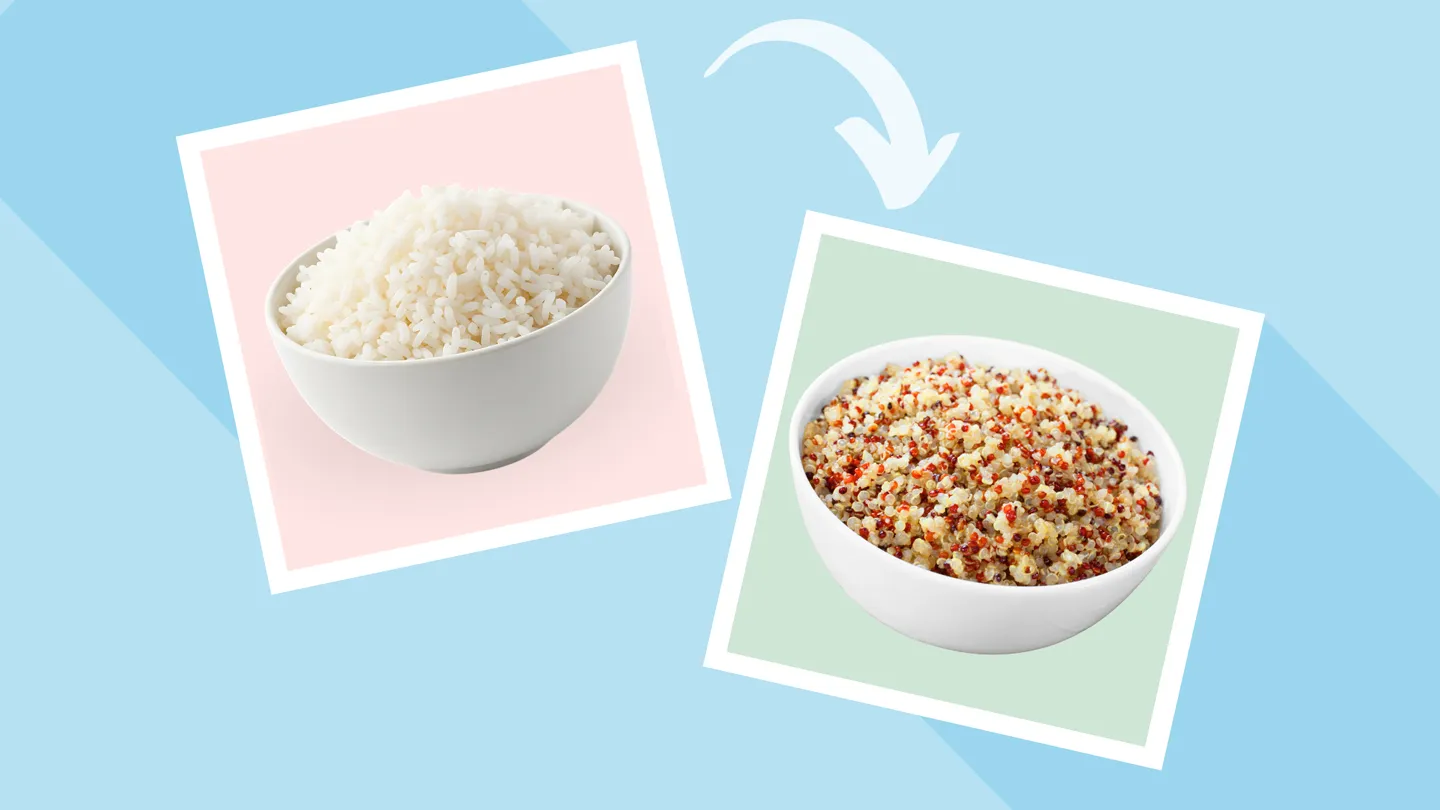
- Half white rice + half brown rice (or quinoa)
- Half regular pasta + half chickpea/lentil pasta (or add extra veggies and reduce noodles)
- One slice of white bread becomes one slice of whole grain (or open-faced sandwich)
This keeps meals familiar while quietly improving fiber and fullness.
Step 2: Pair carbs so they don’t hit “solo”
If you’re eating carbs, give them friends: protein, fiber, and/or healthy fats. That slows digestion and keeps you satisfied longer.
Examples:
- Toast → add eggs and sliced avocado
- Fruit → pair with Greek yogurt or nuts
- Rice bowl → include beans, chicken/tofu, and veggies
Step 3: Learn two label tricks (no nutrition degree required)
- Check the ingredients list: If “whole wheat,” “oats,” “brown rice,” or another whole grain is among the first ingredients, you’re usually in better territory.
- Look at Added Sugars: The Nutrition Facts label lists added sugars in grams. As a quick guide, 5% Daily Value or less is “low,” and 20% or more is “high” (per serving).
Step 4: Target the biggest refined-carb calorie leaks
If you want the highest ROI changes, start here:
- Sweetened drinks (soda, sweet tea, sweet coffee drinks, “juice drinks”)
- Sweet snacks (cookies, pastries, candy)
- Refined snack carbs (chips, crackers, pretzels)
You don’t have to ban them. Just move them from “daily default” to “sometimes on purpose.”
What to eat instead (quick, practical ideas)
Better carb choices that still feel like carbs
- Oats (steel-cut or rolled)
- Brown rice, wild rice, quinoa, barley
- 100% whole wheat or sprouted grain bread
- Beans and lentils (also bring protein)
- Potatoes with the skin, sweet potatoes
- Whole fruit (instead of juice)
Sample day: “Cut refined carbs” without going low-carb
- Breakfast: Oatmeal + berries + walnuts (or eggs + whole grain toast)
- Lunch: Turkey/bean chili + side salad + small serving of brown rice
- Snack: Apple + peanut butter
- Dinner: Salmon (or tofu) + roasted veggies + quinoa
- Treat (optional): Something sweet you actually enjoyportion intentional, not accidental
Do you have to quit refined carbs completely?
Nope. For many people, an “all or nothing” approach is a fast track to “nothing.” Refined carbs can fitespecially if your overall diet is rich in whole foods and fiber.
Also, refined grains that are enriched can contribute certain nutrients (like folic acid and iron), and convenience matters. The goal isn’t perfection; it’s shifting your usual pattern so refined carbs stop being the main character.
A simple 7-day “refined carb reset” (no drama)
- Day 1: Replace one sweetened drink with water or unsweetened tea.
- Day 2: Make breakfast higher-protein (eggs, Greek yogurt, tofu scramble).
- Day 3: Swap one refined grain for a whole grain (bread, rice, pasta).
- Day 4: Add one extra serving of veggies at lunch or dinner.
- Day 5: Choose a snack with fiber + protein (fruit + nuts, hummus + veggies).
- Day 6: Pick a lower–added sugar version of a staple (cereal, yogurt, sauce).
- Day 7: Eat a favorite refined-carb food on purposethen stop at satisfied.
Real-Life Experiences: What Cutting Refined Carbs Feels Like (and Why It Can Help)
People often imagine “cutting refined carbs” as a joyless montage of lettuce and regret. In reality, the experience tends to be a mix of small wins, a few cranky moments, and surprising “oh… that’s what full feels like” discoveries. Here are some common patterns people report when they reduce refined grains and added sugarsespecially the highly processed stuff.
The “I didn’t realize my breakfast was dessert” moment
A lot of folks start by changing breakfast because it’s the easiest to repeat daily. The first week often includes a realization like: “Wait, my cereal has as much added sugar as a cookie.” Switching to oatmeal, eggs, or plain yogurt with fruit can feel boring at first, but many people notice they’re not ravenous at 10:30 a.m. anymore. That alone can cut out an entire snack (and the vending machine impulse) without any calorie counting.
The afternoon crash gets less dramatic
When lunch is heavy on refined carbsthink white bread sandwich + chips + sweet drinksome people describe a 2–3 p.m. slump: sleepy, snacky, and suddenly convinced they “need” something sweet to function. After shifting lunch to include more protein and fiber (like a grain bowl with beans, chicken/tofu, and veggies), the crash often softens. The interesting part? People don’t always feel “energized.” They feel stablewhich is less exciting, but way more useful.
Cravings may spike… then fade
The first few days can be the loud part: cravings, habits, and convenience colliding. Many people aren’t craving carbsthey’re craving specific refined-carb foods that are engineered to be hyper-rewarding (chips, cookies, pastries). After a week or two, cravings often become less frequent and less urgent, especially if meals are satisfying. A helpful trick people mention: keep the carbs, but upgrade them (sweet potato, oats, fruit, whole grains) so you’re not running on dietary fumes.
The scale changes, but so does the “fit”
Some people see quick scale movement early on, partly from reduced sodium and water retention when ultra-processed foods decrease. Others don’t see immediate changes, but notice clothing fits differently after a few weeksespecially if refined carbs were coming mostly from snacking and sugary drinks. The most consistent “experience win” people describe isn’t rapid weight loss; it’s feeling more in control around food. Fewer random snack attacks often means fewer random calories.
Social life still exists (with a little planning)
Real life includes birthdays, takeout, and that one friend who thinks “brunch” is a competitive sport. People who succeed long-term tend to adopt a flexible approach: order the burger, swap fries for a side salad sometimes, split dessert, or choose a meal where refined carbs aren’t the main event. They don’t “never” eat refined carbsthey stop letting them be the default at every meal.
Bottom line: cutting back on refined carbs can help with weight loss because it often improves satiety and reduces easy-to-overeat calories. If you keep meals satisfying and changes realistic, it usually feels less like a dietand more like a system you can actually live with.
Conclusion
Refined carbs are carbs that have been processed in ways that remove fiber (like refined grains) or that add concentrated sugars (especially in drinks and sweets). Cutting back can help with weight lossnot because carbs are “bad,” but because swapping refined carbs for higher-fiber, less processed foods often reduces calorie intake and keeps you full longer. Start small, target added sugars and ultra-processed snacks first, and build meals that don’t leave you hungry. Your body isn’t asking for punishment. It’s asking for food that actually sticks the landing.