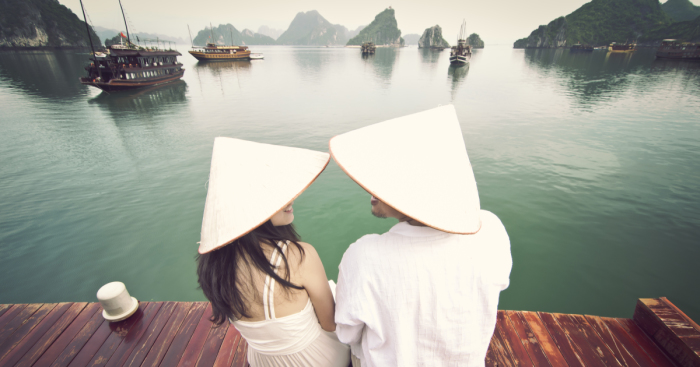

Some couples hire a luxury wedding photographer, book a sunset villa, and casually say things like, “We just wanted something simple,” while standing under $12,000 worth of flowers. Other couples look at the budget, look at each other, look at the camera, and think, “Well, how hard can this be?” Famous last words, naturally.
But sometimes those words lead to something wonderful. That is the charm behind the story of a couple who decided that a tight budget would not stop them from creating unforgettable wedding photos. Instead of hiring a photographer to follow them around the globe, they packed a camera, a tripod, wedding outfits, a sense of humor, and apparently the patience of two people who have made peace with wind, sand, snow, strangers staring, and the remote shutter not working at the worst possible second.
The result was not just a collection of DIY wedding photos. It became a travel love story told across continents: dramatic landscapes, quiet corners, famous landmarks, wild weather, and the kind of images that prove creativity can stretch farther than a wedding budget ever could. In a world where wedding costs keep climbing and destination photography can quickly become expensive, their approach feels refreshingly bold, practical, and a little bit delightfully chaotic.
When the Wedding Budget Says “No,” Creativity Says “Hold My Tripod”
Wedding photography is one of those expenses couples often care deeply about, and for good reason. The food gets eaten, the flowers eventually retire from public service, and the cake becomes a memory with frosting. Photos remain. They are the proof, the emotion, the family history, and occasionally the evidence that Uncle Gary did, in fact, dance like that.
Professional wedding photographers bring skill, experience, lighting knowledge, editing style, and the magical ability to make people look relaxed even when everyone is sweating through formalwear. But for couples on a tight budget, especially couples planning travel at the same time, hiring a photographer for multiple international locations can be unrealistic. Flights, hotels, meals, permits, luggage, and extra shooting days add up fast.
That is where the DIY wedding photography idea becomes more than a money-saving hack. It becomes a creative strategy. The couple in this story chose to take their own pre-wedding photos while traveling, using a camera, lenses, a tripod, and a remote. They also planned ahead: the bride learned to do her own makeup, they brought wedding outfits, and they treated each destination as a new chapter in their album rather than a one-day photoshoot.
The Real Beauty of DIY Wedding Photos
The biggest advantage of shooting your own wedding photos while traveling is not just saving money. It is control. You can choose the location, the time, the mood, the outfit, the angle, and whether you want to try the same pose 37 times because the first 36 made you look like you were arguing with the horizon.
DIY wedding photos also feel personal. Instead of standing in a studio with a painted backdrop and a fan pretending to be a romantic breeze, you are using real places that mean something. Maybe it is a mountain you hiked together. Maybe it is a beach where your shoes filled with sand and your patience left the group chat. Maybe it is a city street where the light bounced perfectly off old buildings for exactly four minutes before a delivery truck entered the frame like a supporting villain.
Travel wedding photography works best when the photos look lived-in rather than overproduced. A tripod can capture stillness, but the story comes from movement: walking together, adjusting a dress, laughing at mistakes, looking toward a skyline, or standing quietly in a place that feels bigger than both of you.
Why a Tripod Becomes the Third Wheel You Actually Need
A tripod is not glamorous. Nobody writes poetry about tripod legs. But for self-shot wedding photos, it is the dependable friend who shows up, holds steady, and does not complain unless you place it on uneven rocks like a reckless optimist.
A good tripod helps keep the camera stable, especially in low light, windy locations, or wide scenic shots. It lets couples frame the image, step into position, and use a timer or remote shutter. It also allows consistency. Once the composition is right, you can take multiple shots without rebuilding everything from scratch.
For travel, the ideal tripod is sturdy enough to support the camera but light enough to carry without turning every airport transfer into leg day. Compact travel tripods, remote shutters, spare batteries, memory cards, microfiber cloths, and a small emergency repair kit can make the difference between “romantic shoot at sunrise” and “why is the camera blinking like it knows something we do not?”
How to Plan Your Own Budget Wedding Photo Adventure
Taking your own wedding photos while traveling sounds spontaneous, but the best results come from planning. The secret is to prepare enough that you can be flexible when real life misbehaves, because real life absolutely will.
1. Build a Realistic Budget First
Before buying gear or booking flights, decide what you can actually afford. A wedding photo trip can save money compared with hiring a photographer for every destination, but it is not free. You still need to account for transportation, lodging, food, entrance fees, permits, outfits, laundry, makeup, camera equipment, repairs, and backup storage.
A smart budget includes a cushion for surprise expenses. Travel has a charming habit of inventing costs at the worst moment: overweight luggage, last-minute taxis, rain ponchos, lost adapters, emergency dry cleaning, or that one café you enter only because you need Wi-Fi and somehow leave with two pastries and a financial lesson.
2. Choose Locations That Do the Heavy Lifting
The easiest way to make DIY wedding photos look expensive is to let the setting do the work. Natural landscapes, historic streets, gardens, beaches, deserts, mountains, caves, snowy fields, and city skylines can create visual drama without elaborate decorations.
Look for places with strong lines, interesting textures, clean backgrounds, and beautiful natural light. Sunrise and late afternoon are often friendlier for photography than harsh midday sun. Early mornings also mean fewer crowds, although they do require waking up before your personality has fully loaded.
3. Practice Before the Big Trip
Do not wait until you are standing on a cliff in formalwear to learn how your camera timer works. Practice at home. Practice in a park. Practice walking into frame, focusing, posing, checking exposure, and adjusting the tripod. Learn how long it takes to set up, how far you need to stand, and whether your remote works from the distance you need.
Practice also reveals what poses feel natural. Some couples are comfortable with dramatic editorial poses. Others look best laughing, walking, or pretending they are not deeply aware of nearby tourists watching the whole production. The goal is not to copy a magazine. The goal is to look like yourselves on a very good day.
4. Keep the Outfits Travel-Friendly
Wedding outfits can be surprisingly difficult to travel with. Big gowns, delicate fabrics, suits, veils, and formal shoes are not always compatible with budget airlines, cobblestone streets, muddy trails, or backpacks that smell faintly of airport sandwich.
Choose outfits that photograph well but can survive movement. Wrinkle-resistant fabrics, lightweight dresses, simple suits, comfortable shoes, and easy accessories are your friends. If you want multiple looks, consider smaller pieces that can mix and match. A veil, bouquet, jacket, or hair accessory can change the mood without taking over your luggage.
Photography Tips for Couples Shooting Their Own Wedding Photos
DIY wedding photography is not about owning the most expensive camera. It is about understanding light, composition, timing, and emotion. A modest camera used thoughtfully can create better images than a fancy camera used in panic mode.
Use Natural Light Like It Owes You Money
Natural light is the budget photographer’s best friend. Soft morning light and golden-hour light are flattering, warm, and easier to manage than harsh sun. If you must shoot during midday, look for open shade, building shadows, trees, arches, or covered walkways.
Backlighting can create a dreamy glow, especially around hair, veils, and fabric. Side lighting adds shape and depth. Direct overhead sun, however, can create harsh shadows under the eyes, which is rarely the “timeless romance” anyone ordered.
Frame the Scene Before You Step In
Set the camera on the tripod and compose the shot before posing. Use landmarks, rocks, trees, buildings, or horizon lines to create balance. Leave enough space around the couple so the image feels intentional, not like the camera accidentally caught two well-dressed people trespassing in a postcard.
When framing wide travel shots, do not always place yourselves in the center. Try the rule of thirds, leading lines, and negative space. Sometimes the most powerful image is not a close-up but a tiny couple standing in a huge landscape, quietly proving that love and luggage can coexist.
Take More Photos Than You Think You Need
When you are both photographer and subject, you need options. Take several shots of each setup. Move slightly. Change hand positions. Look at the camera, then away from it. Walk, pause, laugh, adjust clothing, and try again.
Many self-shot images fail for tiny reasons: closed eyes, awkward hands, strange wind, crooked horizon, mystery tourist, bird with dramatic timing. Taking more photos increases your chance of getting the one image where everything works.
Do Not Ignore Backup Plans
Back up your files. Then back them up again. Use multiple memory cards, cloud storage when available, and an external drive. Losing travel wedding photos after carrying outfits across continents would be the kind of tragedy that makes even a calm person stare silently at a wall for three business days.
Also plan for weather. Rain, fog, snow, heat, and wind can create incredible photos, but they can also damage gear and ruin outfits. Carry protective covers, towels, plastic bags, and patience. Especially patience.
The Emotional Side of Taking Your Own Wedding Photos
The most interesting part of this story is not the gear. It is the commitment. Traveling for years and creating wedding photos along the way requires teamwork. One person checks the framing. The other adjusts the outfit. One runs back from the camera before the timer fires. The other tries not to laugh too early. Both learn to accept imperfection.
That is what makes the images meaningful. A professional shoot may be smoother, but a DIY travel wedding album carries behind-the-scenes memories inside every frame. You remember the cold. You remember the hike. You remember the stranger who offered to help. You remember the tripod almost falling over. You remember how ridiculous and happy you felt standing in formalwear somewhere far from home.
In that sense, the process becomes part of the marriage story. It is problem-solving, compromise, creativity, and shared adventureall dressed up nicely for the camera.
Is DIY Wedding Photography Right for Everyone?
Not necessarily. Couples who want full ceremony coverage, family portraits, reception moments, fast-moving candid shots, and polished editing may still benefit from hiring a professional photographer. Weddings move quickly, and professionals know how to capture moments couples cannot easily recreate.
But for pre-wedding portraits, engagement-style travel photos, elopement-inspired images, anniversary shoots, or creative couple portraits, the DIY approach can be excellent. It works especially well for couples who enjoy travel, have patience, are comfortable learning camera basics, and do not panic when Plan A falls into a puddle.
A hybrid approach can also work beautifully. Hire a professional for the actual wedding day, then create your own travel wedding photo series before or after. That way, you get reliable coverage of the once-in-a-lifetime event and still enjoy the creative freedom of a self-shot adventure.
Specific Examples of DIY Travel Wedding Photo Ideas
If you want to try this concept, think in scenes rather than poses. For example, shoot a wide image of both of you walking across a quiet beach at sunrise, with the dress or veil moving in the wind. Capture a city balcony shot with coffee cups and formalwear for a playful “wedding morning in another country” vibe. Stand at the edge of a mountain viewpoint with your backs to the camera, letting the landscape become part of the story.
In historic towns, use archways, stone walls, staircases, and narrow streets. In deserts, focus on clean shapes, shadows, and movement. In snowy locations, use contrast: dark suits, white dresses, colorful scarves, or warm coats. In tropical places, keep styling simple so the scene does not become visually noisy.
Small details matter too. Photograph rings on a map, shoes beside backpacks, a veil hanging from a hostel window, or the camera and tripod standing in the background like the unpaid intern who made it all possible.
Common Mistakes to Avoid
The first mistake is trying to do too much in one day. Travel already has enough moving parts. Add formal clothes, makeup, camera gear, weather, and location scouting, and suddenly your “simple shoot” becomes a tiny film production with snacks.
The second mistake is ignoring permissions. Some landmarks, parks, museums, beaches, and historic sites have rules about tripods, professional-looking shoots, or commercial photography. Even if you are taking personal photos, check local guidelines. It is better to ask ahead than to be politely escorted away while wearing wedding clothes.
The third mistake is over-editing. Good editing enhances the image; heavy editing can make the sky look radioactive and skin look like polished furniture. Keep colors natural, straighten horizons, adjust exposure, and let the story breathe.
Extra Experience Section: What We Learned From the Camera-and-Tripod Wedding Photo Life
The biggest lesson from a long DIY wedding photo journey is that the best images are usually earned, not bought. Money can hire convenience, but it cannot automatically create meaning. When couples take their own wedding photos while traveling, they collect more than pretty pictures. They collect evidence of effort.
One experience many DIY couples discover quickly is that location scouting matters more than posing. A simple pose in a great location often beats a complicated pose in a messy one. Before setting up the tripod, walk around. Look for clean backgrounds, flattering light, and safe footing. Check what is behind your heads. A tree growing out of the groom’s ear is memorable, yes, but perhaps not in the family-heirloom direction.
Another practical experience is that weather can be a creative partner if you stop fighting it. Wind can lift fabric beautifully. Fog can make a scene feel cinematic. Light rain can add atmosphere. Snow can turn a simple portrait into a fairytale. But the key is preparation. Keep gear covered, bring comfortable layers, and know when to stop. No photo is worth damaging your camera, ruining your health, or discovering that “romantic shivering” mostly just looks like regret.
Couples also learn to communicate better. Self-shooting requires tiny negotiations: move left, tilt the camera, fix the collar, wait for the crowd to pass, try one more shot, please do not step backward into the fountain. These moments can be funny, frustrating, and oddly bonding. The photo may show two calm people in love, but the memory behind it might involve sprinting from the tripod in formal shoes while yelling, “Is it blinking?” That hidden comedy becomes part of the value.
There is also a confidence curve. The first few shoots may feel awkward. You may pose stiffly, overthink everything, and check the screen every five seconds. After a while, you learn your angles, your timing, your gear, and your rhythm as a couple. You stop chasing perfection and start noticing what feels real. That is when the photos improve.
Perhaps the most useful experience is learning that a wedding album does not have to be created in one place or one afternoon. It can be built slowly. One image in the mountains. Another near the ocean. One in a city square. One in a quiet room with window light. The album becomes a timeline of adventure instead of a single scheduled event.
For couples on a tight budget, this is encouraging. You do not need unlimited money to make something beautiful. You need planning, patience, basic gear, backup storage, realistic expectations, and the willingness to laugh when the tripod becomes the most dramatic member of the wedding party.
Conclusion: A Budget Love Story With Better Scenery
The story of bringing a camera and tripod to shoot wedding photos around the world is not just about saving money. It is about choosing experience over excess, creativity over pressure, and personal meaning over perfect production. In a wedding culture where costs can feel overwhelming, this approach reminds couples that beauty does not always require a luxury invoice.
DIY wedding photography is not effortless. It takes planning, practice, patience, and a sense of humor sturdy enough to survive bad weather and blurry test shots. But for the right couple, it can turn a limited budget into a once-in-a-lifetime visual adventure.
In the end, the best wedding photos are not always the most expensive. They are the ones that still make you smile years laterthe ones where you remember the place, the struggle, the laughter, the ridiculous setup, and the fact that somehow, against all odds, the tripod did its job.