
Synthesized from U.S.-based medical and dermatology sources including: American Academy of Dermatology (AAD), NIAMS/NIH, MedlinePlus, Mayo Clinic, Cleveland Clinic, Yale Medicine, Johns Hopkins Medicine, National Psoriasis Foundation, UMass Chan, and NIH-indexed peer-reviewed reviews.
At first glance, vitiligo and psoriasis look like they showed up to the skin party wearing entirely different outfits. Vitiligo causes patches of skin to lose pigment, while psoriasis makes skin cells pile up fast enough to form thick, scaly plaques. One condition is known for white or lighter areas, the other for red, inflamed, flaky patches that can itch like they are auditioning for the role of “most annoying symptom ever.”
So why do these two conditions keep getting mentioned in the same conversation? Because researchers and dermatologists have noticed that they are not complete strangers. Both are immune-driven skin diseases. Both can be influenced by genetics and environmental triggers. Both can flare or spread after skin injury in some people. And, in some patients, they can occur together.
That does not mean psoriasis automatically leads to vitiligo or that vitiligo is secretly psoriasis in disguise. It means there appears to be a meaningful overlap in how the immune system behaves, how inflammation affects the skin, and how the body responds to certain triggers. In plain English: they are different conditions, but they may share some of the same backstage drama.
Here is what the current evidence suggests about the connection between vitiligo and psoriasis, how the two conditions differ, why they may overlap, and what that means if you are living with one or both.
What Is Vitiligo?
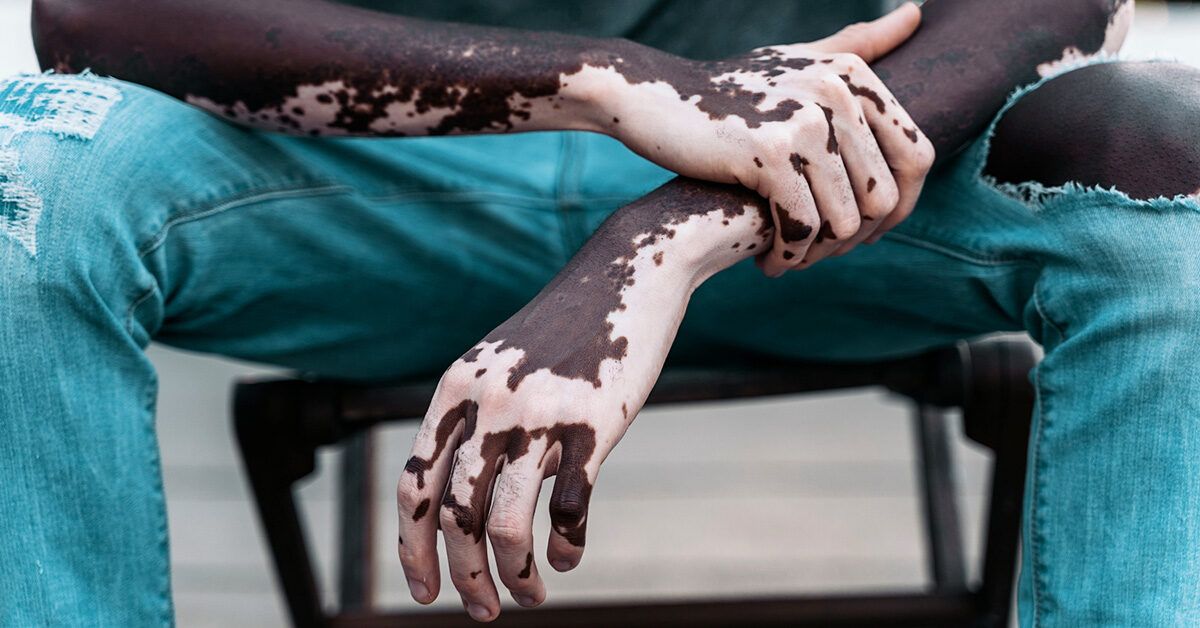
Vitiligo is a chronic autoimmune condition that causes the skin to lose pigment. This happens because melanocytes, the cells that make melanin, are damaged or destroyed. As a result, smooth patches of skin become lighter than the surrounding area or turn completely white. Vitiligo can also affect the hair, the inside of the mouth, and other pigmented areas.
The condition is not contagious, and it is not dangerous in the way people sometimes fear after a quick glance in the mirror and a dramatic internet search at 2 a.m. But it can have a major emotional impact, especially when it affects visible areas such as the face, hands, arms, or scalp. For many people, the hardest part is not physical pain but unpredictability. A patch may stay small for years, or pigment loss may spread more quickly.
There are different forms of vitiligo, including nonsegmental vitiligo, which tends to appear on both sides of the body, and segmental vitiligo, which usually affects one side or one section of the body. Dermatologists often look at the pattern, the speed of spread, family history, and any other autoimmune conditions when deciding how to diagnose and manage it.
What Is Psoriasis?
Psoriasis is a chronic immune-mediated inflammatory disease that speeds up the skin cell life cycle. Instead of old skin cells shedding on schedule, new ones pile up too quickly, creating raised plaques, scaling, redness, and inflammation. Depending on skin tone, psoriasis can look pink, red, violet, brown, or grayish, and the plaques may be thick, silvery, flaky, or sore.
Plaque psoriasis is the most common type, but psoriasis can also show up in the scalp, nails, skin folds, palms, soles, or as guttate, pustular, or erythrodermic disease. Some people also develop psoriatic arthritis, which affects the joints and deserves attention because it can cause long-term damage if not treated.
Psoriasis tends to cycle through flares and calmer periods. Stress, infections, certain medications, smoking, heavy alcohol use, cold weather, and skin injury can all make it worse. In other words, psoriasis has the organizational skills of a raccoon in a kitchen: it does not always need much to make a mess.
So, Is There a Connection Between Vitiligo and Psoriasis?
Yes, but it is a nuanced connection, not a simple cause-and-effect story.
Researchers have found that vitiligo and psoriasis can occur together in some people more often than chance alone might predict. Large observational studies and reviews suggest an association between the two conditions, and some clinical sources note that people with vitiligo may also have other immune-related disorders, including psoriasis. A U.S. comorbidity analysis has even identified psoriasis as one of the more common autoimmune conditions seen alongside vitiligo.
Still, the relationship is not absolute. Plenty of people with vitiligo never develop psoriasis. Plenty of people with psoriasis never develop vitiligo. And researchers are still sorting out whether the overlap reflects shared immune pathways, shared genetic risk, shared triggers, or a combination of all three.
The best current answer is this: vitiligo and psoriasis are separate diseases, but they appear to be biologically related enough that seeing them together is not random or surprising.
Why the Overlap Happens
1. Both Conditions Involve Immune System Misfires
Vitiligo is driven by immune attacks on melanocytes, the cells that create pigment. Psoriasis is driven by immune signals that push skin cells to multiply too fast and create chronic inflammation. Different targets, same general problem: the immune system starts acting less like a careful security guard and more like an overcaffeinated bouncer.
Researchers have been studying shared inflammatory messengers involved in both diseases, including pathways linked to interferon-gamma and interleukin-17. Psoriasis is classically associated with the IL-23/IL-17 axis, while vitiligo has been strongly linked to interferon-gamma signaling. Even so, overlap in broader inflammatory networks may help explain why the two conditions occasionally show up in the same person.
2. Genetics Likely Play a Role
Neither vitiligo nor psoriasis is caused by a single “bad gene.” Instead, both appear to involve a collection of genetic risk factors interacting with the environment. Researchers have long suspected that people who are genetically prone to one autoimmune or immune-mediated condition may also be more vulnerable to another.
That is one reason dermatologists often ask about family history, not just of skin disease but of autoimmune disorders in general. A family tree that includes thyroid disease, alopecia areata, psoriasis, vitiligo, or similar conditions can sometimes offer clues about the immune system’s favorite hobbies.
3. Shared Triggers Matter
Both vitiligo and psoriasis may worsen after certain triggers. Stress is a common suspect. Severe sunburn can be a problem. Skin injury matters too. Cuts, scratches, friction, burns, or even tattoos may trigger new lesions in susceptible people. This is related to the Koebner phenomenon, a response in which new disease-specific lesions appear in areas of trauma.
Koebner phenomenon is well known in psoriasis, but it can also happen in vitiligo. That shared behavior does not prove the diseases are twins, but it does support the idea that injured skin can become a stage for immune dysfunction in both conditions.
4. The Skin’s Immune Environment May Cross Over
Skin is not just wrapping paper for your organs. It is an active immune organ. When chronic inflammation changes the skin barrier, the local immune environment can shift too. Researchers are exploring whether this altered environment helps create conditions where vitiligo and psoriasis can coexist in the same person or even in nearby patches of skin.
Some case reports have described psoriasis appearing on vitiligo-affected skin, or the two conditions developing close together. That is fascinating from a dermatology standpoint, though admittedly less fun when it is happening on your elbow.
How Are They Different?
Even when they overlap, vitiligo and psoriasis are not the same disease.
Vitiligo usually looks like:
- Smooth white or lighter patches
- Loss of pigment without scale
- Changes on the face, hands, arms, feet, or around body openings
- Possible whitening of hair, eyebrows, eyelashes, or beard
Psoriasis usually looks like:
- Raised plaques or patches
- Scaling, flaking, itching, or burning
- Common involvement of elbows, knees, scalp, trunk, palms, or soles
- Nail changes or joint symptoms in some patients
In people with darker skin tones, both conditions can be more visually complex than textbook photos suggest. Psoriasis may appear more violet, brown, or gray than red, and vitiligo may contrast more dramatically against surrounding skin. That is one reason accurate diagnosis matters. Not every white patch is vitiligo, and not every scaly patch is psoriasis.
Can One Cause the Other?
At this point, it is more accurate to say the two conditions are associated than to say one directly causes the other. Some newer genetic and epidemiologic studies are exploring whether vitiligo might increase psoriasis risk in certain populations, but the overall evidence does not support a simple, universal one-way road.
Think of it like this: if someone has one immune-related skin disease, it may signal an immune system that is more likely to develop another. That is different from saying Condition A flips a switch and directly creates Condition B. Dermatology, as usual, prefers the phrase “it is complicated.”
What Treatment Looks Like When Both Are in the Picture
Treatment depends on the exact diagnosis, where the lesions are, how active the disease is, and whether one condition or both are causing symptoms. There is no universal combo platter.
Common vitiligo treatments include:
- Topical corticosteroids
- Topical calcineurin inhibitors
- Ruxolitinib cream for eligible patients with nonsegmental vitiligo
- Phototherapy, especially narrowband UVB
- Short-term systemic treatment in selected cases
- Camouflage makeup or self-tanners for cosmetic blending
Common psoriasis treatments include:
- Topical corticosteroids and other prescription creams
- Phototherapy
- Systemic medications such as methotrexate or other oral drugs
- Biologic therapies for moderate to severe disease
- Targeted treatment for scalp, nails, folds, or psoriatic arthritis when needed
There is some overlap in treatment tools, especially topical steroids and light therapy. But overlap does not mean treatment is interchangeable. A therapy that helps psoriasis may not be the best fit for vitiligo, and vice versa. When both conditions are present, a dermatologist usually tailors the plan carefully to avoid undertreating one problem while chasing the other around in circles.
Just as important, treatment is not only about clearing skin. It is also about reducing itch, protecting the skin barrier, preventing flares, and helping patients feel more comfortable in their own skin again, which is not a “bonus” outcome. It is the whole point.
Daily Management Tips That Actually Matter
- Protect your skin from injury. Since both conditions may react to trauma, be gentle with scratching, rubbing, and harsh skin care.
- Use sunscreen consistently. Sunburn can trigger or worsen vitiligo and psoriasis, and depigmented skin burns more easily.
- Moisturize regularly. This helps support the skin barrier and may reduce dryness and irritation.
- Track flares. Stress, illness, weather changes, medications, and injuries can offer useful clues.
- Pay attention to mental health. Both conditions can affect confidence, mood, social comfort, and quality of life.
- See a dermatologist when the picture is unclear. Skin conditions love looking alike just enough to be rude.
When to Talk to a Doctor
Make an appointment with a dermatologist if you notice new white patches, scaly plaques, sudden changes in existing lesions, nail changes, joint pain, or skin reactions after injury. You should also get evaluated if a condition that seemed stable suddenly starts spreading or if over-the-counter products are not helping.
If you already have vitiligo and start developing itchy, scaly, inflamed patches, do not assume it is “just dry skin.” If you have psoriasis and notice sharply defined white areas that do not scale, do not assume it is leftover discoloration. Getting the diagnosis right is half the battle and usually the half with fewer flakes.
The Bottom Line
Vitiligo and psoriasis are different skin diseases, but there does seem to be a real connection between them. That connection appears to involve shared immune dysfunction, some overlapping inflammatory pathways, genetic susceptibility, and similar trigger patterns such as skin injury and stress. In some people, they occur together. In many others, they do not.
The most useful way to think about the relationship is not “one causes the other,” but “both may grow from related immune roots.” That distinction matters because it keeps expectations realistic, guides smarter treatment, and reminds patients that they are not imagining things if more than one immune-driven skin issue shows up on the same map.
In a perfect world, the immune system would file its paperwork correctly and stop confusing pigment cells and skin turnover with hostile invaders. Until then, accurate diagnosis, individualized treatment, trigger management, and compassionate care remain the best strategy.
Experiences People Often Share When Living With Vitiligo, Psoriasis, or Both
One of the most common experiences people describe is confusion at the beginning. A small pale patch appears on a hand, eyelid, or around the mouth, and it seems harmless enough to ignore. Then a flaky plaque shows up on an elbow or scalp, and suddenly the skin is telling two different stories at once. Some people assume everything must be part of the same condition, while others think each new patch is a completely unrelated problem. That uncertainty can be exhausting, especially before a clear diagnosis is made.
Another theme is the emotional whiplash of visibility. Vitiligo may not hurt, but it can feel impossible to hide. The same goes for psoriasis when plaques appear on the scalp, hands, knees, or arms. Many people say the hardest part is not always the symptoms themselves, but the social reaction. Strangers stare. Friends ask awkward questions. Someone inevitably says, “Have you tried drinking more water?” as if hydration were a secret dermatology superpower. People may start dressing differently, changing hairstyles, skipping social events, or spending extra time on makeup and skin routines just to feel more in control.
Those who live with both conditions often describe a strange balancing act. They are watching for new white patches while also dealing with itching, flaking, burning, or soreness. They may have to learn two separate vocabularies, two sets of triggers, and two different treatment goals: repigmentation for vitiligo and inflammation control for psoriasis. It can feel like managing two noisy roommates who do not pay rent and keep rearranging the furniture.
People also talk about the frustration of unpredictability. A treatment may help one area but not another. Summer might improve psoriasis in one person and make vitiligo more obvious in another. A stressful month can trigger a flare. A cut from shaving, a scratch, or a sunburn can suddenly matter more than it seems like it should. Over time, many patients become surprisingly skilled at reading their own skin. They notice patterns. They learn when to call the dermatologist sooner rather than later. They get better at spotting the difference between temporary irritation and a real flare.
There is also a quieter experience that deserves attention: relief. Relief after finally getting a diagnosis. Relief after finding a dermatologist who understands skin of color, or autoimmune skin disease, or the mental health side of visible skin conditions. Relief after learning that the condition is not contagious, not caused by poor hygiene, and not a personal failure. For many people, education changes everything. Once they understand what vitiligo and psoriasis are, the fear starts to shrink, even if the symptoms do not disappear overnight.
Support matters too. Some people find it through family. Others find it in online communities, support groups, or patient advocacy organizations. Even a single conversation with someone who says, “Yes, I know exactly what you mean,” can take the edge off a very isolating experience. Skin conditions may show up on the outside, but the coping process is deeply personal. The most encouraging stories usually are not about “perfect skin.” They are about people learning how to manage symptoms, protect their confidence, advocate for good care, and stop letting every patch of skin control the plot.