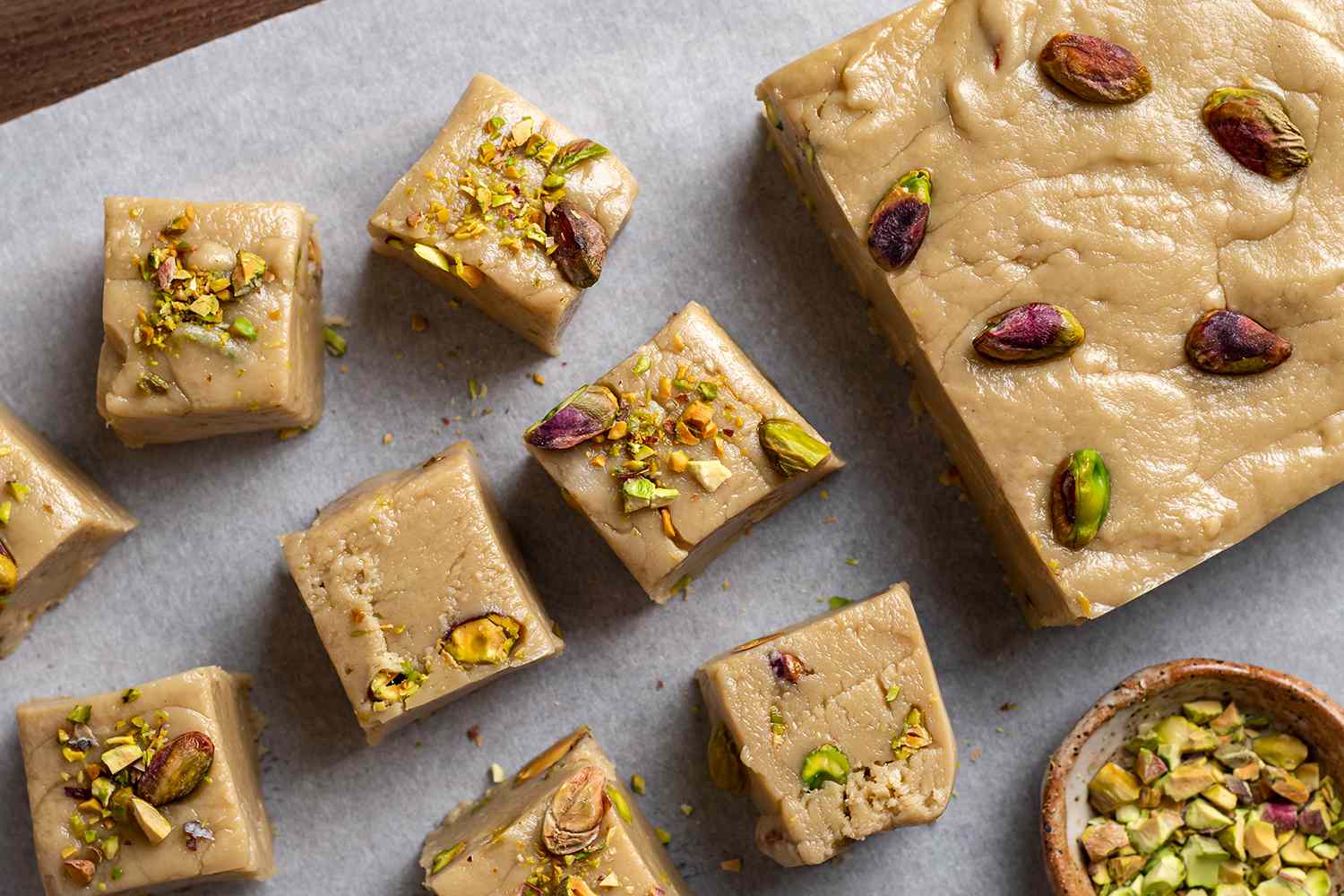

If you’ve never had Turkish tahini helva (aka tahin helvası), imagine a sweet that can’t decide if it’s candy or dessert
and refuses to apologize for either. It’s nutty, rich, slightly “sandy” in the best way, and it melts with a dramatic flair that says,
“Yes, I’m basically sesame butter in a tuxedo.”
In Turkey, tahini helva is commonly sold in blocksplain, pistachio-studded, or cocoa-marbledand sliced into tidy pieces for tea, coffee, or
“just one more bite” situations. The traditional commercial process can include specialty ingredients (like soapwort extract) and a lot of kneading.
But the good news? You can make a fantastic at-home tahini halva recipe with pantry basics, a candy thermometer, and about 15 minutes
of focused stirring (the kind where you ignore texts and pretend you’re on a cooking show).
What Is Turkish Tahini Helva (And How Is It Different From Other Helva)?
“Helva/halva/halvah” is a big family of sweets across many regions. In Turkey, you’ll often hear about two broad styles:
- Flour or semolina helva (cooked in butter/oil with syrup) warm, spoonable, and often served on special occasions.
- Tahini helva (confectionery style) the sliceable, crumbly-smooth sesame sweet we’re making today.
This recipe focuses on the classic sesame halva structure: hot sugar syrup meets room-temperature tahini, then you mix just enough
to bring it together and let it set. The texture you’re aiming for is dense, slightly flaky, and faintly crystallinenot a caramel, not a fudge,
but something uniquely helva.
Main Ingredients (And Why Each One Matters)
Tahini
Tahini is the star, so quality matters. Use a well-stirred, pourable tahini that smells fresh and nutty (not bitter or stale).
Keep it at room temperature before you startcold tahini can seize when the hot syrup hits, and nobody wants a sesame rock.
Sugar + Water
This makes your syrup. The target temperature is what creates the signature helva bite. Too low and it won’t set well; too high and it can turn
brittle or overly crumbly. Precision is your friend here.
Salt + Vanilla (Optional but Highly Recommended)
Salt sharpens the sesame flavor. Vanilla rounds the edges and makes the sweetness taste “dessert sweet” instead of “I just licked a sugar cube.”
Mix-ins (Pistachios, Sesame Seeds, Cocoa, Coffee, Citrus)
Pistachios are a classic Turkish pairing, but this dessert loves customization. Add crunch, swirl in cocoa, or go citrusy for a brighter finish.
Tools You’ll Need
- Candy thermometer (strongly recommended for consistent results)
- Small saucepan (for syrup)
- Heatproof mixing bowl (for tahini)
- Sturdy spatula or wooden spoon (this is not a whisk moment)
- Loaf pan (8.5 x 4.5 inches is ideal) + parchment paper
Turkish Tahini Helva Dessert Recipe (Classic Loaf)
Ingredients
- 1 1/2 cups (about 360g) tahini, room temperature and well-stirred
- 1 1/2 cups (about 300g) granulated sugar
- 1/2 cup (120ml) water
- 1/4 tsp fine salt
- 1 tsp vanilla extract (optional, but recommended)
- 1/3 cup pistachios, chopped (optional)
- 1–2 tbsp toasted sesame seeds (optional)
Step-by-Step Instructions
-
Prep the pan. Line a loaf pan with parchment, leaving overhang so you can lift the helva out later. Lightly grease if you want
extra insurance. (Helva is friendly, but it’s still a dessertdon’t trust it blindly.) -
Mix the tahini base. In a large heatproof bowl, stir together tahini, salt, vanilla, and any mix-ins (like pistachios or sesame).
Set aside. -
Cook the syrup. In a saucepan, combine sugar and water. Bring to a boil over medium-high heat. Once boiling, clip on a candy
thermometer. Cook until the syrup reaches 245°F–250°F (firm-ball stage). Aim for the middle if you’re new: about 248°F
is a great sweet spot for that dense, sandy-ish helva texture.
Tip: If sugar crystals cling to the sides, brush the sides of the pan with a wet pastry brush to discourage graininess. -
Combine (slowly and confidently). Remove syrup from heat. Carefully stream it into the tahini bowl while stirring constantly.
Keep the stream aimed toward the side of the bowl (not directly onto your spoon) to help it incorporate smoothly. -
Stir just enoughthen stop. Mix until it comes together and turns glossy and thick. This can take as little as
20–45 seconds. Overmixing can make the helva excessively crumbly and dry. You’re not kneading bread. You’re persuading candy. -
Pack and set. Quickly scrape into the lined loaf pan, press firmly to eliminate air pockets, and smooth the top. Let cool at room
temperature, then refrigerate until firmat least 2–3 hours, and ideally overnight for the best sliceability. -
Slice and serve. Lift out using parchment. Slice while cold for clean edges, then serve at room temperature for the best melt-in-your-mouth
texture.
Texture Science (The Delicious “Why” Behind the Steps)
Helva is a balancing act between sugar crystals and sesame fat. The syrup temperature controls how concentrated the sugar is, which affects the final
structure. Stirring controls crystal formation and how the syrup emulsifies into the tahini. That’s why the instructions sound oddly specificbecause
candy is basically chemistry with better PR.
- Too cool syrup → softer set, can slump or feel paste-like.
- Too hot syrup → hard, brittle, or aggressively crumbly.
- Overmixing → dry, sandy crumble that falls apart like a cookie that heard a sad song.
Troubleshooting (Because Helva Has Opinions)
My helva is too crumbly.
Most often: you overmixed or cooked the syrup a bit too high. Next time, stop stirring the moment it thickens and pulls from the bowl.
Also make sure tahini is room temp so it incorporates faster.
My helva is too soft or won’t set.
Syrup likely didn’t reach firm-ball stage. Use a thermometer and aim for 245–250°F. Also pack the mixture firmly in the pan; loose filling can make it
seem softer than it is.
It tastes bitter.
Tahini can go rancidespecially if it’s been open a while. Fresh tahini should smell nutty and pleasant. Bitter tahini makes bitter helva.
There’s oil pooling on the surface.
This can happen if the helva gets warm (or if the tahini was especially oily). Store cool, and avoid leaving it near heat. A brief chill often helps it
re-stabilize.
Flavor Variations (Choose Your Own Sesame Adventure)
Pistachio-Rose (Dessert Perfume, But in a Good Way)
Add 1–2 tsp rose water instead of vanilla, plus extra pistachios. Keep rose subtlethis is helva, not a bouquet.
Cocoa Swirl
Divide tahini into two bowls. Stir 2–3 tbsp cocoa into one portion. When the syrup is ready, combine each bowl separately (working quickly),
then layer and swirl in the pan.
Coffee-Cardamom
Add 1 tsp instant espresso powder and 1/2 tsp ground cardamom to the tahini. This version tastes like a Turkish coffee break turned into candy.
Citrus-Sesame
Add 1–2 tsp finely grated lemon or orange zest to the tahini (or to the sugar-water before boiling). Brightens the sweetness and plays beautifully with sesame.
How to Serve Turkish Tahini Helva
- With Turkish coffee or strong espresso (the classic “sweet + bitter” duo)
- With tea (black tea is traditional; mint tea is delightful)
- Crumble over ice cream (vanilla, coffee, or pistachio are all winners)
- Breakfast energy bite (small cube + fruit = surprisingly satisfying)
- Gift it (wrap slices in parchment; your friends will suddenly “just happen” to visit)
Storage Tips
Store helva in an airtight container. At cool room temperature it can keep for about a week, and in the refrigerator it often lasts much longer.
Slice cold for neat pieces, then let portions come to room temp before eating for the best texture.
Bonus: Restaurant-Style “Warm Baked Tahini Helva” Shortcut
In many Turkish restaurants, a beloved dessert is warm baked tahini helvacreamy, spoonable, and topped with nuts. It’s usually made with
store-bought tahini helva (the sliceable block), then transformed with a quick bake.
Easy Warm Baked Helva (Shortcut Method)
- 10–12 oz store-bought tahini helva, crumbled
- 3–5 tbsp milk (add gradually)
- 1–2 tsp lemon juice (optional, for brightness)
- Pine nuts or pistachios for topping
- Heat oven to 375–400°F.
- Mix crumbled helva with milk (start with 3 tbsp) until it looks like a thick paste.
- Add lemon juice if using. Spoon into ramekins, top with nuts.
- Bake 8–12 minutes until warm and slightly puffed. Serve immediately.
Think of it as helva’s cozy sweater version: less sliceable, more spoon-huggable.
FAQ
Do I have to use a candy thermometer?
If you want consistent results: yes. Helva is forgiving in flavor, not in sugar stages. A thermometer removes the guesswork and dramatically improves
your odds of getting that classic texture.
Can I make it less sweet?
You can reduce sugar slightly, but the texture may soften. If you experiment, reduce in small increments and keep the water the same so the syrup still
behaves like syrup.
Is tahini helva vegan?
Many versions are, especially homemade ones like this (tahini, sugar, water, salt, flavorings). Store-bought varieties vary by brand, so check labels
if you have dietary concerns.
Research Note (Sources Consulted)
This article synthesizes common techniques, ratios, and troubleshooting guidance discussed across reputable U.S.-based food publications and recipe sites,
including:
- The Spruce Eats
- Epicurious
- Bon Appétit
- Saveur
- Martha Stewart
- Serious Eats
- Food Network
- King Arthur Baking
- Food52
- Dimitra’s Dishes
- Silk Road Recipes
- The Mediterranean Dish
Kitchen Experiences ( of Real-World Helva Energy)
The first time you make Turkish tahini helva, it feels like you’ve been invited into a delicious little clubone where the membership fee
is paying attention for exactly eight minutes while sugar boils. You start out calm: you line the loaf pan, you stir the tahini, you admire how sesame paste
can look both luxurious and suspiciously like wet sand. Then the syrup begins to bubble and suddenly you’re standing there like a proud scientist watching a
beaker. “Look at me,” you think. “I’m making candy.” Five seconds later, you’re also thinking, “Why is the thermometer climbing so fast?” That’s helva.
There’s a very specific moment where everything clicks: the syrup hits 248°F, you pour it into the tahini, and the mixture turns from glossy ribbon to thick
mass in what feels like one blink. It’s dramatic. It’s also the part where you learn the most important helva lesson: stop stirring before your arms
decide to keep going out of habit. Helva rewards restraint. It’s the dessert equivalent of taking the selfie and putting the phone down instead of
shooting 47 more just to be safe.
You’ll notice the aroma right away: warm sesame, toasted-nut notes, and that candy-shop sweetness. If you add pistachios, the bowl becomes a preview of what
you’ll be snacking on for the next three days “strictly for quality control.” The texture while mixing is oddly satisfyinglike thick frosting that’s trying
to become dough but hasn’t fully committed. Pack it into the pan and you’ll feel the tiny victory of smoothing the top like you’re laying the foundation for
a small, delicious building.
The waiting is the hardest part, not because it’s long, but because helva smells like it’s ready long before it actually is. You put it in the fridge and
every time you open the door you’ll remember it’s there. The first sliceespecially if you cut it coldfeels clean and sharp, and you might get that
satisfying “flake” on the knife. Then you let a piece come to room temperature and it changes personality: it softens, melts quicker, and tastes nuttier,
almost deeper. That shift is part of the charm. Helva isn’t one texture; it’s a range.
And when something goes slightly “wrong,” it’s usually still delicious. Too crumbly? You’ve basically made the world’s fanciest sesame toppingcrumble it
over yogurt or ice cream and pretend it was intentional. Too soft? Chill it longer, slice smaller, serve with coffee. Helva is surprisingly adaptable, and
once you’ve made it once, it stops feeling like candy science and starts feeling like a reliable kitchen ritual: tahini, syrup, quick stir, set, share, repeat.
Final takeaway: This is a dessert with big flavor, minimal ingredients, and maximum “how did you make that?” energy. Keep your tahini fresh,
trust the thermometer, and remember: when helva says “stop mixing,” it means it.