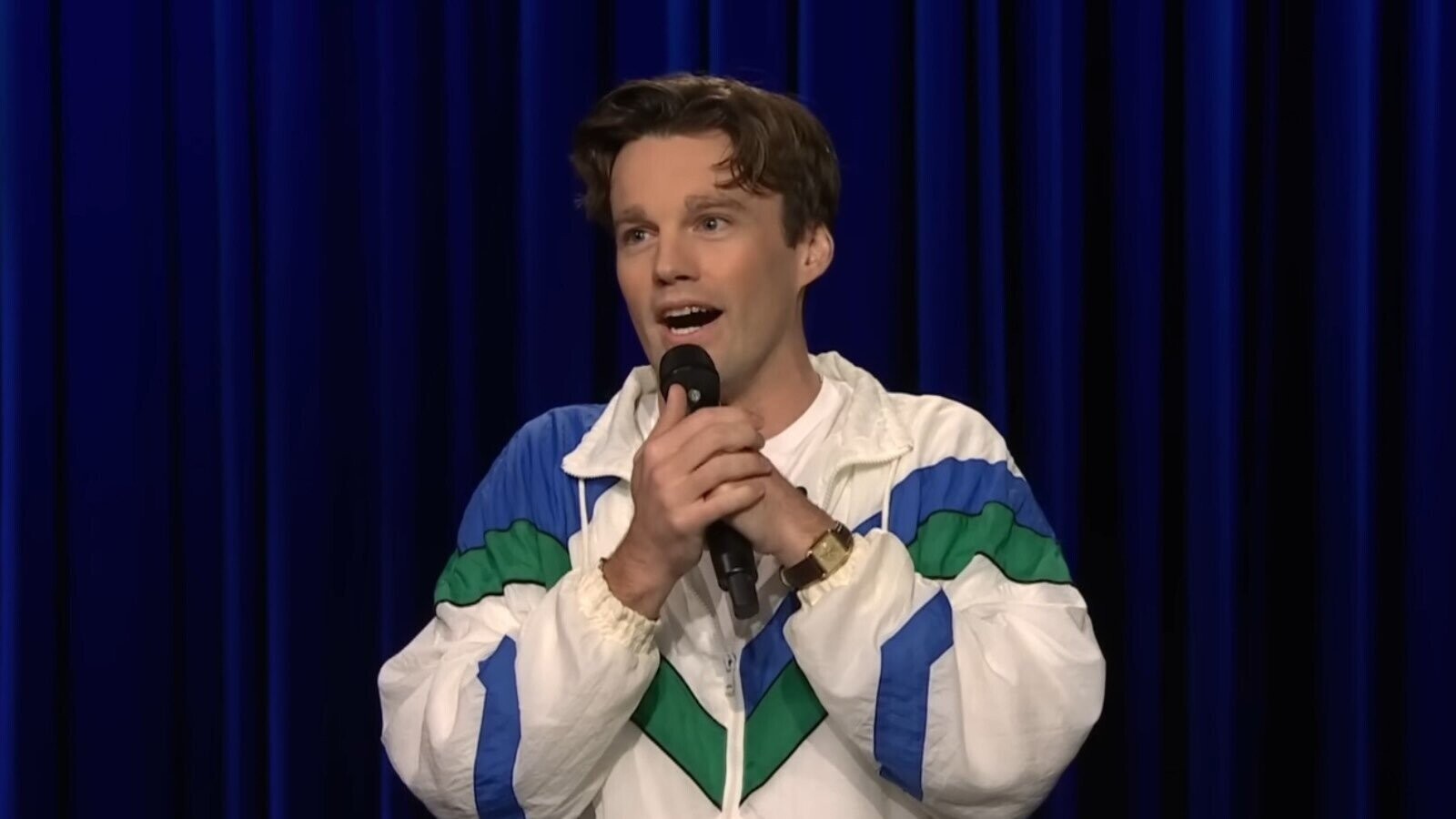

Saturday Night Live loves a good headline, and this one has everything: a new face, a legendary boss, and a spicy phrase that basically translates to “the boys’ club is showing again.” When comedian Tommy Brennan was announced as one of SNL Season 51’s new featured players, the news landed with the usual mix of excitement, skepticism, and hot takes. Some fans immediately asked the obvious question: “Cool, but… where are the women?”
To be clear: Brennan didn’t personally march into Studio 8H carrying a “No Girls Allowed” sign. He’s a stand-up comic getting a huge career break. But the conversation around his hiringespecially the “sausage fest” chattersays a lot about how modern audiences watch SNL now. It’s not just “Is this person funny?” It’s also “What does this casting say about the show’s future?”
Who Is Tommy Brennan (and Why Does SNL Want Him Now)?
Tommy Brennan arrives at SNL with the classic late-night résumé that tends to get comedy bookers smiling: stand-up momentum, industry validation, and proof he can handle a big room. NBC’s own announcement described Brennan as a Just for Laughs New Face of Comedy (2023) who has performed on The Tonight Show Starring Jimmy Fallon, and noted he’s from Saint Paul, Minnesota. In other words, he’s a touring comic who’s already passed a couple of “can you do this on TV without panicking?” tests.
That profile matters because SNL doesn’t just hire “funny.” It hires “funny under pressure.” Live sketch comedy is a weird athletic event where the prize is a laugh and the obstacle course includes costume changes, cue cards, and the constant possibility of being cut five minutes before airtime.
Brennan also fits a tradition the show keeps returning to: the outsider voice with a specific point of view. In a cast full of big personalities and polished character performers, stand-ups often serve as the “human voice” of the showsomeone who can walk out on Weekend Update, talk like a real person, and land jokes that sound like they were thought up by a slightly sleep-deprived genius in a hoodie. (Which, to be fair, is most writers’ rooms.)
What Was Actually Announced: Season 51’s New Additions
The Brennan news didn’t come alone. NBC confirmed five new featured players for SNL Season 51: Tommy Brennan, Jeremy Culhane, Kam Patterson, Veronika Slowikowska, and Ben Marshall (who had already been working on the show in a different role). Season 51 was also positioned as a “shake-up” year coming right after the huge 50th season milestone, with the season premiere set for October 4, 2025 on NBC and Peacock.
On paper, it’s a classic SNL reset: a few exits, a few promotions, and a handful of new people with strong comedy backgrounds. In reality, cast changes always feel like the show’s writing a new thesis statement about what it wants to be. Season 51’s thesis, at least at first glance, looked very… dude-heavy.
Why the “Sausage Fest” Line Stuck (and What It Really Means)
“Sausage fest” isn’t about one guy. It’s shorthand for a pattern: when a high-profile comedy platform refreshes its roster and the result looks like a boys’ soccer tournament. It’s a reaction to imbalanceespecially when the industry has spent years talking about inclusion, representation, and expanding who gets to be the “default funny person” on television.
And here’s the tricky part: SNL already has talented women and non-male performers in its orbit. Viewers can name them. Fans quote their sketches. So when a new hiring wave arrives and a lot of the most public-facing changes are male additions, the optics can feel like a step sideways instead of forwardeven if the writers’ room and leadership decisions are more complicated behind the scenes.
It also doesn’t help that the comedy pipeline feeding SNL has historically skewed male. The show draws heavily from stand-up circuits, improv institutions, and viral comedy spaces thatwhile improvingstill often reward the same types of voices. So the “sausage fest” critique isn’t only about NBC’s announcement. It’s about what kinds of careers get built (and boosted) long before the SNL offer ever arrives.
Lorne Michaels and the Post–SNL50 “Reinvention” Problem
Lorne Michaels has produced SNL for so long that the show’s entire vibe can feel like an extension of his quiet, strategic taste. In interviews leading up to Season 51, Michaels publicly acknowledged that changes were comingpartly because the 50th season was a celebration year, and partly because there’s constant pressure to keep the show from becoming a museum exhibit that occasionally drops a viral sketch.
After a milestone season, the reinvention pressure spikes. The show wants fresh energy, but it also needs stability. It wants new stars, but it also needs people who can carry the live format. In that environment, casting can become conservative in a weird way: decision-makers lean toward candidates who feel “proven,” which can unintentionally reinforce old patterns.
That context doesn’t erase the diversity conversationit explains why it keeps repeating. When a show is trying to protect itself from failure, it often defaults to familiar categories of “safe bets.” Unfortunately, “safe bet” has historically been code for “already accepted by the industry,” and the industry hasn’t always accepted everyone equally.
What Brennan Adds to the Mix (Beyond Being Another Guy With a Mic)
If you zoom in on Brennan as a performernot a symbolthere are reasons his casting makes creative sense. Midwestern comics often bring a grounded, observational style that plays well on SNL, especially in Update pieces where the character is basically “me, reacting to the world.” A fresh featured player who can do stand-up cleanly also gives the show flexibility: monologues, desk pieces, quick cameos, and pre-tapes that need a believable “regular person.”
And because Brennan comes from a stand-up background, he can potentially help the show in a specific way: momentum jokes. Stand-ups are trained to keep the room with them, even if one line misses. That’s valuable live. It’s also valuable when a sketch is wobbling and someone needs to sell it like it was always meant to wobble. Comedy is magic; sometimes the trick is pretending the mess is part of the plan.
Example: The “Weekend Update” Growth Path
Historically, a lot of featured players earn their first real identity through Weekend Update: a recurring character, a point-of-view commentary bit, or a “here’s the new person, let’s see what they do” segment. It’s a smaller stage than a full sketch, but it’s more direct. If Brennan becomes an Update regular, he could quickly go from “new hire” to “oh, that guy.”
The Reality Check: Being New at SNL Means Getting Cut
One reason the Brennan story keeps resurfacing is that it quickly collided with a classic SNL truth: not everything makes air. Early in 2026, news coverage highlighted a Brennan segment that was prepared, performed at dress, and then removed from the live show before NBC released it online. That’s not unusualit’s basically a tradition. “Cut for time” is the show’s polite way of saying, “We liked it, but we liked other things more… and the clock is a monster.”
This is also why representation debates can feel extra sharp. When airtime is scarce, every slot matters. If the lineup is already skewed, and new hires tilt the same way, then who gets room to grow becomes part of the storyespecially for performers who don’t match the “classic” mold the show has leaned on in the past.
So… Is This a Problem SNL Can Fix?
Yesbut not with one casting cycle. If SNL wants the “sausage fest” label to stop following it around like a bad cologne sample, it needs to widen the funnel. That means:
- Expanding scouting beyond the usual comedy hubs and gatekeeper venues.
- Investing in writers and performers whose work isn’t already optimized for the traditional industry pipeline.
- Building development pathways so new hires aren’t thrown into the deep end without airtime or mentorship.
- Taking bigger creative risks on voices that don’t look like “the safe bet,” because audiences are already asking for it.
And it’s worth noting: casting is only the visible tip of the iceberg. A show becomes more diverse not just when it hires different faces, but when it gives those people consistent opportunities to shape sketches, influence tone, and build recurring material that doesn’t get relegated to “once a month, if we have time.”
Conclusion: Brennan’s Big Break, and SNL’s Bigger Conversation
Tommy Brennan joining Saturday Night Live is a big deal for himand a pretty standard move for a show that loves to pull rising stand-ups into the live sketch machine. The reason it became a bigger headline is the cultural context around it: Season 51 wasn’t just a new season, it was a post-anniversary reboot moment. And in reboot moments, every choice looks like a statement.
Brennan didn’t create the “sausage fest” narrative. But his hiring, alongside other male additions, helped reignite a long-running debate about comedy pipelines and who gets platformed. The best-case scenario is that the show uses this moment as fuelnot for blame, but for growth. If SNL wants to stay relevant, it has to feel like it’s listening to the audience it’s trying to make laugh. That audience is diverse. The show should be, too.
Experiences That Fit This Moment (An Extra )
When people talk about joining SNL, they often describe it like stepping onto a moving treadmillwhile someone hands you a costume, a cue card, and a coffee that tastes like it was brewed in 1978. The experience is intense, thrilling, and occasionally humbling in the specific way only live television can deliver. That’s why the “Tommy Brennan tapped…” story feels bigger than a casting bullet point: it’s about what happens when a new comedian enters a legendary pressure cooker while the internet is also grading the show’s choices like it’s a group project.
One common experience for new featured players is discovering that the job isn’t “be funny.” It’s “be funny at the right time, in the right sketch, in the right format, with the right momentum.” You can have a killer idea on Monday, a solid read at the table on Wednesday, and still watch it vanish by Saturday night because the show found something sharper, the host preferred another angle, or the timing simply didn’t work. It’s not personaluntil it feels personal. And that emotional whiplash is part of what makes SNL an unusually effective training ground for comedy careers.
Another experience that fits this topic is the way new cast members become symbols before they become familiar. A rookie might be hired because they have a unique voice, but the first week online discourse can flatten them into a placeholder: “another stand-up guy,” “another viral TikTok comedian,” “another person who looks like the last three people.” That’s unfair on a human level, but it’s predictable on an internet level. It’s also why the “sausage fest” conversation tends to latch onto the newest names: audiences aren’t mad at the individual; they’re reacting to the pattern the individual appears inside.
Then there’s the most classic SNL experience of all: being cut. Performers talk about the weird ache of doing something that works in dress rehearsalhearing real laughs, feeling the piece landonly to learn it won’t air live. In the moment, it can feel like the rug got yanked. Later, it becomes a badge of honor. “Cut for time” is basically the show’s unofficial internship program: you learn quickly that success at SNL isn’t only getting on the show, it’s getting back on the show again, and again, until the audience recognizes you.
Finally, there’s the experience of adapting your comedy identity to a team sport. Stand-up is often solitary: you write, you perform, you adjust. SNL is collaborative chaos: writers, cast, producers, and the week’s host all shaping what survives. For someone like Brennan, the adjustment isn’t only stylisticit’s social. You have to pitch, rewrite, compromise, and still deliver like the material sprang fully formed from your brain. That’s part of why landing the job matters. It’s also why the wider conversation matters. When the pipeline is narrow, fewer voices get the chance to learn these lessons on this stage. And if SNL is serious about its next era, the most valuable “experience” it can create might be making more room for more kinds of funny.