
Picture this: you get to the end of a long day, your battery icon is doing the red-blinking-of-doom thing, and instead of hunting for an outlet, you just put your phone face up on the table near a window. No cables. No charger. Just sunlight quietly topping up your battery while you scroll memes. That’s the dream behind emerging solar coating and solar paint technologies that could one day help power your phone.
We’re not quite at the “never charge your phone again” stage, but scientists and startups are getting surprisingly close to turning ordinary surfaces—glass, plastics, and even phone cases—into mini power plants. In this article, we’ll unpack how these ultra-thin solar coatings work, why they’re different from normal solar panels, what they could realistically do for your smartphone, and what still needs to happen before your next upgrade comes with a built-in sun-powered boost.
What Exactly Is a Solar Coating?
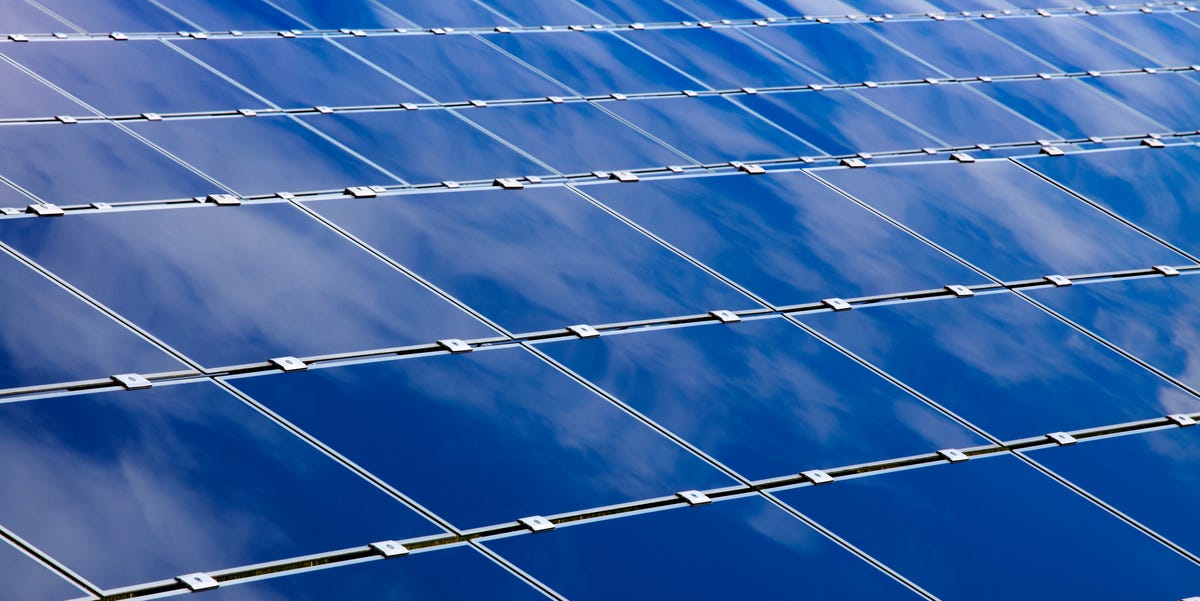
When most people think of solar power, they picture big blue panels on rooftops. A solar coating (or photovoltaic coating, sometimes called solar paint) flips that idea around. Instead of a bulky panel, the light-harvesting material is engineered into an ultra-thin film or paint-like layer that can be:
- Sprayed or printed onto glass or plastic
- Laminated as a flexible film onto surfaces like phone cases or laptop lids
- Integrated into window glass during manufacturing
Inside that coating are special materials that convert light to electricity. Different research groups use different tricks:
- Perovskites — crystal structures that can be dissolved into an “ink” and coated onto surfaces. These are the current superstars in high-efficiency thin solar films.
- Organic or dye-based semiconductors — think of them like highly sophisticated pigments that also happen to generate electricity when light hits them.
- Nano-structured coatings — engineered surfaces that trap and redirect light to tiny solar cells hidden at the edges or behind the main surface.
The big idea: if you can make these coatings thin, flexible, and transparent enough, you can turn things we already carry and stare at all day—windows, screens, glossy back panels—into subtle, always-on energy harvesters.
From Skyscraper Windows to Smartphone Screens
One of the hottest testbeds for solar coatings right now is not phones, but windows.
Several companies and research teams are developing transparent solar coatings that harvest parts of the light spectrum while still letting visible light pass through. That means a skyscraper’s glass facade could quietly generate power without looking like it’s covered in solar panels.
Why does this matter for your phone? Because the same optical tricks and materials that work for windows can be scaled down to gadget-sized surfaces:
- Phone screens are already engineered glass layers with precise coatings.
- Back panels and cases are flat, exposed surfaces that often sit in daylight.
- Your phone is already a carefully layered sandwich of glass, plastic, metals, and adhesives—adding one more functional layer is conceptually straightforward (even if it’s a nightmare for the engineers).
As transparent and semi-transparent solar coatings mature on architectural glass and car windows, phone manufacturers and accessory brands can adopt similar materials to add light harvesting to mobile devices.
How a Solar Coating Could Power Your Phone
Let’s be honest: your phone is a little power hog. Between a bright display, 5G radios, background apps, GPS, and cameras, modern smartphones often burn through 10–20 watt-hours of energy per day. A thin solar coating isn’t going to replace your charger overnight—but it doesn’t have to in order to be useful.
Think “Trickle Charger,” Not Full Power Plant
A realistic near-future scenario looks like this:
- The back of your phone or your phone case is covered in an ultra-thin solar film.
- In bright sunlight, that film might generate up to a couple of watts of power.
- Indoors or in cloudy conditions, it might only provide a fraction of that, but still enough to slow battery drain.
Instead of charging from 0% to 100% on sunlight alone, the coating acts more like a battery “bodyguard”—adding a steady trickle of energy whenever light is available. Over a day, that could translate to:
- Several hours of extra standby time
- A safety cushion of power in an emergency when there’s no outlet
- Reduced depth of discharge each day, which can extend overall battery lifespan
Where the Power Comes From
The power output of a solar coating depends on three big factors:
- Efficiency: How much of the sunlight hitting the coating is converted to electricity.
- Area: How much surface is covered—more square inches, more power.
- Light conditions: Direct sun at noon beats cloudy shade near sunset.
Traditional silicon solar panels on rooftops convert around 20% of sunlight into electricity. Some advanced thin films and perovskite coatings have hit comparable or even higher lab efficiencies. However, once you put them on small, non-ideal surfaces like the back of a phone that spends half its life in your pocket, real-world performance drops.
Still, even modest power output can make a big difference for something as energy-thrifty as idle phone usage. Your device burns far less power when the screen is off and it’s mostly just checking notifications in the background. That’s the sweet spot where a solar coating could quietly offset a meaningful chunk of daily consumption.
Solar Coatings vs. Traditional Solar Phone Cases
Solar phone cases and power banks already exist—usually with a small silicon panel glued onto the back. So what’s so special about a next-generation solar coating?
1. Design Freedom
Old-school solar cases tend to look like mini roof panels strapped to your phone: black, bulky, and not exactly “sleek flagship” energy. A coating can be:
- Almost invisible, especially when integrated under a colored or patterned finish
- Flexible, bending with your case instead of cracking
- Color-tuned, so designers don’t have to choose between “pretty phone” and “power-generating brick”
2. Weight and Thickness
A thin-film solar layer can be just micrometers thick. That’s thinner than a human hair and dramatically lighter than a rigid panel. For phone makers who agonize over every fraction of a millimeter and gram, that’s a huge win.
3. Manufacturing at Scale
Some solar coatings are engineered to be:
- Spray-coated across large surfaces
- Roll-to-roll printed on flexible films, almost like printing newspapers
- Laminated into existing glass and plastic layers
That makes them more compatible with high-volume manufacturing of phones, laptops, wearables, and accessories, where cost per unit and speed are everything.
What’s Holding Solar Coatings Back?
If this sounds so great, why isn’t your current phone already sipping sunlight like an overachieving plant? As you might suspect, the universe has given engineers a few challenges.
Durability and Real-World Abuse
Phones have a tough life: pockets full of keys, accidental drops, summer dashboards, winter sidewalks, spilled coffee, beach sand, you name it. Solar coatings must survive:
- Scratches from daily wear and tear
- Moisture and sweat (especially for wearables)
- Heat cycles from charging, gaming, and hot cars
- UV exposure from the very sunlight they rely on
Many promising thin-film materials, particularly early generations of perovskites, are sensitive to moisture and heat. Researchers are improving stability with protective layers and clever encapsulation, but those add complexity and cost.
Material Safety
Some high-performance solar materials historically relied on small amounts of heavy metals like lead. For a rooftop panel sealed away on your house, that’s manageable. For something you hold in your hand all day, regulators and manufacturers are understandably picky. A lot of current research focuses on:
- Reducing or eliminating toxic elements
- Improving recycling and end-of-life handling
- Finding earth-abundant, safer alternatives
Power vs. Expectations
The final challenge is human psychology. If you stamp “solar” on a phone, many people will expect a magic device that never needs charging. In reality, early solar-coated phones will likely:
- Provide a noticeable boost, not complete independence from wall chargers
- Shine in specific scenarios (outdoors, travel, emergencies) rather than daily heavy use
- Work best as a smart backup, not a primary power source
Managing expectations will be key so that early adopters see the technology as clever and helpful, not overhyped.
What Using a Solar-Coated Phone Might Actually Feel Like
Let’s fast-forward a bit and imagine you’ve bought a phone with a solar-coated back panel or a case that looks like a normal accessory but quietly harvests light.
Everyday Life with Bonus Sun Power
In day-to-day use:
- Your phone trickle-charges whenever it’s on your desk by a window or face-down in the sun.
- Long outdoor days—picnics, work site visits, beach trips—leave you with more battery than you’d normally expect.
- On a busy day with lots of navigation and photos, the solar boost won’t replace plugging in, but it might keep you from hitting 0% before you find an outlet.
It’s similar to how wireless charging felt at first: not essential, but once you get used to your battery sliding up a few extra percent just by existing on the table, it’s hard to go back.
Where It Could Really Shine: Emergencies and Off-Grid Time
The real “wow” moment for solar-coated phones will probably be in edge cases:
- Power outages: Keeping enough charge to make calls, check maps, or send messages during extended blackouts.
- Travel: Backpacking, camping, or long road trips where every extra bit of self-generated power is gold.
- Developing regions: For communities with unreliable grid access, even a small daily solar top-up can be a game changer.
Your phone might not live entirely off sunlight, but a smart coating could turn it into a more resilient, self-sufficient device.
When Might You Actually Buy One?
Predicting exact timelines is risky business (some of us are still waiting on flying cars), but we can outline a likely path for solar coatings and phones:
- Accessory-first phase: Expect more solar-coated phone cases and power banks that use advanced thin films, marketed to outdoor enthusiasts and travelers.
- Special-edition phones: A few brands may release models with solar-enabled backs or side panels as attention-grabbing features, ideal for markets with lots of sun.
- Quiet integration: Over time, solar-harvesting layers may become just one more built-in feature, like water resistance or wireless charging—not the main selling point, but a nice “oh, cool” bonus.
The biggest leap won’t just be in materials, but in system-level design: smarter power management, heat control, and software that knows how to make the most of the variable trickle of energy coming from sunlight.
of Real-World Experiences and Scenarios
Because commercially available, fully solar-coated smartphones are still in their early days, we don’t yet have long-term user reviews like we do for regular phones. But we can blend what we know from early solar phone cases, concept devices, and real-world solar use into practical, experience-based scenarios. Think of this as a sneak peek at what life with a solar-coated phone could feel like in practice.
Scenario 1: The “Always-On Commuter”
Imagine someone who spends a lot of time commuting—train in the morning, lunch outside, evening commute home. With a solar-coated phone or case, their device is picking up sunlight during short, repeated windows of time:
- They stand near the window on the train: the phone’s back catches indirect sunlight.
- At lunch, the phone rests on the table while they eat, sipping energy between social media checks.
- On the way home, it rides in a bag pocket near the top, catching glancing light at every stop.
None of these moments alone turns into a full charge. But over days and weeks, this person notices something subtle: that “I’m under 20% before dinner” anxiety happens less often. They still plug in at night, but the solar boost acts like invisible battery insurance.
Scenario 2: Weekend Hike with Backup Sun Power
Now picture a weekend hiker. They rely on their phone for trail maps, photos, and the occasional “Look how pretty this is” message. In the past, they’d bring a heavy power bank. With a solar-coated case:
- The phone charges slowly while clipped to a backpack strap in the sun.
- Breaks on the trail double as charging sessions when the phone sits face-down on a rock.
- By the time they return to the trailhead, the battery percentage is higher than they expected for such a long day of GPS and camera use.
They might still carry a backup battery for safety, but it becomes more of a “just in case” accessory rather than a guaranteed necessity.
Scenario 3: City Life, Window Desks, and Micro-Charging
In many offices and home workspaces, phones spend hours sitting near windows on desks. A solar coating or transparent solar layer in the back glass makes that idling time productive. You might:
- Drop your phone on your desk for meetings, and it quietly gains a few percentage points of charge.
- Find that your phone ends the workday with 10–15% more battery than you’re used to.
- Notice that on sunny days, your battery life feels “mysteriously better” even though your habits are the same.
Over months, that translates into fewer “panic charges” at 3 p.m., less wear on your battery, and a small but satisfying feeling that you’re using renewable energy in a very personal way.
Scenario 4: Emergencies and Power Outages
Perhaps the most compelling experience comes during emergencies. Imagine a storm knocks out electricity for a day or two. Even if your solar-coated phone can’t fully recharge itself, it can:
- Recover enough power from sunlight to send messages and receive critical updates.
- Extend your usable battery over multiple days with careful, low-brightness use.
- Give you peace of mind that as long as there’s daylight, you’re not completely stranded at 0%.
That’s not just convenience; in some situations, it could be genuinely life-improving.
What These Experiences Have in Common
Across all these scenarios, a pattern emerges:
- The solar coating rarely replaces charging entirely.
- Instead, it changes your relationship with the battery: less stress, more resilience, more independence from wall outlets.
- The benefits are most obvious in bright-light, outdoor, or window-side situations, but even small daily boosts add up.
In other words, a solar-coated phone won’t feel like science fiction. It’ll feel like a normal phone whose battery just seems a bit smarter, a bit more stubborn about staying alive, and a bit more in tune with the sunshine around you.
Conclusion: A Brighter Future for Your Battery
Solar coatings won’t turn your phone into a tiny sun-powered superhero overnight. But as transparent, thin-film, and perovskite technologies mature, they’re poised to become one more clever tool in the never-ending quest for better battery life. From window glass that feeds building power systems to phone cases that quietly harvest sunlight on your commute, the same core idea is spreading: we’re surrounded by light, so why not use it?
In the not-so-distant future, you might look back on wall-hugging, cable-tangled days the way we now look back on phones without Wi-Fi. Your next upgrade may still ship with a charger—but thanks to a smart solar coating, you may find yourself reaching for it less and less.