
I used to think “good lighting” was something you either inherited with a house (like hardwood floors) or earned by marrying an electrician.
Then I tried a set of under-cabinet lights on a whimbecause they were on saleand suddenly my kitchen stopped feeling like a cave where onions
go to be chopped in the shadows.
Under-cabinet lighting is one of those rare home upgrades that’s fast, noticeable, and doesn’t require you to take “before” photos that hurt your feelings.
It makes countertops brighter for cooking, reduces weird shadows from overhead lights, and can even make your cabinets look more expensive than they have any
business looking. And the best part? Once you realize how useful they are in the kitchen, you start “seeing” dark spots everywhereclosets, pantries, laundry rooms,
bookshelvesand you’ll want to light them all up like a tasteful runway show.
Why under-cabinet lighting feels like a tiny remodel (without the tiny remodel price)
In most kitchens, overhead fixtures do a decent job lighting the roomuntil you step up to the counter. Your body blocks the light, and suddenly you’re prepping
dinner in your own personal eclipse. Under-cabinet lights solve that by putting the light exactly where you need it: on the work surface.
It’s also a style upgrade. A soft, even glow along the backsplash can make everyday kitchens look more polished and intentional. That “high-end kitchen” vibe often
isn’t a new countertopit’s layered lighting: ambient (general), task (work areas), and accent (mood). Under-cabinet lighting pulls double duty as task and accent,
depending on brightness and color temperature.
What kind of under-cabinet light should you buy?
There’s no single “best” optionthere’s the best match for your space, your tolerance for wires, and your willingness to drill anything into anything.
Here’s the quick rundown of the main types you’ll see on sale (and why each one exists).
1) Light bars (also called linear lights)
Light bars are slim fixtures that mount under cabinets and spread light evenly. They’re great for kitchens because they can run the full length of a cabinet run,
and many kits let you connect multiple bars together. If you want a clean look with fewer “dots” of light, bars are the straightforward choice.
- Best for: consistent countertop lighting, longer cabinet runs
- Look and feel: clean, modern, “installed”
- Typical power: plug-in or hardwired; some newer rechargeable options exist
2) Puck lights
Puck lights are small round fixtures (think hockey puck shape) that create pools of light. They can be charming in glass-front cabinets or display areas.
In a kitchen, they can work wellbut you’ll usually need multiple pucks to avoid “spotlight” gaps.
- Best for: display cabinets, small sections, highlighting a coffee station
- Watch out for: bright dots and shadows between fixtures if spaced too far apart
3) LED tape / strip lights
Strip lights are flexible, cut-to-length lighting that can be tucked under a cabinet lip for an almost invisible install. They’re excellent for even lighting
when you use a quality strip (and ideally pair it with an aluminum channel/diffuser for a smoother glow).
- Best for: custom lengths, seamless lines of light, accent + task when bright enough
- Great bonus: easy to continue into shelves, pantries, and “odd” spaces
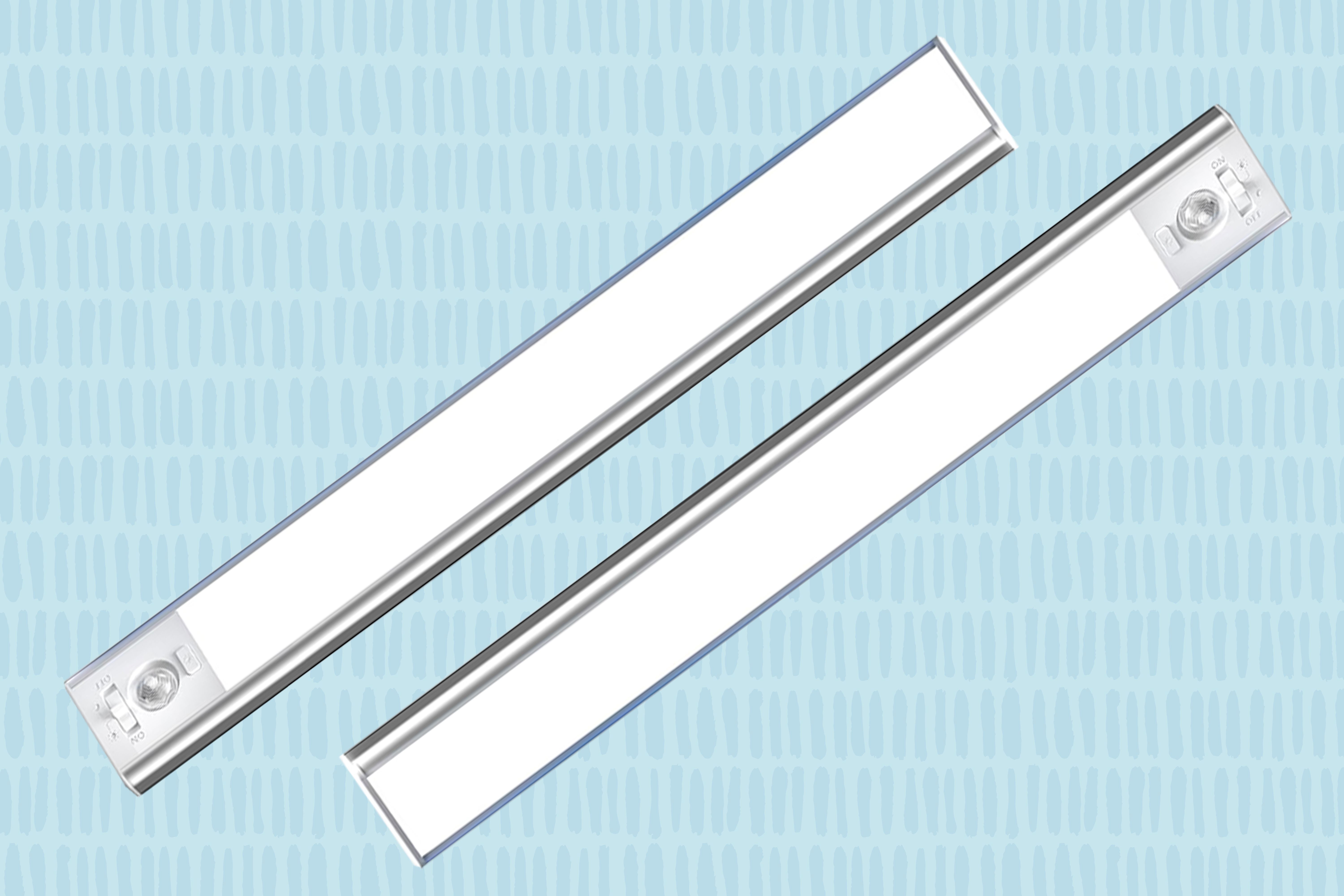
4) Wireless, rechargeable motion-sensor light bars
These are the lights that turn normal people into under-cabinet lighting evangelists. Many come with magnets (or magnetic plates), recharge via USB,
and can run in motion-sensor modeperfect for closets and pantries. They’re also an easy kitchen upgrade if you don’t want visible cords or you don’t have
outlets where you need them.
- Best for: renters, quick upgrades, closets and pantries, “I refuse to deal with wiring” households
- Real talk: you’ll eventually need to recharge them, so pick spots where removal is easy
The checklist I use before I hit “Add to Cart”
When under-cabinet lights are on sale, it’s tempting to grab the cheapest kit and call it a day. But lighting has a sneaky way of punishing rushed decisions.
Use this checklist to avoid ending up with lights that are too dim, too blue, or too flimsy to stay put.
Brightness: how much light do you actually need?
Brightness is measured in lumens. For under-cabinet lighting, you’ll often see “lumens per foot” (for strips) or “lumens per fixture” (for bars/pucks).
A helpful rule of thumb:
- Accent glow: roughly 100–200 lumens per foot
- Task lighting: roughly 200–500 lumens per foot (or enough bars/pucks to eliminate shadows)
If your goal is safe, easy food prepreading recipes, chopping, seeing what you’re doingaim closer to the task range. If you want a soft evening glow,
aim lower or prioritize a reliable dimmer.
Color temperature: warm, neutral, or “did my kitchen turn into a dentist office?”
Color temperature (Kelvin) changes the mood instantly. Many kitchens look best with warm-to-neutral whites:
- 2700K–3000K: warm and cozy (great for wood tones and a welcoming feel)
- 3500K–4000K: cleaner and crisper (often better for task-heavy prep zones)
- 5000K+: very cool daylight (some people love it; many kitchens look a bit harsh)
If you’re unsure, 3000K is a safe middle ground for most homes. If you already have cool overhead lights, matching them can help the room feel cohesive.
Color rendering (CRI): why your tomatoes might look sad under bad lights
CRI (Color Rendering Index) measures how accurately colors look under a light source. Higher is better, especially in kitchens where you want food and surfaces
to look natural. If you can, look for CRI 90+ for the most flattering, true-to-life color.
Dimming and controls: tiny feature, huge happiness
Dimming is the difference between “perfect prep lighting” and “why is my kitchen interrogating me?” Some kits have an inline dimmer, some use a remote,
and smart versions use an app/voice control. Even if you don’t think you care about dimming now, you will the first time you want a softer glow at night.
Power options: plug-in vs hardwired vs rechargeable
Power is where practicality lives. Here’s the decision tree:
- Plug-in: easiest for bright, consistent lightingif you can hide the cord or route it neatly.
- Hardwired: cleanest look and always-ready powerbut usually best handled by a licensed electrician if you’re adding wiring.
- Rechargeable/battery: fastest install and great for closets/pantries; ideal when outlets are inconvenient.
For kitchens where you cook daily, plug-in or hardwired is often the most “set it and forget it” solution. For closets and pantries, rechargeable motion-sensor bars
are ridiculously convenient.
Safety certifications: boring until you smell something weird
For anything that plugs inor lives near cooking and cabinetslook for recognized safety certifications (commonly UL, ETL, or CSA listed).
It’s an easy way to filter out questionable products, especially when shopping fast-moving sale pages.
Where these lights shine beyond the kitchen
The funny thing about under-cabinet lights is that they’re not actually “under-cabinet” lights. They’re “small-space lighting” that happens to be marketed to kitchens.
Once you have a few, you start solving annoyances you didn’t realize were lighting problems.
Closets and wardrobes
Closets are famous for two things: eating socks and hiding dark corners. Motion-sensor bars make it easy to see clothes, labels, and that one shoe you only lose
when you’re already late. If you’ve ever tried to match black pants to slightly different black pants in a dim closet, you already understand the value.
Pantries (aka the snack cave)
Pantries often have one ceiling bulb that lights the doorway and ignores everything else. A strip or bar under a shelf turns the whole space into a tidy,
visible inventory system. Bonus: it makes labels readable without pulling everything out like you’re filming a cooking show challenge.
Laundry rooms
Under-shelf lighting over detergents and stain removers is a small change that prevents a lot of “is this the bleach bottle or the fabric softener?” moments.
Task lighting makes sorting, pre-treating, and folding less annoyingespecially if your laundry area is tucked into a hallway or basement corner.
Home office shelves and workbenches
A slim light bar under a shelf can eliminate shadows on a desk, craft table, or workbench. If you do anything detail-heavywiring, painting, sewing, assembling
you’ll appreciate light aimed at the workspace instead of your forehead.
Hallways, stairs, and “midnight snack routes”
A low, soft light near the floor (or under a console shelf) can act as a night light that doesn’t torch your eyeballs. Motion-sensor options are especially good here:
enough guidance to navigate safely, without turning your home into a stadium at 2 a.m.
Install notes: the “don’t-make-it-weird” guide
Installation can be as simple as peel-and-stick, or as involved as cutting holes and running wires. The goal is the same either way: smooth, even light on the surface
without glare, droopy strips, or a cord situation that looks like you lost a battle with a phone charger drawer.
Positioning: light the counter, not your eyeballs
Placement matters. If you mount lights too far back, you’ll light the backsplash and leave the counter dim. Too far forward and you can create glareespecially on glossy
countertops. A practical approach is to mount the light closer to the front cabinet edge for maximum work-surface illumination, then adjust slightly back if you want a
mix of counter + backsplash glow.
Getting adhesive to actually stick
Peel-and-stick is wonderful until it isn’t. For tape/strip installs:
- Clean the cabinet underside with a degreaser and let it dry completely (kitchen cabinets collect invisible cooking residue like it’s their job).
- Warm the adhesive slightly (room temperature is fine; don’t go full hairdryer-crazy) and press firmly along the run.
- If your cabinets are textured or dusty wood, consider mounting channels or using small clips/screws where appropriate.
Managing cords like a grown-up
For plug-in bars, cord management is half the “looks good” equation. Use adhesive cable clips to route cords neatly along cabinet corners, and aim for the shortest,
simplest path to the outlet. If you have a microwave cabinet or a hidden outlet in an upper cabinet, you can keep the power supply out of sight entirely.
Hardwired lighting: when to call an electrician
If you’re replacing an existing hardwired fixture, you may already have a safe setup in place. But if you’re adding new wiring, cutting into walls, or tying into circuits,
it’s smart (and often required) to bring in a licensed electrician. Kitchens are high-use spaces, and you want everything properly protected and up to code.
Shopping smart when they’re on sale
“On sale” can mean “great deal” or “someone returned it twice and now it’s haunting the clearance aisle.” Here’s how to shop like you’re upgrading your home,
not adopting a problem.
Compare kits, not just prices
Two kits can look identical in photos and behave completely differently in real life. When comparing sale options, check:
- Total illuminated length (how many feet of cabinets will it cover?)
- Brightness (lumens per foot or per bar)
- Controls (inline dimmer, remote, motion sensor, smart app)
- Power (rechargeable vs plug-in vs hardwired)
- Expandability (can you add more sections later?)
Look for the “sneaky extras” that change the experience
Some sale kits include the things you’d otherwise buy later: extra connectors, extension cords, cable clips, mounting channels, or adhesive plates for magnetic bars.
Those small pieces can save you multiple trips to the hardware storeor the classic DIY penalty: stopping mid-install because you’re missing one $3 part.
Pick the right vibe for the room
For kitchens, many people prefer a warm-to-neutral white that complements cabinets and counters. For closets and utility areas, a slightly cooler neutral can feel crisp.
If your household can’t agree, look for adjustable color temperature (“tunable white”) so you can switch between cozy and bright depending on the task.
The bottom line: why I keep buying these lights for “one more spot”
Under-cabinet lighting is practical, flattering, and surprisingly satisfying. It makes food prep easier, reduces shadows, and adds a finished look that reads like
“I planned this,” even if you installed them in sweatpants on a Tuesday night.
When you catch a good sale, it’s one of the smartest low-risk upgrades you can make. Start with the kitchen. Then, when you realize you can finally see the back
corner of your pantry without using your phone flashlight like a raccoon, you’ll know what happens next: closets, shelves, laundry room, and beyond.
My 500-Word Experience Add-On: How These Lights Took Over My House (In a Good Way)
I originally bought my first set for the kitchen because I was tired of chopping vegetables in what I can only describe as “moody restaurant lighting.” The overhead
fixture made the room bright enough to exist in, but not bright enough to confidently tell the difference between a shallot and an onion at 7 p.m. on a weekday.
The moment I installed the lights under the upper cabinets, the counter stopped being shadowy. My cutting board looked like it had been promoted to a better job.
The unexpected win was how the kitchen felt cleaner. Not because the lights magically washed dishes (I checked), but because good lighting highlights the whole work
surface evenly. Crumbs no longer had a witness-protection program. It also made recipes easier to followmy cookbook pages weren’t half-lit anymore, and I wasn’t
leaning around trying to catch the “bright spot” while measuring spices.
After that success, I got bold. I put a motion-sensor rechargeable bar in the pantry. Game changer. Suddenly I wasn’t doing the “hold the door with one hip while
aiming my phone flashlight with my elbow” routine. The light popped on as I walked up, and I could actually read labels without pulling every can forward like I was
auditioning for a pantry makeover show. I also noticed I bought fewer duplicatesbecause I could finally see that yes, we already had three jars of paprika.
Next came the closets. I didn’t realize how much closet lighting affects your mornings until I could see my clothes clearly without turning on the bedroom light.
The motion sensor made it feel fancy, like the closet was welcoming me, even if it was mostly welcoming me to the reality that I still don’t have enough matching socks.
I placed the bar near the top front edge so it lit the hanging clothes instead of the back wall. That one decision prevented the “everything looks gray” problem.
My favorite “bonus” install was a small light bar under a shelf in the laundry area. It’s not glamorous, but it made stain-treating and sorting easierespecially at night.
It also reduced the chance of grabbing the wrong bottle in a half-lit rush. And once the laundry space was brighter, it felt more usable, which is the nicest thing anyone
has ever said about a laundry space.
The main lesson: start with one high-impact spot (kitchen counters), then let convenience guide you. Choose a warm-to-neutral color temperature for cozy living areas,
prioritize CRI if you care about how colors look, and don’t underestimate dimming. The lights I love most aren’t just brightthey’re flexible. And if you catch them on sale,
you’ll probably end up doing what I did: buying “one more set” for “one more spot” until your home quietly becomes well-lit, functional, and just a little more enjoyable.