
Markets have changed their outfits a hundred times over the past 80 years. The postwar boom wore a gray flannel suit. The dot-com bubble showed up in cargo pants and impossible optimism. The housing mania strutted in with adjustable-rate swagger. The pandemic era arrived like a plot twist nobody ordered, followed by inflation, rate hikes, and a fresh round of “this time is different” chatter. Yet under all that wardrobe drama, market cycles keep using the same script: greed, fear, easy money, tighter money, leverage, storytelling, regret, rinse, repeat.
That is why the smartest way to understand market history is not to hunt for one magical forecast book. It is to build a shelf. No single title can decode every turn from the 1940s to today, but the right stack of books can explain why booms feel invincible, why busts feel permanent, and why investors keep falling for old tricks dressed up in shiny new jargon. Think of this list as your market-cycle decoder ring, minus the cheap cereal prize quality.
If you want to understand how stocks, credit, real estate, policy, and investor psychology have interacted across the postwar era, these are the books that do the heavy lifting. Some explain valuation. Some explain bubbles. Some explain central banks. Some explain why humans become financial poets right before becoming financial cautionary tales.
Why Market Cycles Keep Repeating
Before the reading list, it helps to define what a market cycle actually is. A cycle is not just a chart going up and down. It is a loop involving economic growth, interest rates, credit availability, investor mood, and asset prices. When money is easy and confidence is high, people stretch. They borrow more, pay more, and convince themselves that old valuation rules are quaint museum pieces. When liquidity tightens or reality intrudes, the reverse happens. Risk appetite vanishes, weak business models get exposed, and words like “discipline” suddenly return to fashion.
The important thing is that cycles are never driven by only one force. The best books understand that valuation matters, but so do stories. Policy matters, but so does crowd behavior. Balance sheets matter, but so does memory. Especially financial memory, which tends to be about as durable as a soap bubble in a thunderstorm.
10 Books That Explain the Full Movie
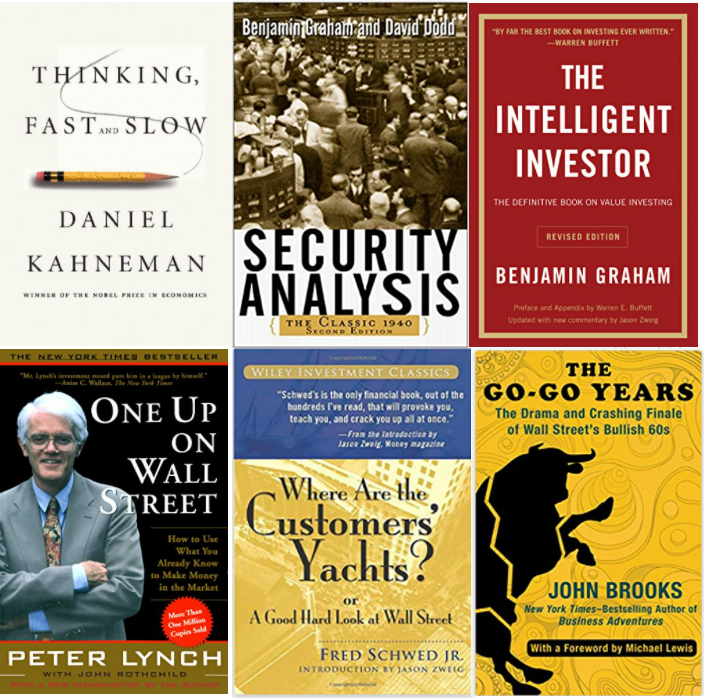
1. The Intelligent Investor by Benjamin Graham
If market cycles had a grandfather clock, this would be it. Graham’s classic is the essential guide to value, patience, and margin of safety. It is not flashy, and that is exactly the point. The book helps explain the long postwar expansion because it teaches investors to separate price from value, enthusiasm from analysis, and temporary noise from lasting business quality.
When markets are rising, Graham sounds almost annoyingly cautious. Then the cycle turns, and suddenly he sounds like the only adult in the room. That is why this book still works for understanding everything from the Nifty Fifty era to the dot-com mania to today’s expensive corners of the market.
2. A Random Walk Down Wall Street by Burton G. Malkiel
Malkiel’s book is essential because every market cycle produces a fresh crop of people who believe they have discovered a permanent edge over everyone else. Bull markets are excellent at turning luck into confidence. This book politely, and sometimes ruthlessly, throws cold water on that illusion.
What makes it so useful across 80 years of market history is its emphasis on market efficiency, diversification, and the danger of overconfidence. It helps explain why speculative surges look brilliant in real time, why active genius often fades when the cycle changes, and why long-term investors are usually better served by process than prophecy.
3. Manias, Panics, and Crashes by Charles P. Kindleberger and Robert Aliber
If you only want one book that maps the anatomy of a financial blowup, start here. Kindleberger’s framework is simple and powerful: displacement, boom, euphoria, distress, and crash. Once you see that structure, you start spotting it everywhere. Technology booms. Housing bubbles. Credit frenzies. Crypto episodes. The labels change; the emotional machinery does not.
This is the book that helps explain why market cycles feel new to participants and old to historians. It turns chaos into pattern recognition, which is about as close to a superpower as finance allows.
4. A Short History of Financial Euphoria by John Kenneth Galbraith
This is the slim book with the heavyweight punch. Galbraith writes with the dry confidence of someone who has seen enough speculative foolishness to stop being surprised by it. His core message is that financial memory is short, leverage is dangerous, and people love to believe that rising prices are proof of genius.
It is particularly good for understanding the recurring emotional climate of late-cycle markets. If you want a quick, sharp explanation of why every generation invents new reasons to ignore old warnings, this book gets there faster than almost anything else on the shelf.
5. Devil Take the Hindmost by Edward Chancellor
Chancellor offers a broader historical tour of speculative behavior, and that long lens is exactly why the book matters. Reading it makes modern bubbles look less like one-off accidents and more like recurring human performances. Very expensive performances, usually.
This book is especially useful when studying the late 1990s and any period in which a new technology becomes the excuse for abandoning common sense. It shows how speculation repeatedly borrows the language of innovation, progress, and destiny. Sometimes the innovation is real. The overpricing can still be real, too.
6. Irrational Exuberance by Robert J. Shiller
No serious market-cycle reading list skips Shiller. This book became famous for good reason: it is one of the clearest explanations of how bubbles form when valuation, media, narrative, and social feedback loops start feeding one another. It is not just about prices being high. It is about why people become emotionally attached to the idea that prices deserve to be high forever.
Shiller is especially valuable for understanding the dot-com bubble, the housing boom, and the modern tendency for stories to move markets as powerfully as spreadsheets do. When investors stop asking what an asset is worth and start asking whether they are missing the future, Shiller should be on the desk.
7. This Time Is Different by Carmen Reinhart and Kenneth Rogoff
The title alone deserves a place in the financial sarcasm hall of fame. This book matters because it shows how debt crises, banking crises, inflation episodes, and sovereign stress are not rare exceptions. They are recurring features of financial history.
For understanding the past 80 years, this book is crucial because it shifts the conversation from “what happened to stocks?” to “what was happening in the balance sheets underneath the market?” That is the right question in every serious downturn. Asset prices do not implode in a vacuum. Debt, credit, and policy mistakes are usually lurking backstage.
8. The Big Short by Michael Lewis
This is the book for anyone who wants to understand how the 2000s housing bubble became a full-scale financial disaster. Lewis does something rare: he explains a deeply technical crisis in a way normal humans can read without needing aspirin.
Its real value in a market-cycle library is that it exposes the plumbing. Many bubble books focus on psychology. The Big Short shows what happens when incentives, securitization, rating errors, leverage, and denial all get locked in a room together. It is the perfect reminder that some cycles are not just sentiment events. They are structural events.
9. Lords of Finance by Liaquat Ahamed
At first glance, this may look too early for a list focused on the past 80 years. It is not. Ahamed’s great achievement is showing how monetary policy, central-bank thinking, and elite assumptions can intensify financial damage when the system is already fragile.
If you want to understand why policy choices matter so much during moments of inflation, deflation, recession, or panic, this book earns its place. It helps explain why markets do not cycle in isolation. Central banks, governments, and institutional dogmas are always in the story.
10. Mastering the Market Cycle by Howard Marks
Marks translates market history into investor behavior. His great strength is making cycles practical without pretending they are perfectly predictable. He focuses on risk appetite, credit availability, psychology, valuation, and the importance of knowing where you are in the cycle even when you cannot know exactly what comes next.
This makes the book ideal for understanding the long bull market after the global financial crisis, the extraordinary policy response after the pandemic shock, and the rough transition into an inflation-and-rates reset. Marks reminds readers that cycle awareness is not about calling the exact top. It is about refusing to behave as though good times will never end.
How These Books Map the Past 80 Years
Postwar boom and the long expansion mindset
The Intelligent Investor and A Random Walk Down Wall Street help explain the era when U.S. capitalism looked increasingly durable, broad equity ownership grew, and long-term compounding became a serious wealth-building idea rather than a niche hobby for patient weirdos. These books teach the discipline that long expansions can erode.
The inflationary 1970s and the policy-heavy 1980s
Lords of Finance, Against the Gods, and later Mastering the Market Cycle are especially useful here because they frame the relationship between policy, inflation, risk, and investor behavior. The lesson is not that inflation is always the villain. It is that inflation changes the rules of valuation, liquidity, and confidence all at once.
1987 and the age of financial speed
A Short History of Financial Euphoria and Manias, Panics, and Crashes help decode the sudden violence of crashes in systems that had come to believe they were smarter than history. One day of panic often reveals a decade of complacency.
The dot-com bubble
This is peak Irrational Exuberance territory, with strong backup from Devil Take the Hindmost and A Random Walk Down Wall Street. Investors were not wrong that the internet would change the world. They were wrong in believing that every company with a cool domain name deserved a heroic valuation. Market cycles often begin with truth and end with overpayment.
The housing boom and global financial crisis
The Big Short and This Time Is Different are the twin towers here. One shows the mechanism. The other shows the pattern. Together they explain why easy credit feels benevolent until it becomes explosive.
The post-2009 bull market, pandemic shock, and inflation reset
Mastering the Market Cycle, Irrational Exuberance, and Manias, Panics, and Crashes are the key modern guides. They help explain why a long stretch of easy money can inflate confidence, why crisis responses can create the next set of distortions, and why new narratives around AI, innovation, or permanent abundance should always be greeted with a raised eyebrow and a calculator.
What All Great Market-Cycle Books Agree On
After reading across this shelf, a few truths keep showing up.
- Valuation matters, even when markets act like it does not.
- Leverage makes ordinary mistakes catastrophic.
- Stories drive markets almost as much as data does.
- Policy can cushion a cycle, worsen it, or delay its consequences.
- Human beings are excellent at confusing a rising market with personal brilliance.
- The phrase “new era” should make investors reach for caution, not champagne.
If You Only Read Three, Start Here
If you want the shortest path to market-cycle literacy, begin with Manias, Panics, and Crashes for the big framework, Irrational Exuberance for bubbles and narrative-driven pricing, and Mastering the Market Cycle for practical investing behavior. That trio gives you history, psychology, and application. Add The Big Short when you want to see how abstract risk becomes real-world damage.
The Real Experience of Reading These Books While Living Through a Cycle
The most interesting thing about market-cycle books is that they read differently depending on where you are in the market. In a bull run, they can feel wise but slightly overcautious, like a relative who reminds you to bring a jacket when the sun is out. In a downturn, they suddenly become terrifyingly accurate. Sentences you skimmed in good times start sounding like they were written specifically for last Tuesday’s panic.
That is the real experience these books offer: not just information, but emotional calibration. When markets are climbing, reading Graham or Marks can feel almost boring because restraint is boring compared with watching highly speculative assets triple while serious people on television speak in prophetic tones. But boredom is often a feature, not a bug. The books teach you that good investing rarely feels like an action movie at the exact moment you are doing it correctly.
There is also a humbling quality to reading across multiple cycles. At first, you think you are learning about history. Then you realize you are mostly learning about human nature. You notice how often investors anchor on recent success, how easily people confuse liquidity with intelligence, and how fast caution is mocked near the top. You begin to understand why cycle veterans sound less excited than newcomers during euphoric periods. It is not because they are joyless. It is because they have seen how the party usually ends, and they know the cleanup crew never gets the same media coverage as the DJ.
Another experience these books create is a shift in what you pay attention to. Instead of obsessing over whether the market will be up or down next month, you start asking better questions. Are credit conditions loosening too far? Are investors being paid enough for risk? Are narratives outrunning cash flows? Is policy fighting the last war? Has confidence become casual, or even worse, fashionable? Those questions do not make you omniscient. They do make you less likely to wander blindly into obvious trouble wearing a badge that says “long-term visionary.”
Perhaps the biggest change, though, is psychological. Reading market history tends to lower your need to predict and raise your ability to prepare. That is a huge upgrade. Instead of trying to ring bells at exact tops and bottoms, you become more sensitive to temperature. You notice when markets are feverish. You notice when fear is indiscriminate. You notice when quality is being ignored because excitement is more entertaining. That kind of awareness does not eliminate losses, but it can reduce unforced errors, which is one of the least glamorous and most profitable habits in finance.
And yes, there is something oddly comforting about all this. Market cycles are painful, but they are not random theater. They have patterns, incentives, emotional triggers, and historical cousins. Reading these books reminds you that the chaos is usually less mysterious than it appears in real time. The headlines may be new. The app notifications may be faster. The vocabulary may have upgraded from ticker tape to algorithmic exuberance. But the core experience is still recognizably human: hope overreaches, reality intrudes, prices adjust, memory fades, and eventually somebody says, with a straight face, that this time is different. That is usually your cue to pull one of these books off the shelf.
Conclusion
The past 80 years of market history do not reduce to one theory, one chart, or one genius investor. They make more sense when you read across disciplines: value investing, bubble history, monetary policy, crisis mechanics, and behavioral finance. That is what the best market books do. They do not promise perfect prediction. They build pattern recognition. And in markets, pattern recognition is often more valuable than confidence.
So if you want to understand the postwar boom, the inflationary resets, the crash years, the internet frenzy, the housing collapse, the age of easy money, and the whiplash of the pandemic-and-inflation era, build the shelf first. The cycles will keep coming. The good news is that the smartest guides are already written.