
If you’ve ever looked at your driveway and thought, “When did this turn into a Jackson Pollock of oil spots, algae, and
mysterious winter grime?”congratulations. You’re the target audience for a pressure washer.
The good news: you don’t have to spend contractor money to get contractor-level satisfaction. Under $500 is the sweet
spot where you can buy a machine that actually cleans (instead of politely misting your problems) and still have cash
left over for a surface cleaner attachment, detergent, and maybe a celebratory beverage after you finish “just one more
pass.”
This guide is built from a synthesis of hands-on testing and scoring from major U.S. home-and-gear outlets that
routinely evaluate pressure washers on real surfacesconcrete, siding, patio furniture, cars, and moreplus key spec
comparisons that matter in day-to-day ownership. Prices fluctuate, so every pick here is commonly sold under $500 at
major retailers (and regularly drops below that mark during seasonal sales).
How we defined “best under $500” (and what “tested” really means here)
“Tested and reviewed” should mean more than copying a spec sheet and saying “powerful!” a dozen times. For this
roundup, we prioritized models that repeatedly show up as top performers in independent testing, especially where
reviewers measured cleaning performance, ease of use, portability, noise, storage, and included accessories.
We also filtered for what actually matters to homeowners: machines that start reliably, don’t punish your wrists with a
stiff hose, include useful tips, and can tackle common chores (driveway, patio, siding, fence, vehicle) without
accidentally “customizing” your deck with an unplanned wood-carving session.
Quick buyer cheat sheet: what to choose for your most common jobs
If you mostly clean cars, patio furniture, grills, and small patios
A compact electric washer around ~1700–2000 PSI is usually plentyand easier to store, quieter, and basically
“plug-and-go.”
If you clean driveways, sidewalks, fences, and siding (and you want it done faster)
Look for higher flow (GPM) and practical accessories like a turbo nozzle or, better yet, a surface cleaner. If you go
gas, you’ll get more muscle, but you’ll also sign up for fuel, oil, and louder operation.
If you want one machine to handle nearly everything around a typical home
A midrange gas unit (often ~2700–3300 PSI) or a stronger electric “splurge” model can cover the broadest range of
choresjust use the right tip and keep your distance on delicate surfaces.
The winners: best pressure washers under $500
Best overall under $500 (gas): Westinghouse WPX3200 (or WPX2700)
If your main goal is blasting grime off hard surfacesdriveways, sidewalks, retaining walls, dirty patio paversthis is
the “weekend warrior” gas washer that repeatedly earns top marks for cleaning strength. Gas units like this can deliver
the kind of speed electric models usually can’t match, especially when you combine decent pressure with strong water
flow.
Why it wins: it brings serious cleaning power for the money, and independent tests have found it to be one of the
strongest performers overall. If you want to stay a little lighter-duty (or you find the better deal), the WPX2700 is a
very solid alternative that still has the punch most homeowners need.
Best for: concrete, masonry, big outdoor resets, and anyone who says “I want it gone” when they see mildew.
Best electric for most homeowners: Craftsman CMEPW1900VA
Don’t let the modest PSI fool youthis is the kind of electric washer that nails the most common homeowner tasks
without drama. Reviewers consistently praise its balance of usability and real-world performance, and it’s friendly for
beginners who don’t want a machine that feels like it’s trying to negotiate a hostage situation every time you connect a
hose.
What stands out: quick, intuitive setup; stable handling; and a performance profile that’s strong enough for sidewalks,
patios, outdoor furniture, and even vehicle washing (with the right nozzle).
Best for: new homeowners, smaller properties, routine upkeep, and “I want it clean but I also want it easy.”
Best “splurge” electric still under $500: Greenworks 3000 PSI Brushless Electric
If you want to stay electric but crave more power than the typical 1700–2100 PSI units, this category is where you
shop. Stronger electrics can be excellent for siding, fences, and medium-to-large patiosespecially when reviewers
highlight thoughtful storage, solid maneuverability, and a good nozzle set.
Why it’s worth paying up: more muscle than budget electrics, without the maintenance overhead of gas. It’s a great
choice for people who will use a pressure washer regularly and want “faster cleaning” without mixing fuel.
Best for: bigger home exteriors, frequent use, and anyone who wants to keep peace with neighbors (relative to gas).
Best for driveways and heavy grime under $500: Simpson CM61083 Clean Machine (3400 PSI class)
This is the “go big” pick for homeowners with a truly grimy driveway, algae-stained concrete, or lots of hardscapes.
Testers have reported fast cleaning times on moldy siding and dirty driveways, and it often comes in well under $500,
which is frankly rude to your old scrub brush.
The important warning: with higher PSI, technique matters more. Use wider fan tips and keep your distance on softer
materials (wood, painted surfaces, older masonry). More power is not a personality traitit’s a responsibility.
Best for: concrete, tough exterior buildup, and large areas where speed matters.
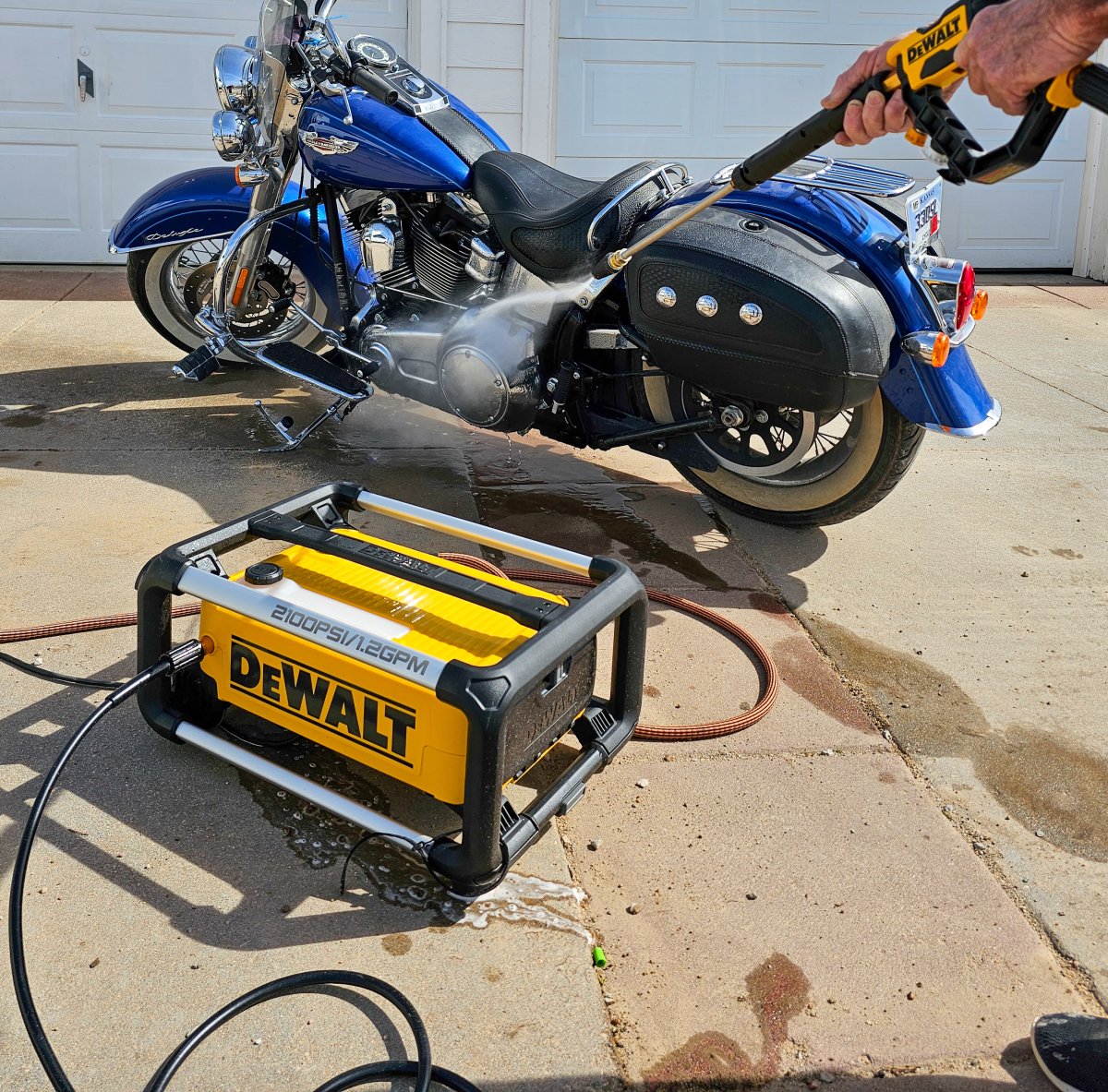
Best portable / jobsite-style electric: DeWalt DWPW2100
If you want something you can toss in the trunk, carry around the property, or store without turning your garage into a
plastic spaghetti museum of hoses and cords, this compact DeWalt is a standout. Testing-focused reviews frequently
praise its portability and onboard storage design.
You’re not buying it for industrial poweryou’re buying it because it’s genuinely easy to live with, and it still cleans
concrete, bikes, patio furniture, and other household surfaces effectively.
Best for: small storage spaces, frequent quick cleanups, and anyone who hates awkward equipment.
Best compact budget pick: Kärcher K1700 Cube
The “Cube” style is popular for a reason: it stores like a toolbox, carries easily, and is perfect for lighter-duty tasks
like patio furniture, windows, vinyl siding rinses, and vehicle washing (againwide fan tip, keep distance).
This is a great option for RVers, apartment/condo owners with limited storage, or anyone who wants a washer they’ll
actually pull out and usebecause it’s not a chore just to set up the chore.
Best for: small spaces, light-to-medium cleaning, and convenience-first buyers.
Best budget-friendly “lots of features” electric: Sun Joe (2030 PSI class, SPX-style models)
Sun Joe models in this class are often recommended because they pack in features people actually use: multiple quick
connect tips, soap capability (sometimes dual tanks), and enough power to make outdoor cleaning noticeably faster than a
garden hose.
They’re especially appealing if you like having optionsdifferent nozzles for different surfacesand want a wallet-friendly
machine that still feels like a “real” pressure washer.
Best for: mixed chores on a budget, and anyone who likes accessories included out of the box.
Best cordless convenience under $500 (when you already own the batteries): Ryobi 2000 PSI class
Cordless pressure washers are the ultimate “I’ll actually use it” machinesno extension cords, no hunting for outlets,
no wrestling the cord around your shrubbery like it’s a nature documentary. The tradeoff is usually runtime and raw
power compared to corded or gas models.
If you’re already on a compatible battery platform, it can be a fantastic grab-and-go solution for quick cleanups,
smaller patios, siding touch-ups, and outdoor gear.
Best for: fast cleanups, areas far from outlets, and people already invested in the battery ecosystem.
What to look for (so you don’t buy a spec-sheet fantasy)
PSI vs. GPM: why flow often matters more than you think
PSI (pressure) is the “punch.” GPM (flow) is the “rinse and carry-away.” In real cleaning, especially on concrete, the
washer that moves more water can finish faster because it flushes loosened grime away instead of just bullying it.
Cleaning Units (CU): the simple math that keeps you honest
A common comparison metric is Cleaning Units: CU = PSI × GPM. It’s not perfect, but it prevents you from
obsessing over PSI alone. Two machines with similar PSI can feel very different if one has better flow.
Electric vs. gas: the “real life” differences
Electric: easier startup, less maintenance, typically quieter, great for regular upkeep. Gas: generally more powerful,
faster for big hardscape jobs, but louder and requires engine maintenance and fuel storage.
Hose quality and reach: the hidden make-or-break feature
A stiff hose can turn a 20-minute patio job into a full-body workout you did not consent to. Look for decent hose
length (often 20–25 feet) and thoughtful onboard storage so setup and teardown don’t feel like punishment.
Use the right nozzle (and save your deck, your paint, and your dignity)
Most machines include quick-connect tips. The colors are common across brands, and the pattern matters:
- 0° (red): pinpoint, very aggressivespot use only, and with caution.
- 15° (yellow): heavy-duty strippinguse carefully on hard surfaces.
- 25° (green): general-purpose cleaningoften the most-used tip.
- 40° (white): gentler fanbest for delicate surfaces and car washing.
- Soap (black): low pressure to apply detergent.
Two upgrades that can matter more than “more PSI”
1) A surface cleaner attachment (especially for concrete)
If you’ve ever pressure-washed a driveway with only a wand, you know the pain: zebra striping. A surface cleaner
reduces streaks and speeds up large flat jobs by maintaining a consistent cleaning path.
2) The right detergent (used correctly)
Soap isn’t cheating; it’s strategy. Apply detergent with the soap nozzle, let it dwell (don’t let it dry), then rinse.
Use cleaners designed for pressure washers and for the surface you’re cleaning (siding vs. concrete vs. vehicles).
Safety and “don’t wreck your stuff” rules
- Start wide, then narrow. Begin with a 40° or 25° tip and move closer only if needed.
- Be extra cautious with cars. Use the 40° tip, keep distance, and avoid blasting seams, badges, and chipped paint.
- Never point the spray at people, pets, or yourself. Treat it like a power tool, because it is.
- Check for recalls before you buyor if you already own one. Some pressure washer models have had safety-related recalls reported in 2024–2025.
How to get satisfying results (without spending all weekend)
- Prep: sweep debris, remove loose dirt, and protect nearby plants (lightly rinse foliage first).
- Test spot: start with a wide fan tip and a safe distance.
- Pre-soak if needed: apply detergent with the soap nozzle and let it dwell briefly.
- Work top to bottom on vertical surfaces: and rinse thoroughly.
- For concrete: use a surface cleaner for the main area, then detail edges with the wand.
Maintenance tips that keep your washer alive (and your wallet calmer)
- Don’t run the pump dry. Make sure water is flowing before you start.
- Relieve pressure after use. Turn off, then squeeze the trigger to release pressure before disconnecting.
- Winterize in freezing climates. Drain water and follow your manual’s storage guidance.
- For gas models: keep up with oil changes and fuel stabilizer if it sits for long periods.
FAQ
Is an electric pressure washer enough for a driveway?
Often, yesespecially for routine cleaning and lighter stains. If the driveway is heavily stained or large, a stronger
electric model or a gas washer will usually finish faster.
What PSI is safe for washing a car?
Technique matters more than a single PSI number. Use a wide fan nozzle (typically 40°), keep distance, and avoid
vulnerable areas. If you’re nervous, choose a lighter-duty electric model and focus on safe nozzle choice and distance.
Should I buy the highest PSI I can afford?
Not necessarily. Many homeowners get better results by prioritizing usable accessories (surface cleaner), better hose
handling, and a sensible PSI/GPM balance. Overbuying power can make it easier to damage wood, paint, and older surfaces.
Field Notes: 10 real-world experiences that make you smarter than the spec sheet (extra 500+ words)
1) The hose is your true enemy. Not the mildew. Not the driveway stains. The hose. A stiff hose will kink,
fight you, and somehow wrap itself around a wheel like it’s trying to unionize. This is why portability, storage hooks,
and “does this feel annoying?” matter as much as PSI. The best washer is the one you don’t dread setting up.
2) Concrete is honest; wood is petty. Concrete generally forgives you. Wood keeps receipts. One second too
close with a narrow tip and your deck boards will look like a distressed farmhouse table you did not ask for. The first
time people “test the power,” it’s usually on wood, and that’s how weekend plans become repair plans. Start with a wide
fan, keep distance, and let the machine do the work.
3) Surface cleaners feel like cheatingin the best way. The first time you use a surface cleaner on a
driveway, you’ll wonder why you ever did the wand-only zigzag method. It’s faster, more even, and dramatically reduces
the zebra-striping that makes your driveway look like it’s wearing prison pajamas.
4) Soap time is not spray time. People rush detergent. The real magic is: apply soap with the black tip,
let it dwell briefly (don’t let it dry), then rinse. That dwell time is when chemistry loosens the gunk so water can
carry it away. If you skip it, you’ll spend more time brute-forcing with pressure, which is slower and riskier on
delicate surfaces.
5) Your “perfect” nozzle will change every 30 feet. You’ll start with the 25° and feel unstoppable… until
you hit a stubborn spot and reach for a turbo nozzle. Or you’ll be cleaning siding and realize the 40° is safer and still
works. The best sessions involve switching tips like a chef switches knives. It’s not extrait’s the correct tool for the
job.
6) Cars are not driveways. It sounds obvious, yet every year people learn this the loud way. Car paint,
trim, and seals don’t want a concentrated jet at close range. When washing vehicles, keep distance, use a wide fan, and
treat the pressure washer like a rinse toolnot a “remove all evidence of bugs since 2019” laser.
7) Electric washers win on “actually using it.” Gas washers are faster on big jobs, but electric models
often get used more because they’re effortless: plug in, go. In real life, the machine that comes out for quick patio
furniture cleanups, muddy bikes, and seasonal siding rinses might improve your home’s look more than a powerful gas unit
that lives in the back of the garage like a sleeping dragon.
8) The first pass is always disappointingthen it suddenly isn’t. There’s a moment in every cleaning job
where you think, “This isn’t working,” and then a clean line appears and your brain releases a tiny firework of joy.
Grime is layered; progress can look slow until it doesn’t. Keep your technique consistent and let the rinse do its job.
9) Water management is half the battle. Keep the hose unkinked, ensure steady supply, and avoid starving
the pump. When water flow is weak, the washer feels underpowered, the spray gets inconsistent, and your results suffer.
A basic, boring stepgood water supplyoften matters more than upgrading from 2000 PSI to 2300 PSI.
10) The real victory is not “clean.” It’s “maintainable.” The best pressure washing routine isn’t an annual
epic where you spend six hours fighting grime like it’s a mythic beast. It’s smaller, quicker cleans a few times a year
that prevent buildup in the first place. When you buy a washer that’s easy to set up, store, and move, you’ll actually
do those quick sessionsand your home will look better all year, not just the weekend before guests arrive.