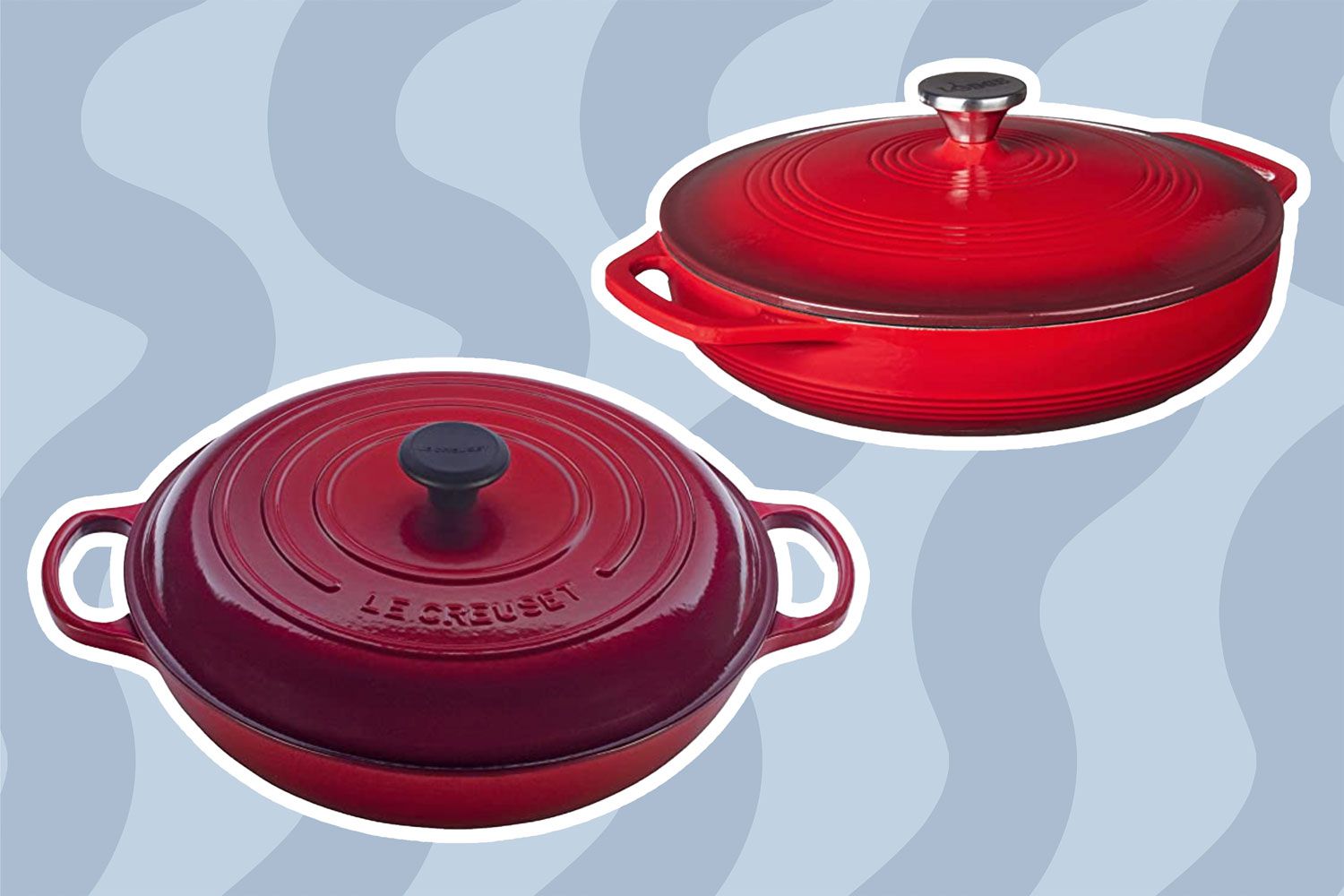

If your idea of comfort involves fork-tender short ribs, saucy chicken thighs, or
caramelized onions melting into a silky gravy, you need a good braising pan. In 2025,
braisers (aka braising pans) are having a moment: brands are rolling out sustainable
cast iron, smarter nonstick, and hybrid pans that go from stovetop to oven to table
without looking like you dragged them out of a restaurant kitchen.
The problem? There are a lot of pans that call themselves “braisers” or claim
to be great for braising. Some absolutely are. Some are just very shallow pots trying
to ride the braising trend. To help you skip the guesswork, we pulled insights from
cookware testing by major food publications, manufacturer specs, and long-term owner
reviews, then narrowed it down to seven standout braising pans that shine in 2025.
What Is a Braising Pan (and Why Not Just Use a Dutch Oven)?
A true braising pan sits somewhere between a deep skillet and a Dutch oven. Compared
to a Dutch oven, which has tall, straight sides for simmering big batches of soups and
stews, a braiser has:
- A wide, heavy base for serious browning and searing
- Shallower, often gently sloped sides that encourage some evaporation
- A tight-fitting lid, often domed, to trap just enough moisture
- Sturdy side handles so it can go in and out of the oven with ease
Testing from cookware experts and brands like Le Creuset and others consistently
points out the same thing: the wider base and shallower walls make braisers better
than Dutch ovens when you want even browning plus gentle, moist heatthink coq au
vin, braised greens, or meatballs in tomato sauce.
In short: if you mostly make huge pots of chili, get a Dutch oven. If you love
one-pan dinners with beautifully browned meat and just enough sauce, invest in a
braising pan.
How We Chose the Best Braising Pans of 2025
For this roundup, we focused on real-world cooking, not just pretty photos.
Core criteria
-
Material & heat performance: Enameled cast iron, carbon steel,
stainless clad, and hard-anodized aluminum all made the cut, but only if they heat
evenly and hold a steady simmer. -
Size & shape: We targeted the braiser sweet spot: roughly
3–5 quarts with a wide base, so you can sear multiple chicken thighs or pork chops
without crowding. -
Oven safety: All picks are oven-safe to at least 450–500°F,
based on manufacturer guidelines and use-and-care manuals. -
Lid & handles: Tight-fitting lids for moist braises and
generous handles you can actually grab with oven mitts. -
Cleaning & durability: Long-term user feedback and testing
from major food sites helped us eliminate pans that chip, warp, or lose their
nonstick too quickly. -
Value: A $300 braiser has to earn its keep. But we also included
budget-friendly options that punch way above their price.
With that in mind, here are the seven braising pans that stand out in 2025 for home
cooks who want serious performance and long-term reliability.
1. Le Creuset Signature Enameled Cast Iron Braiser (3.5–3.7 Qt) – Best Overall
If braisers had a royal family, Le Creuset would be sitting on the throne. Its
Signature braiser has the classic enameled cast-iron build, with a wide base, curved
sides, and that famous domed lid. It’s built specifically for browning and then
gently braising smaller amounts of foodexactly what most home cooks want.
Why it wins in 2025
-
Even heat, no drama: The heavy cast iron distributes heat evenly,
so you can brown chicken thighs edge-to-edge without hot spots. -
Light interior enamel: Makes it easier to see fond and avoid
scorching when you’re building sauces. -
Oven safe to high temperatures: Ideal for finishing dishes in the
oven or even baking shallow casseroles. -
Lifetime investment: Backed by a strong warranty and decades of
real-world use by home cooks and pros alike.
The main downside is pricethe Le Creuset braiser is expensive. But if you cook a
lot of braises, stews, and one-pan meals, the performance and durability make it a
genuine long-term investment rather than a splurge.
2. Staub Cast Iron Braiser / Deep Skillet – Best for Searing and Browning
Staub is another heavyweight in enameled cast iron, and its braiser and traditional
deep skillet perform especially well in independent testing. The interior has a dark
matte enamel that excels at high-heat searing and develops deep, flavorful fondgreat
news if you like rich pan sauces.
Standout features
-
Matte black enamel: Handles high heat beautifully and is less
finicky than bare cast iron, with no seasoning required. -
Tight, heavy lid: Staub lids are known for excellent moisture
retention, thanks in part to self-basting nubs on the underside. -
Serious heat retention: Once hot, it stays hotperfect for
bringing a braise to the table still sizzling.
The darker interior can make it slightly harder to judge browning if you’re new to
cast iron, and the pan is heavy. But if you want restaurant-level searing with the
convenience of enamel, Staub is a powerhouse.
3. Lodge Essentials Enameled Cast Iron Braiser (3.6 Qt) – Best Value Enameled Braiser
Lodge has a long reputation for affordable, reliable cast iron, and its enameled
braiser delivers many of the same benefits as pricier brands at a fraction of the
cost. The 3.6-quart size is ideal for a family of four, and the wide cooking surface
handles 4–6 chicken thighs or a couple pounds of stew meat easily.
Why budget-conscious cooks love it
-
Great heat performance for the money: You still get excellent
browning and steady low-and-slow cooking. -
Color options: Modern enamel colors let you match your kitchen or
table aesthetic without overspending. -
Oven and induction friendly: Works across cooktops and goes
straight into the oven.
The enamel isn’t quite as refined as ultra-premium brands, and you may notice
slightly rougher casting or small cosmetic imperfections. But as a workhorse braiser
that you’re not afraid to actually use, Lodge is hard to beat.
4. Crock-Pot Artisan Enameled Cast Iron Braiser (5 Qt) – Best for Big-Batch Braising
When you want braised short ribs for a crowd or mega-batches of braised beans, the
5-quart Crock-Pot Artisan braiser is a beastin a good way. It combines a roomy
diameter with taller sides than some classic braisers, giving you space to brown and
then braise large quantities in one go.
Why it works so well for batch cooking
-
Big capacity, still braiser-shaped: The pan stays wide and
shallow enough to brown efficiently, unlike a narrow stockpot. -
Family-style serving: It looks attractive on the table, so you
can serve straight from the pan. -
Good value for the size: Compared with premium European brands,
you get a lot of cooking volume for your money.
Because it’s larger and made of cast iron, it’s heavyespecially when full. If you
have limited storage or struggle with heavy cookware, one of the lighter picks below
might suit you better.
5. Cuisinart Chef’s Classic Stainless 5.5-Qt Sauté Pan – Best Stainless Braising Pan
Not every great braiser is labeled as one. A large, straight-sided stainless sauté
pan with a lid often behaves like a fantastic braising panand Cuisinart’s 5.5-quart
stainless sauté is a prime example. It features a wide, flat base and tall sides,
plus a tight-fitting lid and helper handle.
Why stainless deserves a spot on this list
-
Fast response: Stainless-clad pans heat quickly and respond
faster to burner adjustments than cast iron, giving you more control. -
Versatility: Use it for braises, pan sauces, shallow frying, and
even quick stir-fries. -
Oven safe: Cuisinart’s stainless cookware is typically oven-safe
to about 500°F, so you can start on the stovetop and finish in the oven without
thinking twice. -
Dishwasher safe: Unlike seasoned cast iron, stainless can usually
go in the dishwasher when you’re tired after a big meal.
Stainless is less naturally nonstick than enameled or seasoned pans, so you’ll want
to preheat properly and use enough fat when browning. But if you like crisp edges
and quick temperature control, it’s a terrific braising tool.
6. Made In Blue Carbon Steel Chef’s Pan or Rondeau – Best Lightweight Braiser Alternative
Carbon steel is the “cool cousin” of cast ironsimilar performance, but lighter and
more responsive. Brands like Made In have made carbon steel mainstream, and their
deep, wide chef’s pans and rondeaux work beautifully for braising.
Why carbon steel is worth considering in 2025
-
Lighter than cast iron: Easier to lift in and out of the oven,
especially when full of food. -
Highly responsive: Heats and cools quickly, which is useful when
you want to quickly reduce a sauce after braising. -
Develops a natural nonstick: With proper seasoning and use, the
surface becomes slick, like a well-loved cast-iron skillet.
The catch: carbon steel doesn’t play well with long-simmered acidic sauces (tomato,
wine, citrus) because they can eat away at the seasoning over time, just like with
bare cast iron. Shorter braises and pan sauces are fine; for hours-long tomato
braises, stick with enamel or stainless.
7. All-Clad Enameled Cast Iron 4-Qt Braiser – Best Modern Hybrid Braiser
All-Clad is famous for its bonded stainless cookware, and in recent years it has
expanded into enameled cast iron. The 4-quart enamel braiser combines the heft and
heat retention of cast iron with modern details: scratch-resistant enamel, a wide
cooking surface, and excellent oven and grill compatibility.
Highlights
- Flat, roomy base: Ideal for multiple portions and one-pan meals.
-
Durable enamel inside and out: The interior is designed to resist
scratching and staining while offering easy food release. -
High heat tolerance: Oven-safe to very high temperatures (the
cast iron body up to around 650°F, with lids typically lower), so it can handle
everything from braising to baking and roasting. -
Sustainability focus: All-Clad’s enamel collection is made with a
high percentage of recovered materials, reflecting 2025’s push toward more
eco-conscious cookware.
If you like the idea of enameled cast iron but want something a bit more contemporary
than the classic French brands, this All-Clad braiser is a strong contender.
How to Choose the Right Braising Pan for Your Kitchen
1. Consider what you actually cook
-
For classic low-and-slow braises: Enameled cast iron (Le Creuset,
Staub, Lodge, Crock-Pot Artisan, All-Clad) is hard to beat. -
For weeknight multi-use: A stainless sauté pan or carbon steel
chef’s pan gives you more versatility beyond braising. - For big families or batch cooking: Look at 4–5+ quart capacity.
2. Think about weight and storage
Cast iron braisers are heavyno way around it. If you have limited upper-body
strength or small storage spaces, a lighter stainless or carbon steel option may be
more practical. The good news: you still get excellent braising performance as long
as the base is wide and the lid fits well.
3. Don’t ignore the lid and handles
A braiser is only as good as its lid and handles. Look for:
- Looped side handles with enough clearance for oven mitts
- A snug, heavy lid that traps steam for moist braises
- Oven-safe knobs and handles (check the manufacturer’s temp limits)
4. Maintenance reality check
-
Enameled cast iron: No seasoning required, but avoid metal tools
if you want to preserve the enamel. -
Carbon steel & bare cast iron: Need seasoning and a bit more
care, but reward you with fantastic browning and natural nonstick surfaces. -
Stainless & hard-anodized nonstick: Generally easier to clean,
but nonstick coatings require gentler utensils and cleaning methods.
500+ Words of Real-World Braising Pan Experience
It’s easy to obsess over specsheat capacity, enamel formulation, or how many layers
of steel are in the basebut the real magic of a braising pan shows up on a random
Tuesday night.
Picture this: you toss chicken thighs into your braiser without bothering to measure
anything. A slick of oil, generous salt, maybe smoked paprika because it’s staring
at you from the spice rack. The wide base lets every piece get direct contact with
the surface. Nothing is steaming, everything is sizzling. That single design detail
aloneextra widthis what separates a braiser from the too-tall pot you’ve been
fighting with for years.
Once the chicken is deeply browned, you scrape up the fond with onions, garlic, and
maybe a splash of wine or broth. In a good braising pan, this is almost effortless:
the fond loosens cleanly, the pan doesn’t drop in temperature dramatically, and your
sauce starts behaving like it’s been simmering for an hour after just a few minutes.
The lid goes on, the heat drops low, and suddenly you’re free to make a salad,
unload the dishwasher, or scroll recipe videos you’re definitely not making tonight.
Over time, you start to notice the personality of your braiser. Enameled cast iron
tends to feel steady and forgiving. It takes a bit longer to preheat, but once it’s
hot, it smooths over minor mistakeslike turning your burner too low or too high for
a minute. It’s the friend who says, “Relax, dinner will still be great.”
Carbon steel and stainless tell a different story. They’re more responsive. If you
crank the heat, they listen instantly. That means quicker reductions, faster
weeknight pasta sauces, and less waiting for water to simmer. But it also means they
demand a bit more attention. Look away for too long and your onions might go from
golden to “we’re calling this ‘deeply caramelized’” in about 30 seconds.
Another underrated part of braising pan ownership is how much it changes your
cooking style. Once you have a pan that can comfortably go from stovetop to oven to
table, you start designing meals around that flow. Think:
- Sear pork chops, braise briefly with apples and onions, finish under the broiler
-
Brown sausage, add beans, greens, and broth, then bake until everything is silky
and tender -
Toast orzo or rice in the pan, add liquid and vegetables, top with chicken, and
bake until done
The pan becomes the “stage” where the entire meal happens. Fewer dishes, more flavor
layering, and a very satisfying feeling when you set the whole braiser down in the
middle of the table and everyone just digs in.
Over months and years, you’ll also learn the small, practical lessons that don’t
always make it into product descriptions:
-
Choose the right size for your stove: A giant braiser overhanging
a small burner can lead to uneven heating, no matter how fancy the pan is. -
Respect the preheat: Let the pan fully heat over medium, not high.
A patient preheat does more for good browning than blasting the flame. -
Use the lid as a tool, not just a cover: On, off, tiltedthose
adjustments control how quickly liquid reduces and how saucy or sticky your final
dish becomes. -
Don’t fear gentle stuck bits: Fond is flavor, not failure. As long
as nothing is turning black, you’re one splash of liquid away from a gorgeous
sauce.
Eventually, your braising pan stops feeling like “a piece of cookware” and starts
feeling like the default answer to “What should I cook in?” That’s the real test of
whether a braiser belongs in a “best of 2025” list: not just impressive specs, but
whether you reach for it without thinking whenever you want something cozy, deeply
flavored, and mostly hands-off.
Final Thoughts
The best braising pan in 2025 is the one that matches your cooking style, your
space, and your patience level. If you want heirloom-level, enameled cast iron,
Le Creuset, Staub, Lodge, Crock-Pot Artisan, and All-Clad are all excellent choices.
If you lean toward lighter, faster cookware, stainless and carbon steel prove that
you don’t need a 15-pound pan to make incredible braises.
Choose well, treat it decently, and your braising pan will quietly become the hero
of your kitchenturning tough cuts into tender dinners and simple ingredients into
the kind of meals people remember.