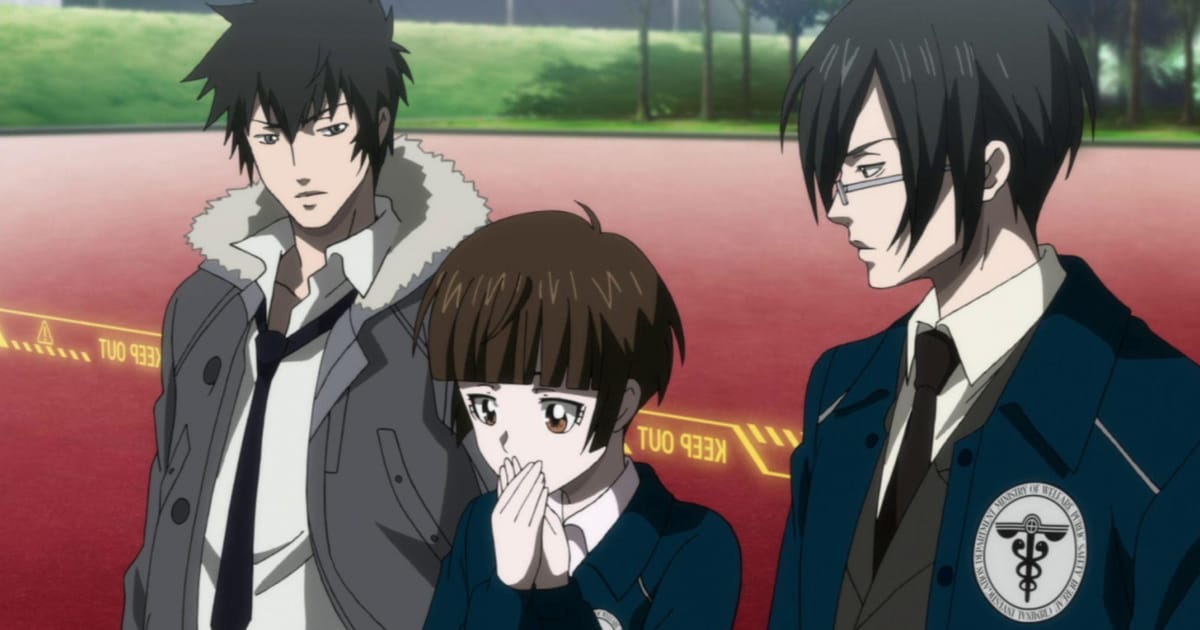

Finishing Psycho-Pass can feel like stepping out of a neon-lit courtroom where the judge is an algorithm, the jury is a camera, and the sentence is… “Your vibes are suspicious.”
It’s slick sci-fi. It’s a crime thriller. It’s philosophy class with guns. And somehow, it still finds time to ask the rudest question of all:
What if the system that “keeps you safe” is also the thing that’s quietly eating your freedom?
If you’re craving more anime like Psycho-Passstories with dystopian rules, moral gray zones, smart investigators, and that cold “the future is here and it’s judging you” atmospherethis list is your next binge itinerary.
Below are 13 anime similar to Psycho-Pass, each chosen for shared DNA: surveillance states, techno-ethics, psychological tension, and plotlines that keep your brain awake long after the credits roll.
What Makes “Anime Like Psycho-Pass” Actually Feel Similar?
Plenty of shows have futuristic cities or cops with cool coats. Psycho-Pass hits different because it stacks multiple flavors at once:
- Systemic dystopia: The world isn’t “broken.” It’s working exactly as designed.
- Tech-driven justice: Crimes aren’t just solvedsometimes they’re predicted, manufactured, or politically managed.
- Philosophical pressure: Every case pokes at free will, responsibility, and what “good” even means.
- Cat-and-mouse tension: The antagonist often feels like a dark mirror to the protagonist.
- Psychological thriller vibes: Less “monster of the week,” more “what is a person when the system labels them?”
With that checklist in mind, here are the best Psycho-Pass recommendations that scratch the same itchwithout being carbon copies.
The 13 Best Anime Similar To Psycho-Pass
1) Ghost in the Shell: Stand Alone Complex
If Psycho-Pass is a debate about policing in a predictive society, Stand Alone Complex is the cybercrime textbook that shows up with sticky notes and a smug grin.
It follows Public Security Section 9, tackling terrorism, hacking, and identity crimes in a world where minds and machines overlap.
- Why it’s similar: futuristic law enforcement, surveillance themes, tech ethics, and cerebral cases.
- Expect: political intrigue, episodic investigations with bigger arcs, and a noir sci-fi atmosphere.
- Best for: viewers who want “smart procedural” energy with big philosophical swing.
2) Ergo Proxy
Ergo Proxy is what happens when dystopia gets poetic… and then asks you to bring a notebook to class.
In domed cities built to protect humanity, a series of strange incidents forces an investigator into a world that’s far messier than the official story.
- Why it’s similar: controlled society, questions about humanity, and a constant “who’s manipulating reality?” mood.
- Expect: slow-burn mystery, existential dread, and symbolism that sometimes feels like it’s staring back at you.
- Best for: people who loved Psycho-Pass for the ideas as much as the action.
3) ID: INVADED
Imagine solving crimes by diving into a suspect’s mental landscapelike a dreamscape detective game where the rules are psychological, not physical.
That’s ID: INVADED, a slick mystery series that turns investigation into a high-stakes mind trip.
- Why it’s similar: futuristic investigative tech, dark cases, and moral complexity around justice.
- Expect: puzzle-box mysteries, emotional backstories, and intense “one more episode” pacing.
- Best for: fans who want detective thrills with brain-bending visuals.
4) Terror in Resonance
This one trades sci-fi gadgets for realismthen still hits you with the same tension as a thriller.
Two teenagers carry out acts of terrorism in Tokyo, pulling authorities into a psychological chess match where the “why” is just as important as the “how.”
- Why it’s similar: cat-and-mouse pursuit, moral ambiguity, and societal critique under pressure.
- Expect: a tight story, haunting tone, and emotional punches that land quietly… then echo.
- Best for: viewers who loved the investigative side of Psycho-Pass most.
5) Monster
If you want psychological intensity without futuristic tech, Monster is the gold standard.
A brilliant doctor saves a child who later becomes a terrifying figurelaunching a long, morally exhausting pursuit across Europe.
- Why it’s similar: ethical dilemmas, the cost of justice, and a villain who challenges your ideas of “evil.”
- Expect: slow-burn suspense, rich character writing, and a relentless moral tug-of-war.
- Best for: fans who want the same seriousness, just grounded in reality.
6) Death Note
Death Note isn’t about police techit’s about what happens when someone tries to become the justice system.
A gifted student gains the power to kill anyone whose name he writes down, and the world becomes his courtroom.
- Why it’s similar: “crime prevention” taken to extremes, philosophical sparring, and justice-as-control themes.
- Expect: strategy battles, moral spirals, and an iconic rivalry.
- Best for: anyone who likes ethical debates with a side of dramatic genius nonsense.
7) From the New World (Shinsekai yori)
Don’t let the calmer opening fool youthis is dystopia with teeth.
In a future where humans have psychic abilities, society maintains peace through rules that feel… suspiciously strict.
- Why it’s similar: social control, hidden truths, and heavy questions about who gets labeled “dangerous.”
- Expect: eerie worldbuilding, unsettling revelations, and a story that grows darker as it matures.
- Best for: viewers who want systemic horror more than gunfights.
8) Babylon
Babylon is a political-legal thriller that feels like it was designed to keep you stressed on purpose.
A prosecutor investigates a case that snowballs into questions about morality, power, and whether society can legislate something as personal as life itself.
- Why it’s similar: institutional corruption, psychological warfare, and ethical debates that get uncomfortably real.
- Expect: mounting dread, sharp dialogue, and a tone that can feel like a cold hand on your shoulder.
- Best for: fans who prefer philosophical suspense over action.
9) Texhnolyze
If you want “bleak cyberpunk” turned up until the dial snaps off, Texhnolyze is your show.
It explores an underground city where power struggles and body modification blur the line between survival and surrender.
- Why it’s similar: dystopian decay, tech-human fusion themes, and existential intensity.
- Expect: minimal hand-holding, heavy atmosphere, and storytelling that trusts you to keep up.
- Best for: people who want the darkest corner of the genre.
10) Serial Experiments Lain
Lain is less “police thriller” and more “internet-era prophecy with psychological horror edges.”
It dives into identity, connection, and the blurred boundary between physical reality and the digital world.
- Why it’s similar: tech philosophy, social control vibes, and the feeling that “society is changing and nobody is ready.”
- Expect: surreal pacing, eerie quiet, and questions that outlive the final episode.
- Best for: viewers who loved Psycho-Pass when it got conceptual.
11) Akudama Drive
Here’s your adrenaline shot.
Akudama Drive throws you into a neon cyberpunk city where criminals (“Akudama”) get pulled into a chaotic heistand the system’s cruelty becomes impossible to ignore.
- Why it’s similar: oppressive future society, flashy tech, and a clear critique of institutional “justice.”
- Expect: high-octane action, stylish visuals, and escalating stakes that go from “oops” to “oh no” fast.
- Best for: fans who want Psycho-Pass energy with more speed and spectacle.
12) Pluto
If you want an emotionally serious sci-fi crime story, Pluto is a strong pick.
It blends detective work with questions about AI rights, war, and what it means to be “human” when your body might be metal and your trauma is still painfully real.
- Why it’s similar: investigative structure, moral complexity, and technology’s impact on justice and identity.
- Expect: grounded pacing, thoughtful tension, and characters that feel like they carry history in their bones (or circuits).
- Best for: viewers who want mature sci-fi with heart.
13) Paranoia Agent
Paranoia Agent isn’t cyberpunk policingbut it is a psychological thriller about society under stress, collective fear, and how “truth” can warp when people desperately need an explanation.
A mysterious attacker becomes a symbol, and the city’s anxiety spreads like a virus.
- Why it’s similar: psychological pressure, social commentary, and a mystery that exposes systemic cracks.
- Expect: surreal storytelling, sharp satire, and episodes that feel like moral X-rays.
- Best for: fans who want the “why are humans like this?” side of Psycho-Pass.
Quick Watch-Order Ideas (So You Don’t Accidentally Drown in Dystopia)
Different moods call for different kinds of bleak. If you want a smoother landing after Psycho-Pass, try one of these mini-routes:
- Closest cousin route: Ghost in the Shell: SAC → ID: INVADED → Pluto
- Philosophy-heavy route: Ergo Proxy → Serial Experiments Lain → Texhnolyze
- Thriller sprint route: Terror in Resonance → Death Note → Babylon
- Cyberpunk chaos route: Akudama Drive → Ghost in the Shell: SAC → Texhnolyze
Fan Experiences: What It Feels Like to Chase the “Psycho-Pass High” (500+ Words)
The funny thing about looking for anime similar to Psycho-Pass is that most fans aren’t only searching for a setting.
They’re searching for a feeling: that icy, electric tension when a story makes you enjoy the chase while also questioning whether chasing “criminals” is even the right goal.
It’s the kind of show that can turn casual viewers into amateur ethicistssuddenly you’re pausing episodes to argue about free will like you’re defending a thesis you didn’t know you enrolled in.
A common post-Psycho-Pass experience is the “two-track craving.” On one track, you want more sleek, futuristic investigationcool tech, smart cases, teams working in a system that’s bigger than them.
That’s why people gravitate to titles like Ghost in the Shell: Stand Alone Complex or ID: INVADED. Those shows deliver the satisfaction of a mystery being unraveled step-by-step, with the added bonus that the technology itself becomes part of the moral problem.
It’s not just “Who did it?” It’s “Who gets to decide what ‘it’ even is?”
On the other track, you want that uncomfortable philosophical aftertaste: the sense that the antagonist isn’t merely “bad,” but is pointing at a flaw the heroes can’t unsee.
That’s where shows like Monster, From the New World, and Ergo Proxy tend to hit hardest.
Fans often describe finishing these series with a weird mix of satisfaction and mild existential dreadlike you just ate a gourmet meal and then realized it was also a warning label.
Another very real “Psycho-Pass hangover” moment is realizing you don’t want nonstop darkness.
The genre’s best stories are intense, but binging too many dystopian thrillers back-to-back can make your living room feel like it has fluorescent lighting and government-issued furniture.
A practical trick fans use is to alternate tones: watch an episode batch of something heavy like Babylon, then cleanse your palate with a lighter series (or at least something less emotionally punishing) before returning to the grim stuff.
Think of it like spicy food. Delicious, addictive, andif you overdo ityour soul files a complaint.
There’s also a social side to these recommendations. Shows like Death Note and Terror in Resonance are famous for turning into “group chat anime,” where every episode ends with someone texting:
“Okay, but if you had that power, would you use it?”
That question is basically the unofficial mascot of the whole anime like Psycho-Pass category.
These stories invite debate, and debating them is half the funbecause everyone draws their moral lines in different places, and the best series are designed to test those lines until they wobble.
Finally, many viewers find that the best way to enjoy these shows is to lean into the themes rather than rushing for plot.
If you treat them like pure action, you’ll still have a good timebut if you give yourself space to think, the shows become richer.
Pause and ask: Who benefits from the system? Who gets erased by it? What is “safety” costing the characters?
That’s the real Psycho-Pass experiencenot just watching a futuristic police unit do its job, but watching a world argue with itself… and realizing the world might sound a lot like ours.
Wrap-Up
The best anime similar to Psycho-Pass don’t just copy the look; they recreate the tension between justice and control.
Whether you go full cyberpunk with Ghost in the Shell, dive into mind-palace investigations with ID: INVADED, or choose psychological warfare with Monster and Death Note, the common thread is simple:
these stories make you thinkand then they make you feel weird about what you thought.