
Ranking Superman movies is a little like trying to rank ways to eat a slice of apple pie: even the “worst” one still has pie energy,
and the “best” one will spark arguments at the table. But the Superman film franchise is also one of the most fascinating case studies
in blockbuster historybecause the character is simple on paper (be good, do good, look great in primary colors) and weirdly hard to
translate on screen (be inspiring without being corny, powerful without being boring, hopeful without being naive).
Over the decades, filmmakers have tried different recipes: mythic and classical, romantic and bright, somber and operatic, andmost
recentlybig-hearted and modern. Some entries soar. Some wobble. A couple face-plant so hard you can practically hear a Daily Planet
editor shouting, “Kent, rewrite the third act!”
Below is my ranking of the major live-action Superman film entries, with a mix of fan-minded opinions and reality checks from critical
consensus and box office performance. If you’re searching for Superman film franchise rankings, Superman movies ranked,
or the best Superman movie (and yes, the worst Superman movie), you’re in exactly the right phone booth.
What Counts as a “Superman Movie” for This Ranking?
Superman has appeared in a lot of projects, but this ranking focuses on the big, widely discussed live-action movie entries where Superman
is the central figure or a defining pillar of the story:
- The classic theatrical run (1978–1987) featuring Christopher Reeve.
- The modern reboot/return era (2006–2017) plus the 2021 director’s-cut event film.
- The 2025 theatrical reboot that launched the new DCU era.
I also include two team-up films because Superman’s portrayal (and the consequences of his characterization) is a major part of the franchise
conversation: Batman v Superman: Dawn of Justice and Justice League. Their impact on Superman’s screen identity is too big to ignore.
How I Ranked Them (So You Don’t Throw Kryptonite at Your Screen)
This is not a “math-only” list. If we ranked strictly by one metricsay, critic scores or worldwide grossthe results would be tidy but not
very useful. So I used a blended approach:
- Critical snapshot (Rotten Tomatoes as a broad “consensus vibe,” plus Metacritic when especially relevant).
- Box office context (what the world showed up for, and when).
- Superman-ness: Does Clark feel like Clark? Is the moral center cleareven when the story gets complicated?
- Rewatch value: Does it hold up when the hype and discourse fade?
- Franchise impact: Did it move Superman forward, or did it leave the cape tangled in the airplane’s landing gear?
Also, I’m grading on a “Superman curve.” If your movie is about a guy who can hear a cry for help from across a city, I expect the script to
hear its own theme from across the story.
The Superman Film Franchise Ranking (Worst to Best)
10) Superman IV: The Quest for Peace (1987)
Why it lands here: This is the entry that most people cite when they say, “I love Superman, but…”
The ideas are earnestnuclear disarmament, Superman trying to do the right thing on a global scalebut the execution is famously rough.
The tone whiplashes, the effects feel undercooked, and the pacing sprints past emotional beats like it’s late for chemistry class.
- Critic snapshot: Rotten Tomatoes places it at the bottom of the list (around 10% in the franchise ranking).
- Box office (worldwide): About $30.3M.
The good: Christopher Reeve’s sincerity still shines through. Even in a weaker movie, he plays Superman like he believes in people.
The “oof”: The story wants to be big and important but ends up feeling small and rushedlike a term paper written during the bus ride
to school.
9) Superman III (1983)
Why it lands here: Superman III is the point where the franchise tries to be a broad comedy and forgets that Superman’s best
humor comes from warmth, not wackiness. It has memorable momentsespecially the “Superman vs. Clark” internal struggle sequencebut it also leans
into goofy villains and a “what are we doing?” energy.
- Critic snapshot: Often ranked near the bottom (around 31% in the Rotten Tomatoes franchise ordering).
- Box office (worldwide): About $80.3M.
The good: When the movie gets seriousbrieflyit hints at a darker, more psychological Superman story that could’ve been great.
The “oof”: The overall tone can feel like the filmmakers were trying to make a Superman movie and a different movie at the same time,
then accidentally stapled the scripts together.
8) Justice League (2017)
Why it lands here: This film is the definition of “patchwork blockbuster.” It has fun moments, a few charming character beats, and
the basic pleasure of a superhero team forming up. But Superman’s role can feel both crucial and oddly weightless, and the movie’s tonal shifts
are hard to ignore.
- Critic snapshot: Low-to-middling consensus (around 39% on Rotten Tomatoes).
- Box office (worldwide): About $661.3M.
The good: You can feel the franchise trying to pivot toward levity and teamwork, which is a very Superman-friendly direction.
The “oof”: Superman’s emotional arc doesn’t fully land, and the villain work is… let’s call it “serviceable.”
7) Batman v Superman: Dawn of Justice (2016)
Why it lands here: Ambitious, visually striking, and permanently welded into pop-culture discourse. It’s also divisive for a reason:
it leans into operatic gloom and complicated plotting. Some fans love the mythic scale and the “gods among men” framing. Others feel it buries
Superman’s essential optimism under a mountain of symbolism, slow-mo, and moral panic.
- Critic snapshot: Rotten Tomatoes places it in the lower tier (around 27%).
- Box office (worldwide): About $874.4M.
The good: Some of the best “Superman as icon” imagery in modern cinema. The movie understands that the symbol matters.
The “oof”: The emotional readability gets muddy. If your audience needs a corkboard and red string to follow Superman’s feelings,
something went sideways.
6) Superman Returns (2006)
Why it lands here: This one is a beautiful, melancholic love letter to the Reeve erasometimes so reverent it forgets to be its own
movie. Brandon Routh brings a gentle decency to Clark, and the film’s mood is elegant. But it can feel more like a memory of Superman than a living,
breathing new chapter.
- Critic snapshot: Stronger critical standing than many later entries (around 73% on Rotten Tomatoes).
- Box office (worldwide): About $391.1M (with a very large reported budget on Box Office Mojo).
The good: The film nails the loneliness of being a symbol and the tenderness of Clark’s humanity. The aircraft-rescue set piece is a
modern classic.
The “oof”: The overall pace is more “Sunday afternoon contemplation” than “summer-movie propulsion,” which is either a feature or a bug
depending on your mood.
5) Man of Steel (2013)
Why it lands here: A bold reboot that gave Superman a contemporary, grounded intensityand triggered a decade-long debate about what
Superman “should” feel like. Henry Cavill looks born for the cape, and the Krypton prologue is a world-building flex. The film’s darker tone worked
for many viewers, while others missed the lighter moral clarity of earlier eras.
- Critic snapshot: Middle-of-the-pack consensus (around 57% on Rotten Tomatoes).
- Box office (worldwide): About $670.1M.
The good: Superman’s power feels enormous, and the movie takes his origin seriously. The music and scale aim for myth.
The “oof”: The emotional texture can be heavy, and the collateral-damage vibe of the climax became a talking point for yearsbecause
Superman stories are partly about how you use power, not just that you have it.
4) Zack Snyder’s Justice League (2021)
Why it lands here: This is the “director’s-cut event” that reframed the 2017 story for a lot of fans. It’s long, stylized, and built
like an epic graphic novelchapter breaks and all. Superman isn’t the sole focus, but his presence (and the thematic weight around hope and sacrifice)
feels more deliberate here than in the theatrical version.
- Critic snapshot: Generally positive compared to 2017’s cut (around 71% on Rotten Tomatoes).
- Box office: Primarily a streaming-era release; its cultural impact is less about ticket sales and more about fandom and discourse.
The good: More coherent arcs for the team, stronger mythic atmosphere, and a sense of intention that the theatrical version lacked.
The “oof”: Four hours is a lot. You don’t “watch” it so much as you move in for the weekend and update your mailing address.
3) Superman (2025)
Why it lands here: The 2025 reboot did the hardest thing a Superman movie can do in the modern era: it made audiences comfortable with
hope againwithout making hope feel like a joke. It leans into Superman’s humanity and public symbolism, while letting the world around him be messy
and modern.
- Critic snapshot: Strong reviews (around 83% critics and ~90% audience on Rotten Tomatoes) and a 68 on Metacritic reported in early coverage.
- Box office (worldwide): About $616.8M.
- Opening context: Domestic opening in the $122M–$125M range depending on measurement/estimate windows.
The good: The movie understands that “truth and justice” aren’t just words on a chestthey’re a daily practice. It also proved that a
Superman film can be broadly successful in theaters again.
The “nitpick”: Some viewers felt it was a little overstuffedlike the film packed an entire comic run into one weekend. (To be fair,
that’s also how many people read comics.)
2) Superman II (1980)
Why it lands here: The best Superman sequel in the “classic” runand still one of the best superhero sequels, period. It builds on the
romance with Lois, tests Superman’s identity, and introduces villains who feel like real threats. Most importantly, it asks a very Superman question:
What does it cost to be a good person when you could be anything?
- Critic snapshot: Top-tier franchise standing (around 88% on Rotten Tomatoes).
- Box office (worldwide): About $216.4M.
The good: Big stakes, memorable villains, and a Superman who feels both powerful and emotionally understandable.
The “tiny gripe”: The behind-the-scenes complexity (and the existence of multiple cuts) can make it feel like the franchise’s first
taste of “Superman continuity chaos.”
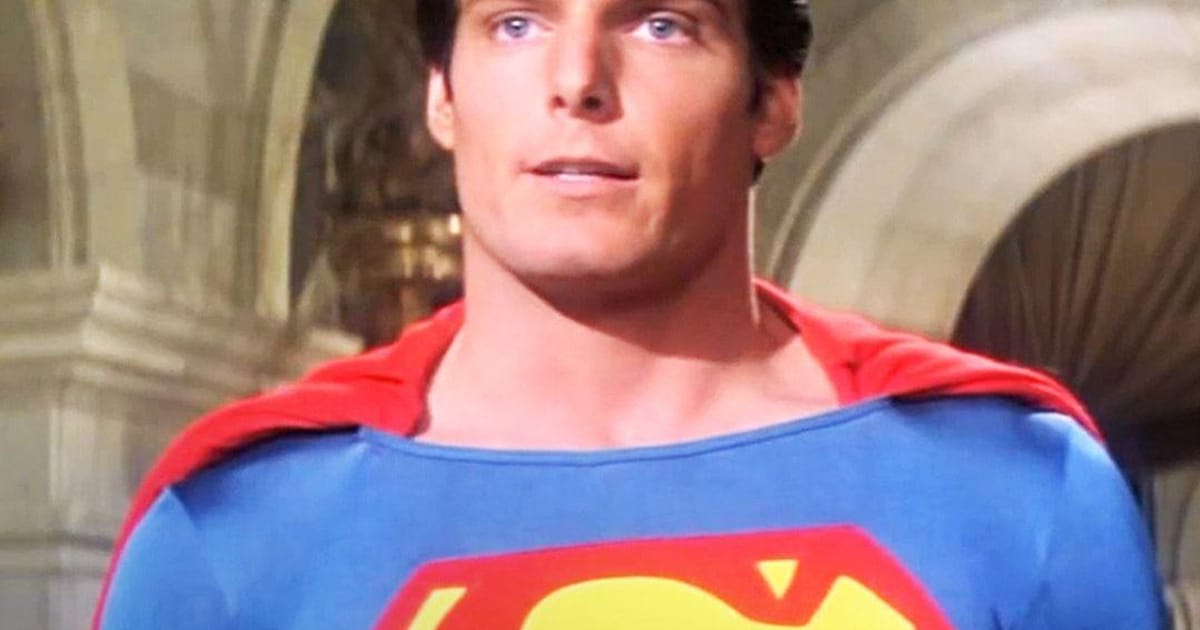
1) Superman: The Movie (1978)
Why it’s #1: This is the blueprint. Not just for Superman moviesfor modern superhero cinema. It treats the character with mythic
sincerity, crafts a version of Clark who is kind without being bland, and makes “heroism” feel romantic in the old-fashioned, big-hearted sense.
The film’s confidence is so strong that it can do quiet scenes (a conversation, a look, a choice) and still feel epic.
- Critic snapshot: A perennial top-ranked entry (around 88% on Rotten Tomatoes in the franchise list).
- Box office (worldwide): About $300.5M across releases tracked by Box Office Mojo.
The good: Christopher Reeve’s performance remains the gold standard because it cleanly separates Clark and Superman without turning either
into a gimmick. The film also nails the “Kansas to cosmos” emotional scalemaking Superman feel both universal and personal.
The “nothing, really”: If you don’t like the slightly classic pacing, that’s tastenot a flaw. It’s a movie that believes in taking its
time because it knows where it’s going.
Tier List Summary (For the Scroll-Happy)
- S-Tier (Must-Watch): Superman: The Movie (1978), Superman II (1980)
- A-Tier (Strong Modern Contenders): Superman (2025), Zack Snyder’s Justice League (2021)
- B-Tier (Interesting, Divisive, Worth Your Time): Man of Steel (2013), Superman Returns (2006)
- C-Tier (Franchise Homework Only): Batman v Superman (2016), Justice League (2017)
- D-Tier (Watch With Snacks and Low Expectations): Superman III (1983), Superman IV (1987)
If you’re building a “best Superman movies” weekend marathon, the simplest path is: 1978 → 1980 → 2025, then branch into the modern era based on
your preferred flavor (bright hope vs. mythic gloom).
Final Take: What Superman Movies Teach Us About Superman
The franchise’s highs and lows all orbit the same challenge: Superman isn’t compelling because he can lift a planet; he’s compelling because he can
lift a conversation. The best entries don’t just stage spectacle. They stage choicesand let Clark’s empathy be the superpower that actually
changes the room.
The 1978 film proved Superman could be cinematic myth. Superman II proved sequels could deepen the heart. The 2025 reboot proved the character
can thrive in the modern blockbuster ecosystem againand even set up future chapters (including the announced follow-up title in the DCU slate).
And the misfires? They’re instructive too. When the story forgets that Superman is a person first and a symbol second, the cape starts to feel heavy.
When the story remembers, the whole thing floats.
SEO Tags (JSON)
of “Experience”: What It Feels Like to Rank Superman Movies in Real Life
Ranking Superman movies is never just a spreadsheet exerciseit’s an emotional scavenger hunt through how people first met the idea of a hero.
Ask a room full of fans for their #1 and you’ll get the same pattern: they don’t start with plot. They start with a memory. Someone remembers
the first time they saw Superman save strangers and felt their shoulders drop, like the world might be okay for two hours. Someone else remembers
watching the Reeve films with a parent or grandparent, noticing that the “old” pacing isn’t slowit’s confident. The movie takes time because it
expects you to lean in.
Then comes the modern era, which has its own “where were you?” moments. For many viewers, Man of Steel was the first time Superman felt
physically overwhelminglike the sound design alone could crack a sidewalk. That experience is thrilling in a theater: the bass hits, the screen
fills with sky, and you can almost feel the air move when he takes off. But the conversation after is just as loud as the movie. People don’t merely
debate whether the action is cool; they debate what Superman should represent when everything around him is noisy, cynical, and complicated.
The team-up films create a different kind of experience: the “group chat movie.” You watch them and immediately want to text someonebecause the
reactions are half the point. Someone cheers at the iconography. Someone groans at a narrative swerve. Someone argues that a different cut fixes
everything, and suddenly your movie night turns into a mini film-studies seminar with snacks.
And that’s why the 2025 reboot felt like a specific cultural moment for a lot of audiences: it gave people permission to enjoy Superman without
apologizing for enjoying him. The experience wasn’t just “this is entertaining,” it was “oh righthope can be cinematic.” People left theaters
talking about tone the way they talk about weather: “It felt brighter.” “It felt kinder.” “It felt like Superman.” That’s not about a single scene;
it’s about the emotional aftertaste.
Finally, there’s the personal ritual side of ranking. Fans rewatch these films at different ages and notice new things. As kids, they see flight.
As teens, they notice identityhow Clark performs awkwardness and how that performance protects his private self. As adults, they notice responsibility:
how Superman listens before he acts, and how the best stories treat saving people as a moral practice, not a flex. That’s the secret reason these
rankings never stay “final.” Superman changes because you changeso every rewatch is like looking at the same symbol under new light.