
If your home had a “Terms & Conditions” page, one clause would definitely read:
“Clutter will reproduce when left unattended.” It’s not a character flawit’s physics (and shopping bags,
and mail, and that one drawer that eats batteries).
The good news: you don’t need a magazine-perfect pantry or a color-coded closet that looks like it pays rent.
You need a system that matches real lifeone that helps you find what you need, put it back without a negotiation,
and stop your stuff from slowly migrating into “mystery piles.”
Why Homes Get Messy (Even When You’re Trying)
Clutter creep is sneaky
Clutter rarely kicks the door down. It tiptoes inone “temporary” stack of mail, one extra water bottle,
one Amazon box you swear you’re going to recycle today. The trick is to notice the first inch of clutter
before it becomes a full-blown habitat.
Decision fatigue is real
Organization isn’t just physical; it’s mental. Every item asks a question: “Keep me? Toss me? Where do I live now?”
When your brain is tired, you default to the easiest answer: “I’ll deal with it later.” That’s how
“later” becomes a room.
A practical workaround is to create a small “holding zone” (a bin, basket, or box) for items you can’t decide on
in the moment. It prevents countertop sprawl while giving your brain a break. Just make sure the holding zone has
a scheduled “decision date,” so it doesn’t turn into a retirement community for random stuff.
Friction beats motivation
Most people assume organization fails because of laziness. More often, it fails because the system is annoying.
If the lid is hard to open, the shelf is too high, the labels are missing, or the bin is in the wrong room,
you won’t maintain it. Your home should work like a well-designed app: fewer clicks, less confusion, more success.
The Organizing Formula That Actually Sticks
There are a lot of organizing “methods,” but the most reliable ones share the same backbone:
clear, categorize, cut, contain. In plain English: take everything out, group similar items,
remove what you don’t need, and store what’s left in a way that’s easy to maintain.
Rule #1: Declutter before you buy containers
Storage bins can be helpful, but they can also become expensive clutter accessories. If you buy containers before
you edit your stuff, you often end up with bins filled with “maybe” items you still don’t actually use.
Start with what you’re keeping, then choose storage that fits the real inventory.
Rule #2: Store “like with like”
Keep items that belong together, together. Not “all craft supplies in the house in one bin,” but “wrapping paper
with tape and scissors,” “baking tools with baking ingredients,” “pet leashes with poop bags.” When your storage
matches your routines, your home stays organized without heroic effort.
Rule #3: Aim for visibility, accessibility, and flexibility
The most sustainable systems are:
visible (you can see what you have),
accessible (you can grab it without moving five other things),
and flexible (it can change when your life changes).
Translation: clear bins or good labels, frequently used items within arm’s reach, and storage that can adapt
(adjustable shelves, modular bins, hooks you can reposition).
Rule #4: Create zones (so your stuff stops roaming)
“Zones” are simply designated homes for categories: a snack zone, a mail zone, a cleaning zone, a charging zone,
a sports zone. Zones reduce the daily brainwork of deciding where something goes. If everyone in the house knows
the zones, your systems become sharednot secret knowledge guarded by one exhausted person.
Choosing Storage That Solves Problems (Not Just Looks Cute)
Measure first, then shop
The most common storage heartbreak is buying something that “should fit” and discovering it doesn’t.
Measure shelves, drawers, closets, and awkward corners. Write the numbers down. Your tape measure is the
responsible friend who keeps you from making impulsive decisions.
Clear bins: when they’re worth it
Clear bins shine for long-term storage, seasonal items, and anything you don’t want to open five boxes to find
(holiday décor, off-season clothing, spare toiletries, craft supplies, pet gear). They also help protect items
from dust and dampness in basements and garagesespecially when combined with labels and sensible placement.
Labels are not optional; they’re the instruction manual
Labels turn “a bunch of bins” into a system. They reduce arguments, speed up clean-up, and keep categories from
melting into each other. You don’t need fancy equipmentthough label makers are satisfying in a “my life is now
a spreadsheet” kind of way. What matters is clarity and consistency.
Contain, don’t cram
A storage container should limit the amount of stuff, not encourage you to pack it like a suitcase.
If a category doesn’t fit in its container, it’s a signal to either:
(1) edit the category, or (2) expand the storage intentionally. “Stuffing it in anyway” is how drawers break
and resentment is born.
Room-by-Room Storage & Organization Strategies
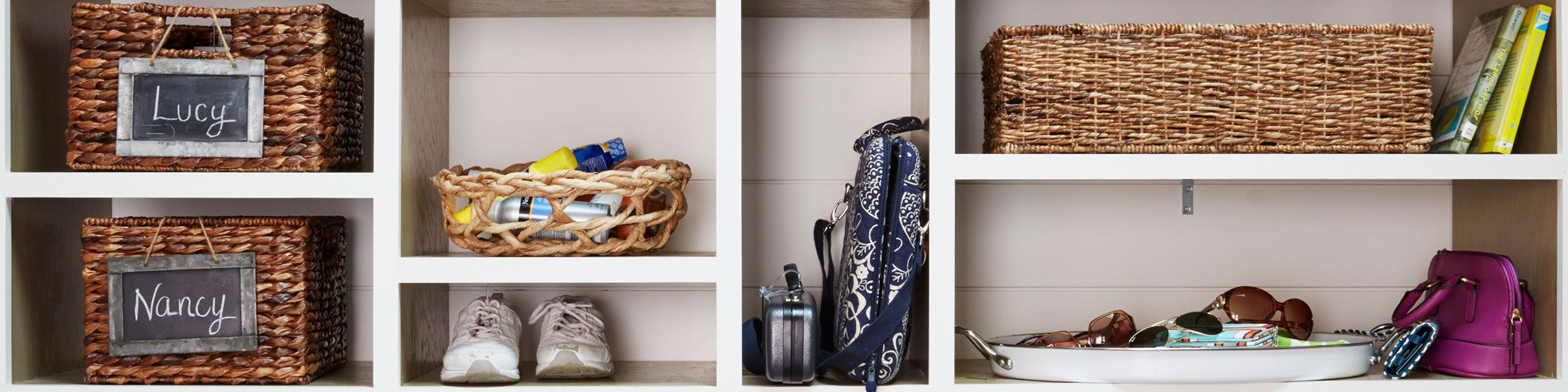
The entryway: build a “landing strip”
If clutter had a favorite room, it would be the entrywaywhere shoes, bags, mail, and keys show up at the same
time like an unannounced group chat. Fix it with a simple landing strip:
- Hooks for bags and jackets (at kid height if you have kids).
- A tray or bowl for keys, sunglasses, and small “don’t lose me” items.
- A shoe zone (rack, cubby, or basketwhatever matches your habits).
- A mail station with a “deal now” slot and a “file later” slot.
The goal is to stop the “drop-and-run” cycle by giving your stuff an obvious home right where it enters.
The kitchen: make the counters boring again (in a good way)
Kitchens get messy because they’re high-traffic and multi-purpose. Try organizing by workflow:
cooking, baking, snacks, lunch-packing, coffee/tea, and cleaning supplies.
Pantry wins that actually matter
- Group by category: breakfast, snacks, canned goods, baking, spices, drinks.
- Use clear, stackable bins to maximize vertical shelf space and keep categories contained.
- Lazy Susans and tiered risers help prevent the “lost behind the peanut butter” problem.
- Make expiration dates visible by pulling older items forward and keeping a quick “use soon” spot.
- Consider a snack zone so everyone knows where the grab-and-go items live.
Appliance garages and “hide the chaos” storage
If small appliances eat your counter space, consider dedicating a cabinet area to themsometimes called an
appliance garage. The idea is simple: keep the tools you use often, but store them behind doors so your counters
stay clear and your kitchen feels calmer.
Bathrooms: reduce duplicates, increase sanity
Bathroom clutter often comes from duplicates (“I forgot we had this”) and tiny items that migrate.
Create micro-zones:
- Daily-use items in the most accessible drawer or shelf.
- Backups in a labeled bin (one bin, not an unlimited warehouse).
- First-aid together, clearly labeled, easy to grab.
- Hair tools in a dedicated spot with cord control (so they stop impersonating spaghetti).
Closets: give your clothes a job description
A closet works best when it reflects how you actually get dressed. Try these upgrades:
- Keep the “most worn” at eye level: everyday shoes, work clothes, school staples.
- Use matching hangers if your closet feels chaoticvisual calm is real.
- Separate by type (tops, pants, dresses) and then by frequency or season.
- Store off-season items in labeled bins or vacuum bags (if space is tight).
- Create a “maybe” zone for items you’re unsure about, then review monthly.
Laundry areas: make supplies easy, not scattered
Laundry rooms work best with vertical storage (shelves, wall-mounted organizers, hooks) and a clear workflow:
sort, wash, dry, fold, put away. Keep stain removers and detergents together; add a small bin for “missing socks”
so they stop haunting the dryer like tiny fabric ghosts.
Home office and paperwork: tame the paper, don’t worship it
Paper clutter is stressful because it feels important. A simple approach:
- Sort into: action, file, shred/recycle.
- Keep essential records in a clearly labeled file system (physical or digital).
- Store frequently used documents in an easy-access spot, not a box in the closet.
- Limit “incoming paper” by switching to paperless billing and scanning what you truly need.
The goal isn’t to keep every receipt from 2014. It’s to find what matters quickly when you need it.
Garage and basement: go vertical and label like you mean it
Garages get chaotic because they become the default storage room for everything you don’t want inside.
Strong systems here use wall space: pegboards, slat walls, hooks, and shelves.
- Pegboards are great for lightweight tools and supplies because you can change the layout as your needs change.
- Track-based or slat wall systems handle heavier items better and keep floors clearer.
- Clear bins + labels prevent the dreaded “mystery box” situation.
- Keep moisture in mind by placing sensitive items off the floor and using durable containers.
A helpful mindset: your garage should be a “store” with departments (tools, sports, gardening, automotive),
not a landfill with a door.
Kids’ stuff and toys: fewer categories, stronger routines
The secret to toy organization is not more bins. It’s fewer, clearer categories and easy reset routines.
Try:
- Open bins for quick clean-up (labels help kids match items to bins).
- A rotation box so not every toy is out at once.
- A “display zone” for favorite items (so kids don’t feel like everything gets put away forever).
Small-Space Organization: Make the Walls Earn Their Keep
When you live in a smaller space, you can’t rely on empty closets and spare rooms (must be nice).
You need to use height, doors, and awkward corners.
Go vertical
Wall shelves, tall bookcases, over-the-door organizers, hooks, and pegboards are small-space superheroes.
They free up floor space, make items easier to see, and reduce the “stacking problem” (stacking is just clutter
doing push-ups).
Turn awkward spaces into functional zones
Under-stair nooks, narrow hallways, the back of closet doorsthese spaces can support routines if you give them
purpose. A tiny shelf and a few hooks can become a charging station. A slim cart can become a coffee bar.
A shallow cabinet can become an “out-the-door” supply station.
Maintenance: How to Stay Organized Without Becoming a Full-Time Organizer
The daily two-minute reset
Pick one “hot spot” (counter, coffee table, entryway) and reset it daily. Two minutes sounds sillyuntil you do
it for a week and realize your home suddenly feels 30% calmer.
The weekly 15-minute sweep
Once a week, do a quick scan for clutter creep: return strays to their homes, empty trash/recycling,
and reset the holding zone. This is your system’s “oil change.”
The seasonal review
Every season, do a targeted refresh:
swap clothing, review pantry expiration dates, declutter the garage or storage closet, and donate what you no
longer use. Seasonal routines keep your home from slowly turning into a museum of past versions of yourself.
Common Storage Mistakes (And What to Do Instead)
- Mistake: Buying bins first. Fix: Declutter first, then buy storage that fits what remains.
- Mistake: Over-categorizing. Fix: Use a few strong categories that match how you search for items.
- Mistake: Hidden clutter zones. Fix: Make zones visible with clear bins or clear labels.
- Mistake: Hard-to-reach storage for daily items. Fix: Put frequently used items at “grab height.”
- Mistake: One person owns the system. Fix: Label zones so everyone can maintain them.
of Real-World “Storage & Organization” Experiences
The most relatable part of organizing isn’t the “after” photoit’s the messy middle where you’re standing in a
sea of stuff thinking, “How did we end up with nine scissors and zero that can cut a straight line?”
If that’s you, welcome. You are among your people.
One common experience is the Great Container Optimism Phase: you buy a set of bins because the
picture looked so peaceful, then you get home and realize your pantry shelves are different heights than the
ones in the photo. Suddenly your “perfect system” is either (a) too tall, (b) too wide, or (c) technically fits
but only if you remove the laws of physics. This is why measuring feels boring but saves your future self from
revenge-cleaning at 11 p.m.
Another classic is the cord and charger mystery. There’s a pilealways a pileof cords that
appear to be for something important, but no one knows what. The most successful households tend to give this
chaos a single, labeled home: “Cords & Chargers.” They’ll add a smaller zip pouch inside for “daily”
cables and keep the rest contained. The stress drops immediately because the cords stop spreading like vines.
And if a cord goes untouched for a long time, it becomes easier to let it go because it had a fair chance to
prove it still matters.
Kitchens have their own drama, often starring the Tupperware Avalanche. You open a cabinet and
lids fall out like they’re auditioning for an action movie. The fix that feels almost magically effective is
giving lids a dedicated organizer (a bin, a file sorter, or a slim divider) and limiting containers to what
actually fits in the shelf space. People often notice something surprising when they do this: once the chaos is
contained, meal prep feels easier, and they waste less food because leftovers are visible instead of hidden
behind a precarious stack of plastic regret.
Garages and closets often bring up the emotional side of organizing. It’s normal to find items tied to old
hobbies, past goals, or “someday” projects. A helpful experience-based approach is to create a short-term
“trial separation”: place those items in a labeled box with a date. If you don’t miss them by that date, you can
donate them with less guiltbecause you’ve gathered real evidence that your life runs fine without them.
Finally, there’s the joy momentthe one people don’t talk about enoughwhen your system actually works.
Someone asks, “Where’s the tape?” and you don’t feel your blood pressure rise. You point to the labeled bin.
They find it. They put it back. That’s not just organization; that’s peace. The best systems don’t demand
perfection. They make the right action the easiest action. And when that happens, your home stops feeling like
a constant project and starts feeling like a place you can live in.
Conclusion
Storage and organization aren’t about owning fewer things or living like a minimalist monk. They’re about
reducing friction in your day. When you declutter first, create clear zones, use containers that support your
routines, and label so everyone can participate, your home becomes easier to runand a lot nicer to exist in.
Start small, build momentum, and remember: the goal is not perfection. The goal is “I can find my stuff without
starting a scavenger hunt.”