
If your dream home lives somewhere between English cottage romance, New York restraint, and I found this perfect old bench and now my whole personality is “bench person”, Richard Ostell’s Westchester cottage is still a master class. It is quiet without being dull, collected without being cluttered, and polished without ever looking like it had a stressful relationship with a label maker.
That balance is what makes this house so memorable. Ostell’s Westchester retreat is not trying to impress you with giant gestures or chandelier acrobatics. Instead, it wins on texture, proportion, patina, and confidence. It understands one of the great truths of decorating: a room does not need to shout when the materials, shapes, and mood are doing the talking.
In design terms, this is a cottage with grown-up taste. In human terms, it is the kind of place that makes you want to put soup on the stove, stack a few art books on the floor, and suddenly start saying things like “the grain of the wood is doing a lot here.” And honestly? The grain is doing a lot here.
Why Richard Ostell’s Westchester cottage still matters
The house itself had the right bones from the beginning: a 1926 holiday cottage in Katonah, expanded over time and set near a wooded nature preserve. That backstory matters because the house already carried the qualities that modern cottage style loves most: simplicity, age, intimacy, and a sense of honest evolution. Ostell did not bulldoze those traits in pursuit of perfection. He sharpened them.
That is the first lesson in stealing this look: do not over-correct the architecture. Cottage design works best when it feels slightly accumulated, slightly imperfect, and absolutely comfortable in its own skin. The goal is not to make an older house look brand new. The goal is to make it look deeply loved, carefully edited, and quietly useful.
Ostell’s approach also feels current because it aligns with what many of today’s best American design publications keep circling back to: natural materials, vintage finds, handmade objects, softer neutrals, and rooms that feel lived-in rather than staged. In other words, his cottage predicted a lot of what now gets called modern cottage, quiet luxury, rustic minimalism, and “collected interiors.” Labels change. Good taste keeps the receipts.
The design DNA of the house
1. Honest materials do the heavy lifting
Richard Ostell has described his taste as an edited mix of straightforward, simple things, especially pieces with age, patina, or evidence of the human hand. That point of view runs through the entire house. You see it in the wood, the linen, the pottery, the painted metal, the handmade lighting, and the unfussy surfaces that feel better because they are not trying too hard.
This is where the cottage earns its depth. There is no slick “showroom gloss” flattening everything into one visual volume. Instead, natural materials create subtle tension: mahogany against white walls, painted floors against soft upholstery, studio pottery against crisp architectural lines. The effect is serene but never sleepy.
2. Vintage and modern are on speaking terms
One reason the home feels so sophisticated is that it avoids the all-antique trap and the all-modern trap. The furniture mix is smarter than that. Ostell pairs Shaker-like utility with modern industrial seating, soft slipcovered upholstery with sculptural lighting, and flea-market soul with clean silhouettes. That blend keeps the cottage from becoming either a period set or a catalog page.
The lesson here is simple: cottage style gets better when every piece does not come from the same decade, the same retailer, or the same aesthetic sermon. A little friction is healthy. An old bench next to a modern lamp? Great. A humble worktable with stackable midcentury chairs? Even better. The room starts to feel discovered instead of decorated.
3. Comfort is elegant, not sloppy
The original sourcing for the house included a linen-slipcovered Cisco Brothers Stewart sofa, and that choice says everything. Slipcovered seating can go wrong fast if it turns into a wrinkled surrender flag. Here, it works because the lines are disciplined and the fabric is natural. The sofa looks relaxed, but not defeated.
That distinction is a huge part of the Richard Ostell Westchester cottage style. Comfort is present everywhere, but it is edited comfort. Not ten thousand throw pillows. Not a sectional the size of a tennis court. Just the right softness, the right scale, and the right texture. Cottage style should feel welcoming; it should not feel like the furniture gave up on life.
4. Functional furniture is part of the charm
A Shaker worktable in the dining area, 40/4 chairs, benches from antiques shops, books stacked across the house, bowls and studio pottery in daily rotation: this is not decorative minimalism. It is usable beauty. The furniture choices feel rooted in work, gathering, reading, and ordinary rituals. That practicality is exactly why the cottage feels believable.
When a room includes furniture with a job description, it gains authority. A worktable suggests projects, meals, wrapping paper, and coffee mugs. A bench suggests boots kicked off at the door. A stackable chair suggests flexibility instead of formality. Cottage interiors thrive when the pieces can handle real life without filing a complaint.
5. The palette is quiet, but never flat
One of the smartest moves in the house is the contrast between pale, chalky walls and very dark floors. That push and pull keeps the cottage from floating away into blandness. Light walls bring calm and air. Dark floors add gravity, age, and a sense of grounding. The exterior paint choice, Benjamin Moore’s Iron Mountain, reinforces the home’s moody, wooded setting rather than fighting it.
This is an important cottage-style tip that still works today: if you want a room to feel soft, do not make everything pale. You need a counterweight. A dark floor, smoky bedroom paint, blackened hardware, weathered wood, or aged metal can anchor all that softness and keep it from reading as sugary.
Room-by-room: how the Westchester cottage gets the look right
The kitchen: part workshop, part refuge
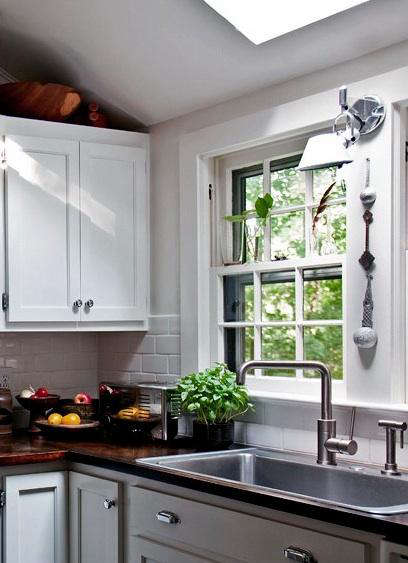
The kitchen is one of the best examples of Ostell’s balancing act. Custom mahogany countertops bring richness and depth, but the room avoids heaviness thanks to classic task lighting, a restrained palette, and pieces with simple profiles. The original sourcing pointed to a Tolomeo wall light and a Schoolhouse Electric Waldorf pendant, both of which make perfect sense in this setting: one is quietly practical, the other timeless and architectural.
What makes the space feel cottage-like is not kitsch. It is usefulness warmed up by materiality. There is no fake farmhouse cosplay happening here. Instead, the kitchen feels as if it belongs to someone who cooks, reads, notices joinery, and knows the difference between “old-looking” and genuinely enduring.
The living room: soft, edited, deeply civilized
In the living room, the linen sofa sets the tone. It is joined by pharmacy-style floor lamps that bring a little precision to all the softness. This is a classic Richard Ostell move: add one or two more technical, structured elements so the room does not drift into romantic mush. The books, art, and pottery then bring back the warmth.
That is the magic formula: a soft foundation, a few clean-lined functional pieces, and enough old or handmade objects to make the room feel personal. Cottage style works best when there is evidence of a mind at work inside the house. Books help. Art helps. Bowls that look like they were chosen for love instead of algorithmic compatibility definitely help.
The study and bedroom: intimacy without fuss
The study lighting included a wooden desk lamp by Studiomama, plus a Noguchi bamboo table lamp elsewhere in the house. There was also a handmade lamp Ostell created himself using laboratory stands, ceramic bulb holders, and fabric-covered cord. That DIY note is important. It reminds us that this interior is not just about shopping well. It is about seeing creatively.
The bedroom palette, with its soft grays and muted whites, continues the home’s calm mood. But because the materials remain tactile and the furnishings remain spare, the room avoids preciousness. It feels like a place to sleep, think, and read rather than a room performing for social media.
How to steal this look today without copying it line for line
The best version of “steal this look” is not literal duplication. If you copy every lamp and every table, you may end up with a tribute act. Charming, perhaps, but still a tribute act. What you want instead is to borrow the principles.
Start with the shell
Use warm white or chalky off-white walls. Add contrast through dark-stained or painted floors, weathered woods, or smoky paint in one room. If your home has original details, preserve them. Cottage style gets stronger when trim, floorboards, and architectural quirks are allowed to remain part of the conversation.
Choose natural materials first
Linen, wood, stone, clay, wicker, iron, and aged brass all work beautifully here. If you are deciding between a glossy synthetic finish and something with texture, texture wins almost every time. Even a simple object looks more expensive when the material has depth.
Mix old and new with intention
Buy one excellent vintage bench before you buy three decorative accessories. Choose a real worktable over a fake “rustic” one with too much sanding and too little soul. Pair it with modern seating if the lines are clean and the proportions are right. Cottage rooms need variety, not chaos.
Decorate with things that imply a life
Books. Pottery. Bowls. Framed photographs. Friend-made art. A basket that looks as if it has actually held kindling. These are not filler objects; they are mood-builders. The Ostell approach works because the accessories feel incidental, not corporate. Nothing says “I hired a personality consultant for my coffee table” less than a nice stack of books and a beautiful ceramic bowl.
Keep the lighting layered and practical
Use a pendant for shape, a task light for function, and one or two lamps for warmth. Cottage lighting should feel low-key and useful, not theatrical. If a fixture looks like it belongs in a medieval banquet hall, step away slowly.
Why this cottage still feels fresh in 2026
Because it is anti-trend without being anti-style. Richard Ostell’s Westchester cottage does not chase novelty; it trusts proportion, texture, and restraint. That is exactly why it still reads as modern. Many trend-driven interiors date quickly because they rely on surface-level signals. This house relies on the deeper stuff: real materials, edited collecting, visual calm, and rooms designed for living.
It also offers a useful correction to the more exaggerated versions of cottagecore and rustic design. You do not need ruffles in every room. You do not need a copper pot army hanging from the ceiling. You do not need to own twelve loaves of sourdough at once. What you do need is a sense of balance, a respect for age, and the confidence to let modest things be beautiful.
Experience the look: what Richard Ostell’s Westchester cottage teaches in real life
What makes a house like this stay with you is not just the styling. It is the emotional temperature. Imagine arriving on a Friday evening after a long week of screens, traffic, meetings, and a thousand tiny modern annoyances. The driveway narrows, the trees take over, and the cottage appears not as a grand statement but as a calm, self-possessed shape in the landscape. Even before you step inside, the mood changes. The exterior does not beg for attention. It simply belongs there.
Inside, the experience is even better because nothing is trying to perform. The rooms do not scream “designer showcase.” They whisper, which is much rarer and much harder to pull off. Your eye moves from a dark floor to a chalky wall, from a bench with age on it to a lamp with clean geometry, from a pile of books to a piece of pottery that looks as if it has been picked up and put down a thousand times. The house feels inhabited by thought.
That is one of the most valuable takeaways from studying Richard Ostell’s Westchester cottage. Good interiors are not just visually pleasing; they shape behavior. A worktable invites you to spread out papers, flowers, or breakfast. A slipcovered sofa makes sitting down feel easy rather than ceremonial. A stack of books near a chair quietly suggests an afternoon instead of an errand. The atmosphere nudges you toward a slower, more observant version of yourself.
There is also a lesson here about memory. Cottage interiors often succeed because they activate things people already love: old wood, handmade ceramics, soft upholstery, painted floors, practical lamps, weathered finishes, and furniture that seems to have stories baked into it. You may not have lived in a 1926 holiday cottage in Westchester, but the visual language still feels familiar. It connects to porches, grandparents’ houses, flea markets, summer rentals, studio spaces, and favorite old bookstores. It feels personal before it is even yours.
And then there is the most liberating part of all: this look does not require perfection. In fact, perfection would ruin it. A slightly crooked stack of books is good. A linen slipcover with life in it is good. A handmade lamp that looks one part clever, one part improvised is very good. The cottage teaches that beauty often arrives through editing, not polishing. Through choosing, not overfilling. Through trusting quiet things to carry a room.
That is why the house continues to resonate. It offers more than inspiration photos; it offers a way of living with objects. Keep what is useful. Keep what is beautiful. Keep what has texture, memory, and patience. Let the room breathe. Let the architecture speak. Let one old bench do more for the mood than twenty trendy purchases ever could. If that sounds simple, it is. If it sounds easy, absolutely not. But when it works, as it does here, the result is timeless.
Final thoughts
Stealing this look is less about buying the exact pendant or hunting down the identical sofa and more about understanding Richard Ostell’s decorating intelligence. His Westchester cottage proves that cottage style can be refined, modern, layered, and deeply human all at once. It is a lesson in natural materials, vintage restraint, useful furniture, and visual quiet. In a world crowded with loud rooms and short-lived trends, this cottage still feels like the smart one in the room.
So yes, steal this look. Just do it the clever way: keep the soul, skip the gimmicks, and never underestimate the power of a good bench.